PART 1
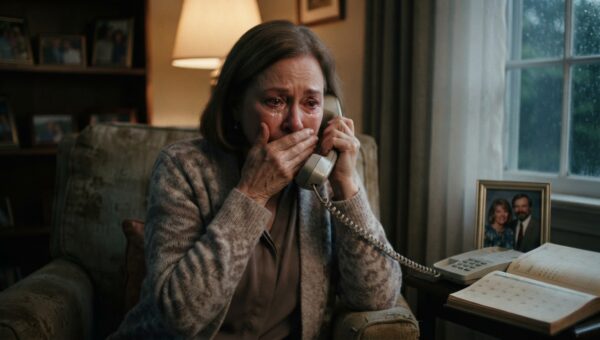
The mahogany desk in my husband Arthur’s home office still smelled faintly of cedarwood and stale pipe tobacco, three months after we buried him. Outside the tall leaded windows, the autumn rain beat a steady, gray rhythm against the glass of our estate in West Hartford. I sat in his leather armchair, the brass key he had pressed into my palm during his final week at Hartford Hospital resting cold against my thumb.
Arthur had spent forty-two years building industrial supply chains from a single rented warehouse into a multi-state distribution empire. When he sold the primary shares two years before his heart finally gave out, the wire transfers hit our private accounts with a quiet, staggering weight. Twenty-eight million dollars.
To the public, to our country club acquaintances, and above all to our forty-year-old son Bradley and his ambitious wife Chloe, Arthur had supposedly retired with a comfortable pension and a tidy nest egg. That was the story Arthur insisted we maintain.
“Don’t tell them, Clara,” he had rasped, his hand clawing weakly at the hospital sheet as I adjusted his blanket. “Bradley has no head for large capital. He’d leverage the whole sum into some half-baked real estate venture before the ink dried. And Chloe… Chloe would have our address changed to Palm Beach by Tuesday. Let them think we’re comfortable.
Let them earn their own way. The twenty-eight million stays locked in the trust until I’m gone, and then it’s yours to protect.”
So I protected it. I kept the old floral sofa in the living room. I drove my ten-year-old Buick sedan. I listened patiently when Chloe dropped by unannounced to complain that our kitchen needed updating, or when Bradley hinted over Sunday pot roast that a cash injection for his consulting firm would solve all his cash flow problems. I smiled, nodded, and said we had to watch our fixed income.
I thought I was honoring Arthur’s wishes. I didn’t realize how quickly my silence would be interpreted as weakness.
The trouble started on a Tuesday morning when a crew of movers parked a massive van in our circular driveway. Bradley strode through the front door without knocking, holding a clipboard and looking flushed with excitement.
“Mom, good, you’re here,” Bradley announced, tossing his car keys onto the hallway side table. “Chloe and I finalized the purchase of the Westport colonial.
It has five bedrooms, an infinity pool, and an equestrian barn. Perfect for the kids’ social circle.”
I lowered my knitting to my lap and looked up from the armchair. “That sounds expensive, Bradley. I thought you said your consulting firm had a lean third quarter.”
“That’s why we’re here,” Chloe chimed in, walking through the front door behind him with her designer leather tote swinging from her elbow. She didn’t take off her damp trench coat; she just stood in our entryway, looking around with a critical wrinkle in her nose. “We’re consolidating our living arrangements. This old place is costing a fortune in heating and property taxes for just one person. We’ve decided to sell this estate, pay off our bridge loan, and move you into the carriage house behind our new property.”
I stared at her. “The carriage house? Chloe, that building hasn’t had updated plumbing since 1984. It’s full of Arthur’s old garden tools and spare lumber.”
“We’ll have a contractor clear it out next week,” Chloe said with a bright, dismissive wave of her hand, as if she were discussing ordering appetizers. “You’ll love it, Clara. It’s cozy. And frankly, it’s time you started acting your age instead of rattling around this giant mausoleum alone. Bradley and I are making all the logistical arrangements. The real estate agent is coming Thursday to appraise the main house.”
My chest tightened, not with fear, but with a cold, clear realization of what my son and daughter-in-law believed my life had become. They looked at a seventy-one-year-old widow in a faded cardigan and saw an empty vessel to be managed, relocated, and squeezed for equity.
“I am not selling this house,” I said, my voice quiet but steady. “And I am certainly not moving into a drafty shed.”
Chloe’s bright smile vanished instantly, replaced by a hard, thin-lipped scowl. She stepped closer to me, looking down as if I were a stubborn child refusing to take her medicine.
“Listen to me, Clara,” Chloe snapped, her voice losing all its faux-sweetness. “You don’t have the liquidity to maintain this property on a widow’s pension. Your husband left you with a modest nest egg, but inflation is eating it alive. You are an aging burden, whether you want to admit it or not. If you won’t accept our help and move into the carriage house voluntarily, don’t expect us to bail you out when the property taxes foreclose. You can pack your bags and go live on the streets for all we care.”
Bradley looked slightly uncomfortable, shifting his weight from one foot to the other. “Mom, Chloe is right. We’re just trying to streamline things. You need to sign the transfer papers.”
I didn’t yell. I didn’t cry. I simply looked at my son, the man I had raised for forty years, and then at his wife, whose diamond tennis bracelet flashed under the hallway chandelier.
“No,” I said softly.
Chloe let out a sharp, incredulous laugh. “Fine! Stay here and rot in your stubbornness. But don’t call us when the bills pile up. Bradley, let’s go. We’re wasting our morning on someone who wants to live in the past.”
They turned on their heels and marched out the front door, slamming it hard enough to rattle the decorative plates on the dining room wall.
I sat alone in the quiet hallway, the sound of their tires crunching away down the gravel driveway. I looked down at the brass key in my pocket. They thought they had won. They believed I was trapped, penniless, and entirely at their mercy.
They had no idea what was waiting in Arthur’s safe.
PART 2
Three days after Bradley and Chloe stormed out, a certified letter arrived from their attorney. It was a formal demand for a durable power of attorney and a quitclaim deed transferring the estate title into a family LLC controlled by Bradley and Chloe. The letter warned that if I did not sign within ten business days, they would petition the probate court for a conservatorship, citing my advanced age and alleged cognitive decline.
They were moving fast. They had already listed our estate with a commercial broker online, using stolen interior photos from an old insurance appraisal, marketing it as an “estate sale with motivated elderly seller.”
I didn’t call a family lawyer to argue. Instead, I walked down the narrow basement stairs to Arthur’s private workshop, unlocked the heavy floor safe tucked behind the workbench, and pulled out the physical leather binder containing the master trust documents.
For two hours, I sat under the overhead fluorescent light, turning crisp parchment pages. There it was, signed and notarized by our corporate counsel two weeks before Arthur passed away: the complete asset allocation ledger of the twenty-eight million dollars, held in an irrevocable family trust with me as sole trustee and veto authority. Furthermore, Arthur had quietly transferred the deed of this West Hartford estate into a separate charitable foundation he established in our names, making the property entirely immune to private liens or forced family liquidations.
Bradley and Chloe didn’t own a single square inch of the main house. In fact, according to the trust covenants Arthur drafted after auditing Bradley’s past failed business ventures, any attempt by our children to coerce or defraud me of my primary residence triggered an automatic forfeiture clause, permanently cutting them out of any secondary trust distributions.
They hadn’t just miscalculated. They had signed their own financial exile.
I closed the leather binder, placed it back in the safe, and locked the heavy steel door. Then I made two phone calls. The first was to Arthur’s corporate attorney, a sharp, silver-haired man named Henderson who had served our family for thirty years. The second was to a high-end moving company in Hartford.
For the next three weeks, I played my part. I let Bradley send text messages threatening me with elder services. I let Chloe leave snarky voicemails about how I was going to end up in a municipal nursing home. I didn’t reply to a single one.
When Chloe drove past the house on a Saturday afternoon and saw my Buick still parked in the driveway, she undoubtedly assumed I was simply stewing in my stubborn isolation, too proud to surrender.
Then came the first Monday of November.
The morning frost coated the lawn in a shimmering white sheet. At precisely 9:00 AM, a large black sedan pulled up to the curb. Mr. Henderson stepped out, holding a thick leather portfolio under his arm, followed by two uniformed county deputies and a notice officer.
At the exact same moment, three miles away in downtown Hartford, Bradley and Chloe were sitting in a sleek glass-walled conference room with their real estate agent and a commercial buyer, preparing to sign the preliminary contract on our estate for a cash offer of 2.4 million dollars.
My phone buzzed on the kitchen counter at 9:14 AM. It was Bradley. I let it ring twice, then tapped the speaker button.
“Mom?!” Bradley’s voice crackled through the speaker, frantic and breathless. “What is going on? We’re at the title company downtown, and the escrow officer just stopped the closing! She says the property title is encumbered by a federal foundation trust and that our purchase agreement is invalid! Did you talk to a lawyer?”
Before I could answer, Chloe grabbed the phone from his hand, her voice shrill with panic.
“Clara! What have you done?” Chloe shrieked. “We already spent the earnest money deposit on our new decorator! You can’t just block a real estate sale! You’re an old woman living in a dream world, and we’re going to drag you into probate court until you’re bankrupt!”
I took a slow sip of my coffee, looking out the kitchen window at the falling red maple leaves.
“You called me an aging burden, Chloe,” I said, my voice calm and even. “You told me to go live on the streets. But as Mr. Henderson is currently explaining to the deputies standing in my foyer, you don’t own this house. And as of eight o’clock this morning, the trust has officially exercised its forfeiture clause regarding your family’s harassment.”
PART 3
There was a dead silence on the line for three full seconds.
“What… what forfeiture clause?” Chloe stammered, the bravado completely draining from her tone.
“Your husband’s inheritance distribution,” I replied. “The five hundred thousand dollars Arthur set aside in a secondary education fund for your children? It was officially reallocated to the state children’s hospital ten minutes ago. Furthermore, the bridge loan you took out on your new Westport colonial using this estate as collateral? Your bank is going to find out by noon that the collateral doesn’t belong to you.”
“Mom, you’re lying,” Bradley whispered, his voice cracking with sheer terror. “Dad didn’t leave any secondary trust. We would have known. We’re his family!”
“You were his family, Bradley,” I said softly. “You just forgot that respect comes before entitlement.”
I ended the call, sliding the phone across the granite countertop.
The fallout was swift and merciless. Without the estate sale proceeds to cover their bridge loan, Bradley and Chloe defaulted on the Westport colonial within forty-eight hours. The commercial buyer they had lined up sued them for breach of contract and fraudulent misrepresentation of property ownership. By December, they were forced to list their primary suburban split-level just to cover mounting legal fees and debt collectors.
On a cold Friday afternoon in mid-December, my doorbell rang.
I opened the heavy oak door to find Bradley standing on the porch. He looked hollowed out, his expensive wool coat rumpled, his hair unbrushed. Behind him at the curb, an old rental truck sat idling in the gray slush.
“Can I come in, Mom?” he asked, his voice barely above a whisper.
I looked at him for a long moment, remembering the way he had stood in this exact hallway three months ago, nodding along while his wife told me I could sleep on the street.
“No, Bradley,” I said, keeping the door half-closed. “You can’t come in.”
He swallowed hard, looking down at the frozen welcome mat. “We’re losing the house, Mom. Chloe… Chloe left. She took the kids to her parents’ place in Boston. I’m staying in a motel off the interstate. I didn’t know about the trust documents. Dad never told me…”
“Your father told you to build your own life, Bradley,” I said. “Instead, you spent your adult years waiting for me to die so you could carve up what he built.”
He stood there in the freezing wind, his shoulders shaking slightly, waiting for a softening that wasn’t coming.
“I’ll have Mr. Henderson send you a modest monthly stipend for basic living expenses,” I added quietly. “Not because you deserve it, but because you are my son, and I won’t have you starving on a street corner. But you will never step foot in this house again.”
He didn’t argue. He turned around, walked slowly down the stone steps, and climbed back into the rental truck.
ENDING
I watched from the living room window as the truck slowly pulled away from the curb, its taillights fading into the early winter dusk.
The house was dead silent again, save for the gentle ticking of Arthur’s grandfather clock in the hall.
I walked over to the armchair, picked up my knitting needles, and set them down on the side table. Then I reached into my pocket, pulled out the brass key Arthur had given me, and placed it gently in the center of the polished mahogany desk.
I didn’t need to lock anything away anymore. The twenty-eight million dollars was secure, the estate was protected, and the winter air outside was finally my own to breathe.
I walked into the kitchen, poured myself a fresh cup of tea, and watched the first quiet snowflakes begin to fall over the lawn.