PART 1
The hospital waiting room smelled of cold linoleum and old coffee, and every time the double doors swung open, the wind from the parking lot hit the back of my neck. I was clutching my side, doubled over in a plastic chair while the triage nurse tapped slowly on her keyboard. My appendix had been throbbing since dawn, and by the time Marissa dragged me into the emergency entrance, the pain felt like someone was driving a dull iron spike into my lower right abdomen.
Mr. Miller, the receptionist called out without looking up. Is your insurance card current?
Marissa stepped up to the desk before I could answer. She laid down our secondary card and her own debit card, her hands steady despite the circles under her eyes. She had left her small bakery at five in the morning to drive me here.
We’ll cover whatever deductible is needed, Marissa told the clerk, her voice quiet and firm. Just get him back to a doctor. He can barely stand.
An hour later, the young resident surgeon pushed back the curtain around examination bed four, his expression grim as he slid the tablet under his arm.
It’s hot, the doctor said, pointing to the ultrasound printout taped to the lightbox. If we wait another twelve hours for this to calm down on its own, it’s going to rupture. We need to take it out tonight.
The out-of-pocket facility fee and surgical deposit not covered by the basic plan is nine thousand dollars. We need payment authorization before we roll you to the OR.
Nine thousand dollars.
For seven years, I hadn’t seen a single paycheck deposit hit my own personal bank account. Every two weeks, my gross earnings of roughly eight thousand dollars went straight into a joint consolidation account managed by my mother, Evelyn. She had set up the structure when I took my first major engineering job, promising that young men needed their mothers to handle the heavy financial lifting so they wouldn’t waste their earnings on cars or foolish investments.
Save your pennies, Thomas, she always told me over Sunday pot roast. A wife is fine for companionship, but a mother protects the foundation.
Marissa had spent seven years watching me hand over my pay stubs while she stretched her bakery income and freelance editing money, exactly nine hundred dollars a month, to cover groceries, utilities, and our small starter townhouse.
Whenever Marissa suggested I take control of my own salary, my mother would sigh, shake her head, and look at me with wounded disappointment until I backed down to keep the peace.
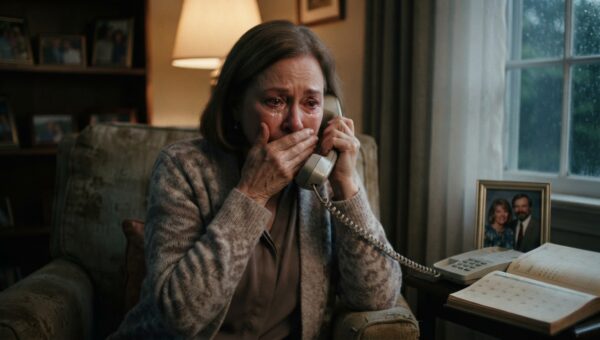
I reached for my phone on the small rolling hospital tray, my fingers shaking as I dialed my mother’s cell phone. It rang four times before she picked up, the sound of television game show music loud in her background.
Thomas? We’re right in the middle of dinner, my mother said, her tone brisk. What is it? Your brother needs me to look over some estimates for his new electronics storefront.
Mom, I’m at St. Jude’s, I managed, breathing shallowly through the pain in my side. The surgeon says my appendix is close to rupturing. I need the emergency deposit from my payroll account. Nine thousand dollars. Can you transfer it to the hospital’s portal right now?
There was a long, heavy silence on the line. The game show music in the background suddenly clicked off.
Nine thousand, my mother repeated, her voice dropping into that cool, clipped register she used whenever I asked a practical question. Oh, Thomas. You know things are tied up right now. There isn’t really a savings account anymore.
My chest tightened, and it had nothing to do with the infection in my abdomen. What do you mean, there isn’t a savings account? That’s seven years of my salary, Mom. Close to seven hundred thousand dollars total over the years. I need nine thousand for surgery.
Well, your brother Aaron needed expansion capital for his retail inventory last spring, she said, as if she were reading me a grocery list. And your sister Chloe found that wonderful townhouse in the suburbs, but the down payment fell short by forty thousand. Families help each other, Thomas. That’s what a common pool is for. You and Marissa live simply enough; you didn’t need all that cash sitting idle.
The phone felt heavy and foreign in my palm. You spent my money? Without asking me?
I managed it, my mother snapped, her patience wearing thin. The way a mother is supposed to. Now don’t be dramatic. Just put your insurance on a credit card or ask Marissa’s parents.
Before I could answer, the line went dead with a sharp click.
I sat there in the dim hospital alcove, the hum of the overhead fluorescent light ringing in my ears. I looked up at Marissa, who was standing beside the bed, her face pale. She didn’t ask what was said. She already knew.
Without a word, Marissa pulled her worn leather purse from her shoulder, unzipped the inner compartment, and placed a cashier’s check face up on the tray table next to my arm.
The amount written in neat, careful blue ink was exactly nine thousand dollars.
Where did you, I started, my voice breaking.
I’ve been setting aside every dollar from the custom wedding cakes I bake on the weekends, and three years of editing fees that your mother didn’t know about, Marissa said, her eyes bright with unshed tears. I told you two years ago that we needed our own separate account, Thomas. You wouldn’t listen. But I’m not going to let you rot in a hospital hallway because your family treats your life savings like a community checking account.
She turned to the nurse standing at the curtain opening and handed her the check. Get him prepped for surgery. We’re paying in full right now.
PART 2
The operation took two hours, and when I woke up, the recovery room was quiet, lit only by the amber glow of the hallway lights through the wire-reinforced glass in the door. My side burned with a dull, steady ache, but the sharp, tearing agony in my lower abdomen was gone.
Marissa was sitting in the vinyl armchair beside my bed, resting her head against the high back with her eyes closed. On the small rolling table within arm’s reach sat my smartphone, plugged into a black charging cord.
As I shifted my weight on the thin mattress, Marissa opened her eyes instantly. She stood up, poured a small paper cup of water from the plastic pitcher, and held a bendable straw to my lips.
How do you feel, she asked softly.
Like a truck ran over me, I whispered, my throat dry. And like an idiot.
Don’t do that to yourself tonight, she said, pulling her chair closer. You’re alive. The surgeon said it was just about ready to burst when they went in. You’re going to be fine.
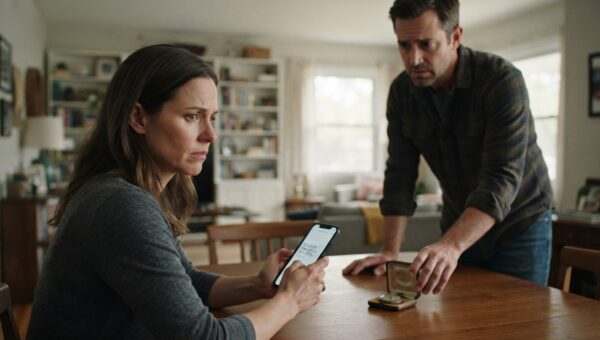
She reached down, picked up my phone, and unlocked the screen with my fingerprint. Instead of handing it to me, she tapped twice on the browser icon and laid the phone across my lap.
The screen glowed bright against the dark sheets. It wasn’t a text message. It was a PDF document downloaded from the primary credit union portal where my payroll checks had been routed for seven years.
I called your mother’s bluff while you were under, Marissa said, her voice completely level, though her fingers were clenched tightly in her lap. When she hung up on you, I used your login credentials from your desk drawer at home. I wanted to see where every single dollar went. I downloaded the complete seven-year ledger.
I looked down at the screen. My hand felt cold against the warm plastic casing of the phone.
The top line showed the cumulative deposits from my employer spanning eighty-four months: eight thousand dollars every single month, exactly as agreed. But as my thumb scrolled down past the initial rows, the destination accounts changed.
There were dozens of outgoing wire transfers labeled as family loans, commercial equipment purchases, and real estate disbursements. A fifty-thousand-dollar transfer to Aaron’s Electronics in 2024. A sixty-thousand-dollar transfer labeled Chloe Property Equity in 2025. And worse, regular monthly automatic withdrawals of four thousand dollars each routed directly into a private investment portfolio held solely in my mother’s name under a revocable family trust.
Our current balance in the primary account that was supposed to hold my life savings was four hundred and twelve dollars and sixteen cents.
She didn’t just borrow it, I whispered, staring at the columns of numbers until they blurred together. She locked me out of ownership entirely. If I tried to buy a used car without her signing off, the card would have declined.
She treated you like a teenager with an allowance while she funded your siblings’ entire lives, Marissa said quietly. And the worst part is, whenever I tried to talk to you about our budget, you told me your mother had everything under control for our future.
I closed my eyes, the bitter taste of shame rising in my throat. For seven years, I had defended my mother’s control to Marissa, calling it old-fashioned prudence, calling her protective instincts a blessing. While my wife worked eighty-hour weeks baking wedding cakes and editing manuscripts to pay for our groceries and electricity, my mother had been building real estate portfolios for my brother and sister using my sweat.
I’m going home tomorrow, I said, my voice hardening as the fog of the anesthesia began to lift. And I’m going to get my name off every single wire she controls.
You can’t just call her, Thomas, Marissa warned, leaning forward. Evelyn isn’t going to hand over control voluntarily. She thinks she owns you.
Then I’ll let the bank explain it to her, I said.
PART 3
By Thursday afternoon, I was discharged from the hospital, moving slowly with my hand pressed against my bandaged side as Marissa drove us back to our townhouse. The gray winter light made the neighborhood look stark and quiet, but the air inside our front door felt different than it had a week ago. The illusion of family harmony was gone, replaced by a cold, sharp clarity.
I didn’t wait until Sunday dinner. I called my mother directly from the kitchen island, putting the phone on speaker so Marissa could hear every word.
It rang twice before my mother answered, her voice sharp and impatient. Thomas? Are you out of the hospital already? I told you not to bother me with financial dramatics while I’m helping Aaron set up his inventory software.
Mom, I need you to meet me at the credit union branch on Main Street tomorrow morning at ten o’clock, I said, keeping my voice level. We are dissolving the joint consolidation account and transferring my payroll deposits directly into an independent account in my name alone.
There was a sharp intake of breath on the other end of the line.
Have you lost your mind, my mother snapped, her tone instantly shifting from annoyed to furious. After everything I’ve done to protect your earnings from frivolous spending, you’re going to march down to a bank because of a temper tantrum? You think you can manage hundreds of thousands of dollars on your own? Look at your wife; she couldn’t even help you with a nine-thousand-dollar emergency without dipping into her little baking stash!
Don’t talk about Marissa, I said, my voice rising. She saved my life while you were sitting at home watching game shows and spending my money on Aaron’s storefront. The account gets closed tomorrow, Mom. If you aren’t there to sign the release, I’ll file an unauthorized transfer affidavit with the fraud department before noon.
You wouldn’t dare, she hissed. I am your mother. I built that portfolio for our family’s security. If you walk away from this, don’t ever expect to sit at my Sunday table again.
Consider it a permanent reservation, I said, and ended the call.
The silence in the kitchen was heavy, but as I looked over at Marissa standing by the counter, the knot in my chest finally loosened. She didn’t say I told you so. She simply walked over, placed her hand over mine on the wooden surface, and gave it a firm, grounding squeeze.
The next morning at ten o’clock sharp, I walked into the marble-columned lobby of the credit union with Marissa by my side. My mother was already sitting at the leather-upholstered consultation desk, her arms crossed tightly over her wool coat, talking in low, sharp tones to the branch manager.
When she saw us walk through the glass doors, her expression hardened into a mask of pure indignation.
Thomas, you are making the biggest mistake of your life, she announced across the lobby as the loan officer stood up to greet us.
Sign the paperwork, Mom, I said, pulling out my chair and sitting down opposite her. Or let the manager explain what happens when an account holder revokes third-party access without beneficiary consent.
The manager, a middle-aged man with graying temples and a tired expression, slid the final closure documents across the polished desk toward my mother.
Mrs. Miller, the manager said smoothly, his voice leaving no room for argument. The primary earner has exercised his legal right to dissolve the joint consolidation structure. We need your signature to release the remaining balance and close the secondary trust links.
My mother stared at the papers for a long, agonizing minute, her pen poised over the signature line. She looked up at me, waiting for the old hesitation, waiting for me to soften and apologize for making a scene.
I didn’t blink. I didn’t look away.
With a sharp, angry jerk of her hand, she scrawled her signature across the bottom line, dropped the pen onto the blotter, and stood up without looking back. She walked out of the branch without a single word, her boots clicking sharply against the marble floor until the heavy glass doors swung shut behind her.
The manager stamped the documents as processed and handed me the new account card in a crisp blue folder.
Marissa took my arm as we walked out into the crisp morning air, the winter sun finally breaking through the gray clouds overhead.
ENDING
We drove back to our townhouse in comfortable silence, the new blue folder resting safely on the center console between our seats.
When we walked through the front door, I dropped my keys into the small ceramic bowl by the entryway, the familiar clink sounding clearer than it had in years. I walked into the kitchen, pulled my old leather checkbook from the drawer, and slid it into the wastebasket beneath the sink.
I didn’t need it anymore.
Marissa walked over to the kitchen counter, tied her flour-dusted apron around her waist, and pulled out her baking sheets to prep for Saturday’s orders. I stood beside her, rolling up my sleeves to help her measure out the sugar and flour, letting the simple, steady rhythm of the kitchen wash over us both.
My mother’s Sunday table was empty now, but for the first time in my life, the house smelled like our own.