PART 1
The digital clock on the microwave in Kevin and Sarah’s kitchen read six-forty in the morning when I set my worn canvas handbag on the counter. Outside, the Ohio suburbs were still wrapped in a gray November chill that made my old knees ache before I even turned the ignition key on my sedan. I was seventy-one years old, living alone on a fixed monthly income of just one thousand four hundred and eighty-six dollars from my late husband’s pension and social security.
Every single Friday, I drove forty-two miles to babysit my two grandkids, Leo who was five and Maya who was eight, while Sarah and Kevin worked their full-time jobs.
I did it for free, of course. They were my only grandchildren, and I loved them more than my own breath. But over the last year, Sarah had instituted a series of strict household rules that made every visit feel less like a family gathering and more like a hotel inspection.
On this particular Friday, I had barely taken off my coat when Sarah walked into the kitchen carrying her laptop bag and a travel mug of coffee. She didn’t offer me a cup. She just crossed her arms, looked down at the paperwork she had laid out on the island, and cleared her throat.
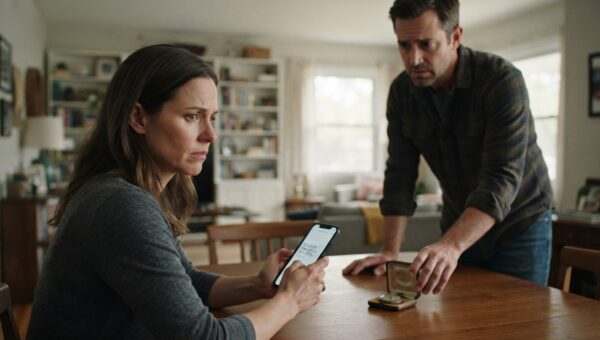
“Margaret, before we leave, we need to settle the bathroom supply ledger from your visits last month,” Sarah said, her voice clipped and professional, the way she spoke to junior accountants at her firm.
I stopped unzipping my handbag. “The bathroom supply ledger, Sarah?”
“You used four rolls of quilted toilet paper over the last four Fridays,” Sarah said, tapping a pink sticky note against the marble countertop. “Kevin and I buy the bulk club packs at forty-two dollars a box, which breaks down to one dollar and seventy-one cents per roll.
Plus your share of the hand soap and paper towels. It comes out to six dollars and eighty-four cents.”
I stared at her. Kevin walked into the kitchen behind her, dressed in a sharp gray suit, holding his car keys. He wouldn’t look me in the eye. He stared fixedly at the stainless steel refrigerator door, his jaw tight, pretending he was absorbed in the calendar magnets.
“Sarah, I come here to watch your children for eight hours every week,” I said, my voice trembling slightly as the warmth drained from my face. “I don’t charge you a single penny for childcare. If I had to pay a commercial sitter in this town, you’d be out thirty dollars an hour.”
“This isn’t a free hotel, Margaret,” Sarah snapped, her eyes narrowing as she tapped the sticky note closer to my hand. “We have a household budget, and water and paper products aren’t an unlimited charity.
If you use our facilities, you cover your consumables. Those are the house rules.”
I looked over at my son. “Kevin? Are you going to say anything about this?”
Kevin cleared his throat, still staring at the refrigerator. “Mom, Sarah’s just trying to keep things organized. You know how tight money is with the mortgage rates right now. Just pay the six-eighty-four so we can get out the door. We’re going to be late for our morning staff sync.”
My chest felt tight, a dull ache pressing against my ribs. I didn’t argue. I reached into my battered leather coin purse, pulled out a crumpled five-dollar bill and two ones, and laid them neatly on the marble counter beside her sticky note. I didn’t wait for my change. I just turned away, hung my coat in the hall closet, and waited for the front door to click shut behind them.
PART 2
The kids were wonderful, as they always were. Maya and Leo ran down the stairs shouting good morning, throwing their little arms around my waist before the echoes of their parents’ car doors had even faded down the driveway. We spent the day baking plain sugar cookies, painting watercolor pictures of bluebirds on cheap printer paper, and playing board games on the worn living room rug.
When Sarah and Kevin returned at five-thirty that evening, the house smelled of vanilla and butter. Sarah walked in, checked the kitchen counter to make sure the six-eighty-four was still sitting there, and mumbled a quick goodbye before hurrying upstairs to change for a dinner party with her colleagues. Kevin thanked me with a brief pat on my shoulder, handed me a grocery list for the following week, and rushed me out the door so they could leave on time.
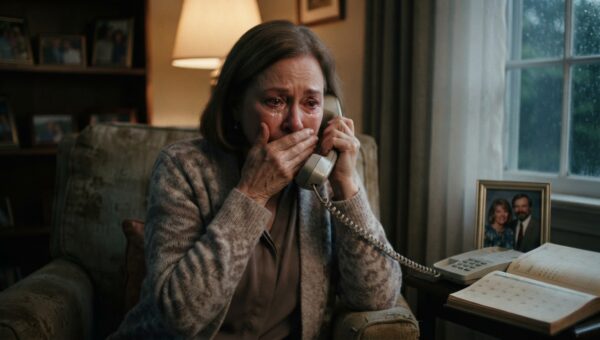
The following Thursday evening, the phone rang just as I was sitting down to a bowl of canned soup. It was Kevin.
“Mom, can you come over tomorrow morning at six instead of seven?” Kevin asked, his voice hurried and breathy. “Sarah and I booked a three-day weekend getaway to a bed-and-breakfast in Traverse City. Our flight leaves out of Detroit early Saturday, but we have a pre-trip dinner with some clients down there tomorrow night. We need you to stay through the weekend and watch the kids until Sunday evening.”
“Oh,” I said, blinking at the kitchen wall. “Well, I suppose I can manage that. Did you leave money for groceries?”
“Just use your credit card or whatever cash you have on hand, and we’ll square up the household receipts when we get back Sunday night,” Kevin said quickly. “Don’t buy anything extravagant, just the usual staples for the kids. Thanks, Mom, you’re a lifesaver. We really needed this break.”
The line went dead before I could ask him what “the usual staples” meant in their household, where store-brand milk was considered unacceptable and the children only ate organic chicken nuggets and imported fruit snacks.
When I arrived at their house at six o’clock Friday morning, they were already gone. A hurried note was stuck to the front of the refrigerator in Sarah’s sharp handwriting: *Kids’ breakfast is in the top freezer drawer. Pizza money is in the jar. Don’t touch the home office.*
By Sunday evening, when Kevin and Sarah finally unlocked the front door and walked back into their warm, tidy kitchen, I was sitting quietly at the island with a small stack of neatly folded receipts beside my teacup.
Leo and Maya were upstairs fast asleep in their beds, exhausted from a weekend of park visits and homemade pancakes.
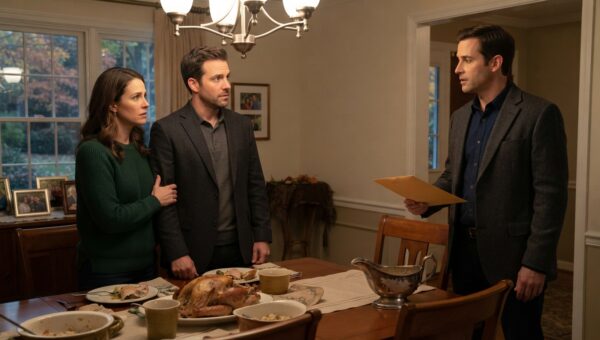
Sarah dropped her weekender bag on the floor with a heavy thud, stretching her arms above her head with a satisfied sigh. “Oh, it was wonderful. The spa package alone was worth the drive. How were the kids, Margaret? Did they behave?”
“They were angels,” I said softly, not moving from my chair.
Kevin walked over to the island, loosening his travel scarf. He noticed the neat line of slips of paper resting beside my tea mug. His brow furrowed. “What’s all this?”
“Those are the receipts from the last three days,” I said, my voice entirely level. “You asked me to cover the children’s needs while you were away, so I made sure they had everything they required.”
Sarah stepped closer, her eyes dropping to the slips of paper. She picked up the top receipt from the local specialty grocery store. Her face went pale, then flushed a bright, angry red.
“Three hundred and twenty-seven dollars and eighteen cents?” Sarah shrieked, her voice echoing off the tile backsplash. “Margaret, are you out of your mind? What on earth did you buy that cost three hundred dollars for a three-day weekend?”
PART 3
I picked up my teacup, took a slow, deliberate sip, and set it back down on the saucer without a single clatter.
“Let’s review the ledger, Sarah, since you’re so fond of them,” I said, my tone remaining as quiet and steady as the ticking of the kitchen clock. “On Friday morning, the refrigerator was completely empty except for a carton of sour milk and three eggs, because you hadn’t gone grocery shopping before your trip. The children needed breakfast, lunch, snacks, and dinner for seventy-two hours.”
“That doesn’t cost three hundred dollars!” Sarah stammered, pointing a manicured finger at the paper. “You bought organic berries, premium beef, and branded snacks! We don’t buy those items!”
“I bought what your children needed to eat, including three boxes of the specific gluten-free waffles Maya requires for her morning digestion, and the chicken strips Leo will actually touch without throwing a tantrum,” I replied, looking straight into her wide, furious eyes. “I also had to pay for two large pizzas from the Italian place down the street on Saturday night because the oven pilot light went out and I didn’t want to risk burning the house down trying to relight it.”
Kevin stepped between us, his hands held up in a placating gesture. “Mom, come on. Three hundred and twenty-seven dollars? That’s almost a quarter of your entire monthly social security check. Why didn’t you just call us?”
“Because you were busy at your spa in Traverse City,” I said. “And because your wife made it very clear last week that this house is not a free hotel. Every single item on this counter is itemized. There are twelve dollars and forty cents for milk, eighty-four dollars for fresh produce and protein, forty-five dollars for the pizzas, and yes, Sarah, seventy-eight cents for the single roll of toilet paper I used in the downstairs guest bath while I was sleeping over to take care of your children.”
Sarah stared at me, her mouth opening and closing soundlessly. The word *audit* seemed to hover in the air between us, unspoken but entirely present.
I reached into my handbag, pulled out my car keys, and laid them right beside the stack of receipts.
“What are you doing?” Kevin asked, his voice dropping into a sudden, panicky register. “Mom, where are your keys?”
“I’m leaving, Kevin,” I said, standing up slowly from the stool and smoothing my cardigan over my hips. “I am seventy-one years old. I live on a fixed income of fourteen hundred and eighty-six dollars a month. I spend forty-two gallons of gas every month driving out here to give you forty hours of free labor so you and your wife can advance your careers and take weekend trips to the lake.”
“Margaret, don’t be dramatic,” Sarah snapped, recovering her footing with a hard scowl. “You’re family! Families help each other out with childcare without sending itemized invoices like corporate auditors!”
“Families don’t charge their widowed mother six dollars and eighty-four cents for using the bathroom,” I answered, my voice cutting through her words like a knife. “Families don’t treat an aging woman like a lodging guest who has to pay for consumables.”
I walked past them down the hallway, retrieved my heavy wool coat from the closet, and slipped my arms into the sleeves.
ENDING
Kevin hurried down the hall after me, his shoes squeaking against the hardwood as he reached out to touch my arm.
“Mom, wait. Let’s not do this,” Kevin pleaded, his voice dropping into a desperate whisper. “If you stop coming on Fridays, how are we going to manage the kids? Daycare in this zip code is two thousand dollars a month! We can’t afford that!”
I stopped with my hand on the front door handle, looking back at my son standing in the dim light of the entryway.
“Then I suggest you look at your household budget, Kevin,” I said softly. “And perhaps start charging your clients for the toilet paper they use when they visit your office.”
I opened the front door, stepped out into the crisp November air, and pulled it shut behind me.
The walk down the porch steps felt lighter than it had in months. My old sedan was parked by the curb, its engine ready to take me forty-two miles back to a quiet house where every roll of paper in the cabinet belonged to me, and where nobody handed me a ledger when I needed to wash my hands.