PART 1
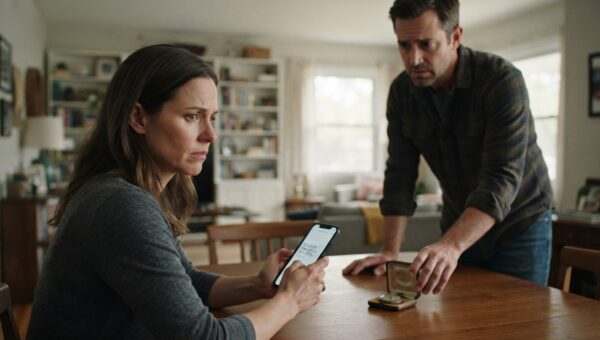
The envelope from the Social Security Administration arrived on a Tuesday in October, sliding through the mail slot and landing with a dull slap on my linoleum floor. I picked it up while balancing a bag of groceries in my other arm, expecting the usual annual cost-of-living notice or an updated statement for my own retirement account.
Instead, the header listed my mother’s name. Clara Vance.
My mother had passed away four years ago in a quiet room at Maplewood Care Center, her breathing stopping just as the afternoon sun hit the edge of the window frame.
I paid for the simple service myself, chose the walnut urn that sits on my mantelpiece, and notified every agency I could think of within forty-eight hours.
I tore open the envelope, my eyes scanning the dense bureaucratic text until the numbers jumped out at me. The letter stated that electronic disbursements totaling one thousand nine hundred and seven dollars had continued depositing into an active account every single month since her passing. Forty-eight months of uninterrupted payments. A total of ninety-one thousand five hundred and thirty-six dollars.
I sat down at the kitchen table, the grocery bag forgotten on the counter. The account listed on the notice was not my mother’s old credit union savings. It was a joint checking account held by my younger brother, David.
According to the brief summary provided in the audit warning, David had submitted a signed physician’s affidavit four years ago claiming that our mother was alive but incapacitated, transferring her monthly benefit directly into his control while she lay beneath six feet of cemetery sod.
I didn’t call David right away. I spent three days walking through my house, staring at the walnut urn on the mantelpiece, remembering the two years before her death when David stopped visiting her room entirely because traffic was bad or his landscaping business was too busy.
Ninety-one thousand dollars. He had been stealing from a dead woman while pretending to be the grieving son who handled her final affairs.
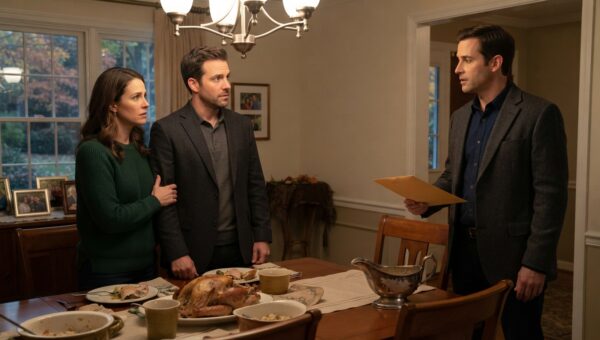
The confrontation was scheduled for Thanksgiving day. It was a family tradition we had kept up out of stubborn habit, gathering around the dining table to carve the turkey and pretend we liked each other’s company.
When David walked through my front door carrying a bottle of cheap red wine and a bag of overly sweet rolls, he looked relaxed, his graying hair combed neatly back from his forehead. We carved the turkey like nothing was wrong, passing the butter and talking about the weather and my daughter’s college applications while the Social Security notice sat folded inside my apron pocket.
It wasn’t until we cleared the plates and sat down with coffee that I pulled the paper out and laid it flat across the wood grain between us.
David looked down at it. The color didn’t drain from his face all at once.
He just stopped chewing, his eyes tracking the figures on the page before he let out a short, defensive breath and leaned back in his chair.
“You can’t have it,” David said, his voice dropping into a harsh whisper that made my daughter, who was clearing dessert plates in the kitchen, pause by the sink. “I took care of her paperwork. I dealt with the nursing home billing offices when nobody else wanted to answer their calls.”
“You didn’t visit her the last two years, David,” I said, my voice shaking despite every effort to keep it steady. “You didn’t sit by her bed. You just kept her bank routing number open and let the checks roll in while she was gone.”
He glared at me across the table, his jaw tightening into a hard knot. “She would have wanted me to have it. The state doesn’t need that money. It was sitting there.”
I didn’t argue with him anymore. The next morning, I drove down to the federal building downtown and filed a formal fraud report with the Office of the Inspector General, handing over the statements and the printed audit trail.
PART 2
Two weeks went by without a word from David. Then, on a cold Friday afternoon, a gray sedan pulled up to my curb, and a man in a dark wool coat carrying a leather briefcase walked up my front steps.
His name was Agent Miller, a federal investigator with tired eyes and a silver crew cut. He showed me his badge at the door, stepped inside, and sat down at the very same dining table where David and I had carved the turkey.
“We’ve pulled the bank records on the primary recipient account,” Agent Miller said, opening his leather portfolio and laying out a thick stack of certified documents. “Your brother drained the ninety-one thousand dollars within forty-eight hours of each deposit, moving the funds into speculative real estate ventures and paying off personal vehicle loans. We’ve initiated asset seizure protocols.”
“Good,” I said, folding my hands in my lap. “He broke the law. He committed fraud against the federal government.”
Agent Miller didn’t nod right away. He turned a page in his file, his pen tapping softly against the margin.
“He did,” Agent Miller agreed. “But Mr. Vance isn’t the only name on the forged documents.”
I frowned, leaning forward. “What do you mean? David forged the doctor’s note himself. He told the bank she was incapacitated.”
“The doctor’s note was one piece,” Agent Miller said, looking up to meet my eyes. “To maintain an inactive senior beneficiary account without an active power of attorney or court-appointed conservatorship, the bank required an annual co-signer verification statement confirming the beneficiary’s continued residence and status.”
He slid a single sheet of paper across the table toward me. It was an institutional verification form dated twelve months after my mother’s funeral, bearing the official stamp of the Maplewood Care Center administration office.
“Someone co-signed the medical continuation form,” Agent Miller continued quietly. “Someone who had access to the facility records, someone who knew the exact layout of the administrative files, and someone who attended your mother’s funeral.”
My hands started shaking. I reached out and pulled the paper closer, my eyes focusing on the signature line at the bottom of the form.
The handwriting was neat, sloping slightly to the left, written in blue ink. It was the exact handwriting I had looked at on birthday cards, grocery lists, and holiday place cards for thirty years.
The co-signer was my husband, Thomas.
PART 3
The room seemed to shrink around me, the ticking of the grandfather clock in the hallway growing deafeningly loud.
“Thomas?” I whispered, the word tasting like dry ash in my mouth. “No. That’s impossible. Thomas hated how distant David was with my mother. He argued with him at her funeral.”
“Mr. Vance needed an insider signature to bypass the annual audit flag at the regional processing center,” Agent Miller explained, his tone devoid of personal judgment, treating the tragedy like a routine ledger error. “Your husband was listed as the secondary emergency contact on your mother’s care registry. When your brother ran into a cash crunch with his business four years ago, he approached Thomas. According to the bank transfers we’ve traced, Thomas didn’t just co-sign the forms. A portion of those monthly deposits was routed directly into a joint home improvement account bearing both your names.”
I sat frozen, staring at the blue ink signature. The kitchen renovation we had done two summers ago. The new cedar deck on the back of the house. The extra money Thomas claimed he had saved from overtime shifts at the municipal water plant.
It wasn’t overtime. It was blood money stolen from a dead woman’s checkbook, laundered through my brother’s fraud scheme, and spent on our own backyard grill and patio furniture.
“Where is Thomas right now?” Agent Miller asked gently.
“He’s… he’s at the water plant,” I managed to get out, my throat tight. “His shift ends at four.”
Agent Miller closed his briefcase, clipped the brass latches shut with two sharp clicks, and stood up from the chair. “I have to speak with him at his workplace. I’m sorry, Mrs. Vance. But as an administrative co-signer on federal fraud documentation involving sums exceeding fifty thousand dollars, he is a primary co-defendant in the indictment.”
I didn’t cry as the investigator walked out the front door and down the steps to his sedan. I sat alone at the table for a long time, looking at the empty chair where my brother had sat eating turkey just weeks before, and then at the clean wood grain where Thomas had shared coffee with me every morning for twenty-eight years.
When the front door opened at four-fifteen, Thomas walked in, dropping his lunch pail onto the counter with a cheerful clatter and calling out my name the way he always did.
“Hey, honey,” Thomas said, walking into the dining room while unzipping his heavy work jacket. He stopped when he saw my face. The smile faded from his mouth. “What’s wrong? Did something happen with your mother’s headstone?”
I pushed the single sheet of paper across the table toward him.
Thomas looked down at it. He didn’t deny it. He didn’t ask what it was. He just let out a long, ragged breath, let his jacket slip from his shoulders onto the floor, and pulled out the chair opposite me.
“David came to me right after the funeral,” Thomas said quietly, his voice breaking as he looked down at his calloused hands. “He had creditors at his door. He said it was just a temporary bridge loan, that the government takes months to process a death notice, and that we could use the extra cushion to finish paying off the mortgage before we retired. I told him no at first. I really did. But then the bills piled up, and… I signed it.”
“You stole from her grave, Thomas,” I said, my voice barely audible. “You and my brother sat at our table and stole from a dead woman.”
ENDING
The trial didn’t take long because there was nothing to argue against. The paper trail was absolute, stretching from the federal reserve down to our local bank statements.
David’s landscaping business was liquidated by the court to cover restitution, and Thomas was sentenced to probation with mandatory community service, his name permanently marked by a federal fraud conviction that stripped him of his pension and his standing at the water plant.
The house was sold in the spring to pay back the remaining balance owed to the Social Security Administration, the equity wiped out in a single afternoon by legal fees and penalties.
I packed my few remaining clothes into two cardboard boxes, loaded them into the trunk of my sedan, and drove away from the neighborhood where we had lived for nearly thirty years.
Before I left, I walked into the spare room, reached up onto the mantelpiece, and picked up the walnut urn containing my mother’s ashes. I held it close against my chest, feeling the quiet, steady weight of it as I walked out the front door for the last time.