PART 1
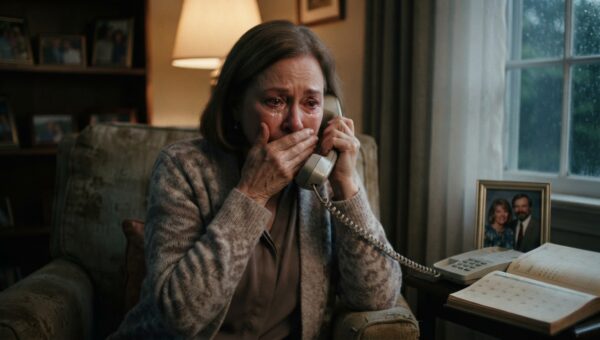
The kitchen was quiet except for the hum of the refrigerator and the steady ticking of the wall clock over the pantry. I was wiping down the granite counter when my cell phone buzzed against the stone. An unfamiliar toll-free number flashed on the screen.
I picked it up, expecting another spam call about car warranties or duct cleaning.
Instead, a woman’s voice came through, brisk and entirely too professional for a Tuesday morning.
“Is this Mrs. Karen Campbell?” she asked.
“Yes, it is,” I said, pausing with the sponge in my hand.
“Mrs. Campbell, my name is Rachel Vance. I am calling from the recovery department of First National Financial. I am reaching out regarding your outstanding balance of two hundred and thirteen thousand dollars.”
I let out a short, dry laugh, thinking it had to be some kind of cruel prank. “I think you have the wrong person. I don’t have any debt. My husband and I paid off our mortgage three years ago, and we use credit cards only for groceries, which get paid in full every month.”
The woman on the other end did not laugh back. Her tone remained flat and unyielding. “Our records indicate seven consolidation and personal business loans opened in your name between 2019 and 2024.
Your husband, David Campbell, co-signed every single one of them. The total principal plus accumulated interest currently sits at two hundred and thirteen thousand dollars, and the account is ninety days past due.”
The sponge slipped from my fingers, landing with a wet plop in the sink. The kitchen suddenly felt too small, the air thick and difficult to pull into my lungs.
“My husband co-signed?” I whispered. “David didn’t co-sign anything. We don’t take out loans.”
“Mrs. Campbell, both signatures are on file,” she said, her voice dropping into a register of practiced sympathy. “If you believe this was unauthorized, you will need to file a police report for identity theft. But as of right now, the legal obligation rests on both borrowers.”
The line went dead with a sharp click.
I stood there by the sink for a long time, listening to the hum of the refrigerator, trying to make my brain connect the numbers she had given me with the life David and I had built over twenty-eight years of marriage.
Without taking off my apron, I walked out of the kitchen, went into the small home office in the corner of the hall, and opened the drawer where we kept our financial files.
My hands were shaking so badly I dropped the plastic binder on the rug. I picked it up, flipped to the back pocket where our annual credit monitoring reports lived, and pulled out the latest statement.
There it was. Page after page of lines I had never seen. Seven separate loans, totaling two hundred and thirteen thousand dollars.
And right beside David’s familiar, messy scrawl on each document was my own signature. Except it was not my signature. Someone had practiced my looping letters, copying the way my middle initial curved downward, but the strokes were too careful, too slow. Forged. Every single one of them.
And according to the disbursement tracking logs printed in the margin, the money had never touched our joint checking account. Every dollar had been funneled through electronic wire transfers to an address in Las Vegas, Nevada.
PART 2
I did not wait for David to come inside. I walked straight through the back door and out into the bright afternoon sunlight.
The garage doors were propped open, and the smell of car wax and warm rubber drifted out into the driveway. David was standing by the rear quarter panel of his pickup truck, a yellow microfiber cloth in his hand, buffing a circle into the silver paint with slow, rhythmic strokes. He wore his old gray sweatshirt and his favorite baseball cap, looking like the same man who had eaten toast at my kitchen table every morning for nearly three decades.
I stopped three feet behind him, the printed credit report clutched so tightly in my hand the paper tore at the edges.
“David,” I said.
He didn’t stop buffing the truck. He didn’t even turn his head. “Just give me ten minutes, Karen. I want to get this coat sealed before the humidity picks up.”
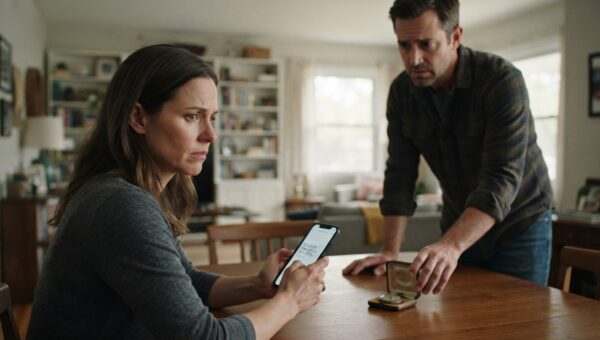
“David, I just got off the phone with a debt collector,” I said, my voice rising over the scratch of the cloth against the metal.
He kept his back to me, his arm moving in steady circles. “People call the house all day selling things. Just hang up on them.”
“They aren’t selling anything,” I said, stepping closer until I was standing right beside his elbow. “They are collecting on two hundred and thirteen thousand dollars in loans taken out in our names over the last five years. Loans that were wired to Nevada. Loans with my signature forged on every single page.”
The cloth stopped moving against the truck.
David lowered his hand slowly, resting it against the tailgate. He still did not look at me. He stared straight ahead at the garage wall, his jaw tightening under his stubble.
“Those are investments, Karen,” he said, his voice entirely devoid of panic or surprise.
I stared at the side of his face, waiting for the joke to land, waiting for him to laugh and tell me he was talking about some mutual fund or a retirement CD we had somehow forgotten.
“Investments?” I asked, the word feeling foreign on my tongue. “In what, David? What kind of investment requires two hundred and thirteen thousand dollars in secret loans and a forged signature?”
He picked up the cloth again, giving the tailgate another half-hearted wipe. He still wouldn’t look me in the eye.
“You wouldn’t understand,” he muttered, turning his shoulder slightly away from me.
“Try me,” I said, my voice dropping into a quiet, dangerous calm. “Try explaining to me how you ruined our credit, forged my name, and threw away our life savings on something you couldn’t even discuss with your wife of twenty-eight years.”
David finally dropped the cloth onto the bumper. He turned around, his face set in that stubborn, arrogant mask he put on whenever he didn’t want to admit he was wrong.
“I said you wouldn’t understand, and I mean it,” David said sharply, pointing the end of his wrench toward the driveway. “Now drop it, Karen. I’m handling it.”
He turned back to his truck as if I were nothing more than an annoying neighbor complaining about stray leaves on the lawn.
I walked back into the house, closed the kitchen door, and dialed the FBI internet crime and fraud reporting hotline.
PART 3
Three days later, Special Agent Miller sat across from me at our kitchen table. He was a tall man in his fifties with tired eyes and a neat gray suit that looked like it had spent too many hours folded over a chair in a federal office. He had laid out three manila folders between us, their covers stamped with red classification markers.
“Mrs. Campbell,” Agent Miller began, keeping his voice low and steady so it wouldn’t carry toward the open windows where the neighborhood kids were riding their bicycles. “We pulled the wire tracing logs from the financial institutions involved. Your husband isn’t dabbling in the stock market, and he isn’t buying real estate.”
My throat felt dry. I reached for my glass of water, my fingers barely steady enough to lift it. “What is he doing?”
“He’s funding a business venture in Nevada,” Agent Miller said, opening the center folder to reveal a series of corporate registry printouts. “A high-end hospitality and entertainment consulting firm based in Reno.”
I shook my head, the pieces refusing to fit together. “We don’t know anyone in Nevada. We’ve never even been to Reno.”
Agent Miller hesitated, his pen tapping lightly against the corner of the table. He looked down at the papers, then back up at me.
“Mrs. Campbell, the business is registered as a limited liability corporation. It lists two primary officers.” He paused for a beat. “The primary shareholder is David Campbell. And the managing partner is registered under a woman’s name.”
The kitchen seemed to tilt slightly, the sunlight shifting across the linoleum. “A woman?”
“Her name is Elena Vance,” Agent Miller said gently. “She’s thirty-four years old, living in a gated community outside Reno.”
I stared at him, the name echoing in the quiet room. Elena Vance. I had never heard it before in my life.
“Is she… is she a business partner?” I managed to ask, though the question sounded pathetic even to my own ears.
Agent Miller closed the folder with a soft thud. “Mrs. Campbell, the business is licensed under your maiden name.”
I stopped breathing. The glass of water slipped from my fingers, shattering against the table, sending cold drops splashing across the wood and onto my lap.
“My maiden name?” I whispered.
“Elena Vance is your maiden name,” the agent said, leaning forward across the table. “Or rather, it’s the identity your husband created using your birth certificate, your old social security block, and a fabricated backstory. According to our preliminary asset check, David used your forged signatures to siphon two hundred and thirteen thousand dollars into a second life three states away—a life where he apparently pretended you were a completely different person, or perhaps where he pretended to be married to a ghost of your past.”
The ticking of the kitchen clock filled the silence, louder and heavier than before.
David hadn’t just stolen our money to fund a bad business. He had built an entire corporate phantom using my history, my name, and my credit, while I stood in the driveway asking him about truck wax.
ENDING
David didn’t come home that night.
When his silver pickup truck failed to pull into the driveway by eight o’clock, I walked upstairs to our bedroom, opened his closet, and pulled his suitcase down from the top shelf. I didn’t cry, and I didn’t feel the rage I thought would consume me. There was only a cold, hollow clarity, the kind that comes after a long fever breaks.
I packed his clothes—every sweatshirt, every pair of jeans, every old cap—and carried them down the stairs, stacking the bags neatly by the front door.
On the kitchen table, right beside the shattered glass of water and the wet credit reports, I left the FBI’s business card and a copy of the notice from First National Financial.
I walked over to the front window and pulled the sheer curtain back just an inch. The streetlights were flickering on, casting long, pale shadows across the empty pavement.
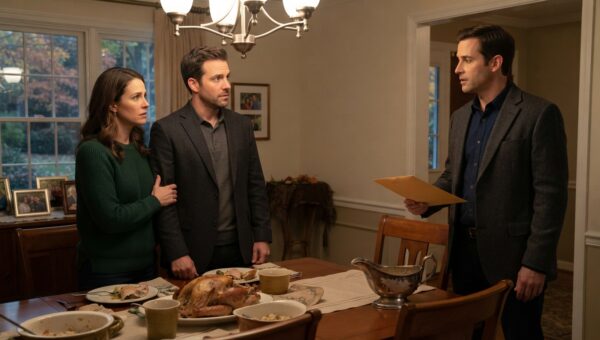
The front door unlocked at nine-fifteen. David stepped into the hallway, keys in hand, stopping dead when he saw the suitcases waiting by the coat rack. He looked up, his eyes meeting mine through the dining room archway.
He didn’t ask what was in the bags. He didn’t try to explain. He just looked at the table, saw the federal seal on the agent’s card, and let his car keys slide from his fingers onto the floor.
I turned away from the window, walked back into the kitchen, and locked the deadbolt behind him before he could take a single step inside.