PART 1
The office of attorney Walter Vance smelled of old paper and peppermint lozenges. Outside the frosted glass door, the Tuesday afternoon rain tapped against the downtown windows of Burlington, steady and gray. I sat on the edge of a stiff leather armchair, my fingers locked tightly around the strap of my canvas handbag.
My aunt Martha had been gone for twelve days. For six of those years, I had driven over every Sunday afternoon to help her manage her groceries, change the heavy storm windows, and listen to her talk about her garden.
When she passed away at eighty-four, leaving behind a small stone bungalow, a ten-year-old sedan, and nearly one hundred and twenty thousand dollars in municipal bonds and savings, I thought the administration would be a straightforward matter of settling her affairs and finally catching up on my own overdue car payments.
Walter adjusted his wire-rimmed glasses, turned the final heavy parchment page of the legal document, and cleared his throat.
“There is one final clause in paragraph fourteen, Clara,” Walter said, his tone measured and professional. “Your aunt left you the house, the vehicle, and the entire liquid balance of one hundred and nineteen thousand four hundred dollars. However, she stipulated that you are not permitted to sell the property or transfer the deed for a period of twelve full months.”
I blinked, staring at him across the polished walnut desk. “Not allowed to sell it for a year? Why would she include a restriction like that?
The roof has two leaks, and the property taxes alone will drain whatever savings I have left by spring.”
Walter folded his hands over the document. “Your aunt was very specific. She instructed me not to answer that question today, but she left a sealed envelope in her home filing cabinet with instructions explaining the condition.”
I almost refused the inheritance right then and there. I lived in a cramped two-bedroom rental across town, and my job as a medical receptionist barely covered my rent and utilities. Taking on an aging house that required immediate plumbing repairs and came with a twelve-month residency mandate felt less like a gift and more like a slow financial trap.
Yet, looking at Walter’s quiet, unreadable expression, I knew Martha had never done anything without a deliberate reason. She had spent her life as a high school algebra teacher and a town council treasurer. She didn’t leave puzzles just to annoy people.
So I signed the initial probate transfer papers, took the heavy brass key ring from Walter’s desk, and drove straight out to Maple Street to move into my aunt’s house.
PART 2
For the first three weeks, my life became a blur of bleach, drop cloths, and contractor estimates. The house smelled of dust and old cedar. I spent my evenings scrubbing grease off the kitchen cabinets and hauling thirty bags of discarded magazines out to the curb. The $119,400 remained untouched in the estate holding account while probate crawled along, leaving me to scrape together cash for plumbers and roofers out of my modest bi-weekly paycheck.
It was late on a Thursday evening when I finally tackled the built-in mahogany sideboard in the dining room. The bottom drawer was stuck, jammed tight by years of swollen wood and a stray wooden spoon wedged in the track.
I yanked it firmly, the wood giving way with a loud pop, and reached my hand into the dark cavity beneath the internal shelf.
My fingers brushed against something taped firmly to the underside of the partition.
I pulled it loose. It was a small brass key attached to a folded index card by a strip of old cellophane tape. On the card, written in Martha’s sharp, sloping ink, were three words: *Kitchen cabinet bottom.*
I walked into the kitchen, pulled open the lower pantry door where the flour and sugar bins sat, and felt along the underside of the lowest wooden shelf. There, tucked behind the rear support beam, was a small, hidden panel held shut by a magnetic latch.
I pressed the panel, and it swung open, revealing a narrow compartment.
Inside sat a small black ledger book with a rubber band around the cover. I carried it over to the kitchen table, sat down under the yellow glow of the overhead light, and slipped the band off.
The pages weren’t filled with household recipes or garden notes. They contained a meticulous list of names, dates spanning the last twenty years, and specific sums of money. Near the back of the ledger, a separate sheet of paper was folded neatly in half.
I unfolded it and read Martha’s handwritten note:
*Clara, if you are reading this, it means you stayed through the winter and didn’t panic and sell the roof over your head. The twelve-month rule wasn’t a punishment. It was a test of patience. Look at entry number forty-two in the ledger, and call Walter’s contact before the year is out.*
PART 3
I turned back to the main section of the ledger, my thumb flipping past rows of names until I found entry number forty-two, dated November 2014.
The name listed was Arthur Vance, followed by a local telephone number and a notation regarding an old municipal drainage easement dispute that had threatened to take away Martha’s southern garden plot decades ago. According to the notes, Arthur had helped her legally defend the property line, refusing any financial compensation at the time. But the ledger also showed that Arthur had fallen on hard times after his retirement, and Martha had spent years quietly setting aside a portion of her savings to repay a debt she felt she still owed.
I didn’t wait until morning. I pulled my phone from my pocket and dialed the number written beside Arthur’s name.
It rang four times before an older man answered, his voice raspy and cautious. “Hello?”
“Is this Arthur Vance?” I asked, keeping my tone steady.
“Yes, it is,” he said slowly. “Who’s calling?”
“My name is Clara Miller. My aunt was Martha Vance—well, Martha Higgins, though people in town always called her Miss Vance.”
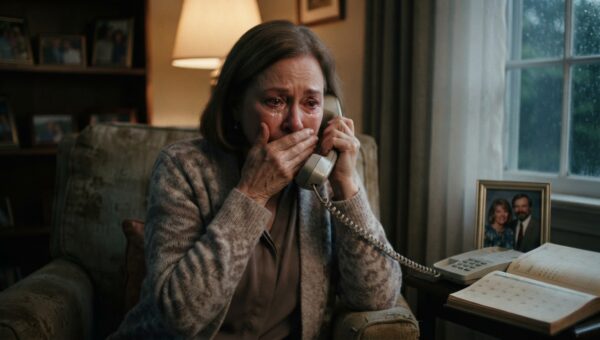
The line went completely silent. I could hear the faint hum of an analog clock ticking in the background on his end, then a sharp intake of breath.
For a long time, neither of us spoke.
Then Arthur asked me one question, his voice barely above a whisper. “Did she finally give you the house?”
“Yes,” I said, leaning back against the wooden kitchen chair. “I’m sitting in her kitchen right now.”
Arthur let out a long, ragged sigh that sounded like years of accumulated weight finally leaving his chest. “Thank God. She worried about you, Clara. She told me she wanted to leave you the house and the savings, but she was terrified you’d flip the property to the developers downtown the moment the will cleared like your cousins kept urging you to do.”
“She made me promise to wait a year,” I said softly.
“She wasn’t just testing your patience,” Arthur explained, his voice growing firmer. “That house sits on the exact corner plot the city needs to complete the new community health clinic bypass. For ten years, developers tried to buy her out for pennies, and she refused every offer. But she knew that once she was gone, someone young and broke might sign the deed away without checking the municipal zoning updates.”
He paused, clearing his throat. “The twelve-month restriction wasn’t a burden, Clara. It was a protective shield. The city council’s re-zoning vote on that corridor happens every November. Once your year is up, the commercial appraisal on that land triples. Martha didn’t just leave you a house. She left you a future.”
ENDING
The rain outside had stopped, leaving the night quiet except for the faint dripping of water from the eaves onto the back porch.
I closed the black ledger, placed it carefully beside Martha’s note on the kitchen table, and looked around the room. The fresh paint on the walls still smelled faintly of linseed oil, and the floorboards beneath my feet felt solid and steady.
I didn’t call the real estate agents the next morning, and I didn’t worry about the roof leaks.
I poured myself a cup of tea, walked over to the window, and watched the first pale streaks of dawn begin to break over the garden fence.