PART 1
The envelope arrived on a Tuesday morning, tucked right between a coupon circular and a utility bill. It was a standard window envelope from the county treasurer, listing a property tax assessment for a small parcel on Willow Street. When I opened it, the balance due jumped right off the page: $1,460. But what made my coffee cup freeze halfway to my mouth wasn’t the amount.
It was the name printed on the billing line as the owner of record.
It was my father’s name. Arthur Miller.
Dad had passed away five months earlier, leaving behind a modest house on Maple Avenue that my older brother Richard inherited under the terms of a will we read in a cramped lawyer’s office downtown. Richard had been the one to handle the final arrangements, clearing out Dad’s paperwork while I took care of the hospital visits during those last grueling months. When I asked Richard if there were any other assets or properties to sort through, he looked me dead in the eye and told me there was nothing else.
“The house is it, Clara,” Richard had said, sliding his car keys into his pocket with a heavy sigh. “Dad didn’t have savings. He didn’t have investments. Just four walls and a leaky roof.”
I believed him. I trusted him because he was my older brother, and because grieving children don’t usually spend their mornings cross-referencing municipal GIS databases with county probate ledgers.
Yet here was a tax notice dated for the current quarter, demanding payment for a small structure on Willow Street that Richard had never once mentioned during the entire estate settlement.
I didn’t call Richard right away. Instead, I pulled my car keys off the hook by the back door, got into my sedan, and drove across town to see what kind of property my father had owned in total secrecy for all those years.
PART 2
The address on the notice led me to a quiet, tree-lined side street on the east side of the county, far from the neighborhood where I grew up. The house on Willow Street wasn’t an abandoned lot or a vacant investment shack. It was a neat, single-story bungalow with white siding, a small front porch, and a patch of well-tended tomato plants growing by the side fence. A child’s red bicycle rested against the porch steps.
I sat in my car for a minute with the engine idling, watching a young woman with a laundry basket walk out the front door and hang a pillowcase on the clothesline.
This wasn’t an empty property. Someone lived here.
I turned off the ignition, stepped out of the car, and walked up the gravel path. The screen door squeaked as I knocked twice on the wooden frame.
The woman came to the door, wiping her hands on a dishtowel, her expression polite but cautious.
“Can I help you?” she asked, looking at my jacket and my sensible shoes.
“I’m sorry to bother you,” I said, keeping my voice steady. “My name is Clara Miller. I’m… well, according to the county tax records, my late father is listed as the owner of this property.”
The woman’s face didn’t go blank with confusion. Instead, her shoulders dropped, and she let out a long, tired breath.
“Oh,” she said softly, opening the screen door a little wider. “You must be Arthur’s daughter. Come inside. We’ve been wondering when someone from the family would finally show up.”
We sat at a small laminate kitchen table while she poured instant coffee into two chipped mugs. Her name was Sarah. She lived there with her husband and their six-year-old son, paying rent every single month to keep a roof over their heads.
“We’ve lived here for eight years,” Sarah explained, looking down at her mug. “Your father was a good man. When we were struggling after my husband lost his union job, Arthur rented us this house for a fraction of market value. He always told us not to worry about the property taxes going up because he handled them directly out of his own account.”
“Every month?” I asked, my fingers tightening around the warm ceramic. “You paid rent?”
“Every single month,” Sarah said. “We wrote the check to Arthur, or… well, lately we gave the checks to your brother, Richard. Ever since your father went into the assisted living facility two years ago, Richard came by to pick up the envelopes in person. He told us he was managing the property trust now that Arthur couldn’t handle the paperwork.”
The kitchen grew very quiet, save for the hum of the refrigerator in the corner. Eight years of rent collected on a house my father owned outright. Thousands of dollars changing hands behind my back while Richard pretended Dad had left nothing behind.
PART 3
I left Willow Street with Sarah’s permission to keep copies of her canceled checks, driving straight downtown to the county records office on Main Street.
The clerk at the counter was an older woman who remembered my father from his days working at the county water department. With a few clicks of her keyboard and a signed request form, she pulled up the complete deed history for the Willow Street parcel.
She slid the printed documents across the scarred wooden counter toward me.
“Here you go, honey,” the clerk said. “Original warranty deed from nineteen-ninety-four. Arthur owned it free and clear.”
I scanned the names, the parcel numbers, and the transfer stamps. My brother Richard’s name was nowhere on the document. He had no legal claim to the property title whatsoever.
Then my eyes dropped to the very bottom of the page, beneath my father’s bold, sprawling signature in black ink. There was a typed codicil added later, dated the same year I turned twenty-one, witnessed by two county notaries whose stamps were faded with time.
My own name was printed beneath Dad’s signature, followed by a series of formal legal clauses. My hands started shaking so violently I had to press the paper flat against the counter to keep the lines from blurring.
*TRANSFER UPON DEATH:*
*To my daughter, Clara Miller, I leave full, unencumbered title to the Willow Street parcel, to be held in her name alone upon my passing.*
I stared at the words until the ink seemed to swim. Dad hadn’t forgotten about this house. He hadn’t left it out of the will by mistake. He had intentionally designated me as the sole heir to the Willow Street property, bypassing Richard entirely because he always knew which of his children looked out for people and which one only looked out for a paycheck.
And Richard had known about it. He had known for five months, ever since he cleaned out Dad’s desk and found the original deed tucked inside the green metal lockbox. That was why he rushed through the probate on the Maple Avenue house, why he convinced me there were no other assets, and why he kept driving out to Willow Street every month to collect rent from a family who thought he was just a helpful landlord.
He was collecting an inheritance behind my back, using Dad’s name to keep the scam running while the tax bills sat piling up in a drawer somewhere in his suburban garage.
ENDING
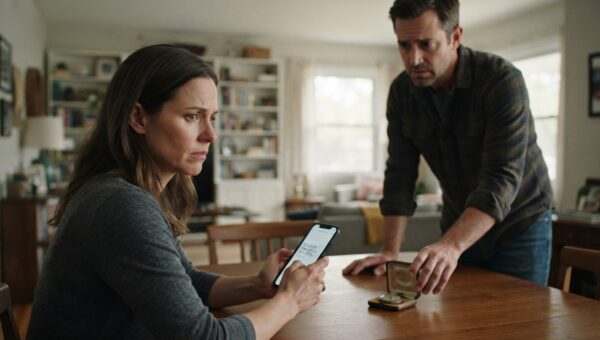
I didn’t call Richard from the courthouse. I drove back to my own house, laid the certified deed and Sarah’s rent receipts out on my dining room table, and picked up my phone.
When Richard answered, his voice had that familiar, rushed cadence he always used when he was busy trying to manage someone else’s schedule.
“Clara? I’m in the middle of a hardware run. Can this wait?”
“No, Richard,” I said, my voice sounding stranger and calmer than I expected. “It can’t wait. I got the tax notice for Willow Street today.”
There was a sharp, distinct intake of breath on the other end of the line. The hardware store background noise vanished instantly.
“What… what are you talking about?” Richard stammered, his tone dropping from impatient to panicked. “There’s nothing on Willow Street. That’s just an old clerical error with the county.”
“It’s not an error,” I said, standing up from the table and looking out the window at the quiet afternoon street. “I’m looking at the deed right now. Dad left the house to me. And I just spent the last two hours talking to the family living there who told me all about the rent you’ve been collecting in cash for the last two years.”
The line stayed silent for a long, heavy five seconds.
“Clara, let’s not be foolish,” Richard finally whispered, all the blustery confidence drained right out of him. “We can work this out. We can split the rental income. There’s no need to involve lawyers or—”
“The house is in my name, Richard,” I interrupted, cutting him off cleanly. “And tomorrow morning, Sarah and her husband are going to start paying their rent to the only person whose name is actually on the deed.”
I ended the call before he could finish his excuse, sliding my phone across the wooden tabletop.
The house was very quiet. I walked over to the kitchen counter, picked up the tax notice with Dad’s name on it, and folded it neatly into my pocket. For the first time since the funeral, the weight in my chest finally lifted, leaving behind a clean, steady space that belonged entirely to me.