I sold our father’s tractor in 1994 without asking my brother. He had left the farm three years before for a tool-and-die shop up in Grand Rapids, but the old 1952 John Deere was half his on paper, just like the acreage and the mortgage we were both supposed to be sharing until the bank started calling on Tuesdays. I told myself he didn’t need it sitting in the weeds.
He needed the cash for whatever life he was building up north, and I needed the three thousand dollars to fix the south corner of the dairy barn before the winter snow caved the rafters right down into the stalls. I signed his name on the title transfer down at the county courthouse because I figured saving the roof mattered more than a signature.
Bobby drove down from Michigan in a rusted-out Ford pickup two days after the scrap hauler hauled the tractor away on a flatbed. He didn’t yell or throw his coffee cup against the wall like our old man used to do when the hay got soaked. He just walked out past the milk house, stood in the empty gravel spot where the John Deere had idled every spring since I was ten years old, and stayed there until the sun went down behind the ridge. When I came out with a wrench in my hand, wiping grease off my thumb, he didn’t even look at me.
He just looked out across the pasture and said, “You could have called.”
That was thirty years ago. We didn’t speak again. Not at Mom’s funeral. Not when my oldest girl got married in the Methodist church down the road. Not when Bobby’s name showed up in the local paper for twenty-five years at the manufacturing plant. We just let the silence grow like sumac along a ditch line, thick and woody and impossible to clear out without tearing up the whole fence. I told myself he was the one who stayed away, and he probably told himself I was the one who pushed him out.
Bobby died in January of this year. Pneumonia took him down fast after his heart started giving out. His widow, Clara, mailed me a heavy cardboard box last week through the post office in Cadillac. Inside, wrapped in brown butcher paper and taped up with yellowed packing tape, was his old tackle box.
It was the green metal one with the peeling latch and the little rust spots around the hinges, the same one we used to carry down to Blackwood Pond when we were twelve and thought a three-pound bass was something worth fighting over.
I set the box down on the yellow linoleum of the kitchen table and popped the rusty latch. It gave that old familiar click, the sound of summer mornings before the debt started piling up. Inside were two fishing licenses, both printed on heavy blue cardstock and dated for the upcoming spring season. One had my name on it, written in that blocky, left-handed printing I knew as well as my own face. Underneath them was a folded piece of yellow legal pad paper with Bobby’s handwriting stretching across the lines.
The note said, The barn looks good from the road. I should have called too. Blackwood Pond, opening day. Don’t be late.
I sat there at the kitchen table for a long time while the refrigerator hummed in the corner and the coffee pot went cold in the basket. The house was too quiet, the way it had been since Clara passed away three years back and left me with the four walls and the ticking clock in the hall. Bobby had been driving past the farm. He had seen the new tin on the south roof that I bought with the tractor money. He had seen it from the state highway, slow-rolling his truck just enough to check if I had kept the place standing, and then he had kept driving because neither of us knew how to put the car in park and walk up the gravel drive.
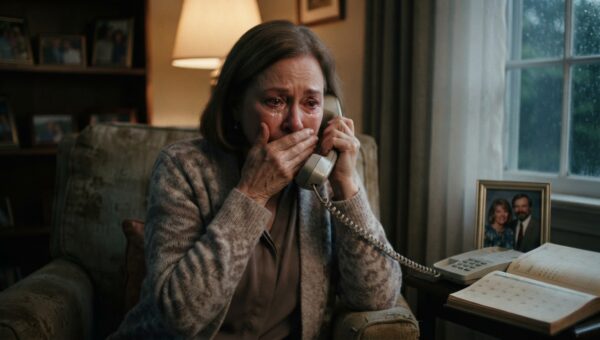
I picked up the black landline receiver and dialed the number Clara had written on the return address slip. It rang three times before she answered, her voice thin and raspy the way it gets when you are seventy-eight and the snow won’t stop piling up against your storm door.
“I got the box, Clara,” I said. My voice sounded rough, like I needed to clear my throat of gravel. “I saw the licenses.”
“He bought them back in November, Leo,” she said, and I could hear the rattle of a spoon against a ceramic mug on her end. “Right after the doctor told him the lungs weren’t going to clear up this time. He sat at the kitchen table with those two cards for two hours. He didn’t want to talk about the tractor, Leo. He never cared about the iron. He just wanted to know if you still had his old spinning rod with the cork handle.”
“I have it,” I whispered. “It’s hanging right over the workbench in the shed.”
“He knew you would,” she said softly. “He told me before he went that he should have answered your letters back in ninety-six, but he was too stubborn for his own good. He said he bought the licenses because he was hoping you’d use them even if he wasn’t there to bait your hook.”
We talked for twenty minutes about things that didn’t matter much, the price of heating oil in Michigan, the way the arthritis gets into your knuckles when the wind shifts off the lake, how fast the grandkids grow up when you aren’t looking. By the time we hung up, the kitchen was dark, and I hadn’t turned on the overhead light. I just sat there with the green tackle box between my elbows, smelling the old lead sinkers and the dried pork rind grease that never did scrub out of the metal corners.
May came in wet and green, the kind of spring where the grass grows an inch a day and the ground stays soft under your boots. Opening day of bass season arrived on a Saturday with a low gray fog hanging over the bottomlands, smelling of damp earth and rotting leaves. I didn’t wait for the sun to clear the tree line. I loaded Bobby’s tackle box into the passenger seat of my truck right beside an old plaid wool jacket that still smelled faintly of pipe tobacco he used to smoke when we were clearing the north forty.
The drive out to Blackwood Pond took twenty minutes down roads we used to ride our bikes over with our poles strapped to the crossbars with old inner-tube rubber. The state had put up a gravel parking lot since the last time I was there, but the water looked the same, dark and flat between the stands of cypress and buttonbush. There wasn’t another car in the lot. The mist was lifting off the surface in long, thin ribbons, white against the dark timber on the far bank.
I carried the green box down the path through the ferns, my joints complaining with every step over the exposed roots. The old wooden dock was gray and splintered, weathered down to the hard grain by thirty years of winter rains and summer heat. I set the tackle box down near the pilings, popped the latch, and laid out two rods, mine with the heavy reel and Bobby’s with the split-cork grip he wrapped with electrical tape back when Eisenhower was in office.
I didn’t catch anything for the first hour. I didn’t really expect to. I just sat there on the edge of the damp wood with my boots dangling over the water, watching the red-and-white plastic bobber drift ten feet out from the dock where the pickerel weed broke the current. The wind stayed down, and the only sound was a red-winged blackbird calling out from the reeds across the cove.
I reached into the tackle box and pulled out one of Bobby’s old carved wooden plugs, the yellow-bellied one with the chipped paint where a pike had taken a chunk out of the cedar back in nineteen-eighty-something. I turned it over in my palm, feeling the tooth marks in the wood.
“You always did buy the cheap lures,” I said out loud to the empty water.
My voice sounded small against the trees, but it didn’t bounce back. It just settled into the fog. I snapped the plug onto my line, pulled back the bail, and cast out toward the middle of the pond where the water ran deep and cold. The line hissed through the guides, and the bobber landed with a soft, clean plop that sent tiny ripples spreading out toward the reeds. I propped the rod against the wooden bench, settled the green tackle box between my feet, and waited for the sun to burn the rest of the mist off the water.