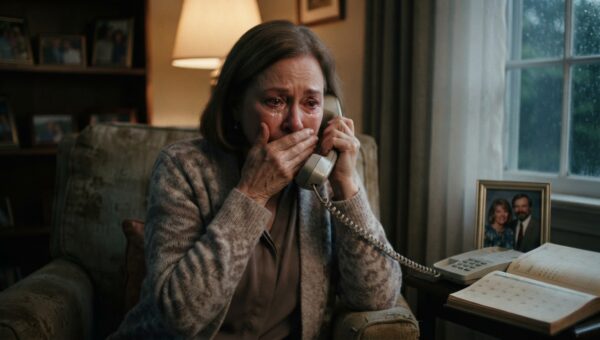
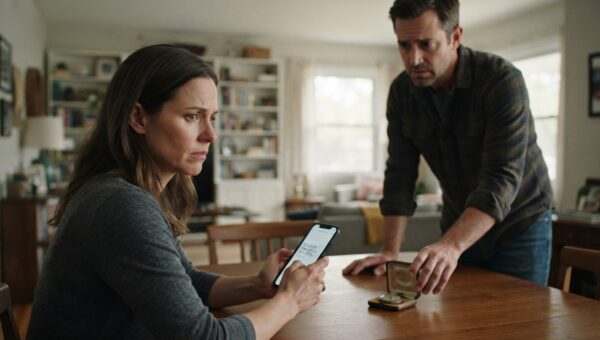
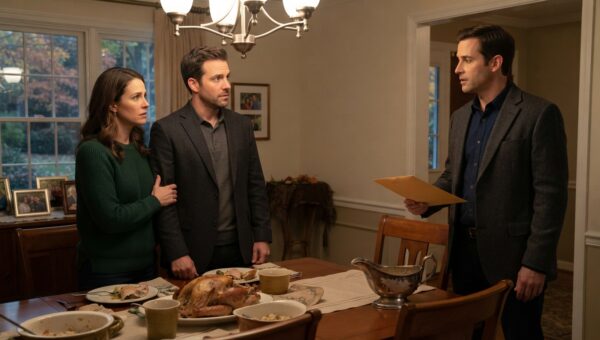
The envelope from the insurance company arrived three days after we buried Dad under the old oak tree at Meadow Hill. I sat at the kitchen table with the white window light cutting across the Formica, my thumb catching on the corner of the paper before I even slid my finger under the flap. Dad died at seventy-four from a massive heart attack while I was downstairs boiling water for his evening tea.
Six years of washing his sheets, tying his shoes, and answering the same three questions every four minutes, and then he was just gone. $500,000 in life insurance was supposed to be split right down the middle between me and Julian. That is what Dad told us a hundred times when his mind was still his own. But the letter resting between my fingers did not mention my name at all.
I read the same two sentences four times because the words kept blurring together into gray ink. We show one beneficiary, updated eight months ago. The check had already been processed and mailed to Julian’s downtown office address. My father had been deep in the fog of advanced dementia for two full years by that point, unable to remember what year it was or who I was half the time, let alone drive across town to alter a binding legal policy.
I didn’t even call first. I grabbed my car keys off the hook, threw my jacket over my shoulders, and drove the twenty-five miles into the city with the engine whining every time I hit the interstate.
Julian’s office smelled like expensive leather and floor wax, completely different from the stale coffee and lavender disinfectant that had coated our house for half a decade. He was sitting behind a glass-topped desk with a white takeout container of pad thai pushed to one side, clicking a silver pen against his teeth. He didn’t even stand up when I walked through the frosted glass door and dropped the insurance letter right on top of his quarterly reports. He just looked at the paper, then up at me, with that smooth corporate smile he used whenever he showed up for Thanksgiving with a store-bought pie and left before the dishes were even cleared.
“You’re making a scene over nothing,” Julian said, chewing slowly. “Dad wanted me to have it. I was there every day.”
The sheer weight of the lie hit me so hard I couldn’t even catch my breath for a second. I slammed both hands down on the polished glass, rattling his water tumbler until the ice cubes clinked together.
“I took care of him for six years,” I shouted, my voice cracking right down the middle. “You came twice a year for twenty minutes just to check if the house was still standing.”
Julian didn’t blink. He didn’t look guilty or flustered. He just reached down slowly into his middle desk drawer, slid out a thick manila folder, and dropped it right in the center of the glass.
“Then explain this,” he said.
I pulled the flap open with trembling fingers and slid out a glossy four-by-six photograph. It was taken inside a cramped, windowless room with acoustic ceiling tiles and cheap gray carpet.
Sitting at a laminate desk was a woman with dark hair pulled back in a clip, wearing a blue cardigan that looked almost identical to the one I wore to the grocery store every Tuesday. Her head was bowed down over a stack of papers, and a manila pen was gripped in her right hand, mid-signature. It was supposed to be me. But I had never set foot in that room in my entire life, and the notary stamp pressed into the bottom corner belonged to an office forty miles away in a run-down strip mall off Route 9.
I sat in my car in the parking garage for twenty minutes with the engine idling, staring down at that photograph until the edges curled slightly against my sweaty palm. My first instinct was to tear the glossy paper into tiny pieces and throw them out the window, but my hands wouldn’t cooperate. Something about the lighting in the picture bothered me. The shadow falling across the woman’s shoulder came from the wrong angle for the overhead fluorescent lights. I zoomed in with my phone camera, squinting at the tiny calendar hanging on the cubicle wall in the background. The date was circled in red marker, matching the exact week Dad’s neurology reports showed he couldn’t recognize his own reflection in the mirror.
I didn’t go home. I drove straight out to Route 9, past the tire shops and the abandoned car lots, until I found the small storefront with faded gold lettering that read Ruiz Notary Services. The bell above the door jingled with a thin, sharp sound that made the man behind the counter look up from his crossword puzzle. Marcus Ruiz was an older man with thick glasses and a yellowing mustache, wearing a short-sleeve button-down shirt with the top button choked tight against his throat. I laid the photograph down on the glass counter right beside his daily ledger.
“I need to see your logbook for October fourteenth of last year,” I said, my voice dropping into a flat, steady register that surprised even me.
Marcus squinted down at the picture, then up at my face, and his eyebrows twitched slightly. He didn’t reach for the book right away. He cleared his throat and shifted his weight from one foot to the other.
“We get a lot of people in here,” he muttered, trying to wave it away. “I can’t remember every signature from eight months ago.”
“I am not asking you to remember,” I said, leaning closer until the counter glass groaned under my palms. “That is my face in that picture, but I have never been in this room in my life. If you notarized a document without proper identification, that is a felony. Now open the book.”
Marcus swallowed hard, turned around slowly, and pulled a heavy, leather-bound register from the bottom shelf, wiping a layer of dust off the cover with his sleeve. He flipped the heavy yellowed pages backward until his finger stopped on a line near the middle of October. I leaned over the counter and read the entry upside down. Name: Helen Vance. Driver’s license number: a string of digits that didn’t match mine by four numbers. And right beside it, a messy thumbprint pressed in black ink.
“A gentleman brought her in,” Marcus whispered, his eyes darting toward the door as if expecting someone to walk in. “He said she was his sister. Said she was nervous about signing family estate papers because of a dispute. She kept her head down the whole time.”
“What gentleman?” I asked.
“Tall guy. Nice suit. Talked real smooth,” Marcus said, pointing a nicotine-stained finger at the ledger page. “Paid me a hundred dollars cash just to expedite the stamp without the usual hassle. Said his name was Julian Vance.”
The air in the small shop felt suddenly thin, like someone had sucked all the oxygen out through the ceiling vents. Julian hadn’t just lied to me; he had planned this out down to the smallest detail, hiring some stranger who shared my general build and hair color to sit at a desk while he stood just out of frame, directing the whole ugly show. I asked Marcus if there was any security footage, but the camera above the door was an empty plastic shell with no wires attached to it. It didn’t matter anymore. I had the ledger entry, the false license number, and Marcus’s trembling admission on a voice recording I had quietly started on my phone the second I walked through the door.
That evening, I pulled out Dad’s medical files from the cabinet in the hallway. I found the clinical notes from Dr. Aris dated right around that exact week in October, detailing how my father had wandered into the neighbor’s yard in his pajamas and failed a basic cognitive test by thinking he was twenty years younger. I also pulled my own electronic pharmacy logs and credit card receipts showing I was three towns over picking up his heart medication at the exact minute the notary stamp was applied. The paper trail wasn’t just clear; it was airtight.
The next morning, I called the insurance company’s Special Investigation Unit directly, bypassing the standard customer service line. I didn’t yell or cry. I simply gave the investigator my father’s policy number, stated that the beneficiary update was executed under fraudulent conditions using an impostor while the insured lacked cognitive capacity, and offered to email the notary logbook entry, the medical power of attorney records, and my own verifiable alibi within twenty minutes. The investigator’s voice changed immediately, dropping all the polite corporate warmth and turning sharp and professional.
Three days later, Julian called me while I was sitting on the back porch drinking my morning coffee. His voice wasn’t smooth anymore. It was tight, high-pitched, and trembling with a frantic kind of panic that sounded almost pathetic.
“The bank account is frozen,” he shouted through the speaker before I could even say hello. “The fraud division from the insurance company just dropped a subpoena on my office. What did you do?”
“I didn’t do anything, Julian,” I said quietly, watching a blue jay land on the wooden fence post near the garden. “You did it all yourself. You just forgot to make sure the person in the photo actually looked like me in the logbook.”
There was a long, suffocating silence on the other end of the line, broken only by the ragged sound of his breathing.
“We can fix this,” he finally whispered, his voice cracking. “We can split it fifty-fifty like Dad wanted. Just call them off.”
“No,” I said. “The only place we are talking about this is in front of an investigator.”
I hung up the phone before he could say another word, turning the screen off and laying it face down on the wooden table. The insurance payout was locked tight pending a full federal and civil fraud review, the initial check was clawed back, and Julian was facing criminal forgery charges that would likely cost him his corporate license. The house was finally quiet again, save for the wind rustling through the tall grass at the edge of the yard. I reached into my cardigan pocket and pulled out Dad’s old steel-cased Timex watch, running my thumb over the scratched glass face. I sat there in the late afternoon sun, breathing in the smell of damp earth and pine needles, feeling completely light for the first time in six years.