The steam was just starting to curl off the rim of my coffee mug when Jenny reached for her knitting needles Tuesday morning, her fingers moving with that quiet, steady rhythm I have watched for forty-three years. She was working on a pale blue scarf for our neighbor’s new baby, her reading glasses sliding an eighth of an inch down her nose the way they always do when she gets lost in a pattern.
I sat across the kitchen table, pretending to read the morning paper, but my eyes kept drifting to the empty space on the coat rack by the back door. That hook used to hold the extra cardigans she made, the heavy wool ones with the wooden buttons she carved herself from maple scraps out in the shed. I didn’t mention them. I didn’t want to bring up what happened last Thursday, though it had been sitting in the back of my throat like a dry bone ever since we walked out of that thrift store on Fourth Street.
We had only stopped at the little local shop because the tomatoes were coming in heavy and I needed a few wooden stakes and some twine. Jenny tagged along just to stretch her legs after a long week of canning preserves. The bell above the door gave that dull, tinny ding it always does, and the smell of old paper and mothballs hit us before we even cleared the linoleum floor.
I headed straight for the garden aisle in the back while Jenny wandered toward the clothing racks, her fingers brushing the sleeves of old winter coats and faded flannel shirts. Then she stopped dead. I heard the sharp intake of breath across the room, the kind of sound a person makes when they step on a stray nail in the dark. By the time I turned around, she was standing motionless under the harsh flicker of a fluorescent tube, her hand resting on the shoulder of a cream-colored cardigan with braided cables down the front.
I walked over, my boots heavy on the stained carpet, and looked at what she was touching. Right beside it hung a hunter-green pullover with brass buttons, and three more sweaters tucked tightly between a rack of polyester jackets. Every single one of them was hers. I knew the stitches as well as I knew the lines on my own palms.
She had spent the entire winter of 2021 working on that cream cardigan for our grandson Leo, sitting by the wood stove late into the night until her knuckles swelled up from the arthritis. Now there was a little white paper tag stapled right through the wool near the hem, with red marker fading under the glare of the bulb. Four dollars and ninety-nine cents. Jenny didn’t cry right away. She just traced the edge of the ribbed collar with one thumb, her breath catching once before she let it out in a long, shaky sigh.
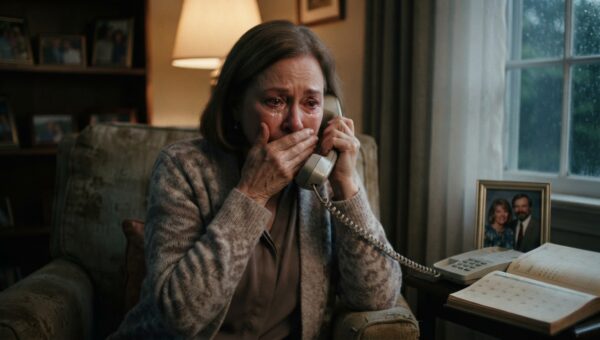
She didn’t make a scene, because Jenny never makes a scene. She just looked up at me with those tired blue eyes, trying to force a smile that didn’t reach her cheeks, and said, It is okay, Bob. Kids probably just get embarrassed by Grandma’s things these days.
That was all she said. But her hands were shaking so badly she could barely tuck her handkerchief back into her apron pocket.
We left the store without the garden stakes, walking back to the truck in total silence. I watched her look out the passenger window the whole way home, her fingers twisted tightly together in her lap. That night, after she finally drifted off to sleep, her breathing heavy and uneven in the dark room, I sat up on the edge of the mattress and pulled my work boots back on. I drove back down to Fourth Street and sat in the cab of my truck across the empty asphalt lot until the thrift store opened its doors at nine the next morning.
Mrs. Gable was behind the counter, wiping down the glass display case with a damp rag. She looked up when the bell rang, squinting through her thick glasses before recognition softened her lined face. I walked straight past the racks, scooped up every single one of the six sweaters Jenny had made, and laid them in a neat pile right on the checkout counter.
You clearing out a closet, Bob? Mrs. Gable asked, her voice dropping into that quiet, careful register people use when they sense something is wrong.
I pulled a twenty-dollar bill and a ten from my wallet and laid them flat on the wood. Keep the change, Clara. I just came to take back what my wife made.
She looked down at the pile, then up at my face, and the truth seemed to settle in her eyes without me having to say another word. She reached out and touched the sleeve of Leo’s cream cardigan, her finger tracing the little initial J stitched in gold thread just inside the collar. I remember who brought these in on Tuesday, she said softly, her jaw tightening just a fraction. A young woman with a blonde ponytail and a blue SUV. Dropped off three large trash bags while her kids were sitting in the back seat playing on their phones. Said she was doing a spring clean-out and needed the space.
Sarah. Our daughter-in-law. Mark’s wife.
I didn’t answer Clara. I just gathered the sweaters into my arms, the wool smelling faintly of cedar and dry storage, and carried them out to the truck. I laid them out across the workbench in the garage, smoothing the sleeves one by one, and then I found Jenny’s old green logbook tucked on the shelf behind my socket sets. Inside were fifty pages of notes, yarn lots, chest measurements, and dates written in her neat, careful cursive. Every single hour accounted for. Every grandchild’s growth spurt tracked like a weather report.
By Friday afternoon, I had my plan set. I called our son Mark and told him to bring the family over for Sunday potluck, adding that we were celebrating nothing in particular, just wanted everyone around the table. Mark sounded distracted, the way he always does when work is pressing down on him, but he agreed. They showed up right at twelve-thirty, Mark carrying a twelve-pack of soda, Sarah trailing behind him with her phone still glowing in her palm, and sixteen-year-old Leo and fourteen-year-old Chloe dragging their feet the way teenagers do when they would rather be anywhere else in the world.
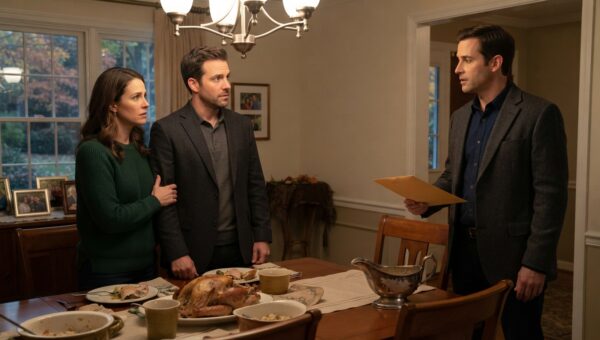
The house smelled like pot roast and rosemary, the way Sunday afternoons always did, but the air in the dining room felt different before anyone even sat down. I had cleared the center of the oak table completely. No serving bowls. No water pitchers. Just six hand-knitted sweaters folded square, each one bearing its little white thrift store price tag fluttering slightly in the draft from the open window.
Mark dropped his keys on the sideboard and stopped in the doorway, his eyes darting from the table to Jenny, who was standing by the kitchen pass-through with a dish towel clutched in her hands. She didn’t know I had gone back to the store. I had kept that part between Clara and me.
What is all this, Dad? Mark asked, his voice dropping into that defensive tone he gets whenever he thinks he is being tested. Is this some kind of joke?
It is not a joke, Mark, I said, pulling out my chair and sitting down at the head of the table. Sit down. All of you.
Sarah crossed her arms, her gold bracelets clinking against her wrist. Oh, come on, Bob. We have got tickets for a movie in town by four o’clock. What is on the table? Those look like… where did you get those?
Chloe leaned over her father’s shoulder, her eyes widening as she recognized the green pullover with the brass buttons. Wait. That is mine. I wore that to the middle school dance three years ago. Why is there a price tag on it?
I opened Jenny’s green logbook on the wood surface, running my thumb down the page where the ink had faded slightly over time. Leo, November twelfth, 2021, I read aloud, my voice sounding flat and heavy in the quiet room. Sixty-four hours of work. Wool imported from a mill up in Traverse City because your grandmother wanted something that wouldn’t scratch your neck. She sat by that window every evening for three weeks while your grandfather hauled firewood, just to make sure the sleeves were long enough to cover your wrists when you reached for the basketball hoop.
Leo stared at the table, his face turning a dark, sudden red. I didn’t know… Mom said we were just donating old clothes that didn’t fit anymore. She said we needed closet space for the new jackets we got at the mall.
Sarah’s face went tight, her chin coming up defensively. We were doing a garage clean-out, Bob! You know how much clutter accumulates in a house with two growing kids. They never wore them to school. The other kids wear hoodies and branded gear, not handmade wool cardigans. They would have been bullied. It was just clutter sitting in a dark bin in the attic.
Clutter, I repeated, looking straight at her across the wood. That isn’t clutter, Sarah. That is your mother-in-law’s eyesight fading under a single floor lamp at ten o’clock at night. That is sixty dollars of yarn she bought with grocery money because she wanted you kids to have something made by someone who actually loves you instead of some machine in a warehouse overseas.
Jenny didn’t say a word. She stayed by the kitchen counter, her head bowed, her hands still twisting that dish towel until her knuckles were white. The silence in the room stretched out so long I could hear the antique clock ticking on the mantel in the parlor, each second dragging like lead.
Mark looked from the sweaters to his wife, then down at the floor, his shoulders sinking the way they used to when he was a boy and got caught lying about the broken window in the garage. He didn’t defend Sarah this time. He just reached out slowly and picked up his own son’s cream cardigan, turning it over in his hands until his thumb brushed the little gold J stitched inside the collar.
Mom, Mark whispered, his voice cracking slightly on the word. Did you… did you really make all of these by hand? Every single winter?
Jenny looked up, her eyes bright with tears she had been holding back for three days. I wanted you to stay warm, Mark, she said, her voice barely louder than a whisper. When the wind comes off the lake in January, store-bought wool isn’t the same. I just wanted you to know someone was thinking about you when you walked out the front door.
Chloe let out a sudden, sharp sob, burying her face in her hands before she ran around the table and threw her arms around her grandmother’s waist, nearly knocking the dish towel from her grip. I am sorry, Grandma, she cried into Jenny’s apron. I am so sorry. I didn’t know. I swear I didn’t know Mom gave them away.
Leo stood there for a second longer, fighting hard against the pride of a sixteen-year-old, before his lower lip started to tremble. He walked over to the table, picked up his old cream cardigan with the thrift tag still dangling from the hem, and pulled it right on over his t-shirt. The sleeves were a little short now, bunching up near his forearms just the way Jenny always feared they would, but he didn’t take it off. He walked straight over to his grandmother and wrapped his arms around her shoulders, burying his face in her gray hair.
We aren’t going to the movies today, Sarah, Mark said quietly, his eyes fixed on the tabletop. He reached over and snapped the little white paper price tag off his son’s sweater, letting it fall silently onto the wood. We are going to help clean out the garage, and then we are staying for dinner.
By six o’clock, the sun was dropping low through the western maples, throwing long, golden bars of light across the kitchen floor. The plates were cleared, the table was wiped down, and the kids were sitting on the back porch with their phones forgotten inside on the counter, talking quietly about old camping trips and the winters we spent cutting firewood together.
Jenny sat in her old wooden rocking chair by the living room window, the evening breeze lifting the white lace curtain just an inch or two. Chloe sat on a low footstool right beside her, holding a pair of smooth wooden knitting needles in her hands while Jenny guided her fingers through the first clumsy loops of a practice square, both of them laughing softly as the yarn tangled and had to be undone. Jenny was wearing the oversized cream cardigan she had made herself years ago, the wool catching the last warm rays of the sun, and for the first time all week, the lines around her eyes weren’t tired at all.