Four years is a long time to think you understand how a person died and what they left behind.
My mother passed away on a rainy Tuesday in October, her breathing slowing down until it just stopped in that small room at Oak Creek Senior Living. I spent three weeks packing up her things afterward, folding twenty-some cotton dresses into cardboard boxes, wiping down the enamel top of her bedside table, and making sure the small silver cross she wore every Sunday ended up safely in my purse.
Daniel didn’t help with any of it. He was too busy with his landscaping business, or so he said, though he managed to show up just in time for the reading of a will that didn’t have much to divide besides memories and a few old photo albums. I remember standing by the open grave while the wind whipped the yellow leaves across the grass, feeling hollowed out and completely alone, even with my brother standing right beside me in his dark wool coat.
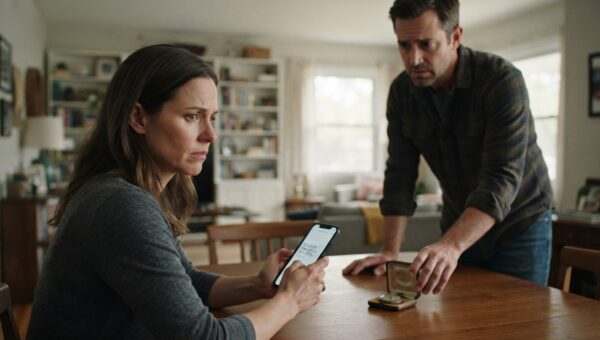
The envelope from the Social Security Administration didn’t look like anything special when it landed in my rural mailbox last month. It was just standard gray paper with the transparent window showing my late mother’s old address, forwarded down to my house through the postal service. I stood right there by the screen door, peeling it open with my thumb while a blue jay squawked in the maple tree out front.
The numbers inside didn’t make sense at first. They listed an ongoing monthly disbursement of $1,907 deposited directly into a regional credit union routing number that didn’t belong to my mother’s estate account. Forty-eight months. Four full years of checks clearing on the third of every single month since she was lowered into the dirt behind St. Jude’s. A total of $91,536 sent out by the federal government for a person who had stopped breathing four years prior.
I sat down at my kitchen table and stared at the line items until my eyes blurred. My mother’s account had been closed by me personally within thirty days of her passing. The death certificate had been mailed certified and stamped with the state seal before November even rolled around. Someone had had to keep the system blind. Someone had had to lie on forms, verify a pulse that wasn’t there, and keep an active stream of public money flowing into a private pocket.
The credit union routing number listed at the bottom of the second page matched the small-business account Daniel used for his trucks.
I didn’t call him right away because I needed the room to breathe. I waited three weeks, watching the leaves turn brown and drop onto the lawn, letting the quiet build up inside my head like pressure behind a dam. Thanksgiving rolled around with its usual forced cheer and smell of burnt butter, and I drove out to Daniel’s house with the official papers folded into four neat squares inside the inner pocket of my coat.
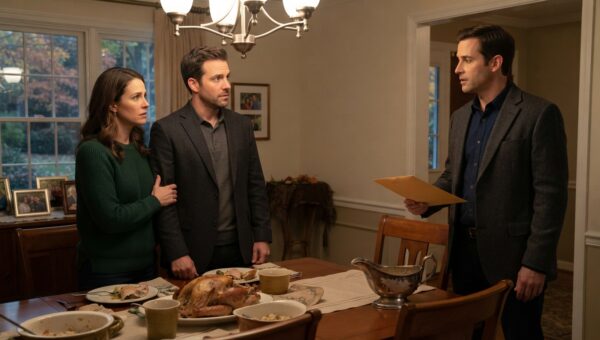
The house smelled like roasted turkey and canned cranberry sauce when his wife, Sarah, let me through the front door. Daniel was standing at the head of the dining table with an electric carving knife in his hand, slicing into the breast of a bird that looked entirely too big for the four of us. The silver blade made a rhythmic scraping sound against the bone as I pulled the folded sheets from my pocket and laid them flat right next to the gravy boat.
Daniel didn’t look up immediately. He just kept sawing at the meat with a small frown between his eyebrows. “You’re late, Clara,” he said, his voice as casual as if we were talking about the weather. “The skin’s going to get cold if you don’t sit down.”
I didn’t sit down. I just tapped my fingernail against the corner of the top page where the Social Security header was printed in bold black ink. “Mother died four years ago, Daniel. Why has her check been hitting your commercial account every month since then?”
The electric knife stopped humming. The silence in the dining room got very thin and sharp, the kind of quiet where you can hear the refrigerator motor clicking on in the kitchen down the hall. Sarah dropped a linen napkin onto her lap and stared straight ahead at the wall.
Daniel set the carving knife down on the platter, wiped his hands on a paper towel, and finally looked at me. His face didn’t turn pale. He didn’t stutter or look around the room for an out. He just gave a short, hard shrug that made his shoulders bunch up under his flannel shirt.
“You can’t have it,” he said, his voice flat and steady. “I took care of her!”
I just stared at him across the table, my hands curling into fists inside my pockets. “You didn’t even visit her the last two years she was in that home, Daniel. I drove out there every Tuesday and Thursday while you were too busy with your trucks.”
“I took care of her paperwork,” he snapped back, his voice rising a notch as he leaned his palms against the edge of the mahogany table. “Someone had to deal with the facility bills when the pension ran dry. The government owes us that money for everything we put into her care.”
“They owe the taxpayers,” I said. “And they definitely don’t owe it to a business account used for buying new mowers.”
“Try proving it,” he muttered, picking the knife back up and turning back toward the turkey like the conversation was already over. “Nobody’s going to care about a clerical lag from an old lady’s file.”
I didn’t yell. I didn’t throw the gravy boat across the room, though I wanted to. I just picked up my coat from the back of the chair, turned around, and walked right back out through the front door without taking another bite of food.
Monday morning, I drove straight to the federal building downtown. I handed the documents, the bank statements, and the dates of my mother’s passing across a high counter to a clerk who looked like she hadn’t slept since 1998. Within two hours, I was sitting in a small, windowless interview room with a man named Special Agent Vance who wore a gray suit that looked two sizes too big and smelled faintly of menthol cigarettes.
He listened to the whole story without interrupting once, taking notes on a yellow legal pad with a cheap ballpoint pen that skipped every few words. When I finished explaining about the Thanksgiving dinner and Daniel’s casual shrug, Vance tapped the end of his pen against the paper and looked up at me with tired, heavy eyes.
“Your brother’s smart enough to set up the diversion,” Vance said, leaning back in his metal chair so it creaked against the linoleum. “But he isn’t a notary, and he isn’t a licensed medical practitioner. He couldn’t sign the annual incapacitation affidavits required to keep those disbursements active without an official secondary signature.”
My chest tightened up. I thought about Daniel sitting in his truck, trying to figure out how to fake a doctor’s handwriting on a federal verification form. “He forged the doctor’s name,” I said. “The home told me their physician retired three years ago.”
“He forged the doctor’s signature, yes,” Vance replied, turning a page on his clipboard to reveal a different document stamped with a blue seal. “But the bank and the agency require a witness guarantor for power-of-attorney renewals when the primary beneficiary is non-responsive. Someone had to sign as a secondary witness certifying that your mother was still alive and residing at a private residence under their supervision.”
I sat there in the hard metal chair, watching the dust motes drift through the beam of light coming off the hallway. “Who?”
Vance didn’t answer right away. He slid a certified copy of a 2021 SSA-787 form across the table toward my side. The paper was crisp, dated three years after my mother was already buried, bearing a signature scrawled in blue ink that looked entirely too familiar.
My hands started shaking so badly I had to press them flat against my thighs to keep them still.
“Your brother needed someone with clean credit and a clear family tie to act as the local guarantor,” Vance said quietly. “Someone who attended the funeral, signed the guest book at the church, and knew the exact dates everyone was looking the other way.”
I looked down at the signature at the bottom of the form. The loops on the capital letters were round and slanting sharply to the left, just like the recipe cards she used to bring over every Thanksgiving with her famous pecan pie.
The co-signer was my Aunt Elena.
Elena had sat in the very front row of the chapel wearing a heavy black veil that she kept dabbing at with a lace handkerchief while my mother’s casket was being lowered into the ground. She had wept louder than anyone else in the room, leaning her head against Daniel’s shoulder and whispering about how cruel it was to lose a sister after such a long and difficult decline. All the while, she was holding the pen that kept the checks rolling into Daniel’s commercial account so she could keep the bank from foreclosing on her own small house down on Miller Street.
“She called me on my birthday,” I whispered, the memory suddenly rising up and choking the air right out of my throat. “She sent me a card with twenty dollars inside and told me how proud my mother would have been of the life I was building.”
“She needed the mortgage arrears cleared,” Vance said, his voice completely devoid of pity. “Our preliminary bank audits show thirty-two separate wire transfers from your brother’s business account straight to Elena’s credit union over the last thirty-six months. Totaling roughly fourteen thousand dollars in consulting fees for services rendered.”
I sat in that room for another twenty minutes, handing over the old funeral guest logs, the family group chat screenshots where Elena complained about her taxes, and every scrap of paper I had kept from the weeks after the funeral. Vance didn’t make any grand promises about justice or healing. He just told me to keep my phone charged and not to mention the federal inquiry to anyone in the family until the warrants were signed by a judge.
The arrests came down on a damp Thursday morning three weeks later.
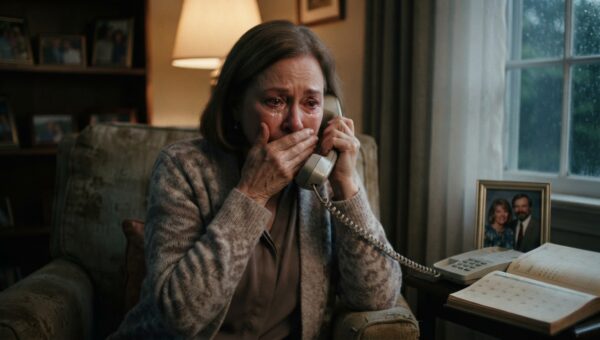
I didn’t watch when the federal marshals pulled up to Daniel’s landscaping yard with their unmarked SUVs and blue windbreakers. I was sitting at my own kitchen table, watching the steam curl off the rim of my coffee mug while the rain tapped against the glass like fingers testing a locked window. My phone buzzed four times in a row with missed calls from cousins I hadn’t spoken to in years, followed by a frantic voicemail from Elena asking if I could please answer my phone because something terrible was happening at her house.
I didn’t call back. I didn’t listen to the rest of the message either. I just deleted it from the log and watched the little notification light blink out until the screen went completely dark.
Later that afternoon, the local paper ran a short brief on page four about federal wire fraud indictments involving an ongoing elder-care benefit scheme totaling over ninety thousand dollars. It didn’t use our last name in the headline, but anyone in town who knew about the funeral and the landscaping business could connect the dots in about ten seconds flat.
By evening, the house was entirely quiet except for the low hum of the refrigerator and the ticking of the clock on the wall. I walked into the front hallway, took down the small framed photograph of my mother from where it hung beside the mirror, and carried it back into the living room. I set it squarely on the mantelpiece, right in the center where the light from the lamp could catch the silver frame without any shadows falling across her face.
There were no more letters in the mailbox the next morning. Just a few circulars and an electric bill that I paid online before the sun even cleared the top of the oak trees across the street. I locked the front deadbolt twice, turned off the hall light, and listened to the dead silence settle into every corner of the house like dust after a long storm.