PART 1
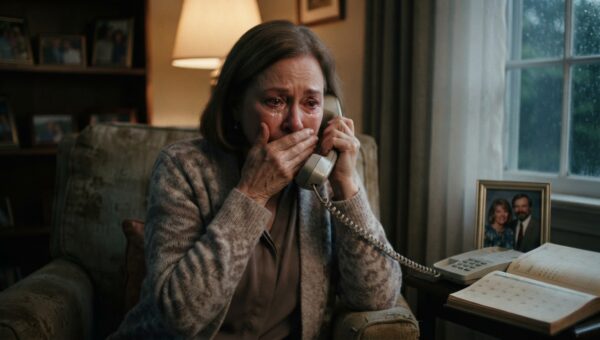
When Karen called me on a Tuesday morning crying so hard she could barely get the words out, my first instinct was just to make it stop. I am sixty-eight years old, and after thirty-one years of living alone since my husband passed away, the sound of family in distress still goes straight to my chest like a physical blow.
She told me that her boutique shop in downtown Savannah was two weeks away from defaulting on its commercial lease. The landlord had given her a final notice for $15,000, and if she didn’t clear the balance by Friday, the locks would be changed and everything she had built over four years would vanish into a bankruptcy filing.
My son David got on the phone a minute later. His voice was steady, tired, and heavy with a kind of quiet shame that always gets to me. He told me they had tried every local credit union, but because of a messy equipment loan they took out last year, no bank would touch them.
“Mom, we wouldn’t ask if there was any other way,” David said, and that phrase did more work than any argument could have. “We just need a bridge loan for ninety days. As soon as the spring inventory clears, we pay you back every single cent. With interest, if you want.”
I didn’t want interest. I wanted my son and his wife to be secure. For three years, I had watched Karen pour her life into that little shop, working six days a week, designing window displays, driving up to Atlanta for wholesale markets. I knew how much it meant to her. I also knew that my own savings account from forty years of working as a medical receptionist was sitting there doing very little. I had $42,500 tucked away in a high-yield money market fund meant for whatever old age had waiting for me. Taking out $15,000 would leave me with enough of a cushion for emergencies, provided my car didn’t break down or my roof didn’t leak.
“Let me look at my statements,” I told them. “I’ll make the wire transfer this afternoon so you don’t have to stress through the rest of the week.”
Karen came over that evening with a stack of papers she called a formal repayment agreement.
It was typed up on computer paper, complete with a signature line, a schedule of three monthly payments starting in June, and a formal heading at the top. I didn’t read every single clause of the fine print because David was standing right behind her, nodding and looking relieved. I signed it on my kitchen table, right next to the empty mug where I had poured her chamomile tea. She folded the paper carefully, slid it into a manila folder, and thanked me twice before hugging me so tightly my ribs clicked.
The wire transfer went out through my bank the next morning. For about ten days, everything felt normal. David called on Sunday to say thank you again and to invite me over for pot roast the following weekend. But when Saturday rolled around, Karen called at 9:00 AM to cancel.
“Mom, something came up with the inventory delivery,” she said, her voice unusually clipped. “Can we take a rain check?”
I told her not to worry about it. But by the following Tuesday, when I tried to call David to ask if he could help me lift a heavy box of books down from my attic closet, his phone went straight to voicemail.
I tried again that evening. Voicemail. I dialed Karen’s number. It rang once, then clicked over to a recorded message telling me the subscriber was not available.
By Thursday, a cold knot had formed under my ribs. I decided to drive over to the boutique downtown, thinking maybe they were just buried under a rush of customers. When I pulled up to the storefront at 2:00 PM, the “OPEN” sign was dark. Inside, the racks were completely bare. The wooden display tables where she used to keep folded sweaters and scented candles were stacked neatly in the corner. A white piece of paper was taped to the inside of the glass door.
It wasn’t a notice of default from the landlord. It was a handwritten sign saying: “Temporarily Closed for Relocation. See You in Atlanta!”
PART 2
I stood on the sidewalk for a long time, staring at the empty shop through the glass until my reflection blurred against the glare of the afternoon sun. A woman came out of the framing shop next door, wiping her hands on a rag, and looked at me with a mild sort of pity.
“Are you looking for Karen?” she asked.
“Yes,” I said, my voice sounding thin even to my own ears. “Do you know when she’s reopening?”
The woman gave a short, dry laugh that had no humor in it. “Honey, she hasn’t been open here for two months. She packed up the big items back in March. The landlord changed the locks in April because she hadn’t paid rent since the winter. She cleared out whatever was left late last week after midnight.”
The words hit me one by one like cold gravel. Two months. She hadn’t been in trouble of losing the lease next week. The lease had already been canceled weeks before she ever called me crying on the telephone.
I walked back to my Buick, sat in the driver’s seat with the air conditioning humming, and tried to steady my hands enough to turn the ignition. Every memory of that phone call replayed in my head, but this time with the sound stripped away, leaving only the mechanics of the lie. The desperate breathing, the shaking voice, the fabricated deadline. It wasn’t a business emergency. It was an extraction.
When I got home, I pulled out my laptop and logged into my bank portal. I stared at the account ledger. The $15,000 wire hadn’t gone to a commercial landlord or a business escrow account. The routing number on the confirmation receipt matched a personal credit union account held jointly by David and Karen. Below that, I saw another outgoing transaction from two days prior: a $4,800 payment to a local travel agency, followed by a charge for car rental insurance in Orlando.
They weren’t saving a boutique. They were funding a trip, or clearing a debt they had hidden from me, or both.
I called David’s office line at the county water authority where he worked as an administrative supervisor. The receptionist put me through without hesitation.
“Mom?” David answered, his voice dropping an octave as soon as he heard my tone.
“I’m at the shop, David,” I said. “The storefront is empty. The neighbor told me you lost the lease back in April.”
There was a long, heavy silence on the line. I could hear the faint clicking of his computer keyboard in the background, then nothing at all.
“Mom, let me explain,” he started, the defensive edge already creeping into his throat. “Things got complicated—”
“You have twenty-four hours to put my $15,000 back into my account,” I told him, keeping my voice lower and steadier than I felt. “If it’s not there by tomorrow at noon, I’m taking the repayment agreement and the bank transfer records straight down to the sheriff’s office and filing a report for elder financial fraud under false pretenses.”
“Mom, you can’t do that,” he said, his voice rising sharply. “That’s my wife you’re talking about. We’re family—”
“You stopped being family when you treated me like an ATM with a pulse,” I said, and pressed the red end call button before he could say another word.
PART 3
The next morning, at 11:15 AM, my phone buzzed on the kitchen counter. It wasn’t David. It was a notification from my bank app: an incoming wire transfer of $15,000, labeled as an account adjustment.
Ten minutes later, my doorbell rang.
I didn’t rush to the door. I finished wiping down the kitchen counter with a damp sponge, rinsed it out in the sink, and then walked slowly down the hallway. When I opened the door, Karen was standing on the porch alone. Her hair was pulled back into a messy clip, and she looked smaller than she did at my kitchen table, but there was still that hard, defensive tilt to her chin that told me she wasn’t actually sorry for what she did. She was only sorry she got caught.
“Can I come in?” she asked, her voice tight.
“No,” I said, keeping my hand on the edge of the door. “You can say whatever you have to say from out there.”
She crossed her arms, shivering slightly in the morning breeze. “David was beside himself last night. You threatened to ruin his career over a misunderstanding. We were going to pay you back as soon as the tax refund hit—”
“The money is back in my account, Karen,” I interrupted. “The transaction is finished. Don’t ever call me again, don’t ever come to this house, and don’t expect a card or a phone call on your birthday or any other holiday for as long as I draw breath.”
She stared at me for a second, her mouth opening to form some argument about family loyalty and forgiveness, but she must have seen something in my face because the words stopped before they came out. She turned around, walked down my front steps without another word, and got into her silver sedan. I watched her back out of the driveway and drive down the street until the car turned the corner and disappeared behind the neighbor’s oak tree.
I closed the front door, locked the deadbolt, and walked back to the kitchen.
ENDING
The house was completely quiet except for the hum of the refrigerator. I picked up the empty chamomile mug from the counter, washed it in warm soapy water, and placed it upside down in the wire rack to dry. Then I sat down at the kitchen table, opened my checkbook, and updated the ledger balance. The numbers were back where they started, but the page looked different now, cleaner in a hard, unyielding way. I closed the cover, put the pen back in the ceramic cup by the window, and didn’t look at my phone for the rest of the day.