The espresso machine behind the counter of the Daily Grind was rattling with that familiar, hollow shriek it always made when the pressure valve needed cleaning. It was 7:14 on a Tuesday morning in late November, and the linoleum by the pastry case already had gray salt smears from twenty pairs of boots. I was knee-deep in foam, pulling double shots for a line that backed up past the napkin dispenser and out the front glass.
I don’t usually mind the morning rush. You get into a rhythm where your hands move faster than your brain, tapping portafilters and wiping steam wands without having to look. But by the time the church bell down the block struck seven-fifteen, the air in the shop had turned sour with the particular kind of impatience that only downtown commuters can manufacture. People were tapping screens, shifting briefcases from hand to hand, and sighing at the ceiling like three minutes in a coffee line was a personal violation.
That was when the bell above the door gave its little high-pitched jingle, and Clara stepped inside.
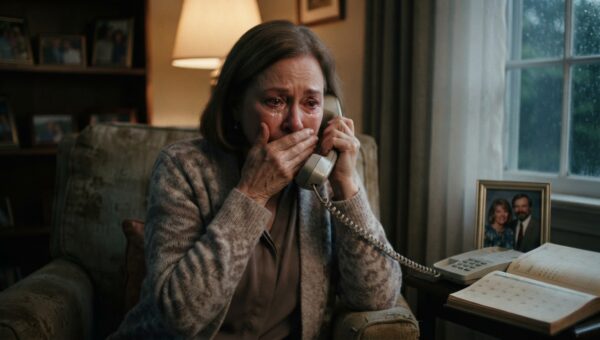
She didn’t push past the line or make a scene. She just drifted in on a gust of damp wind that smelled of wet asphalt and dead leaves. She was wearing a thin beige cardigan that had seen much better years, with buttons missing down the front, and her ankles looked frail and blue beneath her trousers.
She moved with that tentative, bird-like shuffle of someone who was trying very hard not to take up any space in a world that clearly had no room for her.
The line shifted irritably around her as she made her way toward the end of the counter, her fingers tucked deep inside her sleeves as if she were trying to squeeze a little bit of circulation back into them. Her lips had that pale, bruised tint that happens when the temperature drops below freezing and you have nowhere warm to go.
She waited until I looked up from wiping down the steam wand before she spoke. Her voice was barely a dry rattle, lost underneath the grinding of the coffee beans in the hopper.
“Could I please have some hot water?” she whispered.
The man standing right behind her in a tailored wool overcoat let out an audible, wet sigh through his nose.
He had a gold-plated fountain pen tucked into his breast pocket and a silver watch that caught the fluorescent light every time he checked the time.
“Unbelievable,” the man muttered, not even bothering to keep his voice down. “Some of us have places to be, and people are treating the diner like a homeless shelter.”
A few heads snapped around in the line. A woman in a navy trench coat near the pastry case tightened her scarf and looked pointedly at the menu board above my head, as if Clara were an offensive odor she was trying to ignore. The silence that followed was heavy and cold, the kind of stillness that makes you ashamed of your own breathing.
I looked at Clara’s hands. They weren’t just cold; they were shaking with that fine, uncontrolled tremor that comes from three days of sleeping in a drafty municipal hall after an electrical fire took half your apartment building down on Fourth Street.
I knew about the fire because I read the local blotter over my morning toast, and I recognized her face from the small black-and-white photo the parish newsletter ran under the relief appeal. She was too proud to ask for charity, but her body had finally given up the pretense.
So I didn’t reach for a paper cup.
Instead, I reached past the espresso tamper and grabbed a heavy ceramic bowl from the drying rack beneath the counter. I filled it to the brim with the hearty beef and root vegetable stew I had simmering in the slow cooker for the lunch rush, thick with carrots and potatoes that had been soaking in broth since dawn. I grabbed a thick slab of sourdough bread from the crusty heel of the loaf on the cutting board, buttered it fast, and set the whole steaming arrangement down on the zinc counter right in front of her.
“The hot water machine is out of order,” I said, keeping my voice loud enough for the man in the wool overcoat to hear every syllable. “You’ll have to settle for this. It’s on the house.”
Clara stared down at the bowl. A thin wisp of steam curled up past her chin, catching the light from the pendant lamps. For a second, she didn’t move at all, as if she were trying to remember if food was something she was still allowed to have. Then her lower lip started to quiver, and she reached out with both hands, wrapping her blue-veined fingers around the hot ceramic sides of the bowl as if she were trying to draw the heat straight through her skin.
“Thank you,” she managed, her voice cracking right down the middle. “Thank you so much.”
She didn’t try to push her way to a table. She just carried the bowl over to the small wooden booth by the front window, sitting down with a cautious sigh that seemed to deflate her shoulders by an inch. She tore off a tiny piece of the bread, dipped it into the broth, and ate it with her eyes closed.
The line behind her had gone completely still.
The man in the wool overcoat stood frozen with his wallet half-pulled from his back pocket, his eyes fixed on the back of Clara’s sweater. I went back to wiping the counter, but my rag wasn’t doing much more than spreading the coffee rings around in circles. No one ordered anything for nearly a minute. The only sound in the shop was the dull thrum of the refrigerator compressor in the back.
Then the man in the overcoat snapped his wallet shut with a sharp *clack*.
He didn’t look at me when he walked back up to the register. His jaw was locked so tight the muscle beneath his ear was jumping like a trapped beetle. He dropped a black leather folio onto the laminate top and stared down at the grain for three seconds before he looked up at me.
“I want to pay for her meal,” he said. His voice was lower now, stripped of all that boardroom snap it had carried two minutes ago.
“You don’t have to do that,” I said. “It was on the house.”
“I know it was,” he said, and his voice cracked just a little bit on the edge. He reached into his coat and pulled out a gold business card holder, but he didn’t hand me a card. Instead, he dropped a heavy titanium credit card onto the rubber mat. “Run the bowl. And add a five-hundred-dollar gift card to that.”
I blinked at him. “A five-hundred-dollar gift card?”
“To help anyone else who comes in here hungry today,” he said, and finally he looked over his shoulder at Clara, who was buttering her second piece of bread with trembling fingers. “Or tomorrow. Or whenever.”
When I asked him what made him change his mind so fast, he didn’t give me some slick corporate answer. He just kept staring at the small gray hairs at the nape of Clara’s neck where her sweater collar didn’t quite reach.
“She looks exactly like my mom before she passed away last April,” he whispered, and for the first time I noticed the dark violet bruises of exhaustion under his own eyes. “I got so caught up in closing a regional merger and chasing quarterly numbers that I forgot what really mattered. I didn’t even visit her on her last birthday because I had a conference in Chicago. Thank you for reminding me what an idiot I’ve been.”
His name was Marcus Vance, according to the name embossed in tiny silver letters on his folio. He was a senior logistics consultant for a firm down on State Street, a man whose entire life was apparently measured in arrival times and penalty clauses. But right then, standing in a puddle of melted slush by my pastry case, he looked like a kid who had just been caught running through a neighbor’s garden.
“You should go sit with her for a minute,” I told him, sliding his receipt across the zinc. “She’s got nowhere to be right now, and I think you two have something in common.”
Marcus hesitated, his fingers twitching against the edge of the counter as if he were fighting an invisible tether that usually pulled him toward his car. Then he picked up his briefcase, walked over to Clara’s table, and stood there for a second until she looked up from her bowl.
I couldn’t hear what he said to her, but I saw the way her shoulders relaxed when he pulled out the vinyl chair opposite her and sat down without waiting for an invitation. They didn’t talk like strangers who had met five minutes ago. They talked like two people who had both spent the last forty-eight hours out in the cold without knowing how to get back inside.
The rest of the morning didn’t go back to normal. The rush didn’t vanish, but the texture of it changed entirely.
When the woman in the navy trench coat stepped up to the register a minute later, she didn’t look at her phone. She laid a twenty-dollar bill on the counter beside her regular medium skim latte and pointed toward Marcus and Clara’s table with her chin.
“Put that toward the card the gentleman just started,” she said, her voice dropping into a quiet, confidential register. “My mother lived through the flood in ’96 down in Elmira. She wouldn’t take a handout either, but she never turned down a hot biscuit.”
That twenty started something that I don’t think any of us could have predicted. By ten o’clock, the high school kids who came in for morning study periods had dropped their loose change into the jar by the register. The retired mail carrier who usually sat in the corner with a crossword puzzle brought a stack of clean wool mittens from his car trunk and left them on the end of the pastry case with a handwritten note scribbled on the back of a deposit slip: *For anyone whose hands won’t warm up.*
Clara stayed until nearly noon. By the time the lunchtime crowd started drifting in, her daughter had arrived, a tired-looking woman in a faded postal uniform who had spent all morning driving from precinct to parish trying to find her mother after the shelter reported her missing. The reunion wasn’t cinematic; there were no grand speeches or running embraces. Just a long, quiet hug by the front door where the daughter buried her face in her mother’s neck and cried hard enough to make the front window fog over.
Marcus stayed until they left. He didn’t check his watch once the whole time he sat with them, and when he finally stood up to leave for his office, he left a crisp, folded fifty-dollar bill tucked underneath his coffee mug with three words scrawled on a napkin: *Call your mother.*
That afternoon, after the last customer cleared out and I finally had a chance to mop the gray slush tracks off the linoleum, I took down the old brass community board that usually held apartment listings and dry-cleaning flyers. I cleared off the thumb tacks and the curling business cards for lawn services and guitar teachers.
I replaced it with a plain piece of dark pine that I found in the back storage room, sanded down until it was smooth enough to touch without getting a splinter. Using a wood-burning iron I found in my husband’s old tackle box, I burned a single line right across the center of the grain, keeping the letters blocky and uneven the way people write when they mean every single word.
Beside it, I drove a small row of brass cup hooks to hold the colorful sticky notes and prepaid meal tokens that Marcus’s gift fund had started. The shop was quiet again, the kind of quiet that feels like a house after the company has gone home and the lamps are turned down low. But the radiator in the corner was humming a steady, heavy bass note that kept the chill away from the glass, and for the first time all year, the air inside didn’t smell like burnt toast and rushing. It smelled like cedar, and soup, and people who had finally remembered where they were.
Warmth is always on the house.