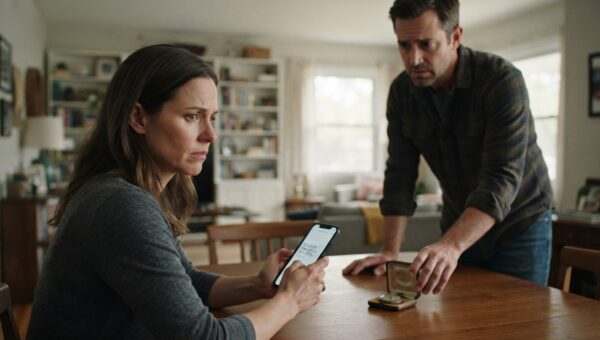
The linoleum under my boots had that particular gray scuff near the deli scales that smelled faintly of old bleach and lukewarm ham shavings. I was standing under those bright grocery store lights with a single pumpkin in one hand and my phone buzzing against my palm. The message came through from Lucas while families around me were arguing over frozen turkeys and pie crusts.
Mom… I know you just bought us the house, but Sarah’s dad doesn’t want you at Thanksgiving. I stared at the small glass screen until the letters blurred together into silver smudges. My thumb hovered over the keyboard. I wanted to type out every single deposit slip from the last six years. I wanted to remind him whose name was on the wire transfers that cleared the escrow office three months ago. I wanted to tell him about the cold winters in that drafty apartment after his father passed away when I kept the ledger books balanced down to the last penny just so he could go to college without owing a dime. Instead, I deleted the whole mess and typed one word. Okay. Then I left the cart right there in the produce aisle, walked past the automatic sliding glass doors, and got into my sedan.
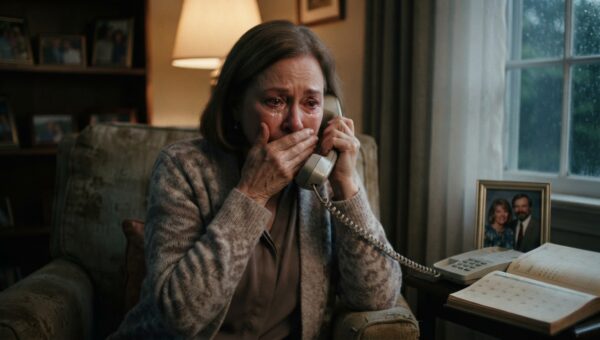
The apartment was quiet when I let myself in. Too quiet. For months, I had been sleeping on an old pull-out couch in the spare room of my second-floor walkup because I cleared out my bedroom furniture to help them furnish their guest suite.
My back had been acting up ever since, but I always told myself it was a small price to pay for family. I sat down at the small laminate kitchen table and poured myself a cup of lukewarm water from the tap. My fingers felt stiff. I kept looking at the blank wall where my late husband’s framed photograph used to hang before I gave it to Lucas for their hallway. Arthur Vance had engineered this from day one. I knew it as soon as Lucas got engaged to Sarah. Arthur was a man who talked a lot about heritage and breeding while living on credit lines that would make a bank teller faint. He looked down his nose at anyone who actually earned a living with calloused hands or an ink-stained ledger. I had spent forty years keeping books for a local lumber yard, and Arthur acted like working for a living was a contagious skin condition.
By Tuesday morning, the fog in my head had cleared away, replaced by something cold and precise. I called Wayne over at the firm down on Fourth Street. Wayne had helped my husband wind up his small business back in ninety-eight, and he always said my records were cleaner than most certified accountants. He didn’t ask any unnecessary questions when I walked into his office carrying a red accordion folder. He just pulled his glasses down his nose and motioned for me to sit. We spent two hours going through every piece of paper from the closing on the Hawthorne street property. The wire receipts, the bank statements, the title insurance policies. The system had a few quirks when you bought a house outright without a traditional mortgage, especially when the buyer was listed as an individual guarantor providing all the liquid capital. Wayne leaned back in his leather chair, the leather groaning under his weight, and tapped a yellow legal pad with his fountain pen.
Margaret, he said quietly, did you sign a quitclaim deed? I shook my head. No, Wayne. I never signed anything transferring the primary interest. They wanted it in their names for the tax credit, but the closing attorney advised holding the master assignment until the spring restructure. Wayne let out a slow whistle through his teeth. Well, then technically you are the primary lienholder of record on an unsecured advance of three hundred and fifty thousand dollars, and your name is still right here on the municipal holding title until the final municipal filing goes through on Friday.
I drove home along the river road, watching the gray water lap against the concrete pilings. The radio was off. I liked the hum of the tires against the asphalt better than any talk show. When I got back to the apartment, I didn’t turn on the television. I sat at the kitchen table and opened the red folder again. The numbers didn’t lie. Three hundred and fifty thousand dollars. That was every penny I received from selling the family home where Lucas took his first steps and learned how to ride a bicycle without training wheels. I had traded thirty years of memories for a brick colonial with a manicured lawn in the Northridge subdivision, believing I was buying my son a secure future. Instead, I had purchased a ticket to my own exclusion. Arthur had probably told Sarah that having a retired bookkeeper with sensible shoes and an old sedan at the family Thanksgiving table would ruin the aesthetic for his country club friends. Sarah, of course, folded immediately because her entire personality was built on pleasing a father who measured human worth by the brand of their wristwatch. And Lucas went along with it because it was easier to cut his mother loose than to stand up to a man who rented a luxury box at the stadium.
Wednesday dragged by like a wet Sunday in February. I spent the afternoon sorting through old receipts in the shoebox under my bed, finding grocery lists from when Lucas was ten and handwriting samples from my husband that made my throat tighten up before I pushed them aside. I wasn’t going to cry anymore. Tears were for people who still had illusions to lose, and I had run completely out of those. My phone buzzed once around four o’clock with a text from Lucas. Mom, are you coming over for leftovers on Friday or something? Arthur says we’re having people over again, so maybe Sunday? I didn’t answer him. I placed the phone face down on the laminate tabletop and went back to packing my leather handbag. I dropped in my house keys, the spare set that unlocked the heavy mahogany front door of the Hawthorne property, the one Arthur thought was entirely his family’s domain now.
Thanksgiving morning arrived with a thin crust of ice on the puddles outside my apartment window. The sky was the color of dirty zinc. I put on my good wool coat, the navy one with the velvet collar that I bought on sale back when my husband was still alive, and checked my reflection in the hallway mirror. My hair was iron-gray and cut short for convenience. My eyes looked tired, but there was a hard, straight line to my mouth that I hadn’t seen there in years. I drove across town with the heater blowing tepid air against my shins. The Northridge subdivision was quiet except for the smell of roasting turkey drifting from chimney flues and the sight of late-model luxury SUVs parked three deep in every circular driveway. Number fourteen sat at the end of a cul-de-sac, its red brick gleaming under a fresh coat of morning frost. There were three foreign cars in the driveway, including Arthur’s silver sedan, parked right where my old station wagon used to sit when I brought them groceries two weeks ago.
I cut the engine and sat in the car for a full minute, watching the smoke curl from the chimney. Through the front living room window, I could see shadows moving behind the plantation shutters. I opened the car door, my boots crunching on the frozen gravel of the driveway, and walked up the front steps without rushing. When I reached the heavy mahogany door, I didn’t knock. I took the brass key from my coat pocket, slid it into the deadbolt, and turned it until the latch clicked open with a heavy, satisfying sound. The warm air hit me first, smelling of sage and expensive wine. I stepped into the foyer just as Arthur was walking out of the dining room carrying a crystal decanter, laughing at something someone said in the kitchen. He stopped dead on the hardwood floor, his face going stiff as a board, the amber liquid sloshing against the crystal rim. Margaret, he said, his voice dropping an octave into that practiced, condescending baritone. You must have the wrong address. The private gathering is this afternoon.
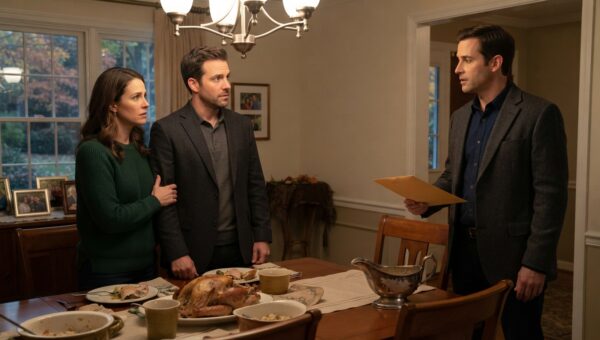
I pulled the red folder out from under my arm and laid it flat on the mahogany entry table right beneath the decorative silver bowl. I don’t think so, Arthur, I said, my voice sounding steadier than my hands felt. This is my foyer. Lucas appeared from the kitchen then, wiping his hands on a linen napkin, his expression shifting from annoyance to pure, blind panic as soon as he saw my face. Mom, what are you doing here? You can’t just walk in. Sarah came out right behind him, her silk dress rustling against the baseboards, her eyebrows pulling together in that tight, familiar scowl. What is going on? Why is she here? Arthur set the decanter down so hard the crystal cracked against the wood. Get out of this house, Margaret. This is private property. We have guests arriving in twenty minutes. I looked right past him at my son, who was standing there like a stranger in his own foyer, staring at the floor. Lucas, I said softly, tell your future father-in-law whose name is currently registered as the primary equity holder on the municipal title until the county clerk processes the transfer scheduled for Monday morning. Lucas didn’t say a word. He just swallowed hard, his Adam’s apple bobbing in his throat.
Arthur stepped forward, his chest puffed out like an aging bantam rooster. That paperwork is a formality. We signed the occupancy agreement. You gave us this house as a gift. It was an advance on an inheritance, Arthur, I said, stepping closer until he had to look down into my eyes. And gifts come with terms. Especially when the recipient decides the giver isn’t fit to sit at the table. I opened the red folder and slid the municipal lien notice across the polished wood toward him. As of eight o’clock this morning, Wayne filed the formal restriction halting the deed transfer due to unfulfilled occupancy covenants and disputed liability. Until the three hundred and fifty thousand dollars is returned in full, or the court rules on the breach of family agreement, this house remains under my direct financial encumbrance. You are currently living in my investment property without a valid lease.
Sarah let out a sharp gasp, her hands flying to her mouth. Daddy, what is she talking about? What mortgage? You said the house was clear. Arthur didn’t answer her. His face had turned a dull, mottled shade of red, and his mouth kept opening and closing like a fish out of water. He reached out to grab the paper, but I pulled the folder back against my coat. You have thirty days to vacate, Arthur, I said quietly. Or you can start paying me market-rate rent starting tomorrow morning at five thousand a month. Lucas finally found his voice, a thin, cracking whisper that sounded like breaking twigs. Mom, please. Don’t do this here. Not in front of everyone. You should have thought about that before you let someone else write the guest list, Lucas, I said.
I turned around, my boots clicking against the hardwood floor of the foyer, and pulled the front door open. I didn’t look back as I walked down the front steps, leaving them standing in the warm, expensive silence of a house they didn’t own. The cold November wind hit my face as I got back into my sedan, but it didn’t feel biting anymore. It felt clean. I drove back across town, stopping only once at the corner diner for a black coffee that tasted like burnt beans and comfort. When I let myself into my second-floor apartment, the rooms were quiet and smelled faintly of old paper and tea. I hung my navy coat on the peg by the door, walked over to the small laminate table, and picked up my phone. I blocked Lucas’s number without reading the three new messages glowing on the screen. Then I sat down by the window with my coffee, looking out at the bare branches of the oak tree in the municipal park across the street, finally ready to write the next line for myself.