My son Marcus didn’t even look up from his phone when Chloe made me pay for the toilet paper.
I’m 71 years old, and my entire month’s check comes out to exactly $1,486 after Medicare takes its bite. Every single Friday, rain or shine, I get behind the wheel of my old Honda Civic and drive 42 miles each way to their house in the suburbs so I can babysit Leo and Maya.
I don’t charge them a dime. I wouldn’t dream of it, because they’re my grandchildren, and helping out family is just what you do when you’re raised the way I was back in East Tennessee. But last Friday, after I walked out of the half-bath down the hall, Chloe was standing right there with a roll of soft-quilted paper in her hand like she was guarding the vault at the First National Bank.
“Clara, we buy the triple-ply,” she said, her voice tight and thin the way it always gets when she’s trying to sound polite while being mean. “With you and the kids going through it the way you do, we’re going to need you to chip in for the bathroom supplies on your visits. It comes out to six dollars and eighty-four cents for your share this month.”
I stood there in their shiny kitchen for a second, my purse strap heavy on my shoulder, while Marcus just kept scrolling through his screen at the kitchen island. “Six eighty-four?” I asked, thinking she must have meant something else.
“This isn’t a free hotel,” she snapped, dropping the loose change math right into the air between us.
I didn’t yell. I didn’t make a scene because I was looking at little Leo drawing pictures of dogs at the kitchen table, and I didn’t want him hearing his mother talk to me like I was a bad room tenant.
I just reached into my coin purse, pulled out a five, a one, and a handful of silver, and counted it out on the granite counter until every penny was accounted for. I handed her the $6.84 and never argued a single word.
The quiet ride home that evening felt longer than usual. My hips ached from the vinyl car seat, and the gas gauge was sitting right near the empty line, reminding me that my grocery envelope for the week was already looking pretty thin. But it wasn’t the gas money that bothered me. It was the way Marcus had stared so hard at his little rectangle of glass while his wife treated her own mother like a nuisance guest staying past checkout time.
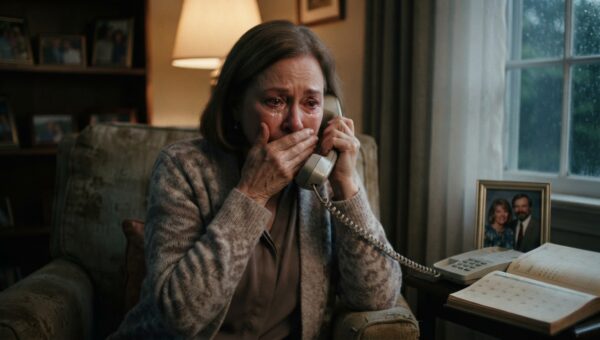
By Wednesday morning, the phone rang while I was sitting at my small laminate table with a cup of instant coffee. It was Marcus, sounding all bright and breezy the way he always does when he wants a favor.
“Mom, Chloe and I found this great little bed and breakfast package down in Savannah for the long weekend,” he said, and I could hear the rustle of travel brochures in the background. “It’s just three days, Friday through Sunday. We were wondering if you could stay at our place and watch Leo and Maya? You love having them over anyway, right?”
A week ago, I would have dropped everything, packed my overnight bag, and driven the 42 miles with a casserole in the trunk. But something inside me just settled into a cold, hard place. I thought about the six dollars and eighty-four cents sitting in Chloe’s little ceramic pig on their kitchen counter. I thought about the math of my life.
“I can do that, Marcus,” I said, keeping my voice very level. “What dates are you needing me there?”
“Friday morning around eight,” he said, already sounding distracted. “Thanks, Mom. You’re a lifesaver.”
They dropped the kids off right on schedule Friday at eight o’clock, looking tanned and excited in their travel clothes, with two matching canvas duffels piled by the front door. Chloe gave me a quick peck on the cheek that smelled like expensive vanilla before she grabbed her purse.
“There’s some bread and peanut butter in the pantry,” she tossed over her shoulder as she walked out to Marcus’s SUV. “Try not to let Maya watch too much television, and make sure you wipe down the counters after lunch.”
Then the door clicked shut, and it was just me and the two kids in that big, quiet house.
Leo is eight and has a bottomless pit for a stomach, and Maya is five and won’t touch anything green if her life depends on it. By Friday night, the pantry Chloe left behind turned out to contain half a sleeve of stale saltines, some off-brand macaroni, and a jar of generic peanut butter that was separated into oil and gray paste. There was no milk, no fresh fruit, and nothing in the refrigerator except a shriveled lime and some leftover takeout containers that smelled faintly of old garlic.
I looked at Leo’s little face when he asked if we could have spaghetti for dinner, and I made my first decision of the weekend. I didn’t use my gas money to drive all the way back to my house. Instead, I put the kids in the back of the Honda and drove down to the local supermarket.
I picked up ground beef, a jar of good sauce, a box of noodles, a gallon of whole milk, fresh strawberries because Maya loves them, whole wheat bread, deli turkey, eggs, and a few yogurts. Total at the register came to $64.12. I paid with my debit card, slipped the paper receipt directly into my coat pocket, and didn’t think twice about it.
Saturday morning rolled around bright and early with Maya coughing a little cold into her pillow, which meant a trip to the pharmacy down the street for children’s chewable Tylenol and some saline drops. That little errand cost $18.45, plus a box of tissues we actually needed. At noon, when the kids were running around the backyard and working up an appetite, the local pizza place dropped off a medium pie because I was too worn out from walking behind Maya all morning to cook from scratch. That delivery was $28.50, tip included.
By Sunday afternoon, our little three-day camp had gone through three gallons of gas running back and forth to the park because the kids were climbing the walls inside that carpeted, sterile house, plus fresh groceries for Sunday dinner, snacks, juice boxes, and a pack of AA batteries for Leo’s remote-control car that stopped working halfway through Saturday afternoon. Every single time I pulled out my worn leather wallet, I took the little white paper slip from the cashier and slid it neatly into my coat pocket alongside the others.
I didn’t do it out of spite at first. I did it because I needed to keep track of my grocery money so I wouldn’t bounce my electric bill at the end of the month. But as the pile in my pocket grew thicker, something else happened. The numbers started telling a story.
Sunday evening arrived with the sound of tires crunching on the gravel driveway right around six o’clock. Marcus and Chloe walked through the front door looking rested, carrying little bags of souvenirs and talking about the nice seafood dinner they’d had the night before. The house was spotless, the kids were bathed and sitting quietly watching a cartoon, and dinner dishes were washed and put away in the cupboards.
Chloe kicked off her sandals and looked around the living room with that critical eye of hers, checking the corners for dust like an inspector on a naval base. “Everything go okay?” she asked, not really looking at me.
“Everything went just fine,” I said, standing by the kitchen island and pulling my old cloth coat around my shoulders.
Marcus tossed his keys onto the counter with a loud clatter. “Thanks again for watching them, Mom. I know it’s a lot to ask for three whole days.”
“It was no trouble at all, Marcus,” I said.
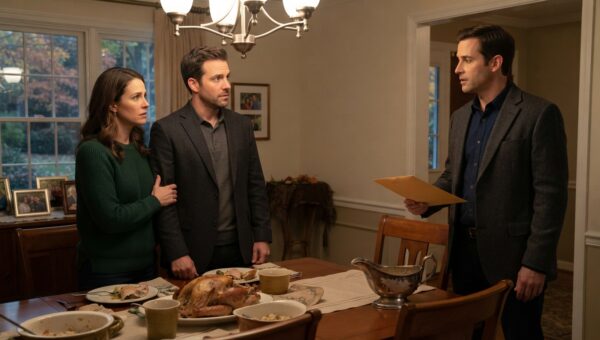
I reached into my coat pocket, pulled out the neat little stack of papers I’d rubber-banded together, and laid them flat against the granite right where Chloe had dropped her car keys. Beside them, I left a small, folded piece of lined notebook paper with my handwriting on it.
Chloe frowned, reaching out with one manicured finger to tap the top slip. “What’s this?”
“Those are the receipts from the weekend,” I said, my voice as steady as an old stone wall. “Groceries, pharmacy supplies, the pizza delivery for the kids on Saturday, the gas for the errands, and the battery pack for Leo’s car. Total comes out to three hundred twenty-seven dollars and eighteen cents.”
The kitchen went so quiet you could hear the refrigerator humming down the hall. Marcus stopped unzipping his jacket, his hands frozen right at his beltline.
Chloe’s face went from pale to a hot, mottled red in about two seconds flat. “Are you out of your mind?” she shot out, her voice rising an octave. “You’re charging us for babysitting? You said you’d do it for family!”
“I didn’t charge you a single penny for my time, Chloe,” I said, looking right into her eyes without blinking. “Just like I’ve never charged you for the hundreds of hours I’ve driven out here over the last five years. But you taught me a very valuable lesson last week about how things work in this house.”
I pointed my finger down at the neat row of white paper slips, each one stamped with the date and time.
“You told me that this isn’t a free hotel,” I continued, speaking softly now so the kids wouldn’t hear us from the living room. “You made sure I paid six dollars and eighty-four cents for the paper I used in your bathroom. So I figured, if we’re running a proper business here, you wouldn’t expect me to subsidize your household food and medical supplies out of my fourteen-hundred-dollar monthly retirement check. A hotel doesn’t stock the pantry for free, does it?”
“Mom, come on,” Marcus finally stammered, stepping between us with his hands up like he was trying to calm down a stray dog. “She didn’t mean it like that. You’re taking it the wrong way.”
“Was she joking when she stood in this exact spot and made me count out my quarters for toilet paper, Marcus?” I asked him. “Because she looked awfully serious to me.”
Chloe crossed her arms tight over her chest, her mouth pinched into a hard little line. “You’re being petty,” she snapped, her voice shaking with anger. “You come over here, you eat our food, you use our utilities, and now you pull this little stunt because you’re mad about a roll of tissue? That money is ridiculous. We never agreed to buy all that extra stuff. You bought name-brand cereal and expensive strawberries we didn’t ask for!”
“I bought what your children needed to eat for three days because your pantry had nothing in it except saltines and paste,” I said. “And if you look at that note beside the receipts, you’ll see I also calculated what my time and mileage would cost if we were charging standard rates. I left that part off the total as a family discount.”
Marcus looked down at the paper, his eyes scanning the lines where I’d written out the math in my steady, old-fashioned cursive. He didn’t say anything for a long time. I could see the exact moment he realized that his mother had finally stopped absorbing the cost of his wife’s stinginess.
“We’re not paying that,” Chloe said, her voice dropping into a dangerous hiss. “This is extortion. You’re punishing us because you’re bitter.”
“You don’t have to pay a cent of it, Chloe,” I said, turning toward the front door and picking up my handbag. “Consider it a parting gift. But that also settles our account permanently.”
Marcus looked up fast, his brow furrowing. “What do you mean, permanently?”
“I mean Friday babysitting is over,” I said, pulling my coat sleeves down over my wrists. “If you need someone to watch Leo and Maya next weekend, you can hire a professional service in town. They charge twenty-five dollars an hour, and I hear they even bring their own toilet paper.”
Before either of them could say another word, I walked past them out the front door and down the porch steps into the cool evening air. My old Honda was waiting by the curb, its headlights cutting a yellow path through the gathering dusk.
The drive back down those 42 miles took an hour because of the slow traffic on the state highway, but my hands felt light on the steering wheel for the first time in years. When I pulled into my driveway and turned off the engine, the house was dark and still.
I didn’t turn on the television when I got inside. I just walked back to my small kitchen, filled my favorite ceramic mug with hot water, and sat down at my own wooden table by the window. Outside, the night was quiet, and my car keys sat untouched right where I’d dropped them by the back door, resting in the peaceful, empty dark.