PART 1
The tax assessment notice arrived on a Tuesday in a plain brown window envelope, addressed to me at my apartment across town instead of the historic house on Oak Street where I had lived for three years while keeping our father alive. I stared at the bold print listing the commercial rezone value at three hundred eighty-four thousand five hundred dollars.
My name was nowhere on the document. Instead, beneath the property description, a neat block of handwritten lettering crossed out my forwarding address and redirected the mail with a sharp black pen stroke that I recognized instantly as Chloe’s handwriting.
For three years, while Chloe flew in twice a year from Seattle for long weekend visits and stayed at the boutique hotel downtown, I spent my evenings tracking oxygen tank deliveries, managing complex medication schedules, and arguing with Medicare billing departments. My father had retired from the county road department decades ago, buying the old two-story Victorian when the neighborhood was still mostly orchards. By the time his lungs finally gave out in late autumn, the city had expanded all around us. Developers had been circling the block for five years, offering cash to elderly homeowners willing to sell out to commercial strip-mall planners.
My father always told us the same thing over his morning coffee.
The house stays in the family, he would say, tapping his scarred thumb against the kitchen table. Marcus takes the house, Chloe gets the investment portfolio grandfather left, and everything is square. I trusted that arrangement because I trusted my father, and because I naively believed my younger sister, who worked as a corporate acquisitions attorney at a high-end firm up north, respected the quiet sacrifice I was making by putting my own life on hold to spoon feed a dying man.
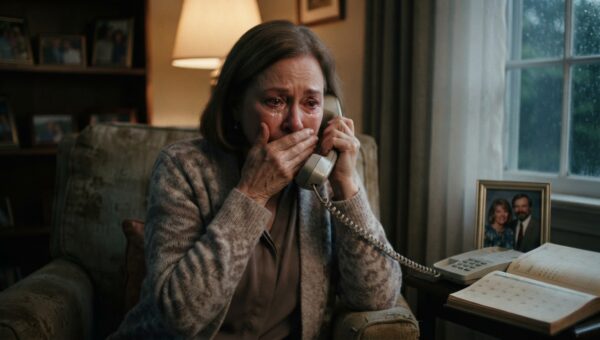
When Dad passed away in his own bed with only me holding his hand, Chloe arrived thirty minutes after the county coroner. Her first move wasn’t to look at his photograph or sit in his favorite armchair. She walked straight to the roll-top desk in the parlor, pulled out a thick leather binder labeled estate simplification, and asked me where Dad kept his safety deposit box key. I handed it to her because my chest felt hollow with grief and my brain was fogged from forty-eight straight hours without sleep. I thought she was just being efficient. Lawyers love efficiency.
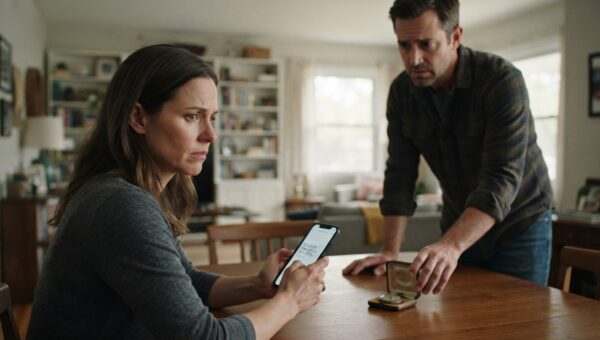
It was only when I tried to log into the county property portal to update the utility billing name that the system locked me out. The parcel number had been severed from my login credentials. A brief call to the county clerk’s office produced a cold digital copy of a warranty deed recorded four days before my father died, bearing a shaky, medication-blurred signature that supposedly transferred one hundred percent of the historic family property solely into Chloe’s name. No split. No consultation. Just a clean, legally airtight wipeout executed while our father was too weak to lift a glass of water without help.
PART 2
I didn’t call Chloe immediately. Instead, I drove out to the house on Oak Street, letting myself in with the heavy brass key that had hung by the pantry door since I was a kid.
The place smelled of stale lemon polish and the cheap pine cleaner Chloe used during her rushed, twenty-minute cleaning sweeps before estate appraisers walked through. Cardboard packing boxes were stacked shoulder-high in the hallway, marked with colored tape and bold developer labels.
On the kitchen island sat my father’s old gray tablet, still plugged into the wall outlet where he liked to watch local news replays. I picked it up, pressed the home button, and found his email client wide open. Chloe had left her webmail session active in a background tab. The most recent message was a frantic thread between her and a commercial acquisitions manager named Vance Miller, detailing a firm closing date for the property and confirming that the municipal rezoning contingency had already cleared.
The timeline hit me like a physical blow. Chloe hadn’t just swooped in after the funeral. She had been engineering the transfer for six months, scheduling her flying visits around real estate board meetings while I was busy changing my father’s bedsheets. Every time she brought him those fancy organic smoothies during his final weeks, she had also brought a notary public friend from out of county who charged fifty dollars a signature to witness elderly men sign papers they were too exhausted to read.
I walked back to my father’s bedroom, my boots clicking against the bare hardwood floors where the rugs had already been rolled up and hauled away. That was when I noticed the bottom drawer of his mahogany dresser was slightly out of alignment. I pulled it all the way out, reaching my hand into the dark, dusty cavity behind the frame where he used to hide his spare truck keys and old hunting licenses. My fingers brushed against a heavy manila envelope sealed with red wax.
Inside was something Chloe had clearly missed during her aggressive purge of the house. It was a formal handwritten codicil, drafted on legal notepad paper in my father’s familiar, stubborn block letters, explicitly revoking any unilateral property transfers made without my explicit countersignature. At the bottom, witnessed and signed by his long-time primary care physician Dr. Hayes and a retired court reporter who lived across the alley, was a clear, unambiguous warning: If Chloe tries to steal the roof over Marcus is head, this paper makes it null and void.
Beneath the codicil lay a stack of faded pharmacy receipts and handwritten ledger pages documenting forty-two thousand three hundred dollars in uncovered out-of-pocket medical supplies, specialized mattress rentals, and emergency plumbing repairs that I had paid for out of my own municipal manager salary over the past three years. Every single dollar was accounted for in neat rows, paired with my bank statements and canceled checks.
Chloe walked through the front door ten minutes later, clicking her designer heels against the bare floorboards with a stack of closing contracts tucked under her arm. She froze when she saw me standing by the bedroom door with the manila envelope in my hand. For a second, the polished corporate mask slipped, revealing the panicked, small-minded girl we grew up with.
You shouldn’t be here, Chloe said, her voice dropping into that tight, controlled register she used when she was losing an argument in a boardroom. The property is under contract. The escrow deposit clears on Friday. You are just a tenant at sufferance now, Marcus. Dad wanted it this way. He wanted the estate simplified so we didn’t waste time in probate court.
PART 3
I didn’t yell. I didn’t throw the manila envelope at her or call her a thief, though every muscle in my jaw wanted to. I walked past her toward the kitchen, setting the papers down next to her laptop.
Dad didn’t want it simplified, Chloe. He wanted me protected, I said quietly. And Dr. Hayes is still practicing medicine right down on 4th Street, which means he remembers exactly who was in this room six months ago when you brought in your little paperwork shortcut.
She laughed, though it sounded thin and brittle in the hollow room. Judges don’t care about handwritten notes on scratch paper, Marcus. Deeds recorded in the county courthouse trump sentimental garbage every single time. My buyers are scheduled for their final walk-through tomorrow morning at ten. If you are here when they arrive, I am calling the sheriff for trespassing.
She turned on her heel and walked out, slamming the front door so hard dust rattled down from the plaster molding in the hallway.
Instead of arguing with her on the porch, I drove straight downtown to a low-ceilinged office off the courthouse square. I sat across the desk from a real estate litigator named Thomas Vance, a graying man who looked like he had spent forty years watching greedy relatives tear families apart over timber rights and strip-mall frontage. He read through my father’s handwritten codicil twice, examined the doctor’s signature, and whistled softly through his teeth.
This isn’t just a codicil, Thomas said, tapping the paper with the blunt end of a yellow pencil. This is a properly witnessed declaration of undue influence with contemporaneous medical attestation. If we file a formal caveat and slap a legal lis pendens on the title before tomorrow morning’s escrow deadline, her commercial buyers will pull out before you can blink. Title insurance companies hate clouded ownership more than anything on earth.
By four o’clock that afternoon, the court clerk’s stamp was officially logged on the property jacket. The title was frozen solid.
The next morning at nine-fifty, I stood on the wide front porch of the Oak Street house when Chloe’s pristine white SUV pulled into the driveway. She climbed out alongside two men in expensive gray suits carrying digital measurement tablets and briefcases. Chloe looked confident, her blond hair pulled back into a sharp knot, her expression set in concrete.
As they walked up the concrete steps, Chloe spotted me leaning against the porch railing with a large cardboard box containing my remaining coffee mugs and photo frames.
I told you to be gone, Marcus, she snapped, her voice carrying across the quiet morning street. Security is on the way.
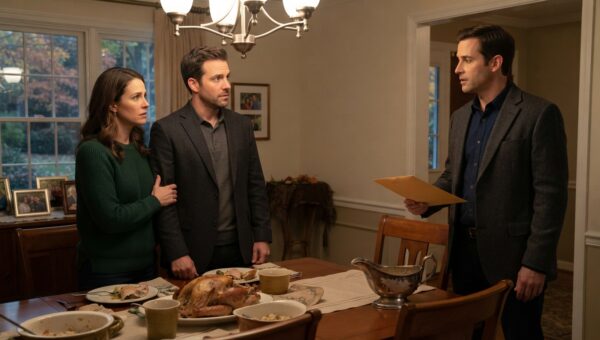
You don’t need security, Chloe, I said, handing her a folded copy of the court-stamped lis pendens notice. You just need your buyers to know that the deed they are about to close on is currently tied up in a multi-year fraud investigation that includes your out-of-county notary friend.
The lead buyer took the paper from Chloe’s trembling hand, glanced at the court stamp, and handed his tablet to his associate. He looked at Chloe, shook his head slowly, and muttered something about breach of warranty before walking back down the steps toward their car without another word.
ENDING
The legal battle didn’t last years. Once Chloe’s firm realized she had used a compromised notary to execute a sole-ownership transfer while our father was under heavy palliative sedation, her partners quietly suggested she take an extended leave of absence to resolve her personal matters.
We settled out of court four months later under the supervision of Thomas Vance. The commercial sale was permanently canceled, and the property title was restored to its rightful standing under my father’s original verbal and written intent. In exchange for avoiding a formal disbarment hearing and criminal fraud charges, Chloe signed over her remaining claim to the estate, walking away with her share of our grandfather’s old investment portfolio while I kept the house.
I spent the following autumn stripping away the peeling white paint on the porch railing and planting three rows of yellow roses along the front fence where my father used to sit. Using an independent mortgage broker, I bought out Chloe’s split share at a fair appraised valuation, ensuring every cent of my forty-two thousand three hundred dollars in out-of-pocket expenses was fully reimbursed from the estate account before any final divisions were made.
Today, the historic house doesn’t look like a developer’s parking lot. The front room has been converted into a quiet community support office for local families navigating terminal home hospice care, run by retired nurses who remember what real dedication looks like.
I still have my father’s old gray tablet sitting on the kitchen table. I keep it unplugged, its dark screen reflecting the afternoon light coming through the clean glass of the parlor window, right where he always said it belonged.