The fifty-dollar bill felt dry and crisp between my fingers when I slid it across the laminate counter at the county animal shelter that Tuesday morning. Brenda didn’t even look up from her paperwork, her pen clicking a steady, mechanical rhythm against the metal clipboard while the harsh fluorescent lights overhead hummed a low, migraine-inducing drone. She stamped a pink carbon slip and tossed it into a plastic tray beside a cup of lukewarm instant coffee that had formed a skin over the top.
“Just standard intake,” Brenda said, her voice completely flat like she was reading off a shipping manifest for auto parts. “Sign at the bottom of the yellow sheet and leave the leash on the hook by the door.”
Rusty didn’t fight me. He never fought anybody in his entire ten years of life, which was probably his biggest flaw. He just sat there on the scuffed linoleum floor with his golden coat dull from weeks of neglect in my new apartment, pressing his heavy, graying snout firmly into the palm of my hand one last time. His breath smelled faintly of old kibble and rain, that familiar, comforting scent I had known since Julian brought him home from the breeder in Lamar back when we both still had hair on top of our heads and mortgage payments that didn’t keep us awake until three in the morning.
Right before Brenda reached out to take the frayed nylon lead, Rusty dropped something wet and heavy onto my left sneaker.
It was his favorite ratty chew toy, a chewed-up piece of yellow rope canvas he had dragged through mud puddles, creek beds, and three different apartment moves. I looked down at the soggy rope, then up at Brenda, who was already tapping her acrylic fingernail against the counter.
“We don’t take toys,” she muttered. “Infectious control. Toss it in the bin by the exit.”
I didn’t toss it. I picked it up, wiped the dampness against my jeans, and stuffed the ruined piece of canvas deep into the pocket of my canvas work jacket before I turned around and walked out into the gray Missouri drizzle without looking back once. My phone buzzed in my pocket three separate times on the short drive to the warehouse where I managed shipping logistics now, but I ignored it because the district manager was already breathing down my neck about the missing pallet of copper fittings from bay four.
Life had become a relentless series of small compromises ever since Julian vanished from the firm downtown four months ago. One day he was the senior financial analyst signing off on corporate restructuring reports, and the next day his office desk was cleared down to the bare wood, his parking pass turned in, and his phone ringing out into an empty voicemail box that nobody at the company seemed authorized to discuss. The police called it a voluntary departure because his Honda Civic was found parked near the Greyhound station in St. Louis with a half-empty cup of gas station coffee on the dash, but Julian didn’t drink gas station coffee. Julian drank black roast from a French press he carried everywhere like a security blanket.
I spent fourteen days trying to balance the demands of the new management position, the strict no-pet policy of the downtown loft I had rented because the commute was shorter, and the gnawing, persistent guilt of leaving Rusty in a concrete run with a bunch of barking strays.
I kept telling myself it was temporary. I told myself the shelter had adoption coordinators who placed older goldens with families out in the county who had fenced-in yards and plenty of porch space for an aging dog to stretch his legs.
Then came the call on a Thursday afternoon when the rain was hammering against the loading dock bay doors so hard we could barely hear the intercom. It was Brenda again, her tone just as devoid of human warmth as it had been on intake day.
“Number forty-two,” she said without even saying hello. “The golden. He didn’t wake up from his sleep this morning. Vet tech found him around six. It happens sometimes with older dogs when you pull them out of their home environment. Drop by before five if you want us to handle the cremation paperwork.”
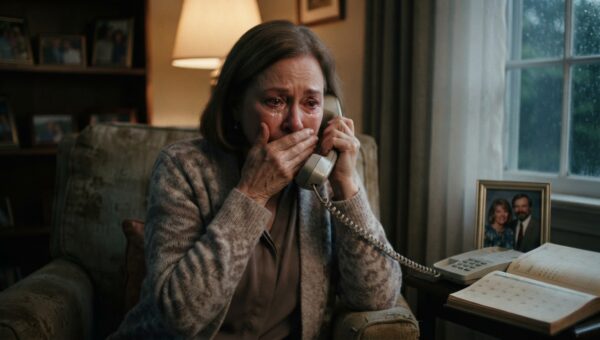
I didn’t cry right then. I just stood there by the warehouse sorting table with the receiver pressed against my ear while a forklift beeped its rhythmic warning in reverse behind me. I told her to go ahead with whatever communal arrangement they had, hung up the phone without another word, and walked straight back to my locker to grab my jacket. The guilt didn’t arrive as a sharp knife; it settled into my chest like a cold, wet sponge that I couldn’t wring out no matter how hard I tried.
By the time I got back to the loft, the apartment felt suffocatingly quiet. No heavy tail thumping against the baseboards, no wet nose nudging my knee while I tried to balance my checkbook at the small laminate kitchen table. I stripped off my damp work jacket, reached into the deep pocket, and pulled out Rusty’s ratty chew toy. The canvas was stiff now, dried out from sitting in the locker, and smelled faintly of old river mud and dog slobber.
I decided right then that it was time to throw it out along with the empty kibble bowl sitting by the pantry. There was no sense keeping reminders of a failure that ended the way this one did. I grabbed a pair of heavy kitchen shears from the drawer, jammed the sharp metal tip into the rotting center of the canvas rope, and yanked upward to slice it in half before dropping it into the metal trash can under the sink.
The fabric tore with a loud, dry pop, and something heavy and metallic hit the bottom of the steel bin with a sharp clang that echoed off the cabinet walls.
I froze with the shears still gripped in my right hand, my breath catching in my throat as I crouched down on the cool linoleum to peer into the dark space beneath the sink. Resting right on top of an empty coffee tin was a small, cold rusted key, no bigger than the ones used for an old padlock or a safety deposit box. Wrapped tightly around the shaft of the key with a piece of rotting yellow twine was a scrap of white printer paper folded into a tiny square.
My hands were shaking so badly I dropped the shears. I reached into the garbage bin, my fingers brushing against the foul-smelling canvas until I pinched the paper and pulled it out into the dim light of the kitchen. The paper was slightly damp, but the ink written across it in fine, precise ballpoint strokes was unmistakable. It was Julian’s handwriting, that neat, accountant’s script where every letter was spaced with geometric perfection.
If you are reading this, it means they already found me, or I didn’t come back from the meeting on the fifth floor.
I sat down hard on the kitchen floor, my back pressed against the lower cabinets, staring at the words until they blurred together under the glare of the ceiling bulb. The note went on in that tight, controlled script that contrasted so sharply with the panic that must have gripped him when he wrote it.
Rusty knows how to find the box if I can’t reach it. The key opens compartment forty-four at the Citizens State branch down on Fourth Street. Everything is in there. The ledger copies, the shell company transfers from the firm’s construction subsidiary, and the signed affidavit from the junior partner who helped them set up the offshore accounts. Don’t give it to local law enforcement. Take it straight to the federal building in Kansas City before they realize what the dog was carrying.
The kitchen around me seemed to shrink. I looked down at the small rusted key in my palm, feeling its sharp edges bite into my skin, and the pieces of the last four months clicked together with a sickening finality. Julian hadn’t left his car at the bus station to run away from a messy life or a failed relationship. He had known the danger he was walking into when he refused to sign off on the quarterly audit, and he had used the only completely loyal creature he had left in the world to carry the evidence out of that office building right under their noses.
The golden retriever hadn’t been abandoned because of a random apartment rule or a sudden change in my work schedule. He had been tracked. The people who cleaned up Julian’s mess downtown must have realized where the dog ended up the moment Brenda entered the microchip number into the state database during standard intake. A fifty-dollar surrender fee wasn’t just a routine shelter cost; it was the exact moment the trap closed.
I didn’t go back to work the next morning. I drove straight down to Fourth Street, parked three blocks away from the brick-faced Citizens State Bank, and walked through the heavy glass doors with the rusted key burning a hole inside my coat pocket. The teller at the counter looked at me twice before she unlocked the steel vault door in the back and led me down the narrow, carpeted corridor to box forty-four.
Inside was a single manila envelope stamped with the seal of a federal grand jury investigation and a heavy ledger filled with columns of figures that spelled out the systematic looting of three municipal pension funds by the senior partners of the firm where Julian used to work.
When I finally laid those documents on the desk of the federal investigator in Kansas City three days later, he didn’t even look surprised. He just opened a thick manila folder labeled with Julian’s name, pulled out a preliminary report that had been gathering dust for months, and slid a clean confession form across the table for me to sign.
The firm’s senior partners were arrested before the end of the month, their names plastered across the evening news while the local papers ran retrospective pieces about the missing analyst who had tried to warn everyone before the doors closed behind him for good. The police report on Julian was officially amended, the runaway narrative tossed out and replaced with an open homicide investigation that eventually led federal prosecutors to indict three men for corporate fraud and obstruction of justice.
The apartment is different now. I moved out of the downtown loft two weeks after the arrests were finalized, trading the concrete courtyard and the strict lease rules for a small frame house out past the county line where the grass grows thick and wild right up to the back porch steps.
On the wooden mantel above the living room fireplace, right beside a faded photograph of Julian laughing while holding a very young, very clumsy golden retriever puppy in the middle of a clover field, rests a single polished brass key ring. It holds one small, rusted key that doesn’t open anything anymore, catching the amber afternoon sunlight through the window while the wind rustles through the maples outside.