Four months. That was how long I had been playing a part in a play I never auditioned for, sitting in that green vinyl chair under the hum of fluorescent lights while Sylvia played the dutiful, exhausted daughter who was just so worried about her aging mother.
The memory clinic on 4th Street always smelled like lemon floor wax and old paper, a combination that made my stomach turn long before I ever saw a doctor.
Sylvia would sit beside me, her hand resting over mine with a weight that felt less like comfort and more like a leash. She would pat my knuckles, sigh softly for the benefit of whoever was walking past the open door, and talk about my forgetfulness as if I were hard of hearing or simply not there in the room at all.
“She left the back burner on all night on Tuesday,” she told Dr. Sterling during our third visit, her voice trembling with that practiced, theatrical sorrow she had perfected sometime around her second year of catering business troubles. “I came over to make coffee and the kitchen was full of gas. I’m just so terrified she’s going to burn the house down around us.”
I remember sitting right there in my cardigan, my hands folded neatly in my lap, wondering who she was talking about because my stove has an automatic safety shut-off that hasn’t let a flame burn unattended since my husband passed away in nineteen-ninety-eight.
I didn’t say anything then. That was my first mistake. I thought family business stayed within the walls of the kitchen, and I didn’t want to embarrass her in front of a doctor who looked about thirty years old and probably had enough on his plate without listening to a mother and daughter bicker over kitchen appliances that hadn’t caused trouble.
The shift happened on a rainy Tuesday morning when Dr. Sterling was running forty minutes behind schedule. The waiting room was empty except for a young man in a gray cardigan who kept clicking a ballpoint pen against his clipboard until the spring inside it sounded like a dying cricket.
Sylvia had stood up, smoothing the front of her linen trousers, and murmured that she needed to find the ladies’ room down the hall before our name was called. The moment the heavy oak door swung shut behind her, the intake clerk behind the high laminate counter stood up and hurried toward the back file room, leaving a stack of manila folders fanned out next to a buzzing desktop printer.
The clerk came back out a second later holding a fresh intake form, and without looking up, he slid one of the folders across the counter toward my side of the glass. “Mrs. Grant? Go ahead and verify these insurance numbers while Dr. Sterling finishes his notes, will you?”
I reached out to push it back, pointing out that he had the wrong person, but my eyes caught my own name typed across the tab in bold capital letters. Inside, clipped to the front pocket with a red plastic binder clip, was a half-sheet of yellow legal paper covered in handwriting I recognized as Sylvia’s precise, looping cursive.
I didn’t mean to read it. I honestly thought it was just our standard family history form, the one where we list my brothers’ heart conditions and my mother’s asthma. But my thumb caught the corner of the page, and the words rose up off the paper and hit me square between the eyes.
Patient appears competent. Family requests diagnosis.
Beneath that sentence, scrawled in the margin with an arrow pointing directly at my pension account number, was a note about conservatorship filings and court-appointed asset management through a local firm I had never even heard of. My pulse started hammering in my ears so loud I could barely hear the hum of the printer. I stood there staring at those four lines of type until the paper started to tremble between my fingers, every single memory of the past four months suddenly clicking together like tumblers in a heavy bank vault.
The missing bank statements. The sudden interest in my home equity line. The way she kept insisting that managing my bills was getting too hard for my old hands, even though I balance my checkbook down to the last penny every single month while sitting at my kitchen table with a cup of black coffee and a sharp pencil.
The clerk came back out, glanced down at the desk, and his face went gray. “Oh. Wait. That’s not, ma’am, you shouldn’t be looking at that.”
“Who asked for this?” I asked, and my voice didn’t even sound like mine. It sounded dry, like dry leaves scraping across a sidewalk. “Who asked for a diagnosis?”
Before he could stammer out an answer, the heavy door clicked open behind me and Sylvia walked back in, her face arranged into that soft, worried smile she wore like Sunday church clothes. She took one look at the yellow paper in my hand, and the smile didn’t break, it just flattened out into something cold and sharp.
“Mom,” she said, and her voice had that little edge of steel she usually reserved for the delivery boys who messed up her catering orders. “Give me that folder.”
We didn’t talk on the drive back to my house. The windshield wipers beat a steady, frantic rhythm against the glass, squeaking because the rubber had worn down months ago and I hadn’t gotten around to changing them. Sylvia kept her hands at ten and two on the steering wheel, her knuckles white beneath her silver rings, staring straight ahead as if the road between the clinic and my driveway was the most important thing in the world.
When we got inside, she didn’t take off her coat. She walked straight into my kitchen, kicked off her loafers, and started pulling English muffins out of the cupboard with movements that were just a little too fast, a little too loud.
“You shouldn’t have been looking through administrative files, Mom,” she said, her back turned to me as she dropped two halves of bread into the slot. “The clinic has rules. Confidentiality rules.”
“You told them I was losing my mind, Sylvia,” I said, staying right by the front door where the cold air from the porch was still drifting in around my ankles. “You told Dr. Sterling I couldn’t manage my own stove. And you wrote down that I needed a conservator for the pension.”
The toaster clicked up with a sharp metallic snap. Sylvia didn’t turn around. She took a butter knife from the drawer, scooped up a yellow dollop of butter, and began spreading it across the warm bread with long, even strokes that looked like she was icing a cake.
“You don’t understand paperwork anymore,” she said, and she said it so calmly, so matter-of-factly, that it sounded like she was telling me it was raining outside. “The catering business has hit a very rough patch, and the suppliers are threatening liens on the commercial kitchen. We need liquidity, Mom. Your house and that monthly check are sitting there doing nothing while you rattle around this big place by yourself. It’s just smart management. Everyone does it.”
“Everyone doesn’t lie to a doctor about their own mother,” I said, and my hand started shaking so badly I had to tuck it into the pocket of my cardigan.
“Don’t be dramatic,” she muttered, turning around with the plate in her hand, her eyes hard and flat like river stones. “I’m protecting our assets. If the business goes under, my credit goes with it, and then where are we? You think your little pension is going to cover my debts? It won’t even cover the interest on the commercial lease. You’re eighty-two years old. You don’t need a house this size, and you certainly don’t need to be making financial decisions you haven’t got the sharpness for.”
She set the plate down on the laminate counter with a sharp clatter, grabbed her car keys off the hook by the pantry, and walked out the front door without looking back, letting it slam shut behind her with a thud that rattled the old stained-glass window in the foyer.
I didn’t cry. When you reach my age, you realize that crying is mostly just a waste of water when you have work to do.
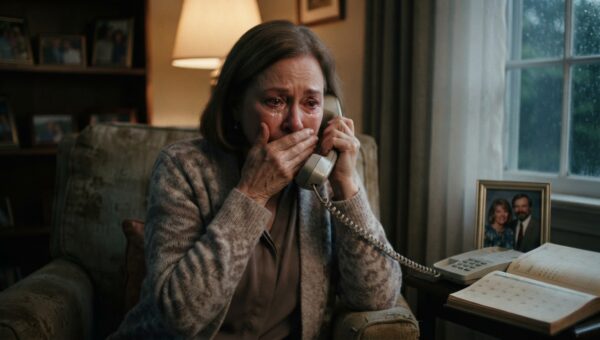
I walked over to the landline on the kitchen wall, the old corded one that doesn’t rely on batteries or digital signals, and dialed Dr. Sterling’s office directly from the card tucked beneath the base. It took three tries before his nurse put him on the line, and when he came on, he sounded tired, the way people sound when they’ve spent all day telling families things they don’t want to hear.
“Mrs. Grant,” he said. “Your daughter mentioned you might be calling. She said you were having another episode regarding the clinic records.”
“Dr. Sterling,” I said, and my voice was steady now, cold and flat like a winter morning. “How many normal memory evaluations have you performed on me in the last four months?”
There was a long silence on the other end of the line, just the sound of papers shuffling in the background and someone coughing down the clinic hallway.
“Four, Mrs. Grant,” he said quietly. “All four of them showed normal baseline cognitive function for your age group. Zero impairment.”
“And who signed the request for the secondary neurological review?”
Another pause, longer this time. “Your daughter provided an amended family questionnaire during your second visit. She stated that you had given her verbal proxy due to your failing eyesight and memory lapses regarding household safety.”
“I have never given anyone proxy for anything in my life,” I said. “And my eyesight is good enough to read your signature on the bottom of those intake forms if I came down there right now. Who else has been accessing my file in that office?”
He didn’t answer right away, but when he did, his voice dropped an octave. “Marcus, the morning intake clerk, handles the secondary intake processing before I reach the examination room. Mrs. Grant… if there has been an irregularity, “
“There hasn’t been an irregularity,” I told him, gripping the receiver until my knuckles turned the color of chalk. “There’s been fraud. And I’ll see you in your office tomorrow morning at nine o’clock with the bank auditor.”
The next morning, I took the bus down to the First National branch on Main Street, wearing my good wool coat and carrying my canvas tote bag with every single tax return, bank statement, and deed I had accumulated since my husband passed away twenty-five years ago. The manager, a young man named Arthur who had known my husband from the Rotary Club, took one look at my face and led me straight back to his glass-walled office without asking me to wait in the lobby.
By eleven o’clock, we had pulled every authorization form Sylvia had submitted over the last six months. Arthur sat across from me with his glasses pushed up on his forehead, shaking his head as he looked through the digital access logs on his computer screen.
“She tried to initiate a title transfer on the house three weeks ago, Mrs. Grant,” he said, turning the monitor toward me so I could see the digital signature block. “She used a general power of attorney form that supposedly bore your signature, notarized by a service down in the industrial park. But the date on this notarization was three days before you even opened this account.”
“She thinks I’m already gone,” I said, looking at the tiny blue pixels glowing on the screen. “She thinks because I move a little slower in the mornings, the rest of my brain has checked out.”
“What do you want to do?” Arthur asked, his hand hovering over the keyboard. “We can freeze the pension direct deposit immediately. We can flag every account so that no withdrawals or transfers can be made without your physical presence and ID.”
“Freeze everything,” I told him. “And print out every single access log from the day she first walked into this lobby.”
The confrontation didn’t happen in a restaurant or over the kitchen phone. It happened right here in my living room, under the light of the brass floor lamp that my husband bought in nineteen-seventy-two.
Sylvia let herself in with her own set of house keys at precisely 3:30 in the afternoon, carrying a brown paper bag from the bakery down the street, probably expecting to smooth things over with a lemon tart and a few patronizing words about my stubbornness. She walked through the foyer, dropped her handbag on the side table, and stopped dead when she saw me sitting at the small mahogany desk by the window.
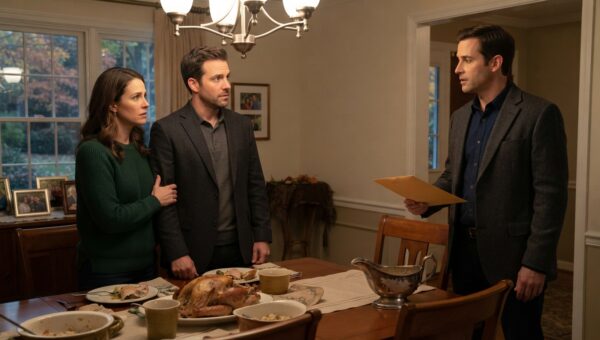
I wasn’t alone. Dr. Sterling was sitting in the wingback chair by the fireplace, and Arthur from the bank was standing near the bookshelf with a thick manila envelope tucked under his arm.
Sylvia’s eyes darted from the doctor to the banker, and then down to the small brass key resting on the blotter in front of me. The bakery bag in her hand gave a soft, dry crinkle as her fingers tightened around it.
“What is this?” she asked, her voice jumping an octave higher than usual. “What are these people doing in my mother’s house?”
“It’s not your house, Sylvia,” I said, standing up slowly and smoothing down the front of my wool skirt. “And these gentlemen are here to make sure you understand the difference between managing a catering business and stealing from an eighty-two-year-old widow.”
She tried to laugh, but it came out sounding like a dog barking behind a fence. “Mom, you’re being ridiculous. You’re confused. You called these men here because you don’t remember what we talked about yesterday, “
“I remember every single word,” I interrupted, and my voice didn’t shake once. “I remember you telling the neighbors I left the stove on. I remember you forging my signature on the bank transfer forms three weeks ago. And Dr. Sterling remembers telling you that my memory tests were entirely normal, which means you didn’t just lie to the neighbors, you committed fraud under oath in a state medical facility.”
Dr. Sterling didn’t look at her; he just stared down at his shoes, his face dark with embarrassment. Arthur stepped forward and laid a single sheet of paper on the coffee table right in front of her feet.
“This is the police notification regarding the falsified guardianship filings,” Arthur said quietly. “And this is the bank freeze notice on all accounts associated with your business tax ID. Your access is terminated, effective immediately.”
Sylvia stared at the paper for a long moment, her chest rising and falling beneath her wool coat in short, ragged breaths. The professional composure she had worn like armor for four months finally cracked right down the middle, her mouth opening slightly as she realized there was no script left to read, no doctor to charm, and no neighbor to fool.
“You can’t do this,” she whispered, her voice dropping down to a harsh, ugly sound. “I’ve given up four months of my life driving you to those damn appointments. I’ve wasted hundreds of hours trying to keep you from, from, “
“From what?” I asked, taking two steps toward her until I was standing right under the hall light, looking her dead in the eye. “From living in my own home? From keeping what I earned?”
I reached down to the blotter, picked up the small brass key that opened the front door, and held it out toward her palm.
“Give me the rest of them,” I said. “The spares from the kitchen drawer, the ones you made last November when you said you needed to water my ferns while I was at the dentist. Give them all back right now, or Arthur calls the sheriff from the car.”
She stood there for three long seconds, her jaw working as if she wanted to spit out something poisonous, but the look in my eyes must have told her the game was completely over. With a sharp, jerky movement, she reached into the pocket of her coat, pulled out a heavy metal ring with three keys dangling from it, and dropped them onto the mahogany desk with a dry, metallic clatter that sounded like a small gate locking shut.
She didn’t say another word. She turned on her heel, grabbed her handbag from the foyer table, and walked out the front door, pulling it shut behind her with a dull, heavy thud that didn’t rattle anything at all.
I stood by the window for a long time after they left, watching through the lace curtains as her silver sedan backed slowly down the driveway, its tires crunching over the wet gravel until the tail lights disappeared around the corner of Elm Street.
The house was very quiet then, just the sound of the refrigerator humming in the corner and the old grandfather clock ticking away the minutes in the hall.
I picked up the small brass key from the desk, slipped it back onto the charm bracelet around my wrist where it belonged, and locked the mahogany drawer with a single, steady turn of my hand.