The will read out plain. My two brothers split the farm and the bank accounts. I got Mama’s butter churn. Galen laughed. “Don’t spend it all in one place, sis.” I remember the way he leaned back in that stiff leather chair at Arthur’s office, his signet ring clicking against the armrest like a metronome of pure arrogance. He was the one who fed and bathed her for six years while they mailed cards.
Well, that was what he liked to tell himself, anyway. Thomas didn’t even look up from his phone. He just nodded along, satisfied that the heavy lifting of probate was finally over and his share of the timber rights was secured.
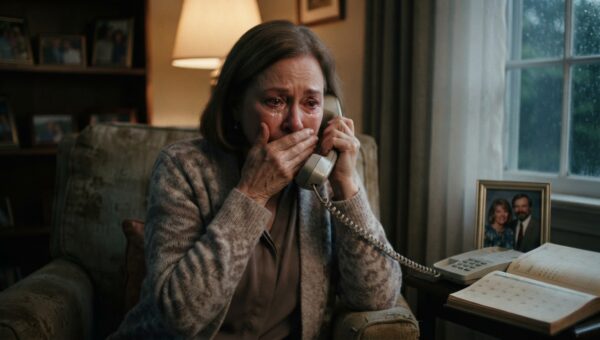
The land is worth maybe $300,000 on a bad day, and they both knew it. For six years, my life had been narrowed down to the hum of an oxygen concentrator and the smell of wintergreen ointment on Mama’s feet. Galen would drive out on a Tuesday afternoon once every couple of months, stay for twenty minutes, complain about the price of diesel, and leave before the supper dishes were even scraped. Thomas lived three states away and sent fruit baskets that arrived bruised. But when the end came in November, they both showed up in clean shirts with their hands out, ready to divide up six decades of hard-won dirt.
Arthur Pendelton folded the stiff cream-colored paper and slid it into a manila folder with a dry sigh. He had known our family since we were kids, and I could tell he had a sour taste in his mouth. He looked at me over the top of his half-moon reading glasses, his expression flat and unreadable. He knew what the older boys had taken for granted, but a lawyer’s hands are tied by the ink on the page unless the ink tells a different story. Galen patted my shoulder on the way out to the parking lot, his breath smelling faintly of peppermint and cheap whiskey. “Don’t worry, little sister, we’ll let you keep your old bedroom until you figure out where you’re going,” he said.
I didn’t answer him. I just walked out to my sedan and popped the trunk. The butter churn was sitting right there on the rubber mat, heavy as an anchor and smelling faintly of dried buttermilk and old pine.
It was the only thing Mama owned that didn’t have a price tag attached to it in my brothers’ minds. They thought I was being sentimental, holding onto some useless piece of kitchen junk while they carved up the acreage. I took the churn home because it was hers, and because it was the only piece of that house that didn’t feel like a battlefield.
The sun was dipping low behind the ridge by the time I carried the churn into my little rental kitchen. The house was quiet, save for the hum of the refrigerator and the ticking of the wall clock. I set the heavy wood down on the laminate counter with a dull thud. My arms were aching from the dead weight of it, but there was a strange comfort in just being home, away from the smell of legal offices and my brothers’ cologne. I filled a bucket with warm water and grabbed a rag, figuring it was time to scrub out the dust of the last few months.
One evening I went to clean it, and the dasher wouldn’t seat right. I pushed down on the carved wooden handle, expecting it to drop smoothly into the bottom groove like it always had when I was a kid watching Mama work. Instead, it caught on something hard and uneven. I frowned, reaching inside with my fingertips to feel around the base. The wood felt different down there, slightly raised and rougher than the staves of the bucket. I tipped it over, sliding the heavy object onto the kitchen table with a scrape. Underneath was a second floor of cedar, screwed in tight with four brass screws that had been painted over to match the grain.
I stood there for a second because my brain kind of stopped working for a second. I didn’t reach for a screwdriver because my hands were shaking too hard. I went to the drawer and pulled out an old butter knife with a bent tip, the only thing close at hand. I wedged the thin blade into the hairline seam between the false bottom and the inner wall. I pried it loose with a butter knife, hardly breathing, the old wood groaning softly under the pressure before the panel popped free with a dry snap.
Inside was a roll of bills thick as my wrist, held together by a rubber band that had rotted and turned gummy with age. Beneath the cash lay a folded deed, crisp and official with its pink ribbon still intact, and a letter in Mama’s shaky hand. The first line read, “For the one who actually showed up. The land they’re fighting over was already yours.” I sat down hard on the kitchen chair, the breath rushing out of my lungs in a long, shaky shudder. The silence in the kitchen felt heavier than the churn itself.
I carefully unfolded the letter, my fingers trembling so much I nearly tore the heavy stationery. Mama’s handwriting was spidery and uneven near the bottom where her arthritis had flared up, but every word was as clear as a bell. She detailed every single time Galen had left her sitting in the dark for three days while he went on a hunting trip, and every time Thomas had called just to ask if she had sold the north pasture yet. She laid out her mind with terrifying clarity, proving she was sound in judgment long after my brothers started whispering behind her back about cognitive decline.
The folded deed wasn’t some handwritten scrap of paper you scribble on the kitchen table. It was an official, stamped conveyance bearing the embossed seal of the county recorder’s office, dated three years prior, just after my stroke scare. It transferred the core eighty acres and the original homestead house directly to my name, free and clear of probate. The bank accounts my brothers thought they were splitting were just operating crumbs; the real timber reserve funds and the land title had been quietly moved out of their reach years ago. And the cash roll? It was over fourteen thousand dollars in accumulated lease and timber payments Mama had pocketed from the county co-op, kept entirely off the ledger so my brothers couldn’t lay a finger on it.
I spent the next morning sitting across from Arthur Pendelton in his wood-paneled office while he examined the documents with a look of stunned appreciation. He adjusted his glasses twice, reading through the multi-page legal description of the property line down by the creek. “Martha was sharper than a tack right up to the end, wasn’t she?” Arthur muttered, tapping the corner of the deed against his desk. He pulled his own file drawer open and matched the serial numbers on the notary seal, confirming every single stamp was legitimate. “This was filed and recorded right here in my office on a Tuesday morning while your brothers were in town buying trucks. She knew exactly what she was doing.”
Verify, file, and wait. That was all Arthur told me to do. By Friday afternoon, the county property records office had officially updated their digital ledger, locking out any secondary claims my brothers might have tried to sneak through the back door of the courthouse. I went back to the old farmhouse, unlocked the front door with the heavy brass key Mama had given me the day I moved in, and waited for the inevitable collision. I didn’t have to wait long.
On Saturday morning, two massive pickup trucks rolled down the gravel driveway, kicking up a rooster-tail of dust that settled over the porch ferns. Galen and Thomas climbed out, slamming their truck doors with the practiced arrogance of men who believed they owned the horizon. Galen was carrying a clipboard under his arm and a roll of yellow caution tape in his hand, ready to start marking up the machinery shed and the old tractor for auction. They walked up the front steps like they owned the place, expecting me to be packed up with two cardboard boxes by the front door.
Galen didn’t even knock. He just pushed the screen door open and stepped right into the front hallway, his boots tracking mud onto the braided rug. “Alright, sis, time to clear out,” he said, waving the clipboard toward the parlor. “We’ve got the flatbed coming at noon to haul off the mower, and the buyer for the barn timber will be here by three. You can take your clothes, but leave the furniture for the estate sale.” Thomas stood behind him on the porch, arms crossed over his chest, looking impatient and bored.
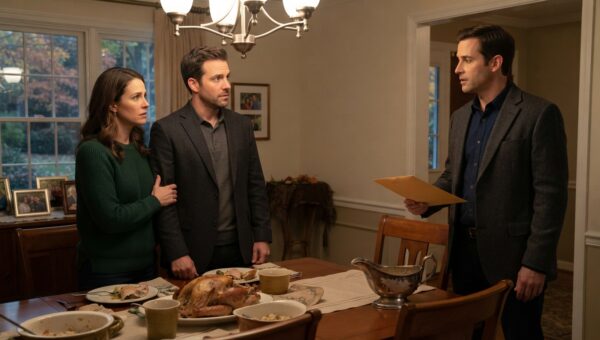
I didn’t move from the rocking chair by the front window. I just picked up the manila folder resting on the small side table and laid it flat across my knees. “You’re a bit early for an auction, Galen,” I said, my voice sounding steadier than I felt inside. “And you’re standing on my porch.” Galen let out a short, bark-like laugh, shaking his head at Thomas as if I were a child playing a silly game. “Don’t start that again, we went through this at Arthur’s office on Tuesday. The judge signed off on the distribution.”
“The judge signed off on whatever was left in the probate estate,” I said, sliding the official county deed out of the folder and holding it up so the red ribbon caught the light through the screen. “He didn’t sign off on what Mama legally transferred three years before she died.” Galen stopped laughing. His face didn’t go white like it does in the movies; it just tightened up into a hard, ugly knot, his jaw working back and forth as his eyes locked onto the raised gold seal of the county clerk. “What is that?” he hissed, taking two quick steps across the living room rug.
“It’s eighty acres of bottomland and the house you’re standing in,” I said plainly. “It’s mine. Every single fence post and cattle gate.” Thomas pushed past him, his face flushing red as he snatched the paper from my hand, his eyes scanning the legal description frantically. “This is fake,” Thomas stammered, his voice cracking slightly on the last word. “You forged this. Mama didn’t know what she was signing three years ago, she was half-blind!” I looked right at him, remembering the six years of missed Christensions and unreturned phone calls while I wiped our mother’s forehead. “Ask Arthur Pendelton,” I said. “He has the matching file copy and the recording receipt right in his safe.”
Galen lunged forward, his hand coming down hard on the wooden arm of my rocking chair. “We’ll fight this in court until you’re sleeping under a bridge,” he snarled, his face inches from mine. “You think you can steal our inheritance with some old piece of paper?” I didn’t flinch. I just looked at him with the same tired calm Mama had used when the river flooded the north forty back in ninety-eight. “You can try,” I said softly. “The county recorder already verified the filing date. And by the way, the back accounts you were so proud of splitting? They were empty before Mama even drew her last breath. She gave me the cash key months ago.”
That broke them. Thomas swore loudly, kicking a porch post before storming back down the steps toward his truck, muttering about lawyers and fraud. Galen stood there for another ten seconds, his chest heaving, his fingers twitching toward the clipboard like he wanted to break it over his knee. But he saw the look in my eye, and he knew the game was over. “You’re a cold woman,” Galen spat out, stepping backward toward the screen door. “You manipulated a dying old lady.” I didn’t say a word. I just watched him turn on his heel and stomp down the steps, the gravel crunching under his heavy boots as he slammed his truck door so hard the side mirror rattled.
They drove off ten minutes later, their tires throwing gravel against the side of the machine shed in a childish fit of temper. I watched the dust cloud drift out over the pasture and fade into the gray afternoon air until there was nothing left on the driveway except the quiet hum of the country. I walked back inside the kitchen, picked up the empty butter churn from the counter, and carried it out to the front entryway. I set it down beside the timber floorboards where it belonged, its cedar base firmly secured once more. It sits there now as a silent sentinel, watching over the floorboards and reminding me of a mother’s quiet justice.