The shelter door hadn’t even closed behind us when a black armored SUV pulled up to the curb. The gravel crunched under its heavy tires, and the engine gave off that low, expensive hum that tells you nobody inside has ever worried about a light bill. My billionaire great-great-grandmother, Eleanor Vance, stepped out from the back seat. She looked at my filthy duffel bags, then down at my six-year-old daughter Maya’s cracked lips.
She didn’t blink. She just stared at us like we were ghosts, and then she growled, “Maria, why are you and my great-great-granddaughter here instead of living in the million-dollar mansion I personally bought for you?”
I nearly choked. What house? I hadn’t heard about any house. I’d been sleeping in my front seat for three weeks after my husband, Caleb, threw us out with nothing more than the clothes on our backs and twenty-four dollars in a coffee mug. Eleanor’s face went cold as stone, the kind of cold that makes young lawyers check their ties and old bankers look at their shoes. She made one phone call right there on the sidewalk, her voice low and sharp like a knife cutting silk, and told someone to clear her schedule for the week. Four days later, her chief counsel handed me a thick manila file that made my own mother’s betrayal finally make sense.
If you had told me a year ago that my life would come down to the smell of cold pleather and stale instant coffee in the back of a station wagon, I would have laughed. Back then, Caleb and I lived in a cramped rental house on the wrong side of town, but at least the roof didn’t leak onto the stove. My mother, Helen, used to come over every Tuesday with a stale loaf of bread and a face full of complaints about how I ruined my future by marrying a man with no ambition. I used to nod and take it because that is what you do when you are thirty-two and tired all the time. I thought she was just being a mother, the way mothers are when they love you too much to let you be happy. I was a fool, plain and simple, and the Lord knows I paid for it.
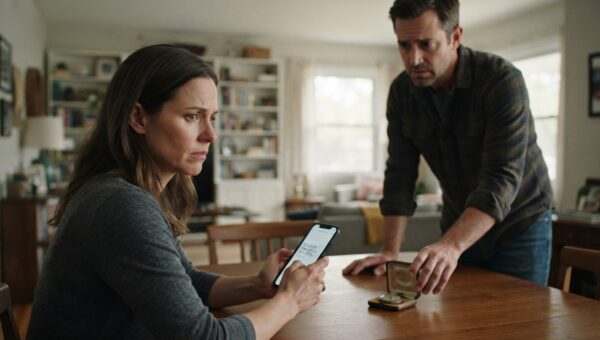
The trouble started on a Tuesday morning in late October. Caleb came home smelling like cheap beer and damp drywall, threw his keys at the kitchen wall so hard the plaster chipped, and told me he was done playing house. He didn’t even look at Maya, who was sitting on the floor coloring with a broken blue crayon. He just said, “Get your stuff out by tonight, Maria. The lease is in my name, and I’m turning the keys over to someone who doesn’t look at me like I’m a failure.” I tried to reason with him, but he just shoved past me toward the bedroom. “You’re dead to me,” he muttered, slamming the door. I loaded what little we had into the trunk of my car before the sun went down, and for the next three weeks, our entire world was a damp steering wheel and the parking lot behind the twenty-four-hour laundry.
I don’t even know why I remember the exact smell of that parking lot, but it sticks in my chest like a dry bone. It smelled like bleach and hot asphalt, and every time Maya asked when we were going home, I told her we were just on an adventure. You tell a lot of lies when your heart is breaking because you don’t know what else to do with your voice. I kept thinking about calling my mother, but every time I reached for the phone, my stomach would turn over. Helen had a way of making you feel like you were the one who broke the world just by standing in it. “You made your bed, Maria,” she would have said. “Now lie in it.” So I didn’t call. I just sat there in the dark, watching the headlights sweep across the ceiling of the car, wondering how a person could fall so far down without hitting bottom.
Then came the morning by the shelter. Eleanor Vance is not the kind of woman you argue with, even if you are related by a line of descent people usually only read about in old newspapers. She is ninety-one years old, walks with an ivory-handled cane that looks like it could break a collarbone, and still runs her family’s timber and real estate holdings with a mind like a steel trap. When she found us standing there with our bags, the fury in her eyes wasn’t loud. It was quiet, steady, and terrifying. “Get in,” she said, nodding toward the back of the SUV. Her driver, a man named Henderson who hadn’t spoken three words in twenty years, took our bags and tossed them into the trunk like they were sacks of feed.
We didn’t go back to the shelter, and we didn’t go to a hotel. Eleanor took us straight to her sprawling estate on the north side of the river, a place where the floorboards don’t squeak and the tea comes in silver pots that stay hot for an hour. For the next four days, Maya stayed in the west guest room, eating toast with real strawberry jam and watching cartoons on a television that was bigger than our old kitchen table. I spent those four days in Eleanor’s study, sitting across a mahogany desk from two corporate lawyers who looked like they lived on aspirin and black coffee. They didn’t ask me about my marriage, and they didn’t ask me about my car. They just asked me about my mother, and they asked me to sign my name on twenty different pieces of paper so they could verify I wasn’t an impostor.
On the fourth afternoon, the heavy oak door of the study swung open without a knock, and Eleanor walked in carrying a single, thick manila envelope. She laid it right in the center of the desk, right on top of my tax returns from three years ago. The paper had that dry, heavy sound that stays in the room long after it lands. “Open it,” she said, her voice like gravel rolling down a chute. I didn’t want to touch it. My fingers were shaking, and I could feel a cold sweat starting along my hairline. I slid the flap open and pulled out a stack of certified copies bearing seals I didn’t recognize.
The first page was a trust deed dated four years ago, right after Maya was born. It listed Eleanor Vance as the settlor and me, Maria Vance, as the primary beneficiary of a fully paid, high-security residential property located out on Whispering Pines Lane. A million-dollar home, sitting on two acres of timberland, set up specifically to keep my bloodline safe from the kind of poverty Eleanor knew too well growing up in the depression. My breath caught in my throat. I stared at the address, wondering how I could have lived twenty minutes from a house with my name on the deed and spent my nights sleeping in a station wagon.
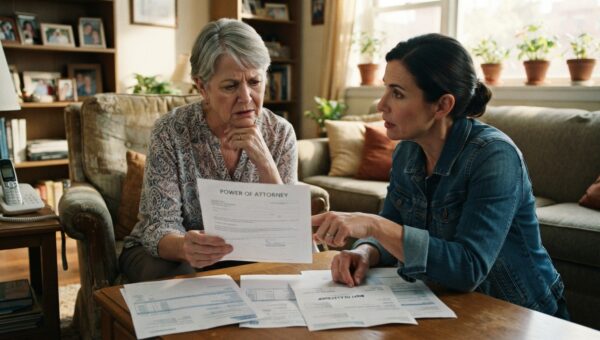
Then I turned the page, and the room went very quiet. There was a second document attached, a quitclaim deed transferring the trust ownership from my name to a commercial shell company called Vantage Holding Group. And right there at the bottom, signed in a neat, familiar cursive that I had looked at on birthday cards my whole life, was my mother’s signature. Helen Vance-Miller. Right beside it was a secondary proxy authorization, signed by Caleb, granting her full legal power to act on my behalf because I was supposedly suffering from postpartum incapacity and unable to manage my own affairs. They had engineered the whole thing while I was still recovering from my emergency C-section in a ward downtown.
I just sat there because my brain kind of stopped working for a second. The lawyers didn’t say anything. They just watched me the way doctors watch a patient waiting for a diagnosis to sink in. “She told me you signed it away, Maria,” Eleanor said softly, leaning on her cane. “Your mother came to my office three years ago with your husband in tow. They claimed you wanted to liquidate the trust to invest in Caleb’s construction business. When I refused to hand over the cash value directly, they produced this forged medical affidavit claiming you were unstable. They thought I wouldn’t check. They thought a ninety-year-old woman wouldn’t notice a million-dollar property being funneled into a shell company owned half by your husband and half by your mother.”
I looked down at the signatures again. My mother hadn’t just stolen a house from me. She had sold my safety to a man she pretended to hate, just so she could hold the mortgage over our heads and keep me crawling back to her kitchen table every Tuesday for scraps of pity. The betrayal wasn’t loud or dramatic. It was cold, calculated, and dressed up in Sunday church clothes. I felt a hot, heavy anger rise up from my chest, pushing out all the fear and all the exhaustion that had been sitting there for weeks. I didn’t cry. When you’ve been living out of a car, you run out of tears pretty fast, and what’s left behind is just gristle and bone.
“Where are they now?” I asked. My voice sounded thin, like paper tearing in the wind.
Eleanor gave a small, thin smile that didn’t reach her eyes. “Your husband is currently loading his tools into his truck because the commercial shop he built with your stolen equity just got slapped with a federal tax lien. And your mother is sitting in her kitchen waiting for your weekly call that isn’t coming.” She stood up, her joints popping slightly, and tossed a set of heavy brass keys onto the desk right beside the file. “The lawyers have already filed the injunctions. The shell company is dissolved, and the property trust has been reverted to your sole control with no proxy riders. Henderson has the car running outside. Do you want to go see your house, Maria?”
The drive out to Whispering Pines Lane took about twenty minutes, but it felt like crossing an ocean. Henderson didn’t play the radio, and I sat in the back seat with Maya sleeping against my shoulder, her little thumb tucked securely in her mouth. The trees along the road were turning that deep, rusty gold that comes right before the first hard freeze of November. When we turned down the private drive, the gravel crunched under the tires with a clean, solid sound that made my skin prickle. The house wasn’t just a house. It was a sprawling brick and cedar estate with deep porches, massive stone chimneys, and tall windows that caught the afternoon sun like sheets of hammered gold. It sat back among the pines, quiet and solid, like it had been waiting for us all along.
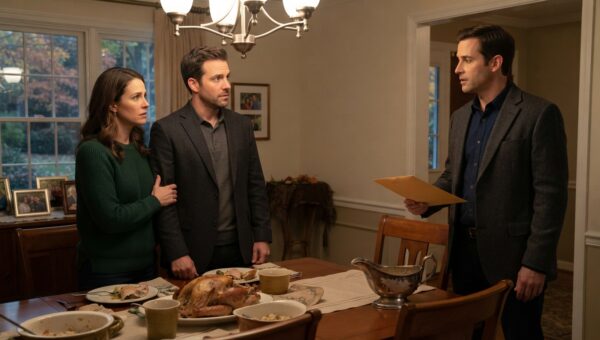
We didn’t go straight inside. We stopped by the side entrance first, because Henderson said he needed to check the utility meters, but I knew Eleanor wanted me to see the reality of what had been stolen from us. As we walked up the flagstone path, the front door of the main house swung open. My mother was standing on the porch, holding a cardboard box full of decorative plates and silver candlesticks. She had a smug, pinched look on her face, the one she always wore when she thought she had outsmarted the room. Behind her, Caleb was carrying a floor lamp, his face red and sweaty from hauling boxes out of the front hall. They had apparently broken in to salvage whatever they could before the sheriff’s deputies arrived with the eviction order.
My mother stopped dead on the top step when she saw the black armored SUV idling in the drive. Then she saw me standing behind Henderson, wearing a clean sweater Eleanor’s housekeeper had lent me, holding Maya’s small, warm hand. The color drained right out of her face, leaving her skin looking like old parchment paper. She dropped a small crystal salt shaker, and it shattered on the stone porch with a sharp, ugly crack that made Maya jump.
“Maria,” my mother whispered, her voice hitching as she took a step backward toward the open door. “What are you… how did you get out here? This isn’t… you shouldn’t be here.”
I didn’t say a word. I just walked up the first two stone steps, my boots making a firm, heavy sound against the flagstone. I reached into my coat pocket, pulled out the manila envelope Eleanor had given me, and dropped it right on top of the cardboard box of plates she was holding. The papers rustled inside the heavy clasp, loud and dry in the crisp autumn air. Behind me, I heard the heavy doors of the SUV open, and Eleanor’s chief legal counsel stepped out onto the gravel, holding a clipboard and a fountain pen ready to sign.
“You knew, didn’t you?” I finally said, my voice dropping into that flat, cold register I hadn’t known I possessed. “You knew the whole time I was sleeping in my car with your great-great-granddaughter, and you were sitting out here dividing up my silver.”
My mother’s mouth opened and closed like a fish out of water, her eyes darting frantically toward the lawyers by the car. “We were just protecting you, Maria,” she stammered, her hands shaking so hard the cardboard box rattled against her waist. “You were always so helpless with money. Caleb said… we were just trying to keep the estate in the family where it belongs. You have no idea how to run a trust of this size.”
“She knows exactly how to run it,” a sharp voice cut through the afternoon air. Eleanor stepped out from behind Henderson, leaning heavily on her ivory cane, her eyes flashing with a cold, fierce light. She walked right up the steps past me, stopping inches from my mother’s face. “And by the time my forensic accountants finish auditing your personal accounts, Helen, you won’t even have enough left to buy a ticket out of this county. The paperwork is filed. The locks are changed. Get off my timberland before I have Henderson throw you both in the back of the wagon.”
Caleb dropped the floor lamp. It hit the porch floor with a dull thud, the bulb shattering inside its paper shade. He looked like he wanted to say something tough, like he wanted to spit or make some threat about his rights, but he looked past my shoulder, saw Eleanor’s legal team standing by the gravel drive with their briefcases open, and swallowed hard instead. He grabbed my mother by the elbow, muttered something ugly under his breath, and practically dragged her down the side steps toward their beat-up pickup truck parked near the azalea bushes. They didn’t look back once. They just threw their boxes into the truck bed, slammed the tailgates so hard the latch rattled, and tore out of the drive with tires screaming against the gravel.
Silence settled over Whispering Pines Lane the moment their engine noise faded into the trees. It wasn’t the heavy, suffocating silence of the shelter, and it wasn’t the cold, hollow silence of the car at midnight. It was a deep, resting quiet, the kind that comes when the storm finally clears and the ground is still wet from the rain. Maya looked up at me, her blue eyes wide and curious, and tugged on the hem of my coat. “Mommy,” she whispered, “is this our new house?”
I looked down at her, then up at the tall oak front door with its heavy brass handle catching the late-afternoon sun. I reached out, took the heavy, polished brass key Eleanor had handed me in the study, and slid it into the lock. It turned smooth as butter, the deadbolt clicking home with a solid, definitive sound that echoed off the high ceiling of the foyer. Maya dropped her worn canvas duffel bag right onto the pristine hardwood floor, and for the first time in three years, I felt the ground under my feet stop moving.