The crystal glassware on the hotel banquet table was catching the amber light from the overhead chandeliers, casting tiny, shivering diamonds across the white linen tablecloth where my own wedding cake sat half-eaten. It was a modest cake. I remember the vanilla bean specks in the buttercream because I had baked them myself two nights before, working late in my apartment kitchen after closing up the hardware store.
Nobody else had offered to help, so I just put my head down and got it done.
Across the room, the contrast was loud enough to rattle the windowpanes. My brother Jake and his new wife were three days away from boarding a flight to Athens for a two-week honeymoon funded entirely by our parents. That trip alone cost more than my entire wedding, down to the last napkin and rented chair. My parents had handed Jake a check for forty thousand dollars before the invitations even went out, plus a custom tailored charcoal suit from downtown that cost more than my first used pickup truck.
For my wedding, my contribution from them was zero. Not a check, not a hand-me-down casserole dish, not even a Hallmark card with a ten-dollar bill tucked inside. They sat at the very back of the small rented pavilion behind the county park, their chairs scraping against the gravel whenever they shifted.
Mom spent the entire ceremony thumbing the screen of her phone, the little blue light catching the corners of her glasses.
When dinner came around at the small reception hall down the road, I tried to keep the peace. I carried a tray of roasted chicken over to their table, my heels clicking against the linoleum. My feet were killing me from the shoes I had bought on sale at Marshalls.
Mom didn’t even look up from her little screen when I set the platter down. Her thumb kept swiping up, scrolling through some endless feed of other people’s grandchildren and vacation photos. “Your cousin Brenda posted pictures from her trip to Destin,” she said, her voice flat. “Honestly, Clara, I don’t know why you insisted on green napkins. They look cheap.”
Dad reached for a roll, his fingers thick and scarred from forty years in the machine shop. He let out a dry, rattling chuckle that didn’t reach his eyes. “Leave her be, Martha.
Clara’s always had to do things the hard way. She’s never needed us like Jake does. He’s always needed us more.”
That was when the room seemed to tilt slightly on its axis. I stood there with the empty tray in my hands, feeling the heat rise up the back of my neck. I looked at Jake across the room, laughing with his bride as a waiter poured champagne into tall flutes. Then I looked back at my parents, sitting in the chairs I had bought them, eating off the plates I had provided, inside a house where they hadn’t paid a single penny of principal or interest since the market dip back in two thousand and twelve.
“We should be grateful we even showed up,” Mom muttered, finally locking her phone screen with a sharp click that sounded too loud in the quiet between us. “Driving all the way out here on a Saturday. Jake’s wedding was at the country club. Much nicer drive.”
I didn’t yell. I didn’t cry or throw a water glass across the room like they probably expected me to do for their entertainment. I just smiled, a tight, small thing that didn’t reach my eyes, and told them to enjoy their dessert. I walked away and went back to clearing tables, but inside my chest, something went cold and hard as iron.
Three weeks later.
The morning sun had that pale, gray look to it that settles over a dairy county when the fog refuses to lift off the pastures. I was sitting at my kitchen table before dawn with a cup of black coffee that tasted like burnt beans. My phone was already sitting beside me, fully charged and ready.
The anger hadn’t faded overnight. It had sharpened into something clean and surgical. For years, I had played the role of the quiet, dependable daughter. The one who fixed the plumbing when Dad’s arthritis acted up, the one who bought the groceries during the bad months, the one who quietly took out a second mortgage during the winter of sixteen to keep their farm-adjacent property out of foreclosure. They thought they were the patriarch and matriarch of an independent domain. They genuinely believed their survival was a testament to their own grit, while Jake was the golden prince who required constant tribute.
They had forgotten one small detail. Or rather, they had never bothered to look at the paperwork in the first place.
At 7:00 AM sharp, I picked up the receiver and dialed the local title office downtown. Brenda was behind the desk, her glasses hanging from a beaded chain around her neck. She knew me from the hardware store.
“Morning, Brenda,” I said, keeping my voice steady. “I need to initiate the sixty-day notice on the property at four-fourteen Elm Street. And I need the transfer paperwork for the deed.”
Brenda’s keyboard started clacking away, the rhythm steady and familiar. “That’s your folks’ place, Clara. You sure about the sixty days?”
“I’m entirely sure,” I told her, watching the steam curl off my coffee cup. “Draw it up. I’ll be down by ten to sign.”
From there, the list was short and brutal. I called the utility cooperative and canceled the electricity and water accounts in my name, shifting the burden back to an empty ledger where my parents would have to apply as new residents with a hefty deposit they couldn’t afford. I called the telecom office and pulled the plug on the high-speed internet and landline phone service they used to stream television every night. Finally, I called the insurance agency and the auto loan center. The gray sedan parked in their driveway, the one Dad drove to the hardware store every Tuesday to complain about the price of nails, was registered entirely to my business credit line.
“Voluntary surrender,” I told the finance clerk. “Tow truck can pick it up from the driveway before noon.”
By nine o’clock, the administrative dismantling of my family’s illusion was nearly complete. I spent the next hour sitting at my desk with a legal pad and a sharpened pencil, doing something I should have done a decade ago. I added it up. Every emergency plumbing repair bill I had quietly paid over the phone with my credit card. Every insurance premium. The property taxes I covered when the county sent out the red delinquency notices. The winter heating oil I had trucked out to their tank during the blizzard of twenty-one.
Sixty-two thousand, five hundred dollars. Down to the exact cent.
I printed out the itemized ledger on three crisp sheets of white paper, my laser printer humming quietly in the corner. Every date, every invoice number, every receipt was attached with a small silver paperclip.
The drive out to Elm Street took twelve minutes. The gravel in their driveway crunched under my tires just like it always had, but today the sound felt different. The gray sedan was still sitting by the side of the porch, waiting for the tow truck that was currently thirty minutes out.
The front door was unlocked, because in our part of the county, nobody locked their doors during daylight hours. I stepped into the kitchen. The smell of stale coffee and toast hung in the air. Mom was sitting at the kitchen table with her tablet propped up against the sugar bowl, scrolling through recipes while a morning talk show played softly in the living room. Dad was out in the garage, hammering away at an old lawnmower blade.
Mom didn’t look up right away. She assumed I was Jake coming by to drop off some laundry or ask for a loan. “If you’re looking for your father, he’s out back,” she said without raising her eyes from the screen. “And close that door. You’re letting the draft in.”
I didn’t close the door. I walked across the linoleum and laid the thick manila envelope right in the center of the table, directly on top of her tablet screen. The paper hit the glass with a sharp, heavy smack.
Mom flinched, pulling her hand back as if the envelope were hot. She looked up at me then, her eyes narrowing behind her reading glasses. “What is this nonsense? Put that in the mudroom. I’m busy.”
“Read it, Mom,” I said. My voice didn’t shake once. It sounded like a stranger’s voice, cold and flat as a slate shingle. “Read every line on the second page. Especially the part about the mortgage.”
She reached out with two fingers, gingerly lifting the flap of the envelope as if she expected a bug to crawl out. She pulled out the itemized sheets, her eyes scanning the numbers at the top. The color didn’t drain from her face in some dramatic movie fashion; her mouth just slowly dropped open, her jaw going slack as she recognized the letterhead of my accountant and the account numbers she had never bothered to learn.
“What is this?” she whispered, her voice suddenly small and thin. “Clara, what are you playing at? Where’s the car?”
“The car is being repossessed by my business account,” I said, leaning against the back of the wooden chair where Dad usually sat to read the paper. “The internet is already dead. The electric company is turning off the meter on Friday unless you pay the deposit yourselves. And the house? You’ve got sixty days to find a buyer or a rental. Brenda has the papers down at the title office.”
Dad appeared in the kitchen doorway then, wiping grease off his hands with a greasy shop rag. He looked between Mom’s white knuckles gripping the paper and my face standing by the door. “What’s going on here? Martha, why are you sitting there looking like you’ve seen a ghost?”
Mom couldn’t speak. She just held out the paper like it was a live grenade.
Dad grabbed it from her fingers, his eyes darting across the totals. His face went dark, the veins in his temples bulging against his skin just like they used to when he was pissed off at a stalled tractor engine. He crumpled the top corner of the paper in his fist.
“You can’t do this,” Dad barked, taking a step toward me. His voice had that old, booming authority he used to keep us all in line. “This is our home. We raised you in this house. You don’t pull stunts like this on your own family.”
“Family,” I repeated the word, tasting it on my tongue like something that had gone sour in the pantry. “You spent forty thousand dollars on Jake’s wedding and Greece. You sat at my wedding and told me I should be grateful you even showed up. You said he needed you more.”
Dad stopped mid-stride, his boots squeaking against the linoleum. “That was just talk at a wedding, Clara. You’re making a mountain out of a molehill. Go out to the driveway and move that car back where it belongs right now.”
“There is no car,” I said, reaching for the brass doorknob. “And there is no safety net left. This is what ‘never needing you’ looked like, Dad. It looked like me paying your bills while you pretended you were providing everything.”
I opened the door and stepped out onto the porch just as the orange tow truck turned down the gravel lane, its yellow beacon flashing lazily against the gray morning sky. Dad shouted something behind me, his voice cracking with a sudden, genuine panic that had nothing to do with pride and everything to do with the fact that his coffee maker was about to lose power.
I didn’t look back. I got into my truck, put it in drive, and rolled down the lane past the mailbox with my name stamped on the side of the metal post.
Three weeks later, the house was officially listed on the open market. Brenda called me on a Tuesday to let me know they had finally gone down to the county housing office to look at low-income senior apartments on the east side of town. Jake hadn’t called once; he was too busy posting pictures of the Acropolis on his Instagram feed, completely oblivious to the fact that his parents no longer had a spare bedroom for him to crash in when he got back.
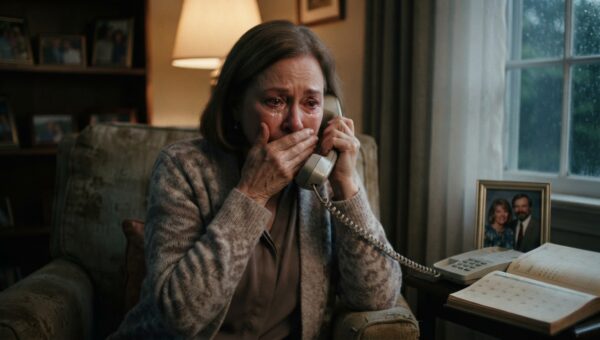
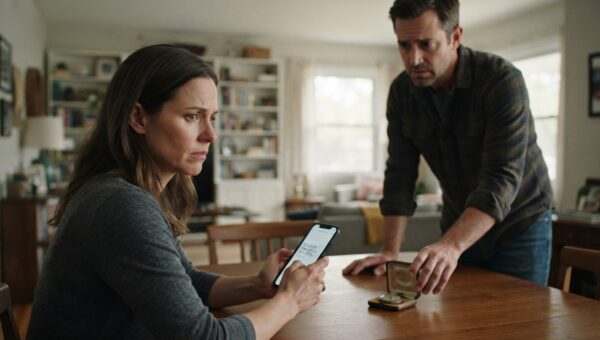
I didn’t answer my phone when Mom called on a Sunday evening. I let it ring out, watching the little screen light up against the dark wood of my apartment table, then go quiet again.
The kitchen table in my apartment was clean. There were no bills stacked under heavy mugs, no overdue notices hidden behind the flour canister, no demands for money disguised as parental wisdom. The phone sat face-up, silent and steady, resting on a surface that finally belonged to me alone.