The fluorescent lights in the loan department at First Hudson Savings hummed with a dry, thin sound that gave me a dull ache right behind my eyes. I had been sitting in the gray vinyl chair across from Mr. Vance for twenty minutes while he tapped methodically at his keyboard, his silver-rimmed glasses pushed halfway down his nose. Outside the tall glass window, Route 9 was choked with mid-morning delivery trucks splashing gray slush onto the curb.
It was a Tuesday in late March, six months to the day since we buried Mama out at St. Jude’s on the hill. My mind was still half-stuck in that cold autumn week, replaying the smell of damp earth and the heavy weight of the polished oak handles we carried between us. I had finally saved enough for the down payment on the small brick split-level on Maple Street, a modest place with a patch of overgrown hydrangea bushes by the front step where I could picture putting down real roots. I wanted a clean slate after the long months of caregiving and hospital smells.
Mr. Vance stopped typing and turned his laptop screen toward me with a slow, deliberate slide of his palm. His face was entirely neutral, the practiced mask of a man who delivered bad news twenty times a week without letting it stick to his skin. “You have a defaulted loan for $8,500,” he said.
His voice was too quiet, almost polite. I blinked at the glowing blue numbers reflecting off his lenses, trying to line them up with my own bank statements in my head. I had paid off my car two years ago, and my credit cards sat at zero every single month. I kept a careful ledger in a blue spiral notebook on my kitchen table. I shook my head, feeling a stupid, nervous little laugh try to climb up my throat. “That’s impossible,” I said. “I don’t have any personal loans. You must be looking at someone else’s file.”
Mr. Vance didn’t smile. He reached for a heavy stack of papers resting in the wire basket beside his phone, pulled out a single sheet covered in fine black print, and slid it across the mahogany grain toward my fingers. “It was processed through our regional online portal on October twelfth,” he said, tapping a corner of the page with his thumb. “The day after the funeral service.
The funds were disbursed directly into a checking account matching your social security number.” I looked down at the paper. There was my name, spelled correctly, and my old address on Clinton Avenue where I had lived before Mama moved in with me for her final summer. But right beneath my signature line, written in a cramped, hurried hand I had watched scribble grocery lists at our kitchen table for thirty years, was a routing number that belonged to a different bank entirely.
The drive from the bank to Clara’s house on the east side took fourteen minutes, though I don’t remember shifting gears or stopping at the traffic light by the hardware store. My hands stayed locked at the ten-and-two position on the steering wheel, my knuckles white enough to show the blue veins underneath. The heater in my sedan was stuck on high, blowing dry, hot air straight into my face until my eyes felt gritty and raw.
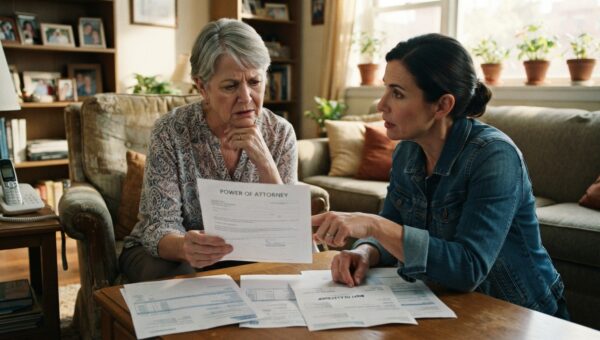
I kept thinking about the rainy afternoon right after Mama passed away, when Clara had leaned across my kitchen counter while the kettle was whistling and laid a heavy hand over mine. “I want to handle the mortuary bills, Beth,” she had said, her voice shaking with what I believed then was genuine grief. “It’s too much for you to carry alone. Just let me take care of the $8,500 for the plot and the service. I want to do this for her.” I had been so grateful I could barely speak. I had handed her my old leather folder containing Mama’s death certificates, my spare social security card, and a handful of voided checks so she could coordinate with the funeral director without dragging me through the paperwork while I was half-numb with shock.
I pulled my car up behind her silver crossover in the gravel driveway, killing the engine before the radiator fan even had time to wind down. The front porch of her split-level needed a coat of gray paint, just like it had for three years, and a stray black plastic flowerpot lay tipped over near the welcome mat. I walked up the three wooden steps without knocking, turning the brass doorknob because it had never once been locked during the daytime in all the years we were growing up. Clara was standing at the kitchen island, wiping down the laminate with a damp yellow sponge while the local radio station played some old country song low in the background. She looked up as the screen door slapped shut behind me, her expression shifting instantly from mild annoyance to the guarded, tight-lipped look she always wore when she thought someone was about to lecture her on her spending.
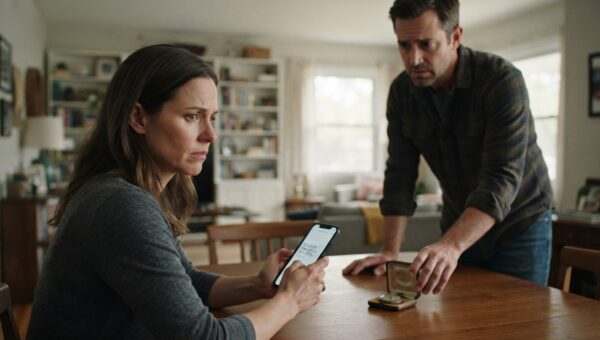
“What are you doing here in the middle of the morning?” she asked, tossing the sponge into the sink with a wet slap. “I told you I have to pick up the dry cleaning by noon.” I didn’t take off my coat. I reached into my canvas tote, pulled out the folded loan application Mr. Vance had printed, and dropped it flat onto the center of the kitchen island right beside her coffee mug. “You used my identity to pay for the funeral?” I asked. My voice didn’t shake. It came out flat and hard, like a stone dropped into a dry well. Clara stared down at the paper for three long seconds. She didn’t gasp. She didn’t turn pale or drop her coffee mug. She just let out a short, thin breath through her nose, leaned her hips back against the edge of the counter, and crossed her arms over her chest. “You make more money,” she said. Her voice had that cold, flat certainty that used to drive our father crazy when we were kids. “You have a savings account. I have two kids in private school and the truck payment was due. It’s fair.”
The silence in that kitchen wasn’t heavy; it was sharp enough to cut skin. I stared at her face, looking for any trace of the sister who had held my hand in the third pew of St. Jude’s while the organ played. There was nothing there except a stubborn, pinched annoyance, as if I were complaining about a borrowed lawnmower she hadn’t returned on time. “It was forty-five thousand dollars,” I whispered, the number finally breaking through my teeth. Clara’s eyes flickered just an inch to the left, and in that tiny, involuntary movement, I knew the rest of the lie was about to fall apart. She hadn’t just paid the mortuary. She had taken every single dollar of credit my name was worth while I sat in my bedroom staring at Mama’s empty rocking chair. “You make more money,” she repeated, her voice rising just enough to challenge me. “Take it up with the bank if you don’t like how the paperwork reads. You signed the initial release form when you gave me that folder.”
I turned around, walked back through the screen door without another word, and drove straight to the municipal building downtown. The waiting room at the police precinct smelled like floor wax and old wool coats left out in the rain. I sat on a hard bench for twenty minutes until Officer Alvarez called my name through the frosted glass of his cubicle. He was a broad-shouldered man with graying temples and a neat mustache that twitched when he talked. I laid the bank statement, the credit report, and my driver’s license down on his gray metal desk in a neat, trembling pile. “I need to report identity theft,” I said. “My sister took out a loan using my social security number.” Officer Alvarez didn’t look surprised. He pulled a yellow notepad toward himself, clicked his ballpoint pen twice, and began asking for dates and account numbers with the slow, deliberate patience of someone who had heard every family betrayal St. Lawrence County had to offer.
He typed away on his desktop terminal for nearly ten minutes, the only sound in the small room being the steady click-clack of his keyboard and the hum of a radiator in the corner. After a while, he stopped typing, leaned back in his squeaky swivel chair, and looked across the desk at me with a look that made my stomach drop lower than it had at the bank. “Ma’ahn,” he said, adjusting his glasses. “This loan wasn’t for $8,500. That’s just what she told you to keep you quiet while she cleared the rest.” He turned his monitor around just enough for me to read the bold black text scrolling across the bank’s master fraud file. The total amount disbursed under my name on October 12 was $45,000. And right beneath the figures was the destination routing number for the remaining $36,500, an account registered directly in Clara’s name at a credit union three towns over, used to clear out two defaulted business notes and three maxed-out store credit lines. “She robbed me,” I said, the words tasting like copper in the back of my mouth. Officer Alvarez picked up his telephone handset without taking his eyes off my face. “Yes, ma’am,” he said quietly. “She did.”
The arrest happened on a Thursday afternoon while the mail carrier was still three houses down the street. Two unmarked cruisers pulled up silently behind Clara’s silver crossover in her driveway, their headlights blinking once in the gray daylight. I sat three blocks away in my sedan, watching through the rearview mirror as Officer Alvarez and a younger detective walked up the wooden steps and knocked twice on her screen door. I didn’t want to see her face when she realized the game was over, but I couldn’t bring myself to turn the ignition and drive away either. I watched them lead her down the steps ten minutes later with her wrists cuffed loosely behind the gray zip-up hoodie she wore everywhere, her head tilted down toward the patchy grass as they guided her into the back of the cruiser. Her husband was standing on the porch behind them, his mouth open in a shout no one could hear through the closed windows, holding a folded bundle of laundry as if he didn’t know what to do with his hands.
The bank fraud department moved with a different kind of speed once the police report was locked into the state database. By Friday morning, Mr. Vance had called my cell phone twice to confirm that the fraudulent balance had been formally flagged, segregated, and frozen pending the district attorney’s asset forfeiture filings against Clara’s accounts. The thirty-six thousand dollars she had funneled into her business debts was pulled back through a court-ordered clawback before she even finished her arraignment at the county courthouse. I spent Friday evening sitting at my kitchen table with a stack of fresh white printer paper and a red pen, crossing out every old figure from my ledger and starting a new column from scratch. The mortgage broker called at four o’clock to say the credit freeze was officially lifted and my pre-approval letter was back in good standing for the Maple Street house.
On Saturday morning, the sun finally broke through the heavy cloud cover that had hung over the valley all week, casting a long, clean strip of yellow light across the linoleum where my coffee cup sat. The house was quiet except for the hum of the refrigerator and the sound of distant traffic out on the highway. I reached into my canvas bag and pulled out the newly issued credit report Mr. Vance had couriered over the afternoon before. It was crisp, white, and completely blank of any debt that didn’t belong to me. I laid it flat on the wooden surface right beside the heavy brass set of house keys the realtor had handed me during our brief meeting at the title office an hour earlier. There were no notes left to write, no apologies to wait for, and no more phone calls to make. I picked up the keys, felt the cold metal teeth against my palm, and for the first time since Mama drew her last breath in the room upstairs, the air in the house felt entirely my own.