The cedar chips in the old trunk on the south side of the attic had gone flat years ago, smelling more of damp pine than anything meant to keep moths away. I was up there looking for my old wool mittens before the first hard freeze hit Dodge County, dragging my fingers along the back edge of the cedar chest where things always slid down behind the lining.
My hand caught on a tab of heavy cream-colored cardstock. It wasn’t mittens. It was a Vanguard Mutual Life folder, thick and squared off with a brass clip that had rusted just a little bit at the corners.
I didn’t think much of it right away because Mama kept all her important papers in biscuit tins and old shoeboxes scattered between the pantry and the spare room closet. But when I pulled it out into the shaft of gray light coming through the eyebrow window, I saw the date stamped in purple ink on the tab. March 14, 2018. That was the year after Daddy passed, the month Mama finally let us sit down at the kitchen table and get her affairs straightened out so nobody would have to guess what she wanted. I opened the heavy flap, and the $500,000 figure stared right back at me in bold Courier font, with my own name typed neatly into the beneficiary line.
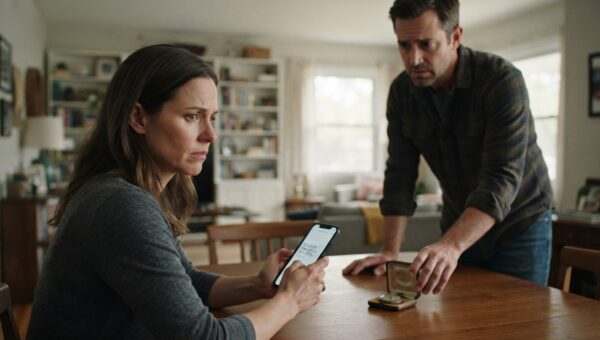
Then my fingers brushed against something else tucked right behind the first folder in the same gap in the cedar lining. A second Vanguard folder. Identical cardboard stock, identical brass clip, but the paper inside felt slicker, newer, the kind of bright white that hasn’t spent eight years gathering dust in a Wisconsin roof space. I flipped the cover back. The date on this one was three weeks ago. October 4. The face amount was still five hundred thousand dollars, but my name had been neatly typed out and replaced with Gerald Torres. My brother Gerald.
The house was too quiet, just the refrigerator humming downstairs and the wind rattling the dry oak leaves against the gutter outside. I sat right there on the attic floorboards with my knees pulled up to my chest, staring at the two identical folders until the numbers started blurring together. How could a policy be duplicated like that without a cancellation?
I pulled my phone out of my pocket, my fingers shaking a little against the glass, and dialed the number for the local Vanguard branch off Highway 41.
A woman with a flat, professional voice answered after four rings, her tone smelling of lukewarm coffee and office fluorescent lights. “Vanguard Mutual, customer service, this is Brenda.”
“I need to check a policy status,” I said, my voice sounding thin even to me. “I’m looking at two documents here for my mother, Clara Torres. Policy number ending in 4892.”
There was a dry clicking of keys through the receiver, rhythmic and steady. “Let me pull that up for you. Clara Torres… yes, I see the file. One moment while I verify your identity.”
I gave her Mama’s social security number and my own name, waiting while the computer hummed on her end. “Okay,” she said, her voice dropping into that slightly practiced register people use when they are about to deliver bad news. “I show that policy 4892 was officially closed out and replaced three weeks ago. The original beneficiary designation was terminated per client request.”
“Terminated?” I said, standing up so fast my head brushed against the exposed ceiling joist. “Who requested it? My mother has advanced vascular dementia. She doesn’t even remember what year it is.”
Brenda didn’t miss a beat. “The update was processed in person at our downtown branch, ma’am. All required identity verification was completed on site, and the change of beneficiary was executed with a signed physical endorsement.”
“That’s impossible,” I told her, my chest tightening up until I couldn’t get a full breath. “She can’t hold a pen for more than ten seconds without her hand cramping into a claw. Who signed it?”
“The file shows the new primary beneficiary is Gerald Torres,” she said, her tone hardening just a fraction. “And the change authorized in person. She signed.”
“She didn’t,” I said, but the line went dead with a soft click before I could finish the sentence.
I didn’t wait to put the mittens back or close the trunk. I grabbed both folders, stuffed them into my canvas tote bag, and drove the twelve miles out to the Maple Grove Care Cottage where Mama had been living since the winter she left the stove burner on all night. The drive took twenty minutes through the flat corn stubble fields, the gray sky pressing down low on the windshield like a wet wool blanket. Every time I hit a pothole on County Road K, the folders shifted in the passenger seat like they were whispering to me.
Mama was sitting in her usual armchair by the window, wearing that faded blue cardigan with the pearl buttons that I bought her at the church bazaar three years ago. Her hair was thin and wispy, floating around her ears like dandelion fuzz, and she was staring out at the gravel parking lot where an empty delivery van was idling. I pulled up a metal folding chair and sat down right in front of her, taking her small, spotted hand in mine. Her fingers felt dry and light, like bird bones.
“Mama?” I said softly. “Do you remember me?”
She turned her head slow, her eyes cloudy and unfocused for a long second before a little flicker of recognition finally reached the surface. “Sarah,” she whispered, her voice rough from the dry room air. “You brought the lemon drops.”
“No lemon drops today, Mama. I brought some papers.” I reached into my bag and laid the two Vanguard folders across her lap, right over her quilt. I opened the recent one to the signature page at the very back. The line at the bottom had a signature scrawled across it in shaky blue ballpoint ink. It looked like a handful of barbed wire dropped onto the page, jagged and rushed, cutting sharply upward at the end.
“Mama, look at this,” I said, pointing my finger right at the signature. “Did Gerald bring you some papers to sign a few weeks ago? Did you sign this?”
She blinked down at the paper, her brow furrowing deep between her eyebrows as she tried to focus. She reached out with her right hand, her fingers trembling so badly she could barely keep her palm flat against the table. The nurse’s aide had left a plastic spoon on the nightstand from her noon applesauce, and I watched Mama try to pick it up. Her hand didn’t just shake; it jerked sideways, the fingers curling inward like she was trying to grab smoke. She managed to lift the spoon about two inches before it clattered back down against the wood with a dull plastic click.
“I can’t,” Mama murmured, her lower lip trembling just a little bit. “My hand don’t listen to me no more, Sarah. Everything hurts when I squeeze.”
“I know it does, honey,” I said, and the lump in my throat felt as big as a fist. “I know.”
I looked back down at the signature on the form. It didn’t match the way she used to sign checks for the church or the way she signed the 2018 policy, where every letter was round and careful like a schoolteacher’s. This new signature had none of the loops she always made on her capital Ts. It was a fake, slapped onto the page by someone who had probably traced it over an old greeting card or a medical release form from when she broke her hip.
I left the nursing home twenty minutes later with my jaw locked so tight my teeth ached. I didn’t go home. I drove straight into town and parked outside Marcus Vance’s law office above the hardware store on Main Street, where the floorboards always groaned under your boots and the air smelled of stale pipe tobacco and old calfskin law books.
Marcus wasn’t a fancy lawyer with a glass skyscraper; he was an old friend of Daddy’s who still wore short-sleeved white shirts with pocket protectors and kept a jar of peppermint lozenges on his desk. He listened while I laid the two folders out on his green blotter, spreading them side by side so he could see the dates and the signatures without me having to explain it twice.
He adjusted his half-moon reading glasses down his nose, peering over the rims at the two papers. He didn’t touch them with his bare hands; he used the eraser end of a yellow pencil to slide the recent policy closer to his lamp.
“Well,” Marcus said, his voice deep and rumbling like gravel shifting in a truck bed. “This is neat. Too neat.”
“Brenda at the branch told me it was done in person,” I said, leaning forward so my elbows hit the edge of his desk. “She told me Mama came downtown and signed it herself. But Marcus, Mama can’t even hold a spoon without dropping it. She hasn’t been out of Maple Grove since November.”
Marcus picked up a magnifying glass from his tray and held it over the 2026 signature. He tilted it this way and that, catching the light from his green-shaded desk lamp. “In-person verification is required by Vanguard’s internal bylaws for any beneficiary swap exceeding one hundred thousand dollars,” he muttered, tracing the jagged line of the T with his pencil tip. “Unless an override is signed off by a branch supervisor. That’s the only way they bypass the teller window.”
“Who’s the supervisor?” I asked.
Marcus looked up from his desk, his old eyes going very still behind his glasses. “The regional processing head for Vanguard in this county is Arthur Vance. No relation to me, thank God. But Arthur’s been there twenty years.”
“Arthur Vance?” I said, the name dropping into my stomach like a cold stone. “As in Art Vance who brings his grill to the Lions Club fish fries? Art Vance who used to sit on our back porch and eat potato salad with Mama?”
“The very same,” Marcus said softly. “And that’s not even the interesting part of the file. You check the employee routing logs for that branch yet?”
“I don’t have access to those.”
Marcus leaned back in his squeaky leather chair, folding his hands over his stomach. “You don’t, but I will once we file the contestation. Here is the problem, Sarah. Under state insurance code, once a primary beneficiary change is logged into the system and approved by a compliance officer, the legal clock starts ticking. You have a strict thirty-day statutory window to file a formal allegation of fraud and request an administrative freeze. After thirty days, the change becomes permanent, and the old policy is legally dead.”
“How many days do we have left?” I asked, my heart doing a heavy, slow thud against my ribs.
Marcus checked his desktop calendar, his finger landing on a circled date with a red grease pencil. “Today is day eight. That leaves you twenty-two days to get a court order, a medical affidavit of incapacity, and proof of internal collusion before that half-million dollars goes straight into Gerald’s checking account.”
Twenty-two days. I sat there in that small, stuffy office staring at the green blotter, listening to the clock on the wall tick off the seconds in slow, heavy intervals. Twenty-two days to unwind something my brother had clearly been planning since he figured out Mama’s mind was going.
I didn’t go home right away after leaving Marcus’s office. I drove out to Gerald’s house on the north edge of town, right past the old grain elevator where the road turns to gravel. Gerald and his wife, Chloe, live in a split-level ranch with gray vinyl siding and two plastic deer standing out in the front yard like they were guarding the crushed-stone driveway. Chloe’s silver sedan was parked right behind Gerald’s Ford pickup, which meant they were both home.
I didn’t call first. I just pulled my car in right behind his truck, cutting off his exit, and walked straight up the aluminum-framed storm door. I didn’t bother knocking polite; I hit the wooden panel with the flat of my hand twice until the whole frame rattled.
The inner door swung open a few seconds later, and Chloe stood there in the narrow hallway with a dish towel clutched in her hands. Her hair was pulled back into a tight clip, and she had that look on her face she always got when she thought someone was trying to sell her something at the front door. When she saw it was me, the little line between her eyebrows tightened up like a drawstring.
“Sarah?” she said, not moving an inch to widen the gap. “What are you doing here? We’re right in the middle of supper.”
“Where is he?” I asked, pushing my shoulder against the edge of the door until she had to step back or let me through.
Gerald appeared behind her in the dim hallway, wiping his mouth with a paper napkin. He was wearing his work fleece with the lumber yard logo on the breast pocket, his thick brown hair combed back flat the way he always did when he wanted to look respectable for the bank manager. “What’s your problem, Sarah? Coming over here banging on the door like you’re the sheriff.”
“You want to tell me about the Vanguard policy, Gerald?” I said, stepping past Chloe before she could block me. “You want to tell me how Mama signed a $500,000 update three weeks ago when she can’t even hold a plastic spoon?”
Gerald didn’t flinch. He didn’t even drop his napkin. He just tossed it onto the hall table beside a plastic bowl of mints and let out a short, dry breath through his nose. “I don’t know what you’re talking about, Sarah. Mama wanted her affairs in order. She made a decision.”
“She has vascular dementia, Gerald. She thinks I’m her sister most days,” I said, my voice rising until it bounced off the low drywall ceiling. “And you didn’t even have the sense to make the signature look like hers. It looks like a chicken scratching on a fence post.”
Chloe stepped forward then, her chin coming up just a little bit, her eyes hard and bright. “Arthur Vance verified that signature himself,” she said, her voice dropping into that smooth, practiced customer-service tone she used every day down at the Vanguard branch. “Everything was done strictly according to protocol. If you have an issue with the paperwork, take it up with the company.”
There it was. Just like that, dropped out into the narrow hallway like she was reading off a deposit slip. Arthur Vance verified it. Chloe didn’t even realize she had given up the connection until the words were already hanging in the stale air between us. She worked right down the hall from Arthur at the downtown branch, processing forms and handling internal routing while Arthur sat in his corner office signing off on whatever came across his desk with a cup of coffee in his hand.
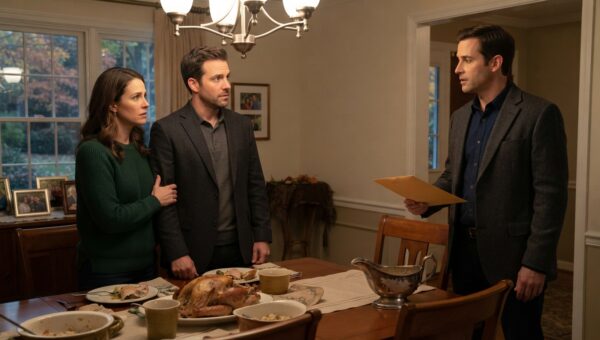
“Arthur,” I said, looking right at her until her eyes flickered away toward the coat rack. “Of course Arthur signed it. He comes to our house for turkey at Thanksgiving. He knows Mama doesn’t even know what a life insurance policy is anymore.”
“You’re making things up because you’re mad you got left out,” Gerald said, stepping up close to me now, his face reddening around the collar of his fleece. “Mom wanted things split fair, and she knew I had the boys in travel ball and the mortgage on the shop. You’ve got your own house. You’ve got your own life. You don’t need half a million dollars sitting in your savings account.”
“It’s not your money to split, Gerald,” I told him, keeping my voice low and steady now that the anger had burned down to something cold and hard in the pit of my stomach. “And it’s not Mama’s decision anymore, because she hasn’t been legally competent to sign a check since the spring of twenty-four. Marcus Vance already has the file.”
Gerald’s face didn’t go white like it does in the movies; it just tightened up into a ugly, square scowl. “You hired a lawyer over this?”
“I did,” I said, turning back toward the front door before he could reach out and grab my arm. “And we have twenty-two days left on the statutory window. See you in court, Gerald.”
I didn’t look back as I walked down their front steps, hearing Chloe say something sharp and fast behind the closing door.
The next two weeks went by in a blur of small-town offices and fluorescent-lit waiting rooms. Marcus didn’t waste any time. We filed the formal petition for an emergency administrative freeze with the county probate court on Tuesday morning, backed by a four-page affidavit from Dr. Arthur Evans, no relation to the insurance man, who had been Mama’s geriatric neurologist at the memory care center for three years. Dr. Evans didn’t mince words in his report; he wrote down that Clara Torres had lost the fine motor coordination required to sign her own name over eighteen months prior, and that her cognitive score on the Montreal test was a 12 out of 30, placing her deep into the middle stages of irreversible vascular decline.
Then came the metadata subpoena. Marcus had a contact down in the state insurance commissioner’s office who pulled the electronic routing trail for policy 4892 out of Vanguard’s main server in Madison. When the thick manila envelope arrived at Marcus’s office on a rainy Thursday morning, we laid the printouts out across his desk like pieces of a jigsaw puzzle.
The digital trail didn’t lie. The electronic override for the beneficiary change hadn’t been processed at the public teller counter like Brenda had claimed over the phone. It had been entered through an internal employee terminal on the third floor, terminal ID VML-304, which happened to be located in the commercial processing pool where Chloe Torres sat every day from eight to five. And the digital signature authorization override wasn’t just signed by Arthur Vance; it was punched in using Arthur’s personal manager PIN at 4:14 PM on a Tuesday afternoon when the branch office was already closed to the general public.
Marcus tapped the bottom of the audit sheet with his fingernail, pointing to a small timestamp in the lower right corner. “There’s your in-person visit,” he said, looking up at me over his glasses. “Entered from an internal employee station with a supervisor override while your mother was sitting in her recliner three miles away watching game shows. That’s not just a civil contract dispute, Sarah. That’s mail fraud and identity theft under state statute.”
We didn’t go to trial. We didn’t even have to wait out the full thirty days. On day twenty-six of the statutory window, Marcus hand-delivered the complete package, the neurologist’s medical affidavit, the electronic audit trail showing terminal ID VML-304, and a formal notice of intent to file criminal charges for document falsification, directly to Vanguard’s regional legal counsel in Milwaukee and to Arthur Vance’s home address by certified mail.
By Monday afternoon, the administrative freeze was made permanent by the state commissioner’s office. Policy 4892 was officially restored to its original 2018 terms, with my name reinstated as sole beneficiary, locked tight behind two layers of compliance verification that required a court-appointed conservator for any future modifications.
Arthur Vance resigned from Vanguard before the internal disciplinary board could even hold its Monday morning hearing, choosing early retirement over a formal termination for compliance fraud. Gerald didn’t call, and Chloe didn’t send a text. Their truck stayed parked in their driveway every time I drove out to see Mama on Tuesdays, and the front yard deer stayed right where they were, staring blankly out at the gravel road.
Yesterday afternoon, I went back out to the attic after bringing Mama a fresh batch of lemon drops. The sun was hitting the eyebrow window just right, throwing a long, pale bar of light across the floorboards near the cedar chest. I didn’t leave the folders in the open lining this time. I carried them down the stairs, past the kitchen where the old kettle was sitting on the burner, and into my small home study off the hallway.
I opened the heavy steel door of the combination safe I bought back when Daddy’s estate was settled, sliding the original 2018 policy folder deep into the back slot right behind the deeds and the tax certificates. I spun the brass dial three times to the left and two times to the right, feeling the heavy steel tumblers drop into place with a dry, solid thud. The steel door swung shut on its heavy hinges, sealing with a definitive, reassuring click that echoed softly in the quiet room.