The cedar box on the top shelf of my bedroom closet collected dust for thirty-one days before I finally touched it again. It sat right beside an old shoebox of recipes and a stack of Sears catalogs from the nineties, completely ignored by everyone who walked past the door. Sherwood had laughed when the lawyer handed it over, his voice sharp and dismissive in that stale carpeted office where the air conditioning smelled like old paper.
He pocketed his half of the farm papers and his share of the ninety thousand in CDs without looking me in the eye. “Always were the sentimental one,” he had told me, clapping my shoulder with a heavy, careless hand that felt more like a shove. I didn’t argue with him. I was too tired, my bones aching from four straight years of sleeping on a narrow cot beside Daddy’s hospital bed while my brothers only drove out when the ham was carved at Christmas.
I carried the cracked case home in the back of my rusted Ford truck, setting it down on the linoleum floor with a hollow thud. For four years, my world had shrunk down to the rhythm of an oxygen tank hiss, the bitter smell of rubbing alcohol, and the low, gravelly hum of Daddy clearing his throat in the dark. My brothers, Sherwood and Dale, had their own lives in the city, their own schedules, their own excuses for why they couldn’t relieve me for a weekend so I could drive into town to get my hair cut.
They arrived for the funeral in shiny black suits, shaking hands with the minister and talking loudly about land values before the dirt even settled over the coffin. When the will was read, they acted like the division of the estate was some kind of sporting event they had won fair and square. They took the flat acreage, the machinery shed, and the liquid accounts, leaving me the old wooden box that had lived under Daddy’s bed since before any of us were born.
The silence in my small house felt heavier once the funeral casseroles were gone and the thank-you notes were mailed. My grandson Leo, who was ten then and spent his Saturdays helping me weed the tomato patch, pointed up at the closet one afternoon while we were looking for his lost baseball glove. “What’s in that weird box, Nanny?” he asked, wiping dirt off his forehead with the back of his small wrist.
I told him it was just an old fiddle Daddy used to scrape tunes on when the winter nights dragged too long. Leo looked up at me with those wide, hopeful eyes that always reminded me of my sister who passed young. “Do you think I could learn how to play it?” he asked, his voice small and eager. I looked at the dust-covered case and felt a strange, quiet pull in my chest, a sudden need to let some kind of music back into rooms that had stayed silent for too long.
The next morning, I loaded the case into the passenger seat and drove past the grain elevators down to Arthur Vance’s little shop on Main Street. Arthur had been fixing instruments since before the interstate was paved, a quiet man who smelled like pine rosin and old paper and didn’t waste words on small talk. The bell above the screen door chimed a tired note as I pushed it open, holding the cracked wooden shell like it might fall apart in my hands.
Arthur looked up from a workbench covered in tiny brass screws and horsehair bows, his thick glasses sliding down the bridge of his nose. “Morning, Clara,” he said, setting down a tiny screwdriver. “What you got in that old coffin?” I laid the case flat on the glass counter, unlatched the rusty metal clips, and lifted the lid. The interior lining was faded, stained with decades of rosin dust and tobacco smoke, holding the instrument in a nest of rotting green velvet.
Arthur didn’t reach for it right away, which struck me as odd because he usually loved pawing through anything old that walked through his door. Instead, he stood up slowly, walked around the counter, and leaned over the glass with his hands braced flat against the wood. He stared down at the scroll for a long, unbroken minute while the traffic hummed outside on the asphalt. “Where did this come from, Clara?” he asked, his voice dropping into a register I hadn’t heard him use before, quiet and entirely serious. I told him it belonged to my daddy, who had kept it tucked under his bed for as long as I could remember, ever since our grandfather passed away back in the fifties. Arthur reached out with trembling fingers, gloved in nothing but old habit, and lifted the fiddle by its neck as if it were spun glass. He didn’t say another word. He carried it over to the northern window where the pale morning light fell unobstructed through the dirty panes, pulling a small silver-rimmed jeweler’s loupe from his vest pocket.
He spent ten minutes peering into the f-holes, tracing the arch of the top plate with the tip of his thumb, and mumbling numbers under his breath that didn’t make any sense to me. I stood by the counter, my fingers hooked into the hem of my cardigan, suddenly feeling foolish for driving all the way into town for what I assumed was a dusty toy. “Is it junk, Arthur?” I asked, breaking the long stillness. “Just tell me if the boy can use it to practice, or if I need to buy him a cheap one from the catalog.” Arthur turned around slowly, holding the instrument against his chest like a baby, his face gone remarkably pale under his gray beard. “Clara, look inside here, through the treble hole, and tell me what that paper says,” he whispered, pointing a thin finger at the dark interior. I stepped close, squinting against the gloom, and read the yellowed ink through my reading glasses: Antonius Stradivarius Cremonensis Faciebat Anno 1721.
The shop seemed to shrink around us, the ticking of the wall clock sounding too loud in the quiet air. “My daddy always said it was an old German copy he bought off a traveling salesman in the thirties for forty dollars and a side of beef,” I said, my voice sounding thin even to my own ears. Arthur shook his head slowly, a faint, disbelieving smile touching the corners of his mouth. “Your daddy was a quiet man, Clara, but he wasn’t simple,” Arthur said, his voice dropping lower still. “This isn’t some factory copy from Saxony. The arching, the varnish, the grain of the alpine spruce… this is a genuine article, and the registry lists only a handful of these particular 1721 instruments unaccounted for since the war.” He paused, looking right into my eyes with a gravity that made my knees feel weak. “If this authenticates through the foundation in Chicago, it’s not just worth money, Clara. It’s a piece of history that museums fight over.”
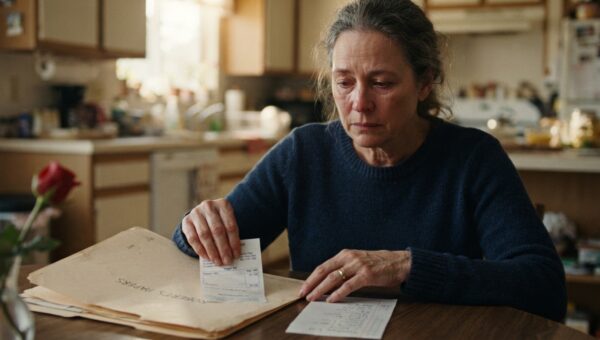
Three weeks later, the appraisal certificate arrived in a flat, stiff envelope sent via courier from Chicago, signed by two men whose names I couldn’t pronounce and stamped with a gold seal that looked official enough to stop traffic. The figure written inside the parchment letter was so large my brain simply refused to process it at first glance, scrolling past the price of the farm and the ninety thousand in CDs combined without slowing down. I sat at the kitchen table with the letter in my hand, staring out the window at the overgrown pasture where the fence line was sagging toward the creek. Daddy had known. He had watched Sherwood and Dale strut around his house like they owned the county, talking down to me, treating my four years of sleepless nights like some kind of unpaid domestic duty they were entitled to. He had given them the dirt and the cash because that was all they cared about, but he had left the real heart of everything in my hands because he trusted me not to sell it to the first buyer who knocked on the door.
The news didn’t stay quiet in a town where everybody knew everybody else’s business before the mail was even sorted at the post office. By Friday evening, Sherwood’s pickup was kicking up dust in my driveway, slamming to a halt right beside my old Ford with the engine roaring before he cut the ignition. He didn’t even wait for me to open the door; he came pounding up the front steps, his face red from the heat and his jaw clenched tight as he reached for the screen. He barged into the kitchen before I could latch the screen hook, his eyes wild and angry as he slammed a folded newspaper down on the laminate table right beside my water pitcher. “You mind telling me what folks down at the diner are saying about some old fiddle being worth half a million dollars, Clara?” he demanded, his voice shaking with a ugly, frantic edge that made me want to step back. “That was Daddy’s property. That was part of the estate, and the lawyer never inventoried that box because you hid it in your bedroom.”
I didn’t flinch, and I didn’t reach for the paper he had slapped down in front of me. I stayed right where I was sitting in the wooden chair, my hands folded calmly in my lap, feeling a strange, cold peace wash over me for the first time since Daddy took his last breath. “You said I was the sentimental one, Sherwood,” I said, my voice steady and quiet in the small room. “You told the lawyer I only wanted the old junk while you and Dale took the farm and the cash.” Sherwood leaned over the table, his face turning darker, his hands braced against the counter where Daddy’s green ledger used to sit. “Don’t play games with me, Clara. That’s family property. We’ve got a right to an equal split under the probate laws, and you know damn well Dad wasn’t in his right mind when he handed that over to you.” He reached out to grab the appraisal letter lying near the toaster, but I moved faster than he expected, my hand coming down flat over the paper.
“You didn’t come to visit him for four years, Sherwood,” I said, and the words came out low and heavy, carrying every sleepless night and every cold cup of coffee I had swallowed in that back room. “You didn’t help change his sheets when he couldn’t get out of bed. You didn’t listen to him talk about the old days when his mind wandered off into the dark. You came for the turkey at Christmas and you came for the money when he died.” Sherwood stopped reaching, his mouth hanging open slightly as the reality of what I was saying finally landed against his sense of entitled pride. “That instrument was Daddy’s secret,” I continued, looking right into his panicked eyes. “And he left it here because he knew who actually sat with him when the house was quiet.” Sherwood stood there for a long second, his chest heaving, looking like he wanted to break something or scream until the neighbors heard him down the road.
“You’ll be hearing from our lawyer on Monday morning,” he spat out, his voice cracking with pure venom as he backed away toward the front door. “We’ll see how smart you feel when the court forces you to hand over every single dime.” He slammed the front door hard enough to rattle the glass in the window frames, his truck tires spraying gravel across the lawn as he tore out of the driveway and headed down toward the highway. I sat there in the quiet kitchen for a long time after he left, listening to the refrigerator hum and the distant call of a crow down by the creek. Dale never even called, too proud or too embarrassed to follow Sherwood’s lead, and within a week the local gossip died down when the lawyers confirmed what I already knew: Daddy had signed the bill of sale over to my name two years before he passed, witnessed by the old family doctor who knew exactly what he was doing.
The financial security didn’t change who I was, but it bought me a kind of freedom I hadn’t known was possible, clearing away the debts that had kept me awake at night and setting aside a college fund for Leo that would make sure he never had to worry about where his next step was coming from. Sherwood kept his word about cutting me off, changing his number and telling anyone who would listen that his sister had cheated him out of his rightful inheritance. I didn’t care about the silence he left behind, because the house didn’t feel lonely anymore now that the rooms were filled with something other than the smell of sickness. The polished, restored fiddle sits safely in a new velvet-lined case on the living room table now, catching the golden evening light while the soft, hesitant notes of a beginner’s scale drift across the room from Leo’s bow. He stands by the window with the instrument tucked under his chin, his small fingers pressing down on the ancient wood just right, bringing back a sound that hasn’t been heard in these hills for a hundred years.