The smell of roasted garlic always stays in the back of your throat when you realize the people who raised you are treating you like an inventory item. My leg was still wrapped in fiberglass from the tibial plateau fracture I got back in late October, heavy and stiff and useless, propped up on a metal folding chair that didn’t match the rest of the dining room set.
My mother, Clara, had spent the last forty minutes bustling back and forth between the kitchen and the table, carrying heavy ceramic bowls of buttered corn and pot roast like nothing was out of the ordinary. She acted like she was just a devoted mother taking care of her injured daughter. But I had my phone sitting right there on my lap, face down, with the voice recorder app running in the background since 1:15 that afternoon.
Wesley sat across from me, digging his fork into a potato before anyone had even said grace. He had that smug, loose-limbed slouch he always had when one of his half-baked landscaping ventures was about to go under and he needed someone else to bail him out.
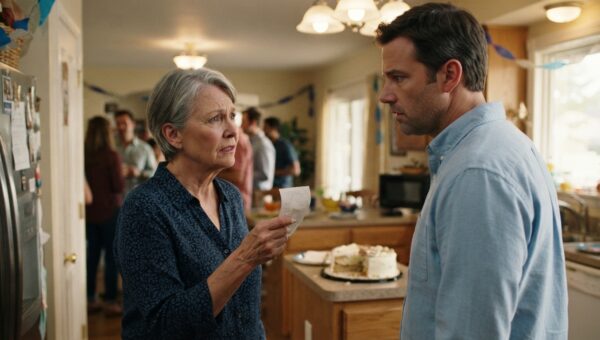
Clara wiped her hands on her floral apron, sat down at the head of the table, and reached into the pocket of her cardigan. She pulled out a long, pale envelope with the crisp federal blue logo of the insurance adjuster in the upper left corner.
She didn’t make a speech. She just slid it across the wood grain past the gravy boat until it tapped softly against my water glass.
“Wesley still has a future,” she said.
She looked right down at my crutches leaning against the sideboard, then back up at me with this flat, dead look in her eyes that didn’t have a single ounce of warmth in it. That was the exact moment the room went sideways. I didn’t yell. I didn’t sweep the plates onto the floor. I just picked up the envelope, pulled out the check for $48,210.50 made out in my legal name, and looked at the endorsement line she had already tried to pre-sign with a shaky imitation of my handwriting.
“You shouldn’t have done that, Mom,” I said. My voice didn’t even shake, which scared me more than anything.
“Don’t be difficult,” Clara snapped, her jaw tightening up. “You can’t use money like that when you’re like this.
The state evaluator said it herself. People with your kind of trauma get confused.”
Wesley didn’t look up from his plate. He just reached out, took the check from my fingers, and slipped it into his jacket pocket like he was collecting his mail.
That Sunday dinner was the third week of my recovery, but the trap had been laid long before my bumper hit that patch of black ice on Route 9. For twenty-one days, I had been sitting in my little apartment upstairs, watching my phone notifications and listening to the audio files I had managed to pull off my old smart speaker when I noticed Clara coming into my place with her spare key while I was still heavily medicated in the rehab ward.
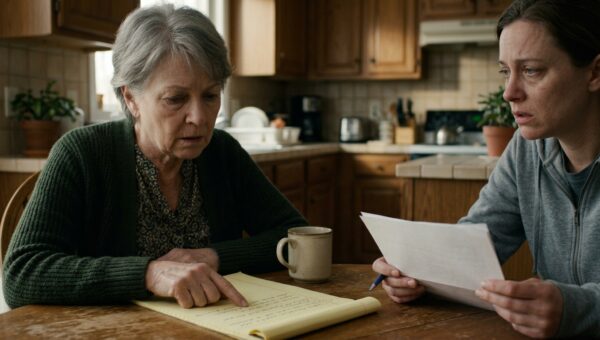
Back in September, before the snow even started, Clara and Wesley had sat at that exact kitchen table while I was out running errands, completely unaware that my old tablet was sitting on the bookshelf recording their conversation.
“She’s getting that settlement payout by winter,” Clara’s voice had said on the audio file, clear as day. “If we get guardianship right after the surgery while she’s doped up on painkillers, we can sign the release forms before she even knows what a lawyer looks like.”
“Will she fight it?” Wesley had asked, sounding whiney and small.
“Let her,” Clara had replied. “Who is the judge going to believe?
A mother taking care of her crippled daughter, or a girl who can’t even walk to the mailbox without falling over?”
I had listened to that recording three times in my hospital bed while the nurses were changing my IV drip. My heart hadn’t shattered into a million pieces like you read about in books; it had just turned into a hard, cold lump of lead. They didn’t see a daughter or a sister. They saw a payday with a broken leg.
Two days after that Sunday dinner, the county sheriff’s deputy knocked on my door at 9:42 in the morning. He looked embarrassed to be there, shifting his weight from one boot to the other while he handed me a thick manila packet sealed with county tape.
“Sorry about this, ma’am,” he muttered, looking past me at my crutches. “Just doing my job. You’ve got a hearing at the probate courthouse next Tuesday at ten.”
I sat down right there on the edge of my mattress and pulled the staples out of the legal brief. Inside were four separate affidavits, all signed by Clara and notarized by her neighbor, a retired insurance clerk named Arthur who owed my mother a favor from the church bake sale.
The first lie claimed I had suffered severe cognitive lapses and no longer recognized family members. The second stated I was prone to wandering outside in sub-freezing temperatures without shoes. The third alleged I actively refused necessary medical treatment and screamed at home health aides. The fourth and most dangerous one declared I was entirely incapable of managing basic financial decisions or comprehending the value of money.
They had built a cage out of paper and ink, hoping I would be too weak and medicated to climb out of it before Wesley deposited my settlement check into his commercial account at the credit union.
I didn’t call Clara. I didn’t text Wesley to scream at them. Instead, I limped over to my desktop computer, plugged in my encrypted thumb drive, and spent the next seventy-two hours organizing every single piece of digital evidence I had accumulated since August.
I clipped the audio files into manageable segments. I transcribed the exact timestamps where Clara dictated the four lies to Wesley over kitchen coffee. I pulled bank statements showing my accident insurance payout had cleared into the escrow account on November 14. Then, I emailed the entire dossier directly to Marcus Vance, a probate attorney in Kingston who specialized in elder financial abuse and fraudulent conservatorships.
Mr. Vance called me back at 4:15 on Thursday afternoon. His voice was low and steady, the kind of voice you trust when your world is falling apart.
“Where did you get these files?” he asked.
“My own living room,” I told him. “They didn’t know the smart speaker stayed live when the internet dropped.”
“Well,” Mr. Vance let out a dry, sharp breath. “This isn’t just a guardianship contest anymore. This is a criminal fraud referral.”
By the time Tuesday morning rolled around, the November wind was howling down off the Hudson River, rattling the frosted windowpanes of the county courthouse. I walked up the stone steps slowly, leaning hard on my steel crutches, every single step sending a dull, metallic ache right through the titanium plate in my knee.
Clara and Wesley were already sitting in the hallway on the wooden bench outside Courtroom 3B. Clara was wearing her best navy blue church suit with the pearl brooch, looking every bit the grieving, devoted mother exhausted by the burden of an ungrateful, broken-down child. Wesley sat beside her, tapping his loafers against the linoleum and scrolling through his phone.
When Clara saw me coming, her face instantly shifted into that soft, wounded mask she wore whenever she wanted the pastor to feel sorry for her.
“Oh, sweetheart,” she whispered, standing up and reaching out an arm like she was going to hug me. “You shouldn’t have come out in this cold. We’re just trying to help you get the care you need. You’re not well.”
I didn’t flinch. I didn’t pull away, because pulling away would have looked erratic. I just looked straight into her eyes and let the silence sit between us for three long seconds until she dropped her arms back to her sides.
“Keep your hands to yourself, Clara,” I said. My voice was low, but it echoed off the marble walls well enough that three people standing by the water fountain turned to look.
Judge Thomas H. Sterling didn’t waste any time with pleasantries once we were inside the courtroom. He was an older man with gray hair cropped close to his skull and reading glasses perched halfway down his nose. He looked over the stack of paperwork on his desk, his expression darkening with every page he turned.
Clara’s attorney, a local guy named Henderson who mostly handled real estate closings, stood up and smoothed his lapels.
“Your Honor, my clients are simply seeking to protect a vulnerable young woman who is clearly incapable of managing her own post-surgical affairs,” Henderson began, gesturing toward me with a practiced, sweeping motion. “The medical affidavits clearly demonstrate severe cognitive decline and disorientation following the trauma.”
Judge Sterling didn’t look up from the file. “Mr. Henderson, did you personally interview the physicians who signed these affidavits?”
Henderson blinked, suddenly looking less confident. “Well, the family practitioner, Dr. Evans, is currently out of state, but, “
“Dr. Evans’ office faxed a letter to my clerk thirty minutes ago stating they never evaluated the respondent for cognitive decline and that her post-operative mental state was entirely normal,” Judge Sterling said, his voice flat and heavy.
Clara stiffened in her chair, her fingers digging into the fabric of her purse. “There must be a mistake, Judge. She doesn’t know what she’s doing. She gave Wesley the check herself because she wanted him to invest it for her future.”
Mr. Vance stood up, buttoning his suit jacket. “If it please the court, we have an exhibit to enter into the record. Exhibit A through J: certified digital forensic extractions containing sixty-four hours of recorded conversations between Clara and Wesley Bennett detailing the premeditated fabrication of these very guardianship claims, recorded weeks prior to our client’s surgery.”
The courtroom went dead silent. You could hear the faint hum of the fluorescent light fixture overhead and nothing else.
Mr. Vance handed the flash drive and the thick binder of transcriptions to the bailiff, who carried them up to the judge’s bench. Judge Sterling slid his glasses up his nose, opened the file, and began reading the printed transcripts where Clara spelled out the four lies word for word, coaching Wesley on how to lie to the court investigator.
For five agonizing minutes, nobody moved. Clara’s face went from pale to a dull, mottled gray, her mouth opening slightly like she wanted to say something, but no sound came out. Wesley stopped tapping his loafers. He stared down at the carpet between his feet, his jaw working overtime.
Then, Judge Sterling pressed a button on his console, and a small courtroom speaker played a thirty-second audio clip of Clara’s voice echoing off the oak paneling.
*”If we get guardianship right after the surgery while she’s doped up on painkillers, we can sign the release forms before she even knows what a lawyer looks like…”*
The recording clicked off. Judge Sterling clicked his pen against the wooden desk once, twice, three times.
“Mrs. Bennett,” the judge said, his voice like dry ice. “Is this your voice?”
Clara swallowed hard, her hands trembling in her lap. “I… I don’t recall saying that in that context, Your Honor. We were just brainstorming. Families get stressed.”
“You coached your son to commit perjury, you filed four fraudulent declarations of incompetence under oath, and you misappropriated forty-eight thousand two hundred and ten dollars of personal injury settlement funds that rightfully belong to your adult daughter,” Judge Sterling said, every word hitting the room like a hammer.
He didn’t even let Henderson speak.
“The petition for guardianship is dismissed with prejudice,” Judge Sterling announced, banging his gavel once with a sharp, final crack. “Furthermore, this court is issuing an immediate freeze on all accounts belonging to Wesley Bennett where these funds were deposited, pending a full civil restitution order and a referral to the district attorney’s office for insurance fraud and perjury. This court is adjourned.”
The gavel came down again, and the sound seemed to shatter whatever was left of the room.
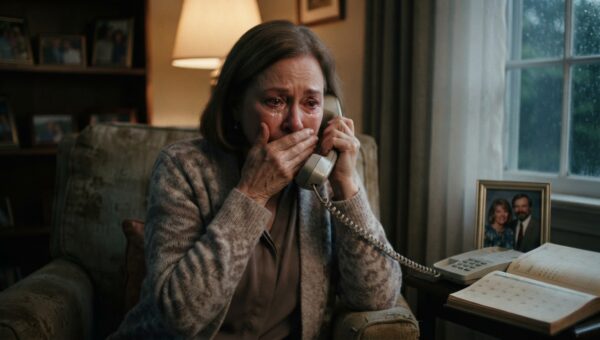
I didn’t look back at them as I walked out of the courtroom. I heard Clara starting to cry, a thin, ugly sound of panic, and I heard Wesley muttering something angry under his breath, but I didn’t slow down. My crutches hit the marble floor in a steady, rhythmic cadence, click, tap, swing. Click, tap, swing.
By Friday afternoon, the $48,210.50 was back in a newly opened account at a bank forty miles away where my family didn’t have an account number or a contact. The sheriff’s department had served Wesley with the asset freeze notice before he even had time to buy supplies for his failing landscaping yard.
My phone stopped buzzing with their calls by Saturday night after I blocked both of their numbers and deleted Clara’s contact card entirely.
I spent Sunday afternoon sitting in my new living room, watching the pale winter sunlight stretch across the unpainted hardwood floor. My leg still throbbed when the weather dropped, a dull, nagging reminder of the ice on Route 9 and the hospital room where I first realized what my family really thought of me.
My steel crutches leaned quietly against the wall near the front door, no longer needed for getting around the apartment, just resting there waiting for the next time I had to stand my ground against the world.