The cedar floorboards in our hallway have this one spot near the linen closet that always gives a dry, sharp click under the heel, no matter how soft you try to walk. I heard Arthur’s boots hit that exact spot at six in the morning, right on schedule, before the coffee maker had even finished its first rattle.
We had been married nine years by then, and most days our life ran on that kind of quiet railroad track.
Arthur worked the maintenance yard down by the river, and I kept books for three local grain elevators out of a cramped office behind the hardware store.
We weren’t rich, but we weren’t begging either, which meant every single dollar had a name painted on it before it even crossed our palms. That was the life we built after the dust settled from our second marriages, and honestly, it felt good to finally have something that didn’t rattle in the wind.
The trouble started the day Lucas graduated from the state university with a degree in finance and a stack of debt that looked like the national budget. Arthur sat at the kitchen table that night staring at his coffee mug like it owed him money, his hands turning the thick ceramic round and round.
Lucas didn’t have his mother in the picture anymore, and Arthur’s shift-work wages barely covered the property taxes on the house, let alone forty thousand dollars in student notes.
I remember looking across the table at Arthur’s tired eyes, seeing the way his shoulders were already bowed down from thirty years of heavy lifting, and I just opened my mouth before my brain could stop me.
“We’ll take care of it,” I said, and right then I signed away six years of my own small savings accounts and extra bookkeeping jobs.
For seventy-two months straight, every single extra check I earned from the grain elevators went straight toward Lucas’s principal balances. I skipped our tenth anniversary trip to Savannah, I drove my old Buick with a rusted-out rocker panel for four more winters, and I told myself it didn’t matter because we were building a doctor or a corporate man or whatever it is people think a college degree buys them.
Lucas would come over on Sundays sometimes, eating roast beef and checking his phone under the edge of the table, smiling that thin, easy smile that made Arthur puff up with pride.
I don’t even know why I remember this part, but I bought him a set of heavy leather luggage for his graduation present because he kept talking about traveling for interviews.
That luggage cost me six hundred and forty dollars, which was half my grocery budget for a month, and I carried it out to his trunk myself while he told me about some junior analyst job he was interviewing for in the city. He didn’t even help me lift the big bag into the back.
He just slammed the trunk lid down, gave me a quick pat on the shoulder, and said, “Thanks for everything, Helen. You’re a lifesaver.”
Then came the promotion six months ago. It was like somebody flipped a switch in a basement and turned off every light in the house at once.
The Sunday visits stopped first, replaced by quick text messages that got shorter and shorter until they dried up completely like mud in August.
Arthur tried calling him about his birthday, but the phone just rang out into empty space until the carrier’s automated voice told us the subscriber’s mailbox was full.
Arthur would sit on the porch swing after supper, rocking back and forth with his eyes fixed on the gravel drive, never saying a word about it, which honestly felt heavier than if he had screamed. I kept telling myself he was just busy with the new office, working late hours, getting settled into that high-rise corporate life where people don’t have time to breathe.
I lied to myself because admitting the truth meant admitting I had spent six years of my life financing a ghost who didn’t want to be seen with folks who smelled like motor oil and grain dust. The silence wasn’t just quiet; it had teeth.
Then came two days ago. The kitchen smelled like lemon cleaner and cold coffee when my cell phone buzzed against the formica top at 4:14 in the afternoon.
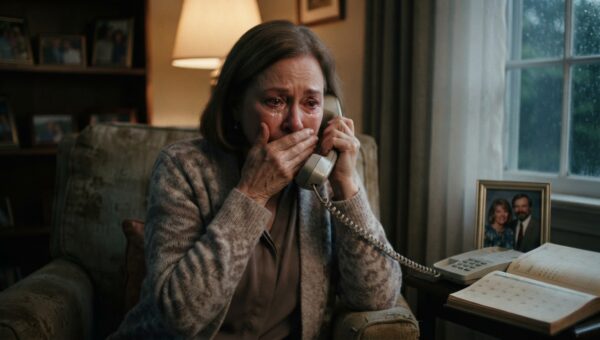
I picked it up expecting a spam call about extended car warranties, but the caller ID showed Lucas’s name plain as day for the first time in half a year. I hit accept because old habits die hard, and before I could even say hello, his voice came rushing through the speaker, thin and shaking so hard he could barely get the words out.
“I’m sick,” he whispered, and for a second I thought he sounded like a little boy lost in a grocery store. “I need money. Please help me.”
I didn’t feel rage right away. I just felt this cold, flat emptiness spreading out behind my ribs like spilled ink.
“You haven’t called us in six months, Lucas,” I said, my voice sounding stranger to me than it did to him. “Not a single word.”
“You don’t understand,” he sobbed, the sound pathetic and ragged against the line. “Chloe left. She took everything. I’m sick and I need cash right now or I’m finished.”
I didn’t even hesitate. After everything I gave him, after every vacation I didn’t take and every hour I spent hunched over ledger books until my eyes blurred, I felt like I owed him nothing.
“I’m sorry you’re sick, Lucas, but you need to call someone else,” I said, and I pressed the red disconnect button before he could answer.
I laid the phone back down on the counter and stood there listening to the refrigerator hum, breathing out a long, slow breath that felt like dropping a heavy sack of feed. But peace doesn’t last when you’ve tied your name to someone who only knows how to take.
Barely three hours later, while Arthur was still out in the garage putting away his wrenches, my phone started vibrating against the counter again. It didn’t stop.
Vibration after vibration, a frantic, buzzing rhythm that made the ceramic coffee mug rattle against its saucer. I picked it up and saw twenty-eight missed alerts flashing red from my credit union app.
My heart didn’t stop, but my stomach dropped right down into my boots as I unlocked the screen with trembling thumbs. The fraud notification messages were piling up one after another like falling timber.
Password reset requested. Unauthorized login attempt from a new device in Nashville.
Wire transfer of twenty-four thousand five hundred dollars initiated from primary savings. Blocked by security protocol.
I stood there in the middle of our quiet kitchen, staring at those red warning boxes until the letters seemed to blur together into one long smear of blood. He hadn’t just called to beg.
While he was on the phone crying about being sick, or right after I hung up on him, he had tried to break into the joint account we set up back when I was paying his student loans. He had used my old backup security answers, the ones he learned when he was a teenager living under our roof, thinking he could just reach into my pocket and pull out whatever he needed to save himself from whatever mess his fancy fiancée had left him in.
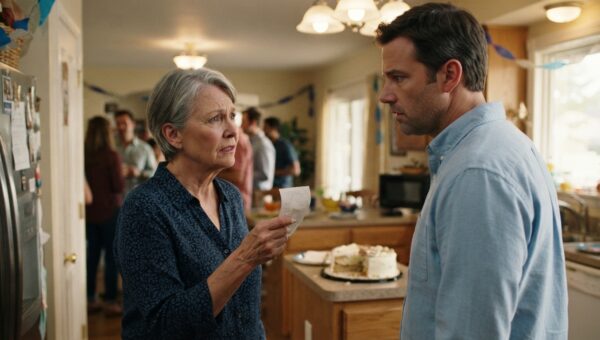
Arthur walked through the back door just then, wiping his grease-stained hands on a blue shop rag, looking tired and old. He took one look at my face and stopped dead on that squeaky floorboard by the linen closet.
“What is it, Helen?” he asked, his voice dropping low. “Who was on the phone earlier?”
“It was your son,” I said, holding out the phone so he could see the wall of red alerts. “And he just tried to drain our entire savings account to pay for whatever trouble he bought himself.”
Arthur didn’t yell, and he didn’t make excuses, which hurt worse than if he had tried to defend him. He walked over to the kitchen table, dropped the greasy rag onto the floor, and sat down hard in his chair with his head in his heavy, calloused hands.
“He called me too, right after you,” Arthur muttered into his palms, his voice cracking right down the middle. “Chloe cleaned out his personal accounts the second the doctors told him about his diagnosis. She didn’t want a sick man living in her high-rise apartment.”
“I’m sorry he’s sick, Arthur,” I said, standing behind my chair with my fingers gripped hard into the wooden backrest until my knuckles turned white. “I really am. But he is never touching another cent of my money as long as I live.”
The next morning, Lucas showed up on our front porch anyway. He looked terrible, his skin the color of skim milk and his expensive corporate suit hanging off his frame like it belonged to a stranger.
I watched him through the sheer curtain of the front window, standing there on the welcome mat with his hands stuffed deep into his pockets, looking smaller than he ever had in his life. Arthur went out to the porch to talk to him, keeping the screen door firmly shut between them while Lucas pleaded through the mesh.
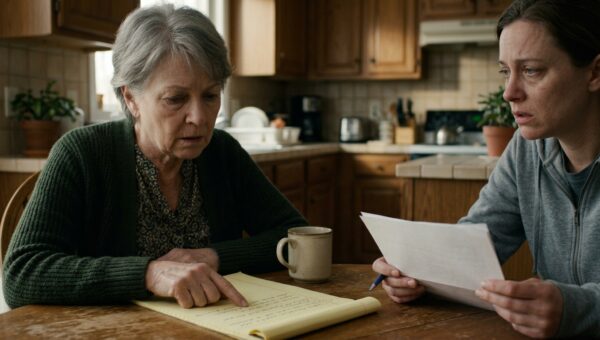
I stayed inside at the kitchen table, opening up the laptop and pulling down every shared digital link, every old authorization form, every single thread that connected my hard-earned wages to his name. I called the credit union fraud department myself at 8:15 sharp, filing the formal paper trail that locked my accounts behind three layers of new security passwords he could never guess.
When Arthur finally came back inside, he looked like he had aged ten years in twenty minutes, his shoulders rounded and his eyes red around the rims.
“He’s staying at a motel down by the interstate for a few days,” Arthur said softly, not looking at me. “He has to go to the clinic for treatments on Thursday. I told him he could use my truck to get there.”
“That’s your choice, Arthur,” I said without looking up from the screen. “You can help him get to the doctor. But he is not coming into this house, and he is not getting a dime from my accounts.”
Arthur just nodded slowly, accepting the boundary the way a man accepts a hard frost in late October. He knew as well as I did that some bridges can’t be rebuilt with apologies, especially when you burned them down yourself just to stay warm for a little while.
Later that afternoon, after Arthur had gone back out to the garage to busy himself with some small engine repair, I cleared the kitchen table completely. I wiped down the formica surface with a damp cloth, scrubbing away every trace of dust and old coffee rings until the top shone clean and bare in the pale afternoon light.
Then I laid out the crisp, freshly printed statement from the bank, showing my name and my name alone as the sole owner of the account. Right beside it, I set my old leather suitcase near the front door, packed and ready for the weekend trip to see my sister in Knoxville that I had put off for six long years.
I stood there in the quiet kitchen for a long time, listening to the clock tick against the wall without a single worry about who might be calling next. My savings were safe, my name belonged to me again, and for the first time in a very long time, the floorboards under my feet didn’t feel like they were about to give way.