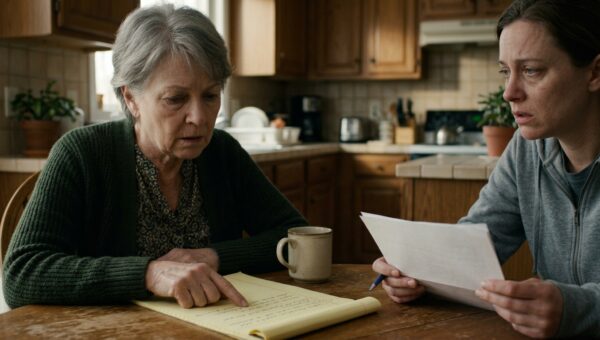
I was sitting at the kitchen table with a yellow highlighter and the stack of statements from First National when I saw it. It was tucked between the water bill and the insurance auto-draft like it belonged there. $189 a month. Every single month for one hundred and eight months. Route 4 Storage, Unit 37. The total didn’t even register at first because my brain kept trying to make it fit into our normal expenses, like the boat insurance or the annual association fee.
But we don’t own a boat anymore, and our association fee is paid once a year in July.
Robert walked into the kitchen right then, smelling of heavy machine oil and wet pine from the garage, holding his coffee mug by the rim. I remember watching the steam drift up past his chin. He had that loose, easy stride he always had after a morning of puttering, his sleeves rolled up to the elbows and his forearms dusted with gray drywall residue. He looked like every other retired mill supervisor in the county. Steady, dependable, predictable Robert.
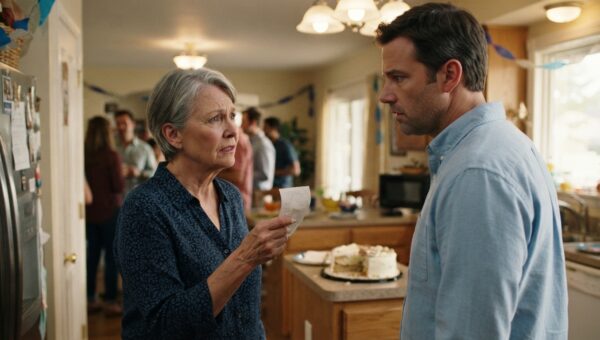
“What are you looking so hard at?” he asked, leaning over the back of my chair to check the coffee pot.
“What is Route 4 Storage?” I asked. I didn’t look up from the paper. I wanted to see his face before he knew I was watching.
He didn’t skip a beat. Not a twitch in his jaw, not a flicker in his eyes.
He just reached around me, topped off his mug, and leaned against the counter with a soft sigh. “Oh, that. Must be the old gear. The outboard motor, some of the camp tools from my dad’s place. I keep meaning to clear it out.”
“For nine years?” I asked.
He gave that low, rumbling laugh he uses when he thinks I’m making a fuss over nothing. “Time gets away from you, Miriam. You know how it is.”
“I do,” I said. “I really do.”
He kissed the top of my head on his way out to the truck to meet the boys at the lodge for their monthly board meeting. I watched his Ford pull out of the gravel drive through the kitchen window, the tailpipe rattling just a little bit like it always did when the muffler needed tightening. Then I stood up and walked straight into his small home office off the hallway.
The desk is an old oak kneehole piece my grandfather built, heavy and scarred from decades of use. Robert keeps his checkbooks and receipts in the top right drawer. I didn’t bother opening it the normal way. Instead, I crouched down on the braided rug, slid my hand underneath the solid wood top, and ran my fingers along the smooth grain near the back corner. My nail caught on something slick and papery. Masking tape. Folded over twice to make a little pull tab.
I peeled it down, and a small brass key dropped right into my palm. It was cold and smelled faintly of copper and old grease. I didn’t think about it anymore. I just put it in my pocket, grabbed my car keys off the hook by the back door, and backed my sedan out of the drive.
The drive out Route 4 takes about twenty minutes past the abandoned brickyard and the stretch of timberland where the paper mill used to dump its slag.
The sky was that flat, bruised gray color we get right before a March sleet storm, low enough to catch on the top of the radio towers. Route 4 Storage isn’t much to look at. A chain-link fence with sagging wire, a motorized gate that stays stuck half the time, and three long metal buildings painted a dull, corporate beige. Row C. Unit 37.
I parked my car three rows down and walked the rest of the way on the crunching gravel. The wind was picking up, rattling the corrugated metal siding of the units like someone shaking a sheet of tin. I stopped in front of 37. There was no padlock, just the standard cylinder lock built into the rolling door. My hands didn’t shake when I slid the brass key into the slot. That surprised me. I felt hollowed out, like an old stump after a freeze. I turned the key. It caught twice, then gave a heavy mechanical click.
I grabbed the handle and yanked upward. The metal door groaned on its tracks, sliding up to let in a square of pale, greasy daylight.
It was not hunting gear.
I stood there on the threshold with my hand still gripping the cold steel handle, my lungs tightening up. The air inside didn’t smell like damp canvas or old outboard motors. It smelled of lavender fabric softener and fresh paint and expensive coffee. A small floor lamp stood beside a beige microfiber sofa that looked like it had been pulled straight out of a suburban model home. There was a low coffee table with a stack of home and garden magazines fanned out neatly beside a ceramic coaster. Along the back wall, floor-to-ceiling metal shelving units were packed tight with heavy plastic storage tubs and rows of vacuum-sealed bags filled with women’s clothing. Sweaters, slacks, winter coats, all in sizes much smaller than mine.
I stepped inside because my feet wouldn’t listen to my head. The linoleum under my sneakers was clean, almost polished. On the far wall, past a small kitchenette setup with a mini-fridge and a microwave, hung a row of framed photographs.
I walked over to them slowly, as if I were moving through deep water. One photograph showed Robert standing on the steps of a white-trimmed craftsman house I had never laid eyes on in my life. His arm was around a woman with dark hair pulled back in a silver clip. She was laughing, her head tilted back against his shoulder, looking at him with that easy, unquestioning familiarity that belongs only to wives. She was wearing a yellow cardigan I had never seen in our closet.
“Who are you?” I said out loud to the empty metal box. My voice sounded thin and flat against the corrugated walls.
I reached out and touched the frame of the photograph. The wood was light oak, cheap but clean. As my fingers brushed the edge, the whole frame shifted forward in the mount. Something stiff was wedged behind the cardboard backing. I hooked my thumb under the edge and pulled.
It was a standard residential lease agreement. The staple was bright and shiny, untouched by rust. The start date listed at the top was three months from now. Three months. Right around the time Robert and I were supposed to be driving down to Myrtle Beach for our anniversary week.
The names on the contract were Robert James Miller and Clara Vance. A three-bedroom rental property forty miles outside of Portland, complete with a garage, a fenced yard, and a monthly payment that made my chest constrict. Below the signatures was a bank routing number and an auto-pay authorization form.
I sat down on the edge of the beige sofa because my knees simply gave out. I didn’t cry. I didn’t scream at the metal walls. I just looked at the lease agreement again, reading the terms line by line until the numbers blurred into gray smudges. Nine years of funding this place. Nine years of quiet departures for the lodge, monthly board meetings that lasted all weekend, and polite little kisses on my cheek when he came home smelling of pine and engine oil. He hadn’t just built a second life; he had engineered an exit strategy with the precision of a master carpenter, timing every single nail to drop right when he reached retirement age.
“You really thought of everything, didn’t you, Robert,” I whispered.
I stayed there in the cold metal unit for perhaps twenty minutes, moving through the space like a stranger touring a museum exhibit. I opened the mini-fridge and found creamer and bottled water. I checked the top shelf of the shoe rack by the door and saw three pairs of women’s walking shoes and a pair of pink slippers. Everything was orderly, calm, and deliberate. There was no chaos here, no messy arguments, no half-truths left lying around. Just a parallel existence waiting for a calendar page to turn.
When I finally pulled the rolling door down, the latch clicked into place with a dry, final sound.
The drive back home felt longer. The sleet had started, little hard pellets bouncing off my windshield with a steady, ticking rhythm. When I pulled into our driveway, Robert’s truck was already parked by the barn. His mud boots were sitting on the back porch exactly where he always leaves them, caked with the same gray dirt he’d tracked out that morning.
I walked inside and hung my coat on the peg by the door. The house was warm and smelled faintly of the pot roast I’d put in the slow cooker before I left. Robert was sitting at the kitchen island, scrolling through something on his tablet with his reading glasses perched on the end of his nose.
“You’re back early,” he said without looking up. “How was town?”
“Quiet,” I said. I walked over to the desk in the office, slipped the brass key back under the corner of the wood, and secured it with a fresh piece of masking tape I found in the drawer. Then I took the lease agreement and the photographs I’d printed out on my phone and laid them right beside his coffee mug on the kitchen island.
Robert stopped scrolling. The silence in the kitchen suddenly grew heavy, pressing against the windows where the sleet was still tapping away. He looked down at the papers, then slowly pushed his glasses up his nose. The color drained out of his face so fast he looked like he’d been struck across the temple.
“Where did you get these?” he whispered. His voice didn’t have that low, easy rumble anymore. It sounded small and thin, like paper tearing.
“Route 4,” I said. I leaned my hands against the edge of the counter and looked right into his eyes. “Unit 37. You left the key in the desk, Robert. You were always a little careless with the small details.”
He opened his mouth to say something, a practiced excuse about old tools or hunting gear, but he caught himself before the words came out. He looked at the lease agreement, then at the photograph of the woman in the yellow cardigan, and finally back at me. His shoulders slumped down, the last bit of that mill-supervisor posture collapsing all at once.
“Miriam,” he started, his voice cracking on my name. “I can explain, “
“No, you can’t,” I said. My voice was completely steady, quieter than his. “You can’t explain nine years. And you certainly aren’t going to explain the next three months from this kitchen table.”
I reached into my pocket, pulled out the set of spare house keys I’d taken off his keyring while he was still at the lodge, and placed them gently on top of the lease agreement.
“My lawyer’s office is open until five,” I told him, looking down at the metal keys sitting right beside his coffee cup. “You have forty-eight hours to get your clothes out of the bedroom and into that storage unit on Route 4. After that, I’m changing every deadbolt from the cellar to the attic.”
He didn’t argue. He didn’t raise his voice or try to smooth it over with that big, easy laugh. He just sat there staring at the table as the kitchen clock ticked off the seconds, the sound sharp and dry against the glass.
Later that evening, after the truck had finally backed out of the drive for good and the house was entirely empty of him, I walked back into his little office. I knelt down by the oak desk, reached underneath with a pair of needle-nose pliers, and unscrewed the small brass hook where the spare key had hung for all those years. I dropped the little metal piece into the wastebasket, where it landed with a tiny, hollow clink. Then I pulled a chair over to the front living room window, sat down with my hands folded in my lap, and watched the morning sunlight break clean and unbroken across the hardwood floor.