The very next morning after we buried my father, my ex-husband’s new bride confidently stepped into his treasured garden and suggested I should begin packing my belongings. She acted as though the inheritance hearing was already decided, completely convinced that my family’s estate would soon become hers. What she never expected was that Robert Whitaker had arranged one final surprise before leaving the world.
And by the time she realized what she had set in motion, there was no turning back. I was pruning the white roses when her voice drifted between the flowerbeds.
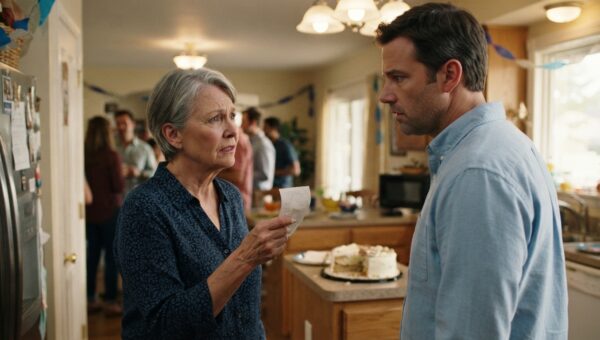
“You should probably start packing,” she announced with a satisfied grin. “Tomorrow’s will reading is simply paperwork. This house is going to belong to us.”
I stayed silent. Instead, I carefully clipped another dead branch using the same patience Robert Whitaker had spent years teaching me. Steady hands. Gentle movements. Never hurry. He always reminded me that roses endured because they knew how to protect themselves. The memory almost softened my grief. Those white roses had been planted during the first summer Mason and I were married, back when Mason still knew how to look me in the eye without calculating what he could take from the room.
Chloe stood there tapping her manicured fingernails against a gold bracelet, wearing an ivory linen dress that looked ridiculous among the damp soil and mulch.
She was thirty-two, half Mason’s age, and possessed the kind of loud, abrasive confidence that comes from marrying a man whose debts you haven’t had to pay yet. Mason was standing a few yards back by the arbor, his hands shoved deep into his pockets, pretending to inspect the property lines like some kind of squire. He wouldn’t look at me directly. He never did after the divorce papers cleared four years ago. He just watched the crows circling the old oak tree by the fence line.
“Did you hear me, Clara?” Chloe asked, her voice sharpening when I didn’t drop my shears. “Mason said your father’s lawyer already filed the draft. Traditional estates go down the male line in this county, everyone knows that. And since you’re just… well, since you’re divorced, you don’t have any legal standing here anymore.”
I snipped a thick stem. The snap was the only sound for a second, sharp and clean against the quiet morning air. “My father’s name was Robert Whitaker,” I said, keeping my eyes on the bush. “He didn’t do drafts, Chloe.
He did foundations. We’ll see what Vance has to say tomorrow morning at ten.”
Chloe let out a short, thin laugh that sounded like gravel sliding down a chute. “Vance is an old man who writes deeds for cattle farmers. He’ll do what he’s told.”
She turned on her heel and clicked her heels across the flagstone patio toward the back porch, her voice carrying back to where Mason stood. Mason lingered for half a second longer, his jaw tight, before following her inside. They thought they owned the place already. They had probably spent the last three weeks measuring the living room for new furniture and arguing over which bedroom would be their dressing suite. They didn’t know my father at all. They only knew the title on the tax rolls and the square footage of the brick house he built with his own hands back in nineteen-eighty-four.
The house was quiet for the rest of the day. Too quiet.
The kind of silence that usually settles over a place right before something heavy gives way. I spent the afternoon clearing out the greenhouse, washing down the glass panes with warm water and vinegar the way Dad always did after a frost. My hands smelled of damp cedar and earth by the time the sun dipped behind the ridge, turning the sky the color of a bruised plum.
The next morning, the sun came up harsh and white. I didn’t rush. I washed my face, put on my mother’s gray linen skirt and a clean blue blouse, and brewed a pot of chicory coffee just like Dad liked it. By nine-forty-five, Mason’s silver SUV was already parked sideways in our gravel drive, blocking the path out to the road.
Chloe was waiting on the porch when I stepped out the front door. She had a leather portfolio tucked under her arm and a smile that looked like it had been practiced in front of a mirror three times before breakfast.
“About time,” she said, checking her watch. “We don’t want to keep Vance waiting. Though honestly, I’m surprised you didn’t just mail the keys back to us yesterday.”
“I like to do things in person,” I said, locking the heavy brass deadbolt behind me.
Attorney Vance’s office smelled like old law books, lemon oil, and peppermint lozenges. It was the same smell it had when I was eight years old and Dad brought me here while he signed the papers for the north pasture. Vance was seventy-eight now, with thick white hair and eyes like polished river stones behind his wire-rimmed glasses. He didn’t stand up when Mason and Chloe barged into the room, trailing their expensive perfume and an unmistakable aura of impatience.
“Sit down,” Vance said, his voice like dry leaves scraping across a porch. He didn’t offer a greeting. He just tapped a thick manila folder against the mahogany desk.
Mason took the leather armchair, leaning forward with his elbows on his knees, wearing that lazy, half-charming grin he used whenever he thought he was closing a deal. “Morning, Vance. I know you’re busy, so let’s just make this official. We’ve got contractors coming out to the estate at one o’clock to look at the kitchen remodel.”
Vance didn’t blink. He opened the folder with deliberate slowness, sliding a set of heavy parchment pages across the desk. “Robert Whitaker was a very thorough man, Mason. Some might say stubborn. But he was never careless.”
Chloe shifted in her chair, crossing her legs with a faint rustle of silk. “We’re aware of his habits. But under the county’s traditional probate rules for legacy agricultural land, “
“This isn’t county land, Mrs. Whitaker,” Vance interrupted, his voice dropping an octave. “This is private property held within a revocable living trust amended twelve weeks ago, specifically recorded with the county clerk on the twelfth of March.”
Mason’s grin faltered just a fraction. He shifted his weight. “Amended? What do you mean amended? Dad told me, Robert told me the estate was under family stewardship.”
“He said family stewardship,” Vance agreed, turning a page. “He did not say corporate liquidation or trophy acquisition.”
Vance looked up, his gaze locking onto Chloe with a coldness that made the room drop ten degrees. “Furthermore, Robert anticipated that certain individuals might attempt to take possession prematurely. Specifically, he anticipated that someone might visit the property prior to this reading and instruct my client to pack her belongings.”
Chloe stiffened, her jaw dropping slightly. “That’s ridiculous. We were just, we were having a conversation.”
“Section twelve, paragraph four of the amended trust,” Vance continued, reading aloud from the document without breaking rhythm. “Any preemptive legal claim, harassment, verbal eviction attempt, or assertion of ownership directed toward the primary caretaker, defined herein as my daughter Clara Whitaker, by any former relative or secondary beneficiary shall trigger an immediate and irreversible forfeiture of all residual stipulatory support.”
The office went dead silent. You could hear the ticking of the old wall clock over by the filing cabinets, loud and heavy like a hammer hitting an anvil.
Mason went gray around the mouth. “What is that supposed to mean? That’s a joke. You can’t just cut me out because Chloe said a word in the driveway.”
“It’s not a joke, Mason,” Vance said, his voice flat as a slab of slate. “And it wasn’t just a word. The estate’s security system, which your late father insisted on upgrading last November, records audio across the entire perimeter of the main garden. We have your wife’s precise instructions from eight-fifteen yesterday morning logged, timestamped, and notarized.”
Chloe stood up so fast her chair screeched against the linoleum. “This is a setup! You rigged this! Mason, tell him to stop this right now!”
Mason didn’t stand. He looked like he had been kicked in the chest by a mule. He stared at the parchment on the desk as if it were written in a foreign language. “Vance. Come on. We were married to this family. I helped put up that fence in ninety-nine.”
“You left her for a twenty-five-year-old real estate agent who didn’t know the difference between a white rose and a weed,” Vance said plainly. “And Robert remembered that very clearly when he signed these papers.”
Vance slid a second, thinner folder across the desk toward me. “The estate is yours, Clara. Free and clear. The taxes are paid through twenty-eight. The trust is sealed. And according to the immediate occupancy clause, anyone currently residing on the grounds without your express written permission is trespassing as of noon today.”
Chloe looked like she wanted to scream, but her voice seemed to catch in her throat. She looked at Mason, waiting for him to do something, to play the big man he always pretended to be. But Mason just sat there with his head in his hands, staring at the floor between his shoes.
“You’re out,” I said.
It was the first time I had spoken since we walked into the room. My voice didn’t shake. It sounded steady and dry, just like Dad’s when he told me how to prune the roses down to the hard wood so they’d come back stronger the next spring.
Chloe grabbed her portfolio off the desk, her face twisted in pure, ugly fury. “You think you’ve won something? You’re just living in an old man’s drafty house in the middle of nowhere! We don’t even want your stupid dirt!”
She turned and stormed out of the office, the door slamming behind her so hard the frosted glass rattled in its wooden frame. Mason stayed sitting for three seconds longer. He looked up at me then, his eyes small and defeated, looking older than his fifty years.
“Clara,” he started, his voice cracking.
“The truck is blocking my driveway, Mason,” I said. “Move it before the sheriff gets out there.”
He didn’t say anything else. He stood up slowly, his shoulders slumped like he was carrying a sack of wet feed, and walked out without looking back.
I stayed in the office while Vance poured two fresh cups of chicory coffee from the little hot plate in the corner. He handed me one across the mahogany desk, his knuckles spotted with age and scarred from years of farm work before he went to law school.
“Your dad would have liked how you handled her in the garden yesterday,” Vance said softly, blowing across the top of his mug. “He was worried you’d let them push you off the land.”
“Dad knew I wouldn’t,” I said. “He taught me how to wait out a frost.”
I drove home alone down the county road with the windows rolled down, letting the dry valley wind pull the smell of old law books out of my hair. When I pulled into the gravel drive, their SUV was gone. The yard was quiet again, just the sound of the wind moving through the cedar branches and the crows settling back into the upper limbs of the oak tree.
I walked around to the back garden. The white roses were still there, catching the last golden light of the late afternoon over the ridge. I set my purse on the back porch step, picked up the worn wooden-handled shears Dad had left on the potting bench, and clipped a single, flawless white rose from the lower branch.
I carried it inside and laid it gently on the polished wooden surface of my father’s study desk, right beside his empty glasses and the heavy brass paperweight he used when the wind came up through the valley. It looked small against the dark wood, but it didn’t need to be loud. It had roots that went deep into the dirt, and nobody was going to dig them up now.