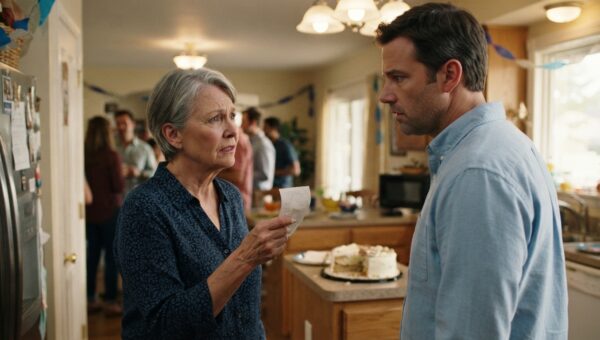
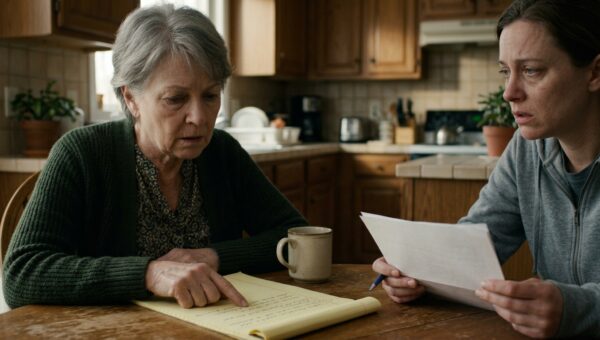
The kitchen clock gave a wet, heavy click against the wall at 12:44 in the morning when Arthur finally set his keys down on the counter. He smelled like antiseptic and cold winter air, the exact same scent he had been bringing home every Tuesday for the last sixteen weeks. I did not look up from the kitchen table where I sat under the glaring yellow light of our overhead fixture, though I had the green parking stub tucked neatly beneath the corner of my ceramic coffee mug.
For four months I had listened to his excuses about late inventory counts at the hardware warehouse. For four months I had let doubt pool in the dark corners of my mind until it felt heavy enough to choke me. But tonight the parking stub had fallen right out of the pocket of his wool coat when I hung it up, and the handwritten napkin note in the glove compartment had a woman’s name and a time scrawled in blue ink. Sandra. Tuesdays, 7. I stared at him as he unlaced his work boots, and for the first time in our twenty-year marriage, I wondered who the stranger was living across the hall from me.
Twelve years before that Tuesday, I built a concrete wall around my family history and threw away the trowel. After my mother passed away in the county hospital, my father and I had a final argument in her empty kitchen that left no room left for mending.
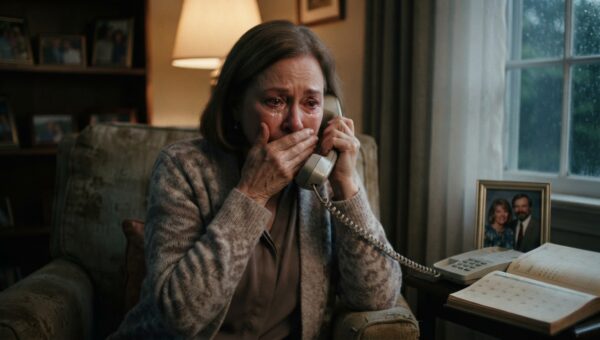
He was a hard man who measured affection in silence and expected everyone around him to bend until they snapped. When I walked out that afternoon, I told myself I was cutting out a cancer, and for more than a decade I kept that promise with a stubborn pride that felt like armor. I changed my phone number, moved across the valley to Bakersfield, and never once looked back when people asked if I had any kin left. Arthur knew every jagged piece of that story because he had held me on the living room floor the night I finally stopped crying over my mother’s cedar chest. He knew how deep the scar ran, which made his late-night absences feel less like an ordinary secret and more like a slow betrayal.
The sun was barely lifting over the dusty horizon by the time Tuesday evening rolled around again, bringing a heavy, dry desert wind that rattled the wind chimes on our front porch.
I told Arthur at breakfast that I had a late shift at the community center, watching his face carefully for any flicker of panic or relief. He just nodded, spooning oatmeal into his bowl with the quiet, methodical rhythm he always used before a long shift at the supply yard. “Don’t wait up for me, Clara,” he said, leaning down to kiss the top of my head with lips that smelled faintly of stale filter coffee. “We’ve got that shipment coming in from Fresno, and the new kid is bound to mess up the manifest.” I kissed him back, tasting the lie on his skin like copper. As soon as his old blue pickup rattled down the gravel drive and turned toward the highway, I pulled my sedan out of the carport and parked two blocks down the street to wait out the clock.
The drive to Mercy General took twenty-two minutes through the neon-lit sprawl of the north side, the traffic thinning out as the clock crept toward seven.
Mercy General was an aging brick building with a concrete parking deck that always smelled of exhaust fumes and damp asphalt. I parked on the third level, walked down the echoing concrete stairs with my purse clutched tight against my ribs, and pushed through the heavy glass doors into the antiseptic lobby. The air inside was thick with floor wax and old wool, humming with the low, monotonous drone of the vending machines in the corner. My palms were sweating against the leather strap of my bag, and every step down the linoleum corridor felt like walking across thin ice over deep water. I didn’t know what I was going to find when I reached the cardiac ward, but my chest felt so tight I could barely draw a full breath.
The third-floor cardiac ward was quiet, bathed in the dim, blue-tinted glow of night lights and computer screens at the central nurses’ station. I kept my head down, pretending to look for a room number until I reached the bend in the hall where room 308 sat near the linen closet. Arthur’s blue canvas jacket was draped over a plastic visitor’s chair just outside the door, looking familiar and terribly out of place in the institutional grayness. I stopped twenty feet away, my breathing hitching in my throat as I peered through the narrow glass window set into the heavy wooden door. Arthur was sitting in a low armchair beside the narrow metal bed, leaning forward with his elbows on his knees. He was holding the hand of the man in the bed, his thumb gently stroking the old, spotted knuckles with a quiet tenderness I thought he reserved only for me.
The man in the bed was frail, his gray hair plastered against the pillow, his face hollowed out by illness in a way that made him look smaller than life. Even from the doorway, through the smudged glass and the tangle of IV lines, I knew those sharp, stubborn cheekbones anywhere. It was my father. The man I hadn’t spoken to since the Clinton administration, the man who had told me I was dead to him in a kitchen smelling of bleach and stale coffee. My knees went weak, and I had to grip the wooden doorframe with both hands just to keep from sliding down the wall. My brain stalled completely, refusing to connect the man who had broken my heart twelve years ago with the husband sitting patiently by his bedside. Arthur leaned closer, whispering something I couldn’t hear through the glass, and my father’s frail head turned slightly on the pillow in a slow, defeated nod.
Footsteps padded softly behind me on the tile floor, and a tired voice spoke near my shoulder. “You must be Clara,” the woman said. I jumped, turning around to find a nurse in dark blue scrubs holding a plastic chart holder against her chest with a name tag that read Sandra. She had kind, tired eyes behind wire-rimmed glasses and a look of deep sorrow that didn’t belong in a hospital hallway. “I’m Sandra. I’m the charge nurse on this floor.” She looked past me toward room 308, her expression softening into something unreadable. “He’s been coming every week, you know. Every single Tuesday without fail, right after his shift at the yard ends.” I stood there, my mouth opening and closing without any sound coming out, the parking stub burning a hole in my pocket.
Sandra shifted the chart to her other hand, letting out a long, quiet sigh that carried the weight of a dozen midnight shifts. “Your father was brought in four months ago after a bad turn with his heart, and when we asked for next-of-kin contacts, he didn’t have anyone listed except an old phone number from an insurance card,” she said softly, keeping her voice low so it wouldn’t carry through the glass. “He remembered your husband’s number from somewhere. Arthur answered, and he came straight down here before you even woke up.” I stared at her, the words tumbling over each other in my head until they made no sense at all. “He told me not to tell you,” Sandra continued, looking right into my eyes. “He said you were carrying enough ghosts from the past without dragging you back into this room. He’s covered $9,000 of your dad’s bills out of his own pocket, piece by piece, every time the collection notices started showing up in the mail.”
The world seemed to tilt on its axis, the humming of the hallway lights fading into a dull, distant roar. “Nine thousand dollars?” I whispered, the number tasting like dry ash on my tongue. Sandra nodded once, her expression firm and steady. “Your father didn’t want charity, and he was too proud to ask you for a glass of water, let alone a dime for his medicine. Arthur told him he was just paying back an old debt from years ago, though we both knew there wasn’t any debt to speak of.” She reached out and patted my arm with a warm, calloused hand. “Your husband is a good man, Clara. He sat right there in that chair while your father cursed him out for the first month, and he just kept coming back every Tuesday with a cup of black coffee and a clean shirt.”
Before I could answer, before I could process the sudden, crushing weight of everything I had gotten wrong, Sandra reached out and pushed the heavy door open an inch. The squeak of the hinges sounded loud in the quiet ward, and both heads inside turned toward the threshold at the same time. Arthur froze, his hand still resting over my father’s knuckles, color draining from his face as he saw me standing there in the harsh light of the hallway. My father blinked slowly against the glare, his sunken eyes shifting from Arthur to me, his chest rising and falling beneath the thin hospital blanket with a ragged, uneven rhythm. For a long second nobody moved, the silence between us heavier than the twelve years of bitter snow that had fallen since we last spoke.
Arthur stood up slowly from the chair, his shoulders tense, looking ready to take whatever blow I was about to drop on him. “Clara,” he said, his voice cracking slightly on the edge of panic. “I can explain the whole thing. I just didn’t want you to carry this.” He took a half-step toward the door, his hands raised palms up in a gesture of helpless surrender. “He was alone, honey. When they called that night, he thought he was dying, and he just kept saying your mother’s name over and over again.” I didn’t scream, and I didn’t run away down the hall like I had done twelve years ago in that kitchen. I just walked past Arthur into the small, sterile room, my boots making a hollow clicking sound on the floor tiles.
I stopped beside the bed, looking down at the old man who had once seemed like a giant of granite and iron. Up close he looked fragile, like dry autumn leaves that would blow away if someone opened the window too fast. His skin was pale and paper-thin, and his breathing had a wet, rattling sound that made my throat tighten with an old, familiar terror. He looked up at me through watery eyes, his lips trembling as he tried to find words he hadn’t used in more than a decade. “Clara,” he rasped, his voice sounding like gravel being turned over with a rusty shovel. “I didn’t mean… I didn’t mean for him to have to do this.” It wasn’t an apology, not really, but it was the closest thing to an unbuttoning of the soul that my father had ever managed in his entire life.
I looked down at his frail hand resting on the white sheet, the skin bruised purple from IV needles and age. Without thinking about the past twelve years, without thinking about the pride I had polished like silverware every single day, I reached out and laid my hand over his. His fingers were cold, but they twitched instinctively under mine, gripping my palm with a weak, desperate strength that caught me completely off guard. “You’re a stubborn old fool,” I whispered, my voice thick with tears I hadn’t given myself permission to shed since my mother’s funeral. My father let out a shaky, wet exhale that sounded almost like a laugh, closing his eyes as a single tear cut a clean path through the gray stubble on his cheek.
Arthur came up quietly behind me, his large, warm hand settling gently on the small of my back, anchoring me to the floor when my legs felt like water. We stayed like that in the dim quiet of room 308 for a long time, the steady beep of the bedside monitor keeping time with our breathing while the rest of the world kept turning outside the brick walls. When we finally walked out of Mercy General into the cool midnight air, the desert wind had died down to a faint whisper against the concrete. Arthur held the passenger door of the truck open for me, his face tired and soft in the amber glow of the parking lot lights. I didn’t get in right away. I stood there by the fender, pulling the crumpled green parking stub out of my pocket and looking down at the greasy ink stamped on the back by the automatic gate.
“You’re an idiot, Arthur,” I said softly, looking up into his tired eyes. He gave a quiet, raspy chuckle, leaning his forehead against mine in the dark. “I know,” he murmured, his thumb brushing my cheek where a tear had finally spilled over. I didn’t let go of the ticket as I slid my hand into his warm palm, holding the little piece of green cardboard like a receipt for a past we had finally laid to rest. We walked around the truck and got inside together, turning the key and driving out of the lot into the quiet night, leaving the hospital behind us with the engine humming a steady, ordinary tune all the way home.