The bank statement was sitting right there next to the butter dish on Wednesday morning when Robert left his glasses on the counter. I only picked it up because the balance looked three digits lighter than it should have been after our property tax cleared. I was running my thumbnail down the line items, looking for the vet bill from our old setter, when the name caught my eye.
Route 4 Self Storage. One hundred eighty-nine dollars. Every single month, like clockwork, for nine solid years.
I didn’t think much of it at first because Robert loves his gear. He spends his weekends up at the timber lodge with his brother Paul, or at least that is what he has told me every autumn and spring since the kids went off to college. When he came back inside for his spectacles, I tapped the paper with my finger and asked him straight out what he was paying for over on the highway.
He didn’t even blink. He just reached for his glasses, slipped them into his breast pocket, and gave me that slow, easy smile he uses when he is talking to a client who wants to back out of a contract. “Just some old timber gear and the heavy tools from dad’s barn, honey,” he said. “It is worth the drive to keep them out of the damp.”
That was all he said before he grabbed his travel mug and headed out to the truck. He didn’t stutter. He didn’t look sideways. But Robert has this tiny twitch in his left jaw muscle whenever he is reciting something he practiced in the mirror, and I had seen it maybe four times in thirty-two years of marriage. Once when he totaled the Buick on ice, once when his partner tried to cheat him out of the timber rights, and just then in the kitchen.
It took me twenty minutes to tear through his home office. I didn’t look in the filing cabinets where he keeps the tax returns or the deeds. I went straight for the heavy mahogany partner’s desk his father built. I ran my fingers along the back edge of the bottom drawer, feeling for the grain, and my knuckle caught on something taped flat against the underside. A small Yale key wrapped in gray masking tape.
I drove out to Route 4 around noon while he was supposed to be checking the perimeter fence up at the lodge. The rain was coming down in sheets, blurring the windshield so bad I almost missed the gravel turnoff for the storage yard. The place smelled of wet asphalt and old cardboard. Unit 37 was way down at the very end of the third metal building, right where the security lights flickered against the corrugated tin walls.
My hand shook so hard I dropped the key twice into the puddles before I finally jammed it into the padlock. The latch gave a loud, heavy snap that echoed down the empty corridor. I pushed the roll-up door open two feet and stepped inside, clicking the overhead fluorescent tube on with a pull chain.
It is not hunting gear. Inside is a living room. A couch, a floor lamp, a coffee table with magazines.
Women’s clothing in vacuum bags stacked along the wall. A shoe rack. And on the coffee table, a framed photograph of my husband with a woman, standing in front of a house I don’t recognize. Behind the photo is a lease agreement. It is dated three months from now, and it says fourteen-thousand dollars due upon occupancy of a three-bedroom brick bungalow on Clover Lane in Oak Creek Township.
I stood there under that cold buzzing light for a long time with my boots wet and my breath pluming in the unheated air. The vacuum-sealed bags were full of cardigans, skirts, and summer dresses that were definitely not mine. The magazines on the glass table were current issues of gardening journals and home design monthlies. There was a mug on the saucer with a painted cat on the side, sitting right next to a spare tube of hand cream.
I picked up the photograph with two fingers like it was made of glass. Robert was smiling in a way I hadn’t seen him smile at me since the Reagan administration. His arm was around a woman with short gray hair and a navy blue cardigan, both of them squinting into the summer sun against the backdrop of a neat little lawn with white window boxes.
The lease agreement underneath had his signature right there in black ink, clear as day, alongside the signature of a woman named Elena Vance. Fourteen-thousand dollars due. A security deposit paid in full from an account ending in numbers I had never seen on any joint ledger we ever filed.
I didn’t scream or throw anything. I just felt this cold, heavy weight settle right behind my ribs, pressing down until my lungs barely worked. I took the lease and the photograph, slipped them into my canvas tote bag, and pulled the metal door down until it locked with a finality that made my teeth ache.
On Saturday morning, I didn’t wait for him to come back from his lodge trip. I drove the forty miles over to Oak Creek Township myself, following the address printed on the top of the Clover Lane lease. It was a quiet neighborhood with big maples dropping yellow leaves all over the curbs and children riding bicycles past mailboxes painted like little red barns.
I parked three houses down behind a faded delivery van and sat there with the heater humming. At 10:15 in the morning, Robert’s dark green pickup pulled smoothly into the gravel drive of number 144. He got out wearing his old canvas work jacket, but he wasn’t carrying timber gear or a chainsaw. He was carrying a brown paper bag from the local bakery and a plastic gallon jug of weed killer.
The woman came out the front screen door to meet him, wiping her hands on a dish towel. She looked to be in her late fifties, with kind eyes behind wire-rim glasses and a silver chain around her neck holding a small gold band. Robert leaned down and kissed her right on the cheek, comfortable and easy, the way a man kisses his wife of thirty years when she’s waiting for him with coffee.
They walked together around the side of the house toward a raised vegetable bed in the back. I watched them through the windshield for twenty minutes, watching him bend down to show her how to spade the dirt, until my vision blurred with a mix of rain and something hot and sharp that burned behind my eyes.
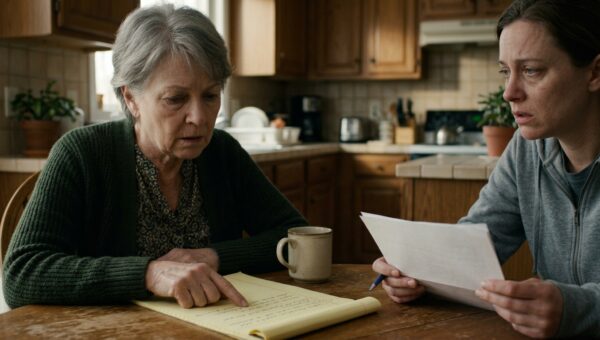
He didn’t come home until Sunday evening around six, exactly when he always came back from the timber lease. I was sitting at the kitchen table with the yellow legal pad and the storage unit papers spread out in front of me under the harsh light of the overhead dome. The house was dead quiet except for the hum of the refrigerator.
He walked through the back door smelling of pine soap and fresh cedar shavings, tossing his heavy keys onto the counter with the familiar heavy clink. “Traffic was heavy coming down the pass,” he said, hanging his jacket on the peg by the door. “Must have been half the state heading home from the mountains.”
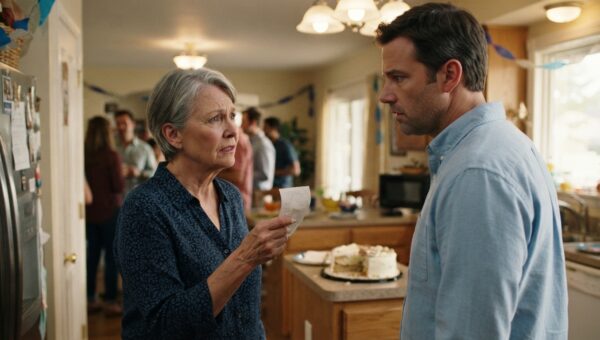
He didn’t notice the atmosphere until he reached for the kettle and saw the framed photograph sitting right in the center of the butcher-block island, right next to the three-page lease agreement for Clover Lane.
He stopped with his hand on the copper handle of the kettle. The easy, practiced look on his face didn’t shatter all at once; it just kind of dissolved, piece by piece, until he looked like an old man who had forgotten where he left his car keys.
“Where did you get that?” he asked. His voice was lower than usual, flat and careful.
“Unit 37,” I told him. I didn’t look up from the yellow legal pad where I was writing down the numbers from the bank statement. “Route 4. Nice place. Climate controlled. You’ve got good taste in flooring, Robert.”
He stood there for a long moment, his shoulders sinking about an inch inside his wool shirt. He didn’t deny it. He didn’t even try to reach for the hunting gear story again. He just walked over slowly, pulled out the wooden ladder-back chair opposite me, and sat down with a heavy sigh that sounded like air leaking out of an old tire.
“It wasn’t meant to hurt you, Martha,” he said. He actually said that. He looked right across the grain of the oak table and told me it wasn’t meant to hurt me. “Things get complicated after thirty years. You change. I changed. We needed different things toward the end.”
“The end?” I looked up at him then, really looked at him, at the familiar wrinkles around his eyes that I used to think meant kindness. “The lease says your occupancy starts in ninety days, Robert. Were you just going to leave a note on the refrigerator, or did you plan to wait until after the Thanksgiving turkey?”
“I was going to handle it properly,” he said, his voice dropping into that reasonable, business-like register he used when he was talking to bank officers. “We would have filed for an amicable late-life dissolution. You keep the primary house, the land, and the retirement accounts we built together. I take my pension split and the truck. Nobody has to know anything about the private side. It’s clean.”
“Clean,” I repeated the word. It tasted like ash in my mouth. “You’ve been funding a second household with a consulting account you hid from our joint returns since Barack Obama’s first term. Nine years of lying to my face every Friday morning when you pack your duffel bag.”
“Elena is a good woman,” he said softly, and that was the moment the last thread snapped. Not because he loved her, but because he said it with the dull, administrative certainty of a man balancing a ledger.
“I don’t give a damn about Elena,” I told him, and my voice didn’t even shake. “And she doesn’t give a damn about you once she finds out you’ve been living a double life on stolen taxes and thirty years of my unpaid labor keeping this farm afloat while you played suburban husband in Oak Creek.”
He leaned forward, his hands flat on the wood. “Martha, be reasonable. If you blow this up now, the tax penalties alone will, “
“The tax penalties are the least of your worries,” I cut him off. “I called Arthur Vance down at the county seat this morning before church. He’s handling my filing in the morning. And as for Elena, I found her phone number in the back of the storage unit lease. I sent her copies of our marriage certificate and the joint tax filings about an hour before you walked through that door.”
The color left his face then, fast and complete, leaving him looking gray and old under the kitchen light. He opened his mouth to say something, but no sound came out. The phone on the counter gave a sharp, sudden buzz, a text message or an alert, and Robert didn’t even dare look down at the screen.
“Get your bags,” I said, pointing toward the stairs with the end of my pen. “You’ve got three months until that lease starts, Robert. But you aren’t waiting until then. You can stay in Unit 37 or you can check into the motel down by the highway, but you aren’t sleeping under my roof tonight.”
He sat there for another minute, watching me with those familiar eyes that suddenly belonged to a stranger, before he slowly stood up from the chair. He didn’t argue. He knew when a contract was voided. He walked out of the kitchen without another word, his boots heavy on the pine floorboards, and the sound of his zipper bag opening upstairs felt like doors closing in an empty house.
By ten o’clock on Monday morning, the joint accounts were frozen, the secondary credit lines were locked down tight by the attorneys, and Robert’s truck was gone from the drive.
I stood alone at the kitchen counter with the morning light hitting the clean wood, listening to the old refrigerator hum against the silence. I reached into my pocket, pulled out the heavy metal key to Unit 37 on its green plastic tag, and dropped it into the bottom of the small ceramic dish where we used to keep the spare change. The clink of iron against porcelain was sharp and clean, and for the first time in nine years, the house finally belonged to me.