The kitchen counter always smelled faintly of burnt toast and chicory coffee on Wednesday mornings, back when I still believed our life together had a solid foundation under it. Robert left for his lodge meeting at precisely 7:15, his wool coat brushed clean, his leather key ring giving off that familiar dry jingle against the brass hook by the door.
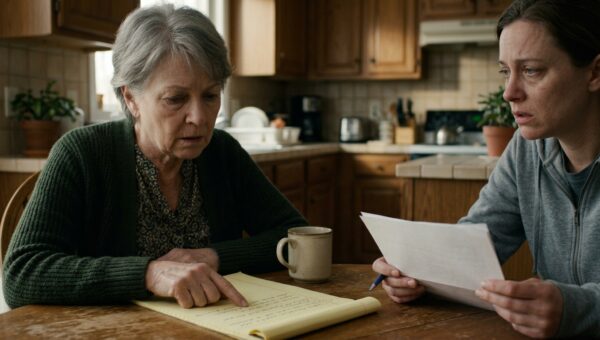
We had been married nine years, and our routine was as predictable as the old grandfather clock in the hallway that gained four minutes every single week. I spent my mornings balancing the checkbook at the oilcloth-covered table, checking the figures twice because groceries had climbed again and every dollar mattered in a town where the paper mill had laid off half its crew.
The statement from First National sat right next to the butter dish that morning, unfolded and marked with Robert’s yellow highlighter. My thumb caught on an auto-payment entry that had repeated every month without fail since the second year we bought the house. One hundred and eighty-nine dollars, drafted on the twelfth of every month, payable to Route Four Mini-Storage. I stared at the line until the ink seemed to blur into a gray smudge against the cheap paper. We did not own a boat. We did not have extra furniture to store.
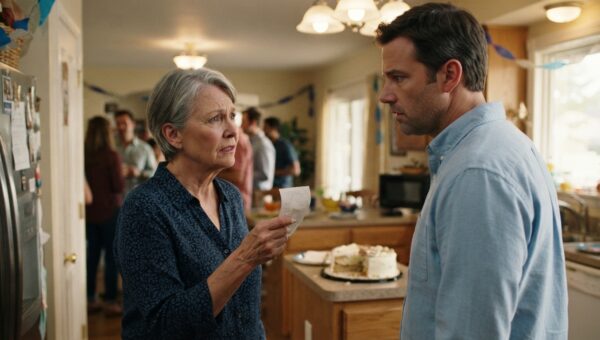
When I asked him about it later that evening while he was scraping his boots on the back porch, he did not even look up from his newspaper.
“Just some old camping gear and spare parts from my dad’s truck,” he said, his voice flat and dismissive as he kicked the screen door shut. “Nothing worth driving all the way out there for.”
That should have been the end of it if Robert had been a better liar, or if he had remembered to put his key ring back where it belonged instead of leaving it tossed carelessly on the corner of his oak desk. Two days later, while he was out helping his brother clear storm damage from the north pasture, I went into his small study. The room smelled of pipe tobacco and old paper, the blinds drawn halfway against the afternoon glare. I opened the middle drawer, the one he always kept nudged shut just a fraction tighter than the others, and ran my fingers along the smooth grain of the wood underneath.
My nail caught on a ridge of gray masking tape stuck hard to the underside of the sliding track. I peeled it loose, and a small brass key dropped into my palm, cold and heavy against my skin. It had a yellow plastic tag dangling from the ring with the numbers three and seven written in his sharp, blocky handwriting. I stood there in the quiet room for a long minute, listening to the grandfather clock tick away the seconds in the hall, and realized I was not even surprised. The cold certainty settled in my chest like a heavy stone dropped into deep water.
The drive out to Route 4 took twenty minutes through the patchy March slush that coated the shoulders of the state road. The storage facility was a long, low cinder-block building painted a dull battleship gray, tucked behind an overgrown stand of pine trees that kept it hidden from the passing log trucks.
The gravel lot was empty except for a faded red pickup truck parked near the office. I kept my coat buttoned high against the damp wind and walked down the central corridor of Unit Building B until I found the heavy steel door marked thirty-seven.
The brass key slid into the padlock housing with a smooth, oiled click that sounded far too loud in the empty hallway. I pulled the heavy corrugated metal door upward, the rollers rattling against the track until a rectangle of pale overhead fluorescent light spilled across the concrete floor.
It was not hunting gear.
The space had been converted into a small, tidy studio apartment, smelling faintly of lemon furniture polish and lavender sachet. A beige tweed sofa sat against the far wall beneath a framed print of a lighthouse, flanked by a standing floor lamp with a pleated shade. A low coffee table held a stack of current home-design magazines and a ceramic dish filled with peppermints. Along the right-hand wall, floor-to-ceiling metal shelving units were packed with heavy-duty vacuum-sealed plastic bags filled with women’s clothing, winter coats, and neatly folded sweaters arranged by color. Near the corner sat a white wooden shoe rack holding at least a dozen pairs of heels and walking shoes, all clean and ready to wear.
I stepped across the threshold, my boots crunching softly on the swept concrete, and walked over to the coffee table. Resting beside a small glass vase was a framed photograph of Robert smiling in a sunlit backyard I had never seen before, his arm draped around the shoulders of a woman with dark hair tied back in a ribbon. She was laughing, her face turned up toward his with an easy familiarity that made my breath catch in my throat. I knew that smile. I had never met her, but the way she leaned into him belonged to a wife, not a stranger.
Behind the photograph, tucked halfway beneath a leather notepad, lay a folded legal document with blue binding tape along the top edge. My fingers were trembling slightly as I pulled it free and opened the stiff pages. It was a residential lease agreement for a split-level suburban home on Maple Street in a town two counties over, signed in Robert’s clear, confident hand. The start date was three months from the current week, coinciding precisely with the maturity date of our joint municipal bonds and the sale of my late mother’s acreage. The monthly rent was fifteen hundred dollars, paid in full for the first year through an automatic transfer from an account I had never been permitted to see.
I stood in the center of that quiet, climate-controlled room for a long time, looking at the neatly made couch and the vacuum bags full of another woman’s life, and the pieces of the last nine years rearranged themselves into something unrecognizable. The late-night lodge meetings that always seemed to fall on Tuesdays and Thursdays. The sudden business trips to the supply yards down south that never yielded any receipts or timber samples. The way he had started keeping his phone face-down on the kitchen table whenever the screen lit up with a message. He had not been building a refuge for old tools. He had been building an exit, funded by every gallon of gas we didn’t buy and every vacation we never took.
“You shouldn’t be poking around in here,” a voice seemed to whisper from the empty corners of the room, though it was only my own thoughts echoing against the metal walls.
I didn’t panic. The hot, frantic rage I had expected to feel never came, replaced instead by a cold, sharp clarity that made every movement deliberate. I pulled my phone from my coat pocket and took clear, well-lit photographs of every page of the lease agreement, making sure the signatures and account numbers were fully legible. I photographed the photograph on the coffee table, the closet shelves, and the serial number on the utility meter mounted near the door. Then I locked the metal door back into place, gave the padlock a firm tug to make sure it caught, and walked back out to my sedan.
The drive home felt longer, the gray landscape blurring past my windshield while my mind raced through account numbers, joint titles, and safety deposit boxes. Robert’s truck was already parked in the gravel driveway when I pulled up around four o’clock, the engine ticking as it cooled in the damp afternoon air. He was standing by the woodpile with an armload of split maple, looking like an ordinary country husband coming in to start the evening fire before supper.
He dumped the wood into the metal bin by the back door and wiped his palms on his work trousers as I walked up the porch steps.
“You missed a good drive,” he said, offering a small, easy smile that didn’t quite reach his eyes. “Brother Dave found some old logging chains we can use for the back pasture.”
I didn’t take off my coat. I reached into my canvas tote bag, pulled out the printed photographs I had stopped to print at the pharmacy in town, and laid them out in a neat row across the scrubbed pine surface of the kitchen table. The lease agreement, the photograph of him with the dark-haired woman, and the bank statement showing nine years of steady payments were spread out under the overhead light like evidence in a courtroom.
Robert stopped with his hand on the back of the kitchen chair, his smile freezing and then slowly fading into a hard, closed expression. The silence in the kitchen grew heavy, thicker than the smell of the woodsmoke drifting in from the stove.
“Where did you get those?” he asked, his voice dropping into that low, dangerous register he usually reserved for dealing with difficult feed merchants.
“Route 4,” I said, my voice steadier than my hands. “Unit 37. It’s a nice place, Robert. Very comfortable. But you forgot to cancel the auto-pay on the main account.”
He stared at the papers for a long moment, his jaw working as he tried to calculate an excuse, a lie, anything to rebuild the wall he had spent nearly a decade constructing. But the numbers and the signatures didn’t leave any room for stories about hunting gear or old truck parts.
“It’s not what you think,” he finally muttered, stepping back half a pace as if the kitchen table had suddenly become hot to the touch. “Things got complicated. You don’t understand how it started.”
“No,” I said, looking straight into his eyes until he was the one who looked away. “I understand completely. And you won’t need to worry about Maple Street in three months, because the joint accounts are frozen, the lawyer has copies of everything on this table, and the sheriff’s office knows whose name is on the storage rental.”
He opened his mouth to say something else, some last defense or angry threat, but then he saw the finality in my face and simply closed it again, the color draining from his cheeks. I turned around, walked down the short hallway to his study, and looked at the empty wooden track beneath the desk where the strip of gray masking tape still left a dull, sticky square against the bare oak.