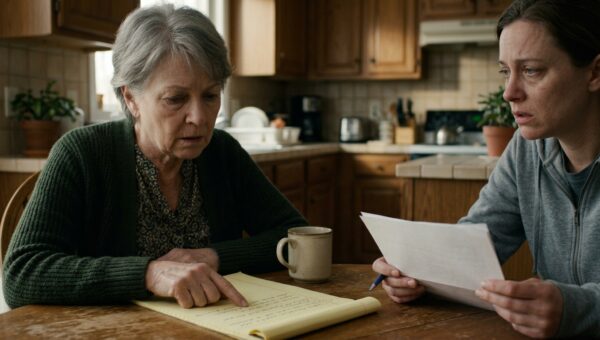
The kettle on the stove gave a high whistle that made the copper sides shudder against the burner. I was standing there with a gray ceramic mug in my hand, waiting for the water to settle down so I could pour my morning coffee before my first shift at the firm. It was supposed to be a regular Tuesday morning in the small apartment I rented near downtown, the kind of morning where you think your life is moving along in a straight line.
I had my laptop open on the kitchen island, and the browser tab was still open to that Pinterest board I had spent the weekend building.
Four years ago, when I was freshly eighteen and my grandmother Nana Clara died, the legal world was a blur of black dresses and paper folders that my parents told me not to worry about. They said they would handle the probate and the deed transfer for the little yellow house on Elm Street because I was too young and busy starting my freshman year of college three hours away. I trusted them because that is what you do when you are eighteen and the ground has just dropped out from under your family. Nana Clara had left the house to me in her will, clear and simple, or so I thought.
I scrolled through the board on my screen, looking at the sage green paint swatches and the cane webbing for a coffee table I wanted to build.
The job I landed after graduation was right in that same neighborhood, which meant I could finally stop paying rent to a stranger and move into my own house. I sent the link to my mother in a quick text message with three heart emojis because I thought she would be happy for me.
My phone stayed quiet for about twenty minutes while I drank my coffee and put on my blazer. Then my mother called. Her voice sounded thin and tight, the way it always did when she was trying to swallow bad news at a family dinner.
“Is this for that real estate website?” she asked before I could even say hello.
“No, Mom, it’s for Nana’s house,” I said, smiling a little at my own excitement. “I’m graduating in three weeks, and my office is ten minutes from there. I can’t wait to paint the kitchen.”
There was a long, heavy silence on the other end of the line, just the sound of her breathing and the faint click of a kitchen drawer closing in the background.
“We need to talk tonight,” she said, and the line went dead before I could ask what she meant.
Later that evening, my father drove over without calling first, which he never did unless something was broken or someone had died.
He sat down at my small kitchen table without taking off his jacket, his hands resting heavily on his knees the way he used to do when I brought home a report card with a C on it. He didn’t look at me; he looked at the coffee maker on the counter.
“Your mother told me about the decorating board,” he said, clearing his throat. “We need to clear some things up about the Elm Street house.”
“There’s nothing to clear up,” I said, pouring him a glass of tap water he didn’t touch. “Nana left it to me. The deed has my name on it. I checked the county records back when I turned twenty just out of curiosity.”
My father finally looked up, his jaw set in that hard, stubborn line I had spent my whole childhood avoiding. “Your name is on the title, yes, but legally you weren’t in a position to manage an asset like that at eighteen.
We took care of the property taxes and the upkeep. We kept the roof from leaking. Because of that, we entered into a three-year lease agreement with some very reliable tenants last autumn.”
I stood there by the sink, the sponge still in my hand. “You rented my house?”
“We managed your asset,” he said, his voice rising just enough to let me know he was losing his patience. “And those tenants have a legally binding contract. You cannot evict them. You won’t be able to move in for another three years, at least.”
The room felt smaller all of a sudden, the walls pressing in with a dull, heavy heat. I didn’t cry because my brain was moving too fast, clicking through four years of vague answers whenever I asked how the house was doing.
“Where is the rent money, then?” I asked, and my voice sounded quieter than I meant it to be.
Both my parents had always been careful with money, clipping coupons and talking about retirement funds with a kind of anxious reverence. But my father’s face went dark in a way that had nothing to do with saving for my future.
“Where do you think it went?” he snapped, his hands gripping the edge of the table. “We spent thousands keeping the taxes paid while you were off at school. You have some nerve asking about money when we carried the weight for four years.”
“Four years of rent,” I said, walking over to stand right in front of him. “Nana’s house brings in at least fourteen hundred a month. That’s over sixty thousand dollars. Where is it?”
He stood up then, towering over me just like he used to when I talked back. “You are ungrateful. We gave you a roof over your head, we helped with your books, and now you’re interrogating your own father over a business arrangement we made to protect your investment.”
He grabbed his jacket, muttered something about disrespect, and walked out the door without saying goodbye, letting the screen door slam hard enough to rattle the glass.
I didn’t sleep that night. I sat on the floor with my laptop and pulled up the county assessor’s portal, typing in the parcel number for Elm Street. The deed was indeed in my name, transferred when I turned eighteen, but the mortgage and rental management filings told a different story. Attached to the property file was a lease agreement signed six months prior, listing my father as the managing agent with power of attorney. Except I had never signed a power of attorney. I never gave anyone permission to lease my house to strangers for three years.
The next morning, I skipped my first hour at the firm and drove straight to the office of Mr. Arthur Vance, the elderly estate lawyer who had handled Nana Clara’s will four years ago. His office smelled of old paper and peppermint, and his desk was piled with leather-bound ledgers that looked like they belonged in a museum.
Mr. Vance remembered me immediately, peering over his half-moon reading glasses with a mild, grandfatherly smile. “Ah, Clara’s granddaughter. You must be finishing up your degree now. How is the house on Elm Street treating you?”
“That’s actually why I’m here, Mr. Vance,” I said, placing a manila folder on his blotter. “My parents told me yesterday that they signed a three-year lease on the property last fall. They told me I can’t move in. But I never signed any management agreement or power of attorney giving them the right to lease it.”
The old man’s smile faded slowly. He reached for his glasses, took them off, and rubbed the bridge of his nose before opening the file I handed him. He pulled out the probate documents from four years ago, flipping through the yellowing pages with thin, methodical fingers.
“When your grandmother passed, we ensured the deed went directly to your name as she specified,” he murmured, half to himself. “Your parents acted as your legal guardians for the probate execution since you were a minor by a few months. But a guardian’s authority over real property dissolves the moment the beneficiary reaches majority age unless a formal trust or enduring power of attorney is established and signed by the owner.”
He looked up at me, his eyes sharp behind the thick lenses. “Did you ever sign an enduring power of attorney giving your father control over your real estate assets after your eighteenth birthday?”
“No,” I said. “Never.”
Mr. Vance pulled a duplicate copy of the lease from his drawer, one he had been sent as a matter of local record, and ran his finger down the signature line. “Well, your father signed this as ‘agent for the owner.’ If you didn’t grant him that agency in writing after you turned eighteen, this lease was executed under false pretenses. And as for the rental income…” He trailed off, looking at me with a kind of heavy pity that felt worse than anger. “If they collected rent on a property deeded solely to you without remitting those funds to you as the legal owner, that isn’t just a family disagreement, my dear. That’s misappropriation of an estate asset.”
The quiet in his office was absolute, broken only by the distant ticking of a grandfather clock in the hallway. I sat there for a long time, watching the dust motes drift in the shaft of sunlight coming through the venetian blinds. All those years I thought they were just being overprotective parents, keeping me safe while I learned how to be an adult. The truth was much smaller and uglier than that. They had treated my inheritance like a retirement cushion, spending the money on their own debts and assuming I would stay quiet because I was young and dependent.
“What do I do?” I asked.
Mr. Vance pulled a fresh sheet of legal stationery toward him and uncapped his fountain pen. “First, we send a formal notice of revocation of agency to your father and a notice of lease inquiry to the tenants currently occupying your home. Then, we invite your parents to a meeting in this office to discuss where the past four years of rental income went.”
Two weeks later, the meeting took place in that same room. My parents walked in looking confident, my father wearing his Sunday suit and my mother carrying her leather handbag like a shield. They thought this was going to be another family lecture where they could yell about respect and put me back in my place.
They stopped short when they saw Mr. Vance sitting behind his desk with a thick audit trail of bank deposits and the original deed spread out before him.
“What is this?” my father demanded, standing in the doorway. “We don’t need a lawyer to settle family business.”
“Sit down, Robert,” Mr. Vance said, his voice carrying the dry, unyielding authority of a man who had spent forty years dealing with people who thought they were above the law. “We aren’t discussing family business today. We are discussing property law and financial restitution.”
My mother sat down slowly in the wooden armchair, her fingers digging into the leather of her bag. “We only did what was best for you,” she whispered, looking at me with wet, pleading eyes. “We kept the house in order. We paid the insurance.”
I didn’t yell. I didn’t cry. I just slid the bank statements across the mahogany desk, open to the pages showing four years of monthly deposits from the tenants into an account bearing my parents’ names, with every single dollar spent down to a balance of eighty-seven dollars.
“You didn’t keep it in order for me,” I said, my voice steady and cold in the quiet room. “You used my house as an ATM. And the lease is void because I never signed it.”
My father reached for the papers, but Mr. Vance gently pulled them back out of reach.
“You have thirty days to account for the fifty-four thousand dollars in unremitted rent, Robert, or we file the necessary motions with the county court,” the lawyer said calmly. “And the tenants have already been notified that their lease agreement was unauthorized by the legal titleholder, though Miss Miller has kindly agreed to let them finish out the school semester before a proper, legal lease is negotiated directly with her.”
My parents didn’t say another word. They left the office ten minutes later without looking at me once, my father’s face pale and rigid with humiliation.
Three weeks later, on a bright Saturday morning in May, I stood alone on the porch of the little yellow house on Elm Street. The moving truck had just pulled away down the gravel lane, leaving the afternoon quiet in its wake. I pulled the heavy brass key out of my pocket, the one Mr. Vance had handed me after the final paperwork cleared.
The lock was stiff, and it took a firm turn of the wrist to throw the deadbolt back. The door swung open with a dry, familiar click, and the smell of old cedar and floor wax rushed out to meet me. I stepped across the threshold into the empty hallway, the sun cutting through the front windows and laying bright squares across the hardwood floor. It was my house now, every square inch of it, and I didn’t need anyone’s permission to walk through the door.