The digital clock on the guest room microwave glowed a sharp 2:04 in the red light that always bled through the mini-blinds from the intersection down on Maple Street. I had gotten up for a glass of water, my bare feet making no sound at all on the pine floorboards that my grandfather had laid down back when Eisenhower was still in office.
The house was supposed to be a fortress of quiet after twenty-two years of marriage, but the study door was cracked open about two inches, and a thin wedge of cold blue light spilled out onto the dark hallway runner.
Julian was sitting in my father’s old leather armchair, the one with the cracked armrest where he always dropped his reading glasses. He had his phone propped up against a stack of old seed catalogs, talking in that low, rhythmic murmur he used to use when he was sweet-talking me over the telephone lines back in the winter of ninety-eight. I didn’t rush. I just stopped walking and let my shoulder rest against the dry plaster of the hallway wall, counting the rhythmic click of the radiator downstairs as it hissed against the cold Maine air.
“I love you, baby,” he whispered, leaning in so close to the small plastic camera lens that his nose almost touched the glass. “She doesn’t suspect a thing. Just hang on until after the holidays. We are almost clear.”
I stood there in the dark hallway for eleven minutes. I didn’t feel my heart stop, and my blood didn’t run cold because real life doesn’t turn into a movie score when your foundation caves in. My brain just clicked into a very cold, very efficient gear that I didn’t even know I owned. I listened to him murmur about escrow accounts and winter rentals down in Portland, mapping out the precise shape of the life he was going to buy with the assets we had spent two decades scraping together out of the dirt and the paper mill. When he finally clicked the screen dark, I walked back to the guest bed, lay down on top of the quilt, and stared at the ceiling until the first gray smear of dawn hit the curtains.
The sun was barely lifting the frost off the porch roof when I got dressed in my gray wool trousers and my good boots.
Julian was still snoring softly in the master bedroom, dead to the world the way heavy men sleep when they think they have outsmarted everyone in the county. I didn’t wake him up to scream. I didn’t throw his clothes down the stairs or smash his porcelain coffee mug. I just walked out to my sedan, turned the key, and drove straight down to the brick office building on Main Street where Attorney Vance kept his seal.
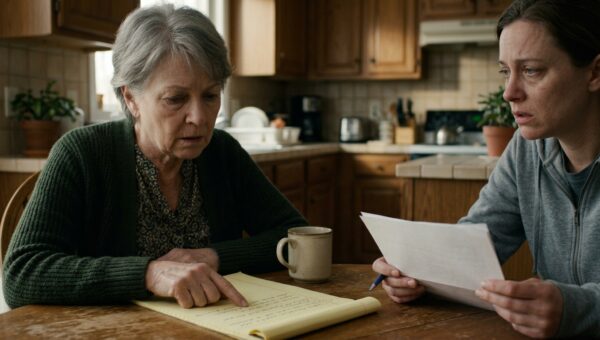
Arthur Vance had known my father, and he knew the exact weight of every timber in our house. He looked at me over his half-moon reading glasses when I sat down in his corduroy-upholstered client chair and laid out the facts without crying once. I told him about the eleven minutes in the hallway, the Portland rental, and the joint savings ledger that sat in First National under both our names with a balance that looked like a telephone number.
“We have the right to secure joint liquidity under existing marital provisions, Eleanor,” Arthur said, tapping a yellow legal pencil against his blotter. “Especially with documented intent to dissipate assets for third-party support. But you have to move before he smells rain.”
“I want it locked before he comes home for lunch,” I said. My voice didn’t even shake. It sounded like I was ordering three pounds of beef shoulder at the butcher’s counter.
By noon, three hundred and forty thousand dollars had slipped quietly out of our joint account and into an irrevocable trust held under my maiden name and managed by the firm. The account didn’t show as closed; it showed as restructured under temporary corporate oversight pending audit review, which meant the daily online portal would just give Julian a bland, generic error code whenever he tried to log in during his lunch break at the hardware supply yard. He would figure it was just server maintenance, the kind of glitch that happens to regional banks on rainy Tuesdays.
The next three weeks were a strange, hollow exercise in theater. Julian came home every evening at 5:15, exactly on schedule, smelling faintly of pine shavings and cheap menthol cigarettes. He kissed the top of my head while I stirred the stew, his hand lingering on my shoulder with that exaggerated tenderness men use when they are trying to pay off a moral debt to themselves. He even started bringing home small treats from the bakery down by the tracks, a box of cinnamon twists or a lemon loaf, setting them on the oilcloth table with a flourish that made my stomach turn over in slow, heavy circles.
“You’ve been awfully quiet lately, El,” he said one Thursday night, watching me across the rim of his beer bottle while the local news droned on about a snowstorm coming down from Canada. “Everything okay at the historical society?”
“Just tired, Julian,” I said, sliding my fork through a potato. “You know how the winter months get into my bones.”
“Well, you just rest up,” he said, and his smile didn’t even hitch at the corners. “We’ve got big things coming in the new year. Things are going to change around here for the better. You’ll see.”
I looked at him across the table, at the little gray hairs thickening around his temples and the small gold band on his left hand that he had probably already mentally slipped off and dropped into a drawer. I wondered if he ever thought about the twenty-two years we spent hauling firewood up those back steps, or if women like Elena just washed all that history out of a man’s head like grease off a greasy wrench. He thought he was being clever. He thought he had bought himself a new life with three weeks of grocery store pastries and midnight whispers into a plastic screen.
The snow finally started coming down in earnest last night, sticking heavy and wet against the kitchen windows until you couldn’t see the outline of the barn across the frozen pasture. Julian came through the back door stamping his boots, his cheeks red from the wind, holding a crumpled paper sleeve containing a dozen long-stemmed roses that were already starting to turn brown at the edges from sitting in some florist’s bucket down by the depot.
“Happy three weeks to Christmas, honey,” he said, thrusting the ugly bunch of flowers into my arms with a theatrical little bow. “You’re the only woman I’ll ever love, you know that, right? Through everything.”
I took the stems from his hands, feeling the cold moisture soak right through the green florist paper. I walked them over to the counter, laid them down beside the toaster, and turned back to face him with my hands folded neatly over the waistband of my apron.
“That’s a very big promise, Julian,” I said, my voice dropping into that flat, level register that used to make my mother stop whatever she was doing.
“Well, it’s the truth,” he said, taking off his canvas coat and tossing it over the back of the pine rocker. “I mean it. We’ve got a good life here.”
I reached under the mail basket where I had left the thick manila envelope Arthur Vance handed me yesterday afternoon, its brass clasp shining dully in the overhead fluorescent light. I picked it up by the corner and slid it across the quartz countertop until it bumped softly against his empty beer glass.
“Open it,” I said.
Julian gave a little half-laugh, the kind that tries to brush off a bad joke before it starts, and reached out to flip the metal prongs. “What’s this? More tax forms from the historical society?”
“Just read the first page, Julian.”
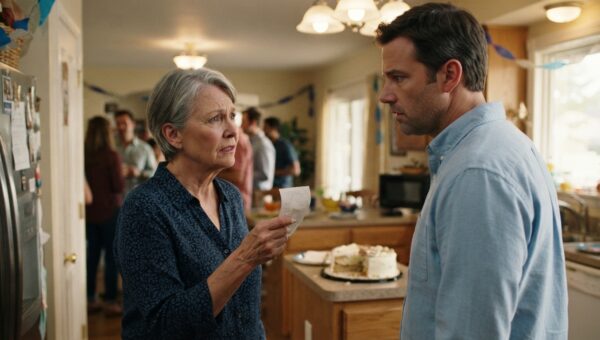
He pulled out the folded sheets of heavy bond paper, his eyes scanning the corporate letterhead at the top before moving down to the columns of numbers and legal headings. I watched the color drain out of his face, starting around his mouth and working its way up into his forehead until his skin looked like old lard under the kitchen light. His jaw worked twice, but no sound came out, just a dry little click as his teeth hit each other.
“The liquidity ledger,” I said, leaning back against the sink and folding my arms over my chest. “You might want to look at the bottom line where it lists the routing number for the trust. That’s where the three hundred and forty thousand went, by the way. Right out of our joint account and into a place where your name isn’t on the signature card.”
Julian let out a sharp, ragged breath that smelled of stale beer and peppermint. He dropped the papers onto the counter, his hands shaking so hard he knocked the salt shaker over into the puddle of melted snow dripping from his coat.
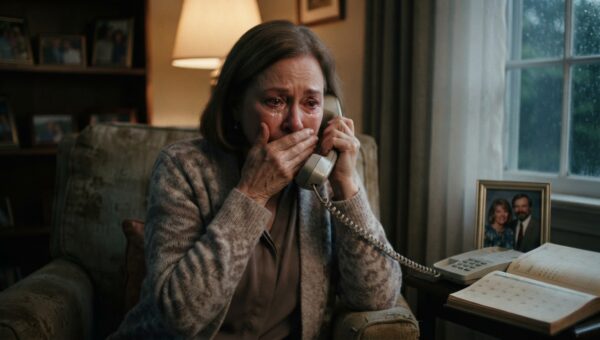
“How long have you known?” he whispered, and for the first time in twenty-two years, he sounded like a very small, frightened boy who had broken something he couldn’t put back together.
I looked down at the discarded roses lying across the oilcloth table, their brown-tipped petals curling against the plastic surface like dead things.
“Since eleven minutes past two on the third of December,” I said. “You were talking awfully loud about Portland, Julian. You really ought to check your volume when you’re planning a new life in the middle of the night.”