I got a lot of things wrong when Clara died, but keeping our twenty-minute Christmas Eve walk a private thing was never one of them. Or at least, that is what I kept telling myself on a Tuesday afternoon in December when the phone started ringing off the hook and my kitchen suddenly felt about five sizes too small. People talk about grief like it is a wave that hits you and then recedes, but after twenty-two years, I have come to see it more like an old coat left hanging by the back door.
You do not wear it to every dinner party, and you certainly do not try to squeeze someone else into the sleeves just because they complain about the cold.
Back when Clara passed away during the birth of our youngest, Leo, the house was so quiet you could hear the refrigerator hum from the upstairs hallway. Maggie was only six then, and Toby was four, and I was just a thirty-eight-year-old mechanic who did not know how to boil an egg without scorching the pan. The doctor said things that did not make sense in a bright, sterile room while Clara lay still under a stiff white sheet. We walked out of that hospital into a gray December drizzle, and I remember thinking that the earth had a terrible way of spinning right along even when your own particular world had just cracked right down the middle.
The cemetery is down off Elm Street, exactly twenty minutes from our front porch if you walk at a steady, ordinary pace.
The first Christmas Eve after we lost her, I bundled the kids up in their thickest coats, tucked a single white carnation into my pocket, and we walked through the frozen ruts of the grass until we found her stone. We did not say much because children that small do not have the vocabulary for forever. We just stood there while the sun went down behind the water tower and the streetlights started clicking on one by one.
Over the years, that twenty-minute walk became the anchor of our December. As Maggie and Toby grew up, getting taller through their awkward phases and eventually heading off to college and their own jobs, they always came home for Christmas Eve. We never made a big production out of it. Around four in the afternoon, someone would quietly grab their boots from the mudroom, we would walk down the sidewalk past the old hardware store, place our flower, and head back home before the frost bit our noses too hard.
It was just us, the three of us who had been in that delivery room of ghosts, holding onto the one thread we had left.
When Toby met his wife, Chloe, five years ago, we had a proper sit-down conversation about it before they even got engaged. Chloe is a sweet girl from two towns over who bakes sourdough bread and laughs at my terrible jokes, and she understood right away. She sat at our kitchen table with a mug of coffee and nodded while I explained how the walk worked. “I wouldn’t dream of intruding on that,” she told me with a gentle sort of grace that made me respect her right down to the ground. Ever since they got married, Chloe stayed behind while Toby walked with us, and by the time we got back, the whole house smelled like warm cinnamon rolls and roasted coffee because she liked having something ready for our cold hands.
That was our rhythm. A quiet, steady thing that required no explanations.
Then came Derek. Maggie met Derek at an accounting firm in the city where she works, and from the very first Sunday dinner he attended, I could tell he treated life like an audit. He was the kind of man who measures his worth by how many people are sitting at his table and whether the seating chart looks impressive enough for a photograph. When Maggie and Derek got married last spring, the friction started almost immediately. Derek did not like traditions he had not invented, and he had a particular dislike for any room he was not allowed to headline.
Maggie tried to handle it herself at first. I could see the exhaustion in her eyes during Thanksgiving when she kept whispering under her breath every time Derek brought up the holidays. She had talked to him and talked to him and explained that she doesn’t want him during our private family traditions. She told him point-blank that the graveside walk was something she shared with her father and her brother for a reason that went back twenty years. I thought that settled it. I figured a husband would listen to his wife when she talked about her own dead mother, but I was living in a fairy tale if I thought Derek cared about anyone’s history except his own resume.
The phone call came on a Thursday evening while I was wiping down the counters after supper. My phone buzzed against the formica, and when I saw Derek’s name blinking on the screen, my stomach did that cold, heavy drop it used to do back when Leo was sick with the croup. I answered it because you do not ignore family, even when you know they are calling to stir up dirt.
“Stanley,” Derek said without even saying hello, his voice tight and clipped like he was reading from a ledger. “I want to know why I am not considered family to you.”
I paused with the dish towel half-folded in my hands, looking out the dark kitchen window at the bare maple branches tapping against the glass. “Hello, Derek. What are you talking about?”
“You know exactly what I am talking about,” he snapped back, the warmth of politeness completely stripped away. “Maggie tells me you and the kids are doing your little pilgrimage on Christmas Eve, and once again, I am being left out in the cold. Why am I not family to him and that he needs to go to this tradition?”
The phrasing hit my ears like gravel thrown against a tin roof. He was talking about himself in the third person now, like he was a grievance committee filing a formal complaint. I took a slow breath, trying to keep my voice from getting thin.
“Derek, it is not about you,” I said as calmly as I could manage. “It is just twenty minutes. It is a quiet thing for the kids and me to visit their mother.”
“A marriage certificate means I am family, Stanley,” he interrupted, his voice rising until it bounced off the tile. “If Toby’s wife is sitting at home, that’s their business, but I refuse to be treated like an outsider in my own wife’s family. It’s insulting.”
“It’s not an insult,” I said, my grip tightening on the dish towel. “It’s just twenty minutes out of the whole year. Some spaces belong to the past.”
“You’re a jerk,” he said, and the word hung there in the small kitchen space, sharp and ugly. “You’re deliberately excluding me to make a point, and everyone is going to hear about how you treat people.”
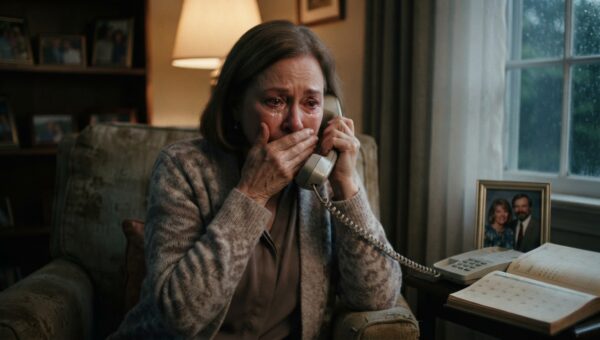
Before I could answer, the line went dead with a harsh click. I stood there in the quiet kitchen for a long minute, listening to the hum of the refrigerator, feeling the blood rush slow and hot behind my ears. I thought about hanging up and calling Maggie to check on her, but I knew my daughter was already living inside a storm I could not pull her out of. Derek did not waste any time making good on his threat either. By Friday morning, the ripples had turned into a full-scale splash across the extended family text chains and phone trees.
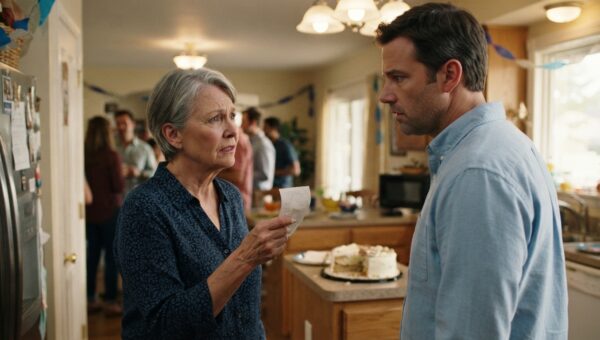
The real trouble started when Derek managed to drag Chloe into it. I would have never believed it if I hadn’t seen the text message pop up on my phone later that afternoon. Chloe, who had baked those cinnamon rolls for three years without a single complaint, sent me a long paragraph about how family unity meant being inclusive and that maybe it was time to let the past go and modernize our holiday schedule. It read like it had been drafted by a lawyer and signed under duress. Derek had gotten in her ear, whispering about fairness and equality until he had convinced her that respecting a dead woman’s memory was somehow an attack on her own marriage.
My daughter-in-law was suddenly mad at me, too, because Derek had made her feel like her quiet presence in the house was an act of submission rather than a kindness. The irony of it was thick enough to choke on. A man who had never known Clara, a man who had never seen the nursery we painted yellow in nineteen-ninety-two, had successfully turned a twenty-minute walk into a territorial dispute over real estate in the family heart.
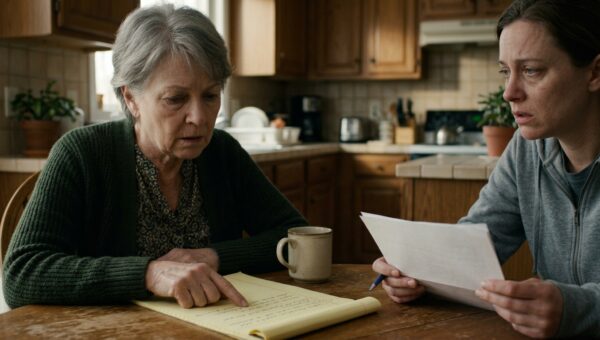
By Sunday, the tension had reached the point where Maggie looked like she had aged five years in a week. We met for coffee at the diner down on fourth street, just the two of us in a vinyl booth that smelled like stale grease and floor wax. Maggie wouldn’t even look at her coffee cup; she just kept tracing the cracked red seam of the tabletop with her fingernail.
“I tried, Dad,” she whispered, her voice cracking right down the middle before she could even get the sentence out. “I told him a hundred times. I told him it wasn’t personal. But he says it makes him look bad to his parents if we aren’t all doing the same things together. He won’t let it go.”
I reached across the table and put my hand over hers. Her skin felt cold, just like Clara’s used to get when she stayed out in the wind too long. “You don’t have to manage him for the rest of your life, Mags,” I said quietly. “You just have to decide what you’re willing to give away.”
“He told everyone on his side of the family that you’re freezing him out,” she said, looking up at me with those same dark eyes her mother had. “And now Chloe thinks we’re playing favorites because she stays behind. Derek got into her head by telling her she’s being treated like hired help.”
“Chloe knows better,” I said, though my stomach tightened because I knew how persuasive a man like Derek could be when he wanted to rewrite history to suit his comfort. “She’s just tired of the noise.”
“He’s coming anyway, Dad,” Maggie said, and the words dropped onto the table like lead weights. “He told me last night that he’s putting on his coat on Christmas Eve whether you invite him or not. He said he’s going to stand at the gate to prove a point.”
The rest of the week leading up to the holidays passed in a heavy, unnatural silence. The phone stayed quiet, but you could feel the pressure building behind the dam, all those small resentments and wounded vanities pooling up until they threatened to wash away the simple things we had built. Toby called me on Wednesday night to check in, sounding tired and worried. He told me Chloe had been crying in the kitchen because Derek had made her feel like a doormat for staying home in past years. That was the most painful part of it all. Derek didn’t actually care about the grave or about Clara or about honoring anybody; he just cared about winning an argument and making sure everyone knew he had the power to rearrange our lives.
When Christmas Eve finally arrived, the weather didn’t offer any comfort either. The sky was a flat, bruised gray, and a thin skin of ice coated the puddles along the curb as the afternoon sun began to drop behind the rooftops. I was standing in the mudroom pulling on my heavy wool coat when the front door opened and Toby and Chloe walked in. Chloe looked pale, her eyes darting toward the floor like she expected me to be angry with her over the text message.
I didn’t say a word about the text. I just looked at her standing there in her red scarf, smelling faintly of vanilla and clove, and I saw how much pressure she had been under all week.
“Glad you’re here, Chloe,” I said, my voice rough from the cold air coming through the open door. “The kitchen’s warm.”
She swallowed hard, her hands gripping the straps of her purse. “I’m sorry about the message, Stanley. Derek just… he gets very loud about things being equal.”
“I know,” I told her, adjusting my collar. “Some folks think love is measured by how many people you can squeeze into a photograph. But it isn’t.”
A minute later, Maggie walked through the door alone. She didn’t have to explain where Derek was. His car was parked out by the mailbox, engine running and exhaust puffing white smoke into the freezing air like an angry bull waiting at a gate. Maggie pulled her hat down low over her forehead and walked straight past the living room toward the back door.
“He’s in the car,” she said flatly, her voice dead. “He said if we don’t let him walk with us, he’s going to wait right by the cemetery entrance so we have to walk past him to get in.”
Toby stopped tying his bootlace and looked up, his face darkening. “The hell he is. I’ll go out there right now and tell him to turn the car around.”
“No,” I said, and my voice was lower and steadier than I even felt. “Let him sit in his car. We’re going for our walk.”
We stepped out onto the front porch together, the four of us, exactly as we had been before the world got complicated by marriage certificates and audit sheets. The wind hit us straight off the fields, sharp enough to bring water to our eyes, but we didn’t look back toward the idling sedan in the driveway. We started down the sidewalk at our usual pace, the old familiar rhythm of our boots crunching against the frozen crust of the grass. Twenty minutes. Not a second more, not a second less.
When we reached the wrought-iron gates of the cemetery, Derek’s sedan was parked sideways across the narrow lane with its hazards blinking amber in the gathering dusk. He was standing leaning against the fender with his hands stuffed deep into his coat pockets, looking like a man holding a tollbooth on a lonely road. Maggie slowed her pace for a second, her hand coming up to touch her sleeve, but I didn’t break stride.
As we walked past him toward the familiar row of headstones under the old oak tree, Derek straightened up and took a step forward, his mouth open to start in on his speech about family unity and exclusion. He looked ready to deliver a lecture right there among the frost and the dead.
I didn’t stop for him. I didn’t argue, and I didn’t raise my voice to match his. I just looked him straight in the eye as I walked by, and for the first time all week, I felt completely calm.
“Twenty minutes, Derek,” I said quietly, my breath pluming white in the cold air between us. “You’re welcome to wait in the warm house when we get back, but this part is already spoken for.”
He stood there by his blinking hazard lights with his mouth still half-open, sputtering something about disrespect that got swallowed up by the wind before it ever reached the grass. We kept walking until we reached Clara’s stone, the cold ground hard beneath our boots, standing together in the fading light just like we always had. A single fresh white flower resting against the frost-covered headstone in the fading winter twilight, followed by the quiet crunch of footsteps returning down the familiar path toward home.