I let my son use my truck after he swore he’d landed a night job that needed a vehicle. Fine. I raised him better than to lie, or I thought I had. Then the mail started. Toll violations and a red-light ticket, all from a city three hours off, all after midnight, my name on every one. His night job is a warehouse twenty minutes away.
He looked me in the eye and lied, that smooth voice boys get when they’re covering. So I didn’t argue. I photocopied the citations, circled the dates in red, and Saturday, while he snored on my couch, I lifted his key off the hook, went out to my truck, and opened the door to see what my boy had been up to.
The frost on the windshield was still gray and stubborn when I stepped off the back porch. My boots crunched hard on the gravel, the only sound in a valley that was usually waking up slow around seven in the morning. I didn’t rush. When you have spent thirty-odd years keeping machinery together in a gravel pit, you learn that hurrying a inspection only makes you miss the hairline fractures in the casing. The 2012 Ford F-150 has two hundred and ten thousand miles on the frame, but I kept the engine block clean enough to eat off.
It was the only thing of real value I had left to my name after the divorce and the mill downsizing back in twelve.
I put the key into the driver’s door. The lock turned with a dry, familiar click. Inside, the cab smelled like stale black coffee, cheap gas-station spearmint gum, and the damp wool of the hoodie he had left bunched up behind the center console. I sat down and pulled the door shut, cutting off the chill of the morning wind. The steering wheel was slightly sticky under my palms. I didn’t like the look of that. My boy Ethan was twenty-two, old enough to keep his own gear clean, but he had always been sloppy with the small things. I reached over and flipped open the glove box.
Papers spilled out before I even touched the stack. Registration slips, insurance cards, and a grease-stained receipt from a diner three counties north, dated the previous Tuesday at 2:14 in the morning.
That was the first crack in the story. You don’t haul pallets in a cold-storage warehouse four miles down the county road and somehow end up eating greasy hash browns ninety miles up the interstate two hours after midnight. I pushed the papers aside with my thumb and found a folded flyer tucked up against the owner’s manual. It was printed on cheap glossy cardstock, advertising an industrial park meet near the state line with a handwritten scribbled note about a thousand-dollar cash bracket and rolling starts.
I sat there for a long minute watching my breath frost up against the inside of the windshield. The motor was cold, but my chest felt hot and heavy, the way it did back when I dropped my first transmission on my own bare foot and had to crawl three hundred yards back to the house without making a sound. Ethan had always been a quiet boy since his mother left us for that insurance adjuster down in Binghamton, but quiet never meant honest.
Quiet just meant he was saving up his words for when he needed to spin something smooth.
I got out of the truck and walked around to the tailgate. The spray-in liner was scuffed up worse than it should have been for hauling cardboard boxes. I ran my fingers along the inside lip of the bed. There was black rubber smeared thick along the metal ridges, the kind of heavy, chewed-up residue you only get when a set of tires has been spinning hard against a concrete barrier or a makeshift starting line. He wasn’t just driving my truck up north. He was running it. He was taking the one thing I trusted him with, the vehicle I needed to haul firewood and make my odd jobs down at the co-op, and he was risking the whole axle on some parking-lot betting circuit three hours away in the capital.
I locked the door back up and walked slow toward the house. The sun was clearing the top of the ridge now, cutting thin, pale stripes across the frozen grass. Ethan was still out cold on the plaid sofa in the living room, one arm dangling off the edge, his breathing heavy and regular the way mine used to be after pulling a double shift on the crushers. He looked younger than twenty-two when he slept, all the sharp edges of his jaw smoothed out by the exhaustion of running all night. I didn’t feel like waking him right then. I wanted the coffee to finish dripping through the basket first so my hands wouldn’t shake when I laid the evidence out across the oilcloth table.
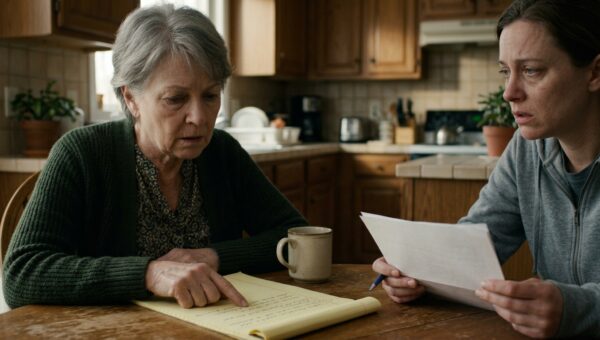
By nine o’clock, the smell of chicory and burnt roast filled the kitchen. I sat at the table with the stack of red-circled toll tickets on my left and the diner receipt on my right. The house was dead quiet except for the hum of the refrigerator and Ethan shifting his weight against the springs in the other room. A minute later, I heard the dull thud of his bare feet hitting the laminate floor, followed by that long, ragged sigh young men make when they are dragging themselves back into the world. He came shuffling into the kitchen wearing gray sweatpants and an old high school track hoodie with the sleeves pushed up to his elbows. He didn’t look at me right away. He just reached past my shoulder for the ceramic mug by the sink and poured himself half a cup of the lukewarm dregs left in the pot.
“Morning,” he muttered, rubbing his eyes with the heel of his hand. His hair was sticking up on the left side where he had mashed it against the armrest for six hours.
“Morning,” I said.
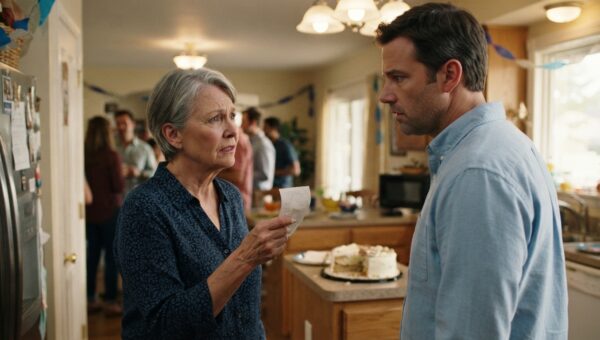
I didn’t move my hands from the table. I left the top toll ticket right under my middle finger with the red marker circle glowing like a stoplight against the white paper. Ethan took a sip of the coffee, winced because it was bitter, and then finally let his eyes drift down toward the table. I watched the color drain out of his face right around the edges of his nose. It wasn’t the white of a man who was scared. It was the gray of a boy who realized his alibi had just rotted through at the seams.
“What’s all that?” he asked. His voice was lower now, lacking that easy morning warmth he usually put on like a clean shirt.
“That’s three weeks of turnpike cameras,” I said. My voice didn’t rise. I’ve found that shouting at people only gives them something to push against. If you keep your voice down, they have to listen to the empty space you leave behind. “Route 90 northbound at 1:42 in the morning. Route 81 south at 3:11. And a red-light camera off industrial boulevard in the capital from last Saturday when you supposedly had that double shift on the loading dock.”
Ethan set his mug down on the counter a little too hard, some of the dark coffee sloshing over the rim and pooling around the base. “Dad, look. I can explain that. Things got mixed up with the schedule down there. They shifted my hours twice last week.”
“You told me Tuesday you were working four to midnight,” I said. I pulled the diner receipt out from under the salt shaker and laid it flat on the oilcloth. “Strange thing for a warehouse hand to be eating ham and eggs in Syracuse at two-fifteen in the morning. Especially when he’s driving a Ford with my name on the title and five hundred dollars worth of new rubber on the rear axle that I paid for out of my winter oil fund.”
Ethan opened his mouth, closed it, and then ran his tongue along his lower lip. The smooth story wasn’t coming. The gears in his head were grinding, trying to find a version of the truth that didn’t make him look like a fool who had been caught red-handed.
“It was just a couple of times,” he said finally, his voice dropping down into that sullen, defensive register he used when he was fourteen and got caught skipping fifth period behind the gymnasium. “We weren’t hurting anything. The truck runs fine.”
“The truck runs fine because I change the oil every three thousand miles and check the belts every Sunday,” I said. I stood up from the wooden chair. The legs scraped against the linoleum with a sharp, dry screech. “You didn’t just borrow my truck, Ethan. You lied to my face while you used my own property to run around three counties playing games with people who don’t care if the engine blows as long as the cash clears.”
“I was making money,” he said, and for a second there was a flash of real defiance in his eyes, that stubborn streak he got from his mother’s side of the family that always made them think they were smarter than the room they were sitting in. “I cleared six hundred bucks last weekend alone. I was going to help with the property tax next month.”
“You weren’t going to help with anything,” I told him. “You were going to run this frame until the transmission dropped out on the interstate and then call me from a gas station three hours away asking for a tow and twenty dollars for gas.”
I reached into the pocket of my work shirt, pulled out the silver key with the blue plastic cap that I had lifted off the hook three hours ago, and dropped it right into the center of the coffee spill on the counter. The metal made a wet, dull clink against the ceramic mug.
“The truck stays here,” I said. “You want to go up to the capital, you can take the Greyhound bus at six in the morning like every other person who has somewhere to be. But you aren’t taking my property to do it.”
Ethan looked down at the key sitting in the dark coffee puddle. He didn’t reach for it. For a long second, neither of us moved. The house was so quiet I could hear the crows arguing in the tall pine tree down by the creek line.
“You can’t just strand me here,” he muttered, his voice tightening up at the edges. “How am I supposed to get to the real warehouse job on Monday?”
“You should have thought about that before you started lying about where you were going when the sun went down,” I said.
I turned my back on him and walked over to the window that looked out over the driveway. The old F-150 sat there in the morning sun, its hood gleaming with a thin coat of frost that was starting to melt into little gray rivulets down the fenders. It looked like just another old truck belonging to an old man who had spent his life working for things that didn’t stay broken. Ethan didn’t say anything else. I heard him turn around, his bare feet slapping softly against the floorboards as he walked back down the hall toward the small back bedroom, closing the door behind him without slamming it.
I stood there by the glass for a long time watching the light hit the frost until it was all gone. Then I reached over, picked the key up off the counter, wiped it clean on my sleeve, and walked out the back door to hang it back up on the sturdy little brass hook by the side entrance where it belonged.