The dishwater was lukewarm and smelled faintly of cheap lemon soap by the time I finally scrubbed the last of the paper plates from the twins’ eighteenth birthday party. My hands were pruned up around the thumbs from being in the water too long, and my lower back had that dull, familiar ache that settled in right around four o’clock every single afternoon.
Outside the kitchen window, the Louisiana humidity hung heavy in the live oaks, blurring the streetlights into fuzzy yellow pools against the gathering dusk.
Thirteen years. That was how long it had been since the phone call from the parish sheriff told me that my brother and his wife weren’t making it back from Baton Rouge. I was twenty-six years old, working the morning shift at the county records office, and suddenly I had two five-year-old boys living in my spare bedroom with a suitcase full of mismatched socks and plastic dinosaurs. Everyone at the funeral told me how brave I was, and everyone promised they would check in on us. But one by one, the casseroles stopped coming, the phone calls dried up, and the relatives found reasons why they couldn’t host Thanksgiving. So I became their guardian.
What was supposed to be temporary turned into a permanent way of life before I even had time to catch my breath.
I picked up evening data-entry work behind the glowing screen of my old desktop computer just to cover the rising property taxes and the endless grocery bills. My own small dreams of studying interior architecture at the state university faded into the background like old wallpaper. Dating stopped entirely because who has time to sit across from a stranger at a diner booth when you have two boys needing help with fractions and baseball cleats. The twins always came first. I never regretted it for a single second, but by the time eighteen rolled around, my bones felt closer to fifty.
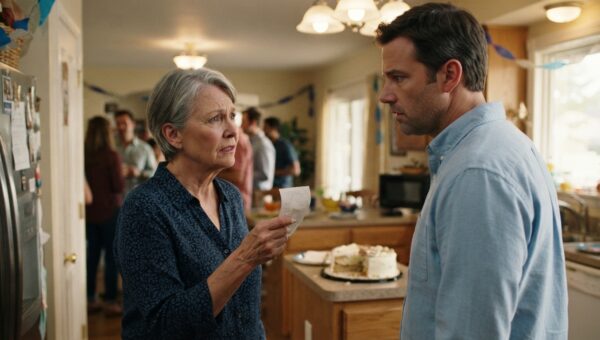
The party had been a modest affair in the backyard with store-bought ice cream cake and neighbors bringing folding chairs. Now the yard was empty except for a few stray paper napkins stuck in the azalea bushes, and the house was quiet in that heavy way it only got after a room full of people cleared out.
I dried my hands on the faded kitchen towel hanging from the oven handle and turned around to wipe down the counter one last time.
Mason and Noah were standing right behind me in the narrow galley kitchen, so quiet I hadn’t even heard them walk in from the back porch. They weren’t boys anymore, even if I still caught myself looking for the gap in their baby teeth sometimes. They both stood taller than me now, broad-shouldered and quiet in that careful way their father used to get when he was about to break some bad news or ask for a serious favor.
“Hey,” Mason said, his voice dropping into that deep baritone he’d grown into over the last year. “Aunt Clara. Sit down at the table for a minute, will you?”
I let out a tired laugh and tossed the damp towel onto the counter. “Boys, if this is about the leftover cake, you can eat the whole rest of the box for breakfast. I’m too beat to argue.”
“It’s not about the cake,” Noah said softly. He gave me that particular look with his left eye squinting just a fraction that always meant he was holding back a secret. “Just sit down. Please.”
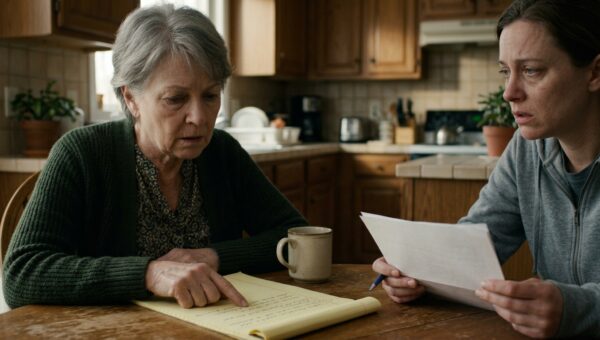
I pulled out the wooden chair that always wobbled on the uneven linoleum and sat down, expecting maybe they wanted to talk about their community college tuition or borrow the sedan to drive down to the coast for the weekend. Instead of taking the chairs opposite me, Mason reached behind his back and laid a thick manila legal folder right next to the salt shaker. It was bound with a thick rubber band, and the corner of the envelope had a small ink stamp from the parish courthouse downtown.
Three weeks earlier, I had spent forty minutes on the phone with the mortgage company trying to explain why my car repair bill meant my housing payment was going to be three days late, and the man on the other end had used that polite, pitying tone that makes you want to crawl right out of your skin. I figured this envelope was some kind of final notice or tax assessment I’d missed while working the double shift at the office.
“What is this?” I asked, my fingers brushing the heavy cardboard of the envelope. “Did something happen with the truck registration?”
“Open it,” Mason said, sliding it an inch closer across the grain of the worn oak table.
I pulled the rubber band off with a dry snap that sounded too loud in the silent house. Inside wasn’t a tax bill or a collection notice. It was a certified copy of the property deed for the house we were sitting in, along with a stack of formal bank documents printed on heavy cream-colored paper. My eyes skimmed the neat lines of legal jargon, looking for the words I expected to see about liens or default notices, but instead my gaze kept catching on a single, bold stamp right across the bottom of the financial summary.
Paid in full.
The kitchen clock gave a wet, heavy click against the wall at 8:14 in the evening. I stared at the paper until the letters started to blur together into gray smudges.
“I don’t understand,” I whispered, looking up between the two of them. “Where did you get this? This cost… this is thousands of dollars. The principal wasn’t supposed to be cleared until 2031.”
Noah pulled out the chair beside me and sat down, resting his elbows on the table the way his uncle used to do when he was explaining a car engine. “Ever since we turned sixteen, Aunt Clara. After school, we weren’t just hanging out at the auto shop or doing lawn work for Mr. Henderson. We took every single shift we could get. Mason rebuilt transmissions in the back bay, and I helped run the books and tutor kids over at the community center.”
“We saved every paycheck,” Mason added, his voice dropping a little as he looked down at his calloused hands. “Every holiday tip, every graduation check from Uncle Ray, every dollar we made on the side. We opened a separate account three years ago with a lawyer in town who helped us set it up so you wouldn’t find out until it was done.”
“You shouldn’t have done that,” I said, and my voice cracked in a way I hated. “That money was supposed to be for your start in life. Your own apartments, your tools, your books for the fall.”
“This is our start,” Noah said, and he reached out to cover my trembling hand with his. “You gave up everything so we wouldn’t end up in foster care or bounced around between relatives who didn’t want us. You paid for our shoes, our braces, our clothes, and every single meal on pure grit and overtime. We couldn’t walk out of this house knowing you were still losing sleep over a bank payment.”
There was another paper tucked into the back of the folder behind the deed. I pulled it out with fingers that felt thick and clumsy. It was an acceptance letter and a tuition deposit receipt for the professional design certificate program at the regional technical college downtown, paid for in full for the upcoming fall semester.
The room felt very small all of a sudden. For thirteen years, I had built my entire identity around being the shield between these boys and the hard edges of the world. I had carried the ledger in my head every single day, balancing gas against groceries, medication against electricity, terrified that one bad month would leave us out on the curb. I had told myself a hundred times that my own life was over the day my brother’s car slid off that wet patch of asphalt on Highway 19, that my only job was to get them across the finish line.
And here they were, standing over the finish line, turning around to pull me across it with them.
“I don’t even know what to say to you two,” I whispered, and the first hot tear finally spilled over my eyelashes and hit the kitchen table.
“You don’t have to say anything,” Mason said quietly, coming around the table to put his arm around my shoulders. “Just let us make dinner tomorrow night for once.”
Later that night, long after the house had gone completely still and the porch light was buzzing softly against the screen, I walked back out to the kitchen in my bare feet. Three coffee mugs were sitting side by side on the freshly stained wooden table that Mason had built in his woodshop class, right beneath the window where the breeze was finally cool enough to open the glass. Outside, the streetlamp hummed against the dark, and for the first time in thirteen years, there wasn’t a single bill waiting on the counter for the morning.