What makes a man with graying temples and sixty-three years of memories decide that a twenty-six-year-old girl he met at a specialty coffee kiosk is the only person who ever really understood him?
I keep asking myself that same question, even now.
Last month, my dad sat us down in the dining room he and my mother built together back in 1994 and casually dropped a bomb over takeout Thai food.
My dad, Arthur, cleared his throat, looked right past me at Liv, and said he had changed his inheritance plan so it all goes to her house, the savings, all of it. He said, Liv needs to be taken care of. She just smirked.
I remember the exact weight of my water glass in my hand right then. My fingers squeezed the wet glass so hard the knuckles turned white, but I didn’t yell. I didn’t flip the table or start screaming about thirty years of family history. Arthur looked so proud of himself, leaning back in his chair with his arm draped over the back of the upholstered seat, looking like a man who had just solved all the world’s problems with a stroke of a pen. Liv didn’t even try to look sad about cutting out his only child. She just took a slow sip of her iced tea and smiled at the salt shaker.
I swallowed the lump in my throat and kept my mouth shut. I knew Arthur was slipping, but I didn’t realize how fast the rot had set in.
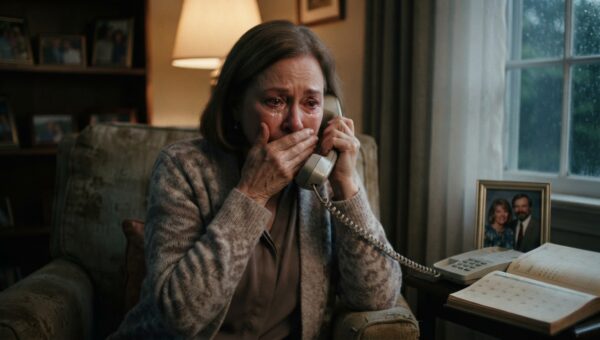
Back when Mom was alive, this house was loud and full of life. Mom spent twenty-two years planting hydrangeas along the front porch and stretching every single paycheck so we could keep the property in the family no matter what the market did. When she passed away from the cancer that took her voice before it took her breath, Arthur cried for six months straight. He told me I was all he had left. He told me our history was sacred.
Then he hired Liv to help him with his tablet or his taxes or whatever excuse she used to get her foot in the door. Within six months, she had moved her expensive luggage into the master bedroom. Within a year, she had him convinced that his entire past with my mother was just a warm-up act for his grand finale with her.
I didn’t argue with him that night. I just finished my pad thai, grabbed my coat, and walked out to my car.
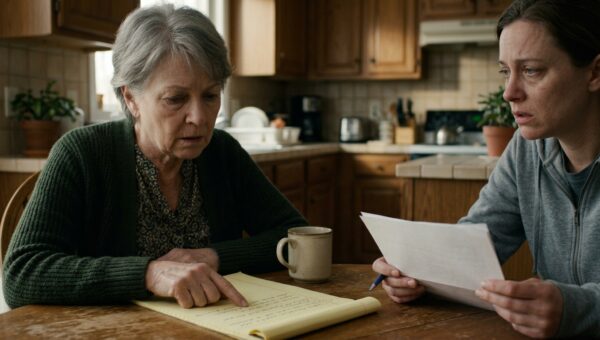
The next thirty days were a blur of quiet, calculated movement. I didn’t call him to argue, and I didn’t text him asking how he could throw away everything Mom worked for. Instead, I drove down to the county records office downtown and pulled the original deed from 1998, then spent two hours sitting across a scarred oak desk from Mr. Vance, the family attorney who had handled Mom’s final wishes.
Mr. Vance adjusted his reading glasses, pushed the yellowing folder across the desk, and gave me a grim little smile.
“Your father can write whatever he wants on a napkin, honey,” Mr. Vance told me, his voice dry as old parchment. “He can sign a hundred new wills. But he cannot give away what does not belong to him.”
He tapped a finger on a stamped clause on page four. The irrevocable family trust. Set up the exact month Mom got her diagnosis. Everything tied directly to my name upon his passing, completely bypassing any new marriage or updated paperwork he might try to push through. Arthur had spent the last year bragging about his new life, completely forgetting the legal architecture Mom had built to protect us both from men who get lonely and girls who get greedy.
I thanked Mr. Vance, copied the paperwork, and put the certified files into a heavy manila folder. I didn’t feel triumphant. I just felt cold.
When the next family dinner invitation arrived via text message from Arthur, it felt less like an invitation and more like a victory lap. He wanted to celebrate the finalization of his new legal arrangements. He wanted me to see that he had won and I had lost.
I showed up at 6:00 sharp, carrying the manila folder tucked firmly inside my canvas tote bag.
The house smelled like expensive scented candles and bleach, the kind of sterile, generic scent Liv brought with her like cheap perfume. The family portraits of Mom and me at the lake had been taken down from the hallway wall, replaced by massive, moody black-and-white prints of Liv staring blankly into a camera lens.
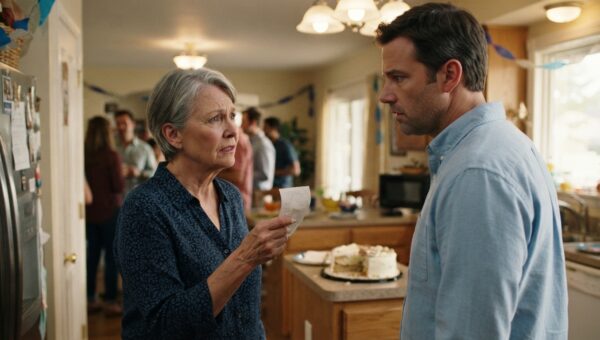
Arthur was mixing martinis at the kitchen island. He looked older than his sixty-three years, his skin loose around his jawline, wearing a designer linen shirt that looked ridiculous on a retired high school shop teacher. Liv was sitting at the dining table, tapping away on her phone with manicured nails that looked like tiny pink almond shells.
“Glad you made it,” Arthur said, not even looking up as I walked in. “We have some paperwork to go over after we eat. Time everyone grew up and accepted how things are.”
“I’m here,” I said, setting my bag down on the entryway bench with a soft thud.
Dinner was agonizingly polite. Liv talked endlessly about her aesthetic vision for the backyard patio, throwing around words like travertine and infinity pool while Arthur nodded along like an obedient puppy. He kept reaching across the table to touch her hand, flashing this pathetic, desperate grin that made my stomach turn. He wanted me to look at them and feel small. He wanted me to feel like an outsider in the home I grew up in.
“We’re planning a trip to Cabo next month,” Liv announced, cutting into her roast chicken with deliberate slowness. “Arthur wants to sell off the old boat slip to pay for the first-class tickets. It’s time to let go of the past, don’t you think?”
Arthur cleared his throat and puffed out his chest. “Liv’s right. You have to live in the present. And my present needs security.”
That was the moment. The exact cue we had been building toward for a month.
I didn’t raise my voice. I didn’t slam my fist on the table. I just reached into my canvas bag, pulled out the heavy manila folder, and laid it right in the center of the white tablecloth, right between the salt cellar and the half-empty bottle of pinot noir.
“You can sell the boat slip if you want, Dad,” I said, my voice sounding louder in the quiet room than I expected. “But you might want to read page four of this before you book those flights.”
Arthur frowned, his martini shaker pausing mid-shake. “What is that?”
“It’s Mom’s trust,” I said calmly. “The one you signed twenty-eight years ago when we bought this place. The one that says the house, the primary savings reserves, and the land are locked into an irrevocable generational holding. You can write Liv into your will a hundred times over. You can leave her your clothes, your car, and whatever is left in your checking account. But you cannot touch this house.”
Liv stopped chewing. Her fork scraped against the porcelain plate with a sharp, ugly sound.
Arthur stared at the folder like it was a snake coiled on the linen. “That’s… that’s not right. I talked to the online service. They said, “
“You talked to a website, Dad. I talked to Mr. Vance,” I said, leaning forward to rest my forearms on the table. “The house goes to me the second you’re gone. Liv gets zero square feet of brick, zero dollars of the principal, and zero claim to anything Mom built.”
For three seconds, nobody breathed.
The silence in the dining room wasn’t just quiet; it was heavy and suffocating. Both of them went completely pale, the color draining right out of their faces until they looked like ghosts sitting under the chandelier. Liv’s mouth opened slightly, her eyes darting from Arthur to the folder, the smug little smirk completely wiped off her face, replaced by a sudden, frantic panic.
Arthur looked at Liv, then back at me, his hands beginning to shake as he set the martini shaker down on the counter with a loud clatter.
“You… you can’t do that,” Arthur whispered, his voice cracking on the last word. “We discussed this. We’re a family.”
“No, Dad,” I said, standing up from my chair and sliding my cloth napkin neatly beside my untouched glass of water. “You had a family. You just traded it for an audience.”
I turned around and walked out the front door, leaving them sitting there in the harsh light of the dining room, staring at each other across a table that suddenly felt very, very empty.