The silver candleholders on Arthur and Evelyn’s dining table always looked slightly tilted to me, like they were leaning away from the heavy smell of the roast beef. We walked up the crushed stone driveway at 4:55 on Easter Sunday, my boots crunching a little too loud in the dead silence of that gated neighborhood. Audrey wore her navy blue dress with the lace collar I had mended three times under the kitchen lamp.
I wore my good blazer, the one with the frayed lining inside the left cuff that I always tucked in when nobody was looking.
Three years had passed since Daniel’s heart stopped in the middle of a Tuesday shift at the hardware store. His parents didn’t come to the hospital. They sent a floral arrangement that cost more than my monthly grocery budget and a brief, typed note on heavy cream stationery explaining that their grief was a private matter. Two weeks later, the lawyer called to tell me the trust had been dissolved because Daniel had married outside their social circle without a prenuptial agreement. No help. No phone calls. Just a thick silence that settled over our small rented apartment like a layer of gray dust.
So I took the bus across town at 4:30 every morning and scrubbed the black rubber tile floors of St. Jude’s Academy until my knees throbbed.
I emptied thirty-gallon trash cans filled with greasy pizza boxes and crumpled history papers. I learned the exact squeak of the third-floor hallway hinges and the bitter taste of cafeteria coffee from the teachers’ lounge. Evelyn knew where I worked, of course. Everyone in that part of the county knew St. Jude’s. It was where Arthur bought his board seats and where their social standing was polished every single day by tuition checks written with fountain pens.
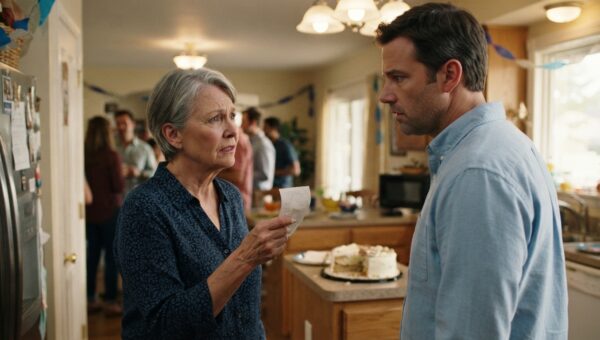
We pushed through the heavy double doors of the Sterling estate and found the family already seated. The room smelled of expensive beeswax and white lilies. My brother-in-law, Julian, didn’t look up from his phone when we pulled out our chairs near the far end of the long mahogany table. Arthur sat at the head, carving the roast with long, rhythmic strokes of an ivory-handled knife.
“Careful with the hem of that coat, Clara,” Evelyn said before we even sat down, her eyes darting toward my shoes. “The floors are imported oak from Belgium. They mark up easily.”
“I wiped my soles on the scraper outside, Evelyn,” I said quietly, keeping my hands flat in my lap.
Arthur carved a thick slice of beef and dropped it onto a porcelain plate with a heavy thud. “A bit late this year, aren’t you? Julian was just telling us about his firm’s new acquisition in Chicago. Some of us measure time by quarters, Clara. Not by shifts.”
A low murmur of laughter rippled around the table from cousins and uncles I hadn’t spoken to since Daniel’s funeral. I kept my eyes fixed on the small silver water goblet in front of me. The glass had a tiny chip near the rim that caught the chandelier light like a star.
“Still cleaning toilets?” Evelyn asked loudly across the table, her diamond rings clicking against her wine glass as she took a slow sip. “Julian’s housekeeper was telling me the shortage of domestic help is quite dreadful this spring.
She said she could probably find you a few hours doing laundry if the school schedule ever lightens up.”
The table went completely still. Julian chuckled, shaking his head. Arthur set the carving knife down on the silver tray with a sharp clink that made the salt shakers jump.
“My son had a brilliant future,” Arthur said, his voice dropping into that cold, formal register he used at board meetings. “He was set to take over the entire regional portfolio before he made his choices. It’s painful to see what was left behind. A tragedy for the bloodline, really.”
My chest tightened, but it wasn’t fear. It was that familiar, heavy heat that had kept me walking home from the bus stop in the dark winters without crying. I looked down at my hands. The skin around my cuticles was dry and slightly pale from the heavy-duty quaternary ammonium disinfectant we used in the gym locker rooms. I had scrubbed those floors until my palms burned, just to make sure Audrey had her braces paid for on time and fresh milk in the fridge every Thursday.
I opened my mouth to tell Arthur we were doing fine, that we didn’t need their charity or their pity, when Audrey moved beside me.
The chair legs scraped softly against the Belgian oak. Audrey stood up, her small shoulders squared inside the navy dress. She didn’t look like an eleven-year-old girl facing down a table of wealthy, intimidating adults. She looked steady.
“No,” Audrey said, her voice clear and carrying effortlessly through the vaulted room. “Listen carefully, Grandma and Grandpa.”
Arthur frowned, leaning back in his leather chair with a dark look. “Sit down, child. Grownups are speaking.”
“You talk about my mother’s job like it’s a secret,” Audrey continued, her tone so calm it made Evelyn stop lifting her wine glass halfway to her mouth. “You talk about St. Jude’s Academy like it’s your private club where you buy plaques for the entryway.”
Julian snorted. “Listen to the little girl. Clara, control your daughter.”
“I am controlling myself,” Audrey said, turning her head to look directly at her grandfather. “Grandpa Arthur, you haven’t paid your quarterly pledge to the St. Jude’s scholarship fund in eighteen months. The development office calls the head custodian’s office every Tuesday to check on the maintenance schedule for the east wing because the board rooms are falling apart from deferred repairs.”
The color drained from Arthur’s face so fast his skin looked almost gray under the chandelier light. He half-rose from his chair, his hands gripping the edge of the table. “What did you say?”
“You heard me,” Audrey said, her voice dropping into a steady rhythm that sounded terrifyingly like her father when he was cornered and done running. “Mom isn’t just a cleaner. She’s the head evening custodian of the entire upper campus. She holds the master keys to every single room, including the safe behind the headmaster’s desk where your past-due development letters are sitting in a red folder.”
Silence slammed into the room. It was heavier than the heavy floral centerpieces, heavier than the cold meat on the silver platters. Evelyn’s hand shook so badly her wine spilled a dark purple stain across the pristine white linen runner.
“That’s enough,” Evelyn hissed, her voice cracking. “Julian, get them out of here.”
“No, let her finish,” I said softly.
I stood up beside my daughter. I reached out and gently took her hand. Her fingers were warm and steady, not trembling at all. For three years, I had carried the shame of Daniel’s family like a wet wool coat on my shoulders, pretending their silence meant we were small. But looking at Arthur’s white knuckles and Evelyn’s open mouth, I realized the truth. They weren’t holding up an empire. They were holding up a cardboard wall, and my daughter had just pushed her finger through the middle of it.
“We came here tonight because I wanted Audrey to know her father’s people,” I said, my voice quiet, completely level, carrying across the hushed room without a single tremor. “I wanted her to see where he came from so she’d understand why he left. But we don’t need your roast beef, Arthur. And we certainly don’t need your opinion on hard work.”
I turned toward the hallway, pulling Audrey gently with me.
“Clara, wait, ” Arthur started, his voice losing all its boardroom authority, sounding suddenly old and small in the middle of all that polished mahogany.
We didn’t look back. We walked down the long, carpeted hallway toward the front entrance, past the gilt-framed portraits of ancestors who would have turned their noses up at both of us. The heavy mahogany front door swung open easily under my hand. The cool evening air outside smelled of wet grass and spring rain, clean and sharp, carrying no trace of bleach or pretense. The door clicked shut behind us with a solid, final sound as we walked down the stone driveway toward our reliable, modest car, stepping out into a future built entirely on our own terms.