For eight months, I blamed the tired eyes of an old woman every time I clipped the edge of the hallway door frame or missed the bottom step of the cellar stairs by an inch. You make excuses at seventy-nine because the alternative is admitting that the machine is starting to break down in ways you cannot oil or fix yourself.
Sixty years behind the wheel of a station wagon, a sedan, a little blue hatchback, and never once a scratch on a fender or a blue light flashing in my rearview mirror. I figured I had earned at least a quiet fade into old age. But a desk at the county licensing bureau on a Tuesday morning does not care about your safe driving record when your eyes refuse to track a plastic pen from left to right.
The office smelled of floor wax and stale coffee from the vending machine near the water cooler. The examiner, a young woman with very neat blonde hair and a badge that read Brenda, had me cover my left eye with a little plastic paddle. Then my right. She moved her pen back and forth in that jerky little rhythm they use. I watched the silver tip blur just slightly at the edges, like a photograph taken with shaky hands.
Brenda didn’t say anything. She just traced the line again, slower this time, her lips pressed into a thin, tight line. Then she set down her clipboard, stood up without another word, and walked over to the glass-walled office at the back of the room.
The supervisor came out a minute later. He was a tall man with a silver mustache who looked like he had spent forty years telling people bad news. He didn’t look at my application papers. He looked right at me, kindly enough, but with that absolute wall of official finality that you only encounter when a government worker decides you are done.
“Ma’am, I can’t let you drive home,” he said, and his voice was so quiet it barely carried over the hum of the fluorescent lights. “Is there someone we can call?”
My ears started to ring. It wasn’t a loud sound, just a dull, persistent buzzing that pushed away the rest of the room.
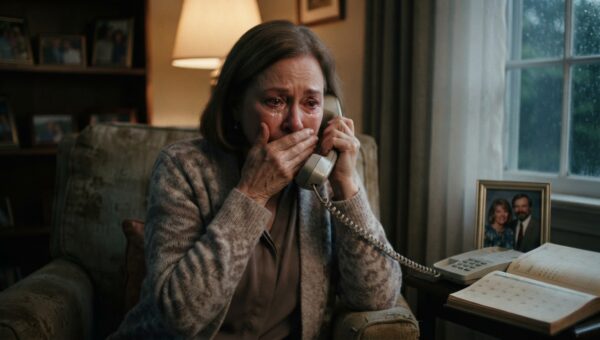
I still had my car keys in my purse, right in the side pocket where they had lived since 1994. My little blue sedan was sitting out in the asphalt lot under the baking noon sun, full of half-empty grocery bags and a wool blanket I kept in the trunk for chilly mornings. The idea of leaving it there felt wrong, like abandoning a dog on a street corner. I nodded because my throat had gone entirely dry, and I gave him Maya’s number from memory.
Maya got there in twenty minutes. She didn’t ask what happened while we were walking out to her car, and she didn’t fuss over me the way she used to when she was ten and scraped her knee on our back porch. She just reached out, took my car keys right out of my hand before I could protest, and dropped them into her canvas tote bag.
Then she opened the passenger door of her little SUV and helped me climb up into the seat.
“We’re going straight to urgent care,” she said, and her hands on the steering wheel were white-knuckled against the leather. “The DMV supervisor called me back after I hung up, Grandma. He said your eyes didn’t just miss the pen. He said you were tracking completely off to the left.”
The urgent care waiting room smelled of rubbing alcohol and damp coats. We sat on orange plastic chairs that linked together in a long, unbroken row while the clock on the wall clicked its way through forty-five minutes of silence. When a nurse finally called my name, the examination was a blur of cold stethoscopes, flashing lights, and a doctor who tapped my knees with a little rubber triangle until my legs jerked like clockwork. Then came the referral to the main hospital downtown for a quick scan, just to be thorough, just to rule things out.
By the time the bill for the emergency screening arrived a week later, three thousand dollars even after the insurance picked at it like crows at a cornfield, it was already the furthest thing from my mind. The real number that mattered was three centimeters.
That was the size of the shadow Dr. Aris pointed to when he spun the light box around in his small, windowless office. He was a younger man with tired eyes and sleeves rolled up past his elbows, and he pointed a yellow highlighter at the back of the brain scan like a schoolteacher showing a map of a foreign country.
“Right here,” Dr. Aris said, tapping the film. “See how this dark patch is pressing against the occipital and parietal junctions? That is why your depth perception went sideways over the last year. That is why you were clipping door frames and missing the bottom stair.”
Maya was sitting beside me in the metal chair, her hand clamped so tightly over mine that my knuckles were aching. “Is it a stroke?” she asked, her voice shaking just enough to let me know how scared she really was.
“No,” Dr. Aris said, and for the first time since we walked into the hospital, my chest unclenched just a fraction. “It is a meningioma. It is benign, it is slow-growing, and it has likely been sitting there for years, quietly taking up space until it finally started crowding the nerves that handle your vision and balance. It explains everything.”
We drove home in the late afternoon, the sun low and red over the ridge of the mountains, casting long shadows across the asphalt. Maya didn’t turn on the radio. The hum of the tires against the pavement was the only sound in the car, steady and rhythmic, keeping time with the thoughts running through my head. For months, I had been furious with myself for getting old, for losing my grip, for becoming the kind of person who needed help to cross a parking lot or read the fine print on a soup can. I had spent half my nights lying awake in the dark, terrified that my mind was dissolving away like sugar in hot tea, leaving me a stranger in my own skin.
Now I knew the truth. It wasn’t my mind failing me. It was just an uninvited guest sitting at the back of my skull, taking up room it had no business claiming.
When we pulled into the driveway, Maya walked me up the front steps and unlocked the door. The house was cold and smelled faintly of the cedar chips I kept in the closet, perfectly normal, perfectly quiet. I walked into the kitchen and set my handbag down on the counter, right next to the small ceramic bowl where I used to empty my pockets every evening.
Maya reached into her tote bag, pulled out my car keys on their brass ring, and walked over to that same little bowl. She dropped them in with a small, sharp clink that echoed against the stoneware.
“You’re not driving to the surgeon’s consultation on Thursday,” she said, leaning back against the counter and folding her arms over her chest. “I’m picking you up at eight. We’ll go together.”
I looked at the keys sitting at the bottom of the bowl, half-buried under a grocery list I had written three weeks ago and a spare house key I hadn’t used since the screen door was replaced. For sixty years, those keys had meant freedom, independence, the ability to go wherever I damn well pleased whenever the mood struck me. Giving them up felt like handing over a piece of my own soul. But looking at Maya, standing there in her sneakers with her coat still zipped, waiting for me to argue so she could love me through the fight, I realized something else.
The keys were just metal and brass. The real life, the part that mattered, wasn’t locked inside a blue sedan sitting in a DMV lot.
“Eight o’clock then,” I said, and my voice didn’t shake at all. “And don’t be late. I want to stop for coffee on the way.”