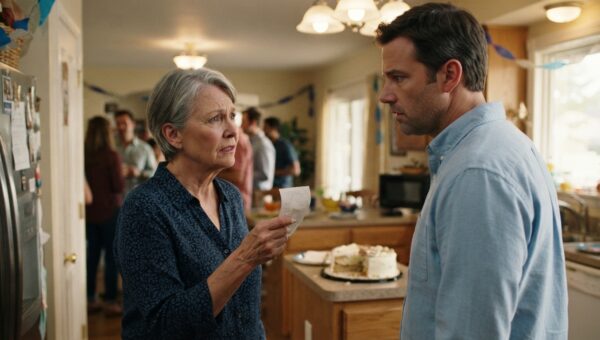
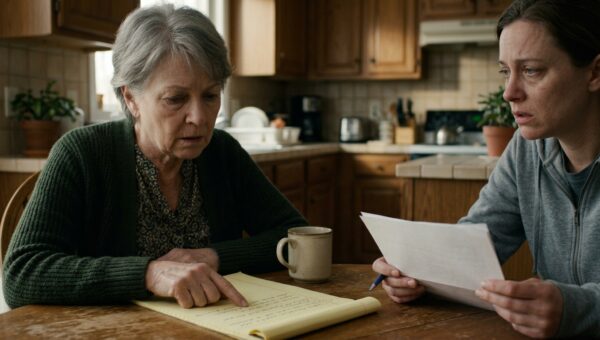
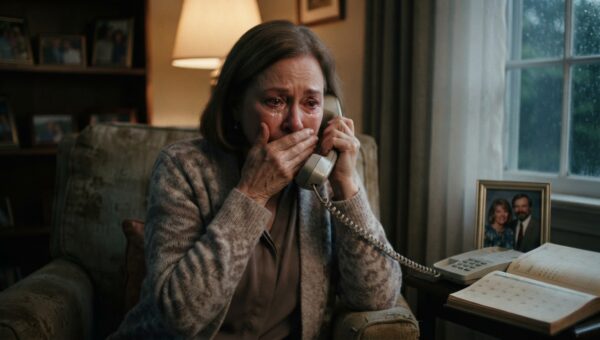
The deadbolt in our hallway always let out a sharp, metallic click before the door actually moved, a sound I had learned to dread by the time I turned fourteen. On that Tuesday in January, the wind was already howling off the ridge, driving dry snow against the front porch glass like handfuls of gravel. My father stood by the kitchen table with his jaw clamped so tight a muscle ticked near his ear.
Eight hundred dollars was missing from the tin in the pantry, and he was not the kind of man to ask questions until he had already decided who was guilty.
Ethan sat at the table too, peeling a loose piece of laminate off the edge with his thumbnail. He did not look up when the silence stretched out too long, making the floorboards beneath my socks feel thin and cold. My mother was standing by the stove with her back turned, her fingers gripping the edge of the enamel counter so hard her knuckles looked like polished bone. She knew how my father operated when he got like this, but she had spent twenty years perfecting the art of disappearing into the wallpaper.
“I didn’t touch it,” I said, and my voice sounded too small against the whistle of the wind in the chimney.
Ethan didn’t even hesitate. He just lifted his chin toward me without raising his eyes from the table. “She took it,” he lied, his voice flat and practiced like he had rehearsed it twice in the mirror.
My father moved before I could take another breath, his hand catching the collar of my sweater and dragging me toward the front entryway with a force that rattled my teeth. He didn’t want to hear my excuses or look at my hands or check where I had been all afternoon. He wanted someone to blame for the hole in his ledger, and I was the easiest target in the house.
“Get out,” snarled the father. “I won’t feed a thief.”
The front door swung wide, letting in a wall of bitter Pennsylvania air that smelled of wet asphalt and frozen mud. He shoved me across the threshold before I could grab my coat from the peg, and the heavy oak door slammed shut behind me with a finality that made the porch light flicker. I stood there on the top step in my thin cotton shirt and denim skirt, watching the snow dust my bare arms while the wind tore the breath right out of my lungs.
Within ten minutes, the cold stopped feeling like cold and started feeling like needles driven into my skin. I tried the knob, but the deadbolt was already thrown, solid and immovable. I walked down the gravel drive, my teeth clicking together like loose coins, heading toward the treeline where the wind broke just a little bit against the pines. The snow was already piling up around my sneakers, dragging at my ankles with every step until my legs felt like lead pipes.
I remember thinking that if I just sat down behind the old cedar stump by the creek, the burning in my chest would finally stop. The world started to blur around the edges, turning a dull, flat gray that swallowed the light from the county road a quarter-mile away. My fingers went completely numb, and then my arms stopped aching altogether, which felt like a strange kind of relief before the dark came down hard and fast.
When I finally opened my eyes, the glare from the overhead fluorescent lights hit the back of my skull like a hammer. The air in the room was warm, smelling faintly of antiseptic and rubbing alcohol, but my hands felt like they were being dipped in boiling water as the frostbite began to thaw. I tried to turn my head on the stiff cotton pillow, but a sharp ache stopped me halfway.
A man sat in the metal chair beside the bed, his thumb resting gently against the back of my hand. He looked to be in his late forties, with silver threading through his dark hair and lines around his eyes that told me he spent a lot of time watching things he couldn’t fix. He wasn’t a doctor, and he certainly wasn’t anybody from our town. He just sat there in silence, watching my eyelids flutter until I managed to focus on his face.
“Easy now,” he said, his voice low and gravelly like dry leaves sliding across concrete. “You’re at St. Jude’s in Ridgway. The state troopers pulled you out of the creek bed about an hour before dark.”
Before I could ask him who he was or why he was holding my hand, the heavy door to the hospital room banged against the rubber wall stop. My mother rushed in first, her face flushed from the cold and her wool coat unbuttoned in a desperate rush. She looked like she had run all the way from the parking lot, her eyes wide and darting frantically around the sterile white walls.
“Oh, thank God,” she breathed, taking a ragged step toward the mattress. “We got the call from the troopers and, “
She stopped dead three feet from the bed. Her gaze dropped from my face down to the man sitting in the chair, specifically to his hand resting over mine. Her purse hit the green linoleum floor with a heavy, sickening thud, spilling a tube of lipstick and a plastic coin purse across the shiny wax.
“No,” she whispered, her face draining of color until she looked almost translucent under the harsh lights. “You’re supposed to be dead……”
The silence that followed was heavy enough to crack the ceiling tiles. The man in the chair didn’t flinch, didn’t pull his hand away, and didn’t look surprised in the slightest. He just slowly stood up to his full height, looking down at my mother with a cold, steady gaze that seemed to take in every lie she had told for the last fourteen years.
“Hello, Helen,” Arthur Vance said quietly. “It’s been a long time.”
My mother backed up until her shoulders hit the door frame, her hands clawing blindly at the wood behind her like she was trying to push her way through the wall. “How did you find her?” she choked out, her voice cracking on the last word. “She wasn’t supposed to be anywhere near you.”
“She was freezing in a ditch behind your husband’s property, Helen,” Arthur said, and the plainness of his tone made it sound ten times more brutal than a shout. “Because your golden boy needed to cover his gambling debts at the pool hall in Wilcox, and you both decided it was easier to throw a fourteen-year-old girl into a blizzard than admit your house was built on rot.”
I lay there on the thin hospital mattress, the burning in my thawing fingers suddenly fading into the background as the pieces started grinding together in my head. I thought about the tin in the pantry, the missing eight hundred dollars that Ethan had been sweating over for three days, and the way my father had looked at him like he was a saint who could do no wrong.
“Ethan took it,” I whispered, the words tasting like dry ash in my mouth.
Arthur looked down at me, his expression softening just a fraction. “We know he took it, sweetheart. The state police found the receipt from the pool hall in his jacket pocket when they brought your parents in for questioning ten minutes ago. Your brother isn’t quite as smart as your father thinks he is.”
The door opened wider, and two state troopers stepped into the room, followed by my father. He looked smaller than he did in our kitchen, his shoulders rounded under his heavy winter coat, his face mottled with a dull, confused anger that didn’t quite know where to land. He looked at Arthur, then at my mother pressed against the door, and finally at me lying beneath the white hospital sheet.
“Helen, who is this man?” my father demanded, his voice dropping into that rigid, authoritarian register he used when he was losing control of a room. “Why is he touching our daughter?”
My mother slid down the door frame until she was sitting on the linoleum next to her spilled lipstick, her face buried in her shaking hands. “He’s not your daughter, Thomas,” she sobbed into her palms, the confession tearing out of her like something rotten finally breaking through the soil. “She’s not yours. She’s his.”
The room went so quiet I could hear the faint hum of the ice machine down the hallway. My father stared down at his wife, his mouth slightly open, the color draining out of his face until he looked like an old man made of grey plaster. He looked at Arthur, then back at my mother, the foundation of every rule he had ever enforced, every cruel thing he had ever said, collapsing into dust right there on the hospital floor.
“Is that true?” my father asked, his voice cracking into something thin and pathetic.
Arthur didn’t raise his voice. He reached into his coat pocket and pulled out a thick manila folder, holding it out toward my father with the steady patience of a man who had waited fourteen years for this exact second. “You married a woman who was told her firstborn didn’t survive the winter of my absence, Thomas. Except the doctor she paid off back then had a change of heart last month, and I’ve spent the last six weeks looking for the girl you just tried to freeze to death.”
My father didn’t take the folder. He just stood there with his hands hanging limply at his sides, looking like a man who had just realized he spent his entire life guarding an empty box. He turned his head toward the hallway where the troopers stood waiting, then back toward the bed where I lay watching him with a coldness that had nothing to do with the frostbite.
“You’re coming home with us right now,” my father muttered, though there was no weight left behind the words, just a desperate reflex.
I pulled my hand out from under his blanket and tucked it firmly against my chest, staring straight into his eyes without blinking. “I don’t have a home there,” I said.
Arthur stepped back to the bedside, reaching down to pick up a thick, heavy woolen coat that was draped over the back of the metal chair. He held it out for me, his movements calm and deliberate, offering the first real shelter I had known since I was born. I sat up slowly, swinging my legs over the edge of the mattress, ignoring the stinging ache in my heels and the sound of my mother crying softly against the floor.
As we walked out of the room toward the double doors, my father didn’t try to stop us, and the troopers made way without a word. The crisp morning air hit my face like a clean slate as we stepped out of the emergency entrance into the pale Pennsylvania sunrise, and Arthur gently draped the warm wool coat over my shoulders, locking out the cold for good.