PART 1
My son told me his new wife needed the spare bedroom for her home office, so I carried my Singer sewing machine out to the garage myself.
He told me the whole arrangement would only last a month. I believed him because Kevin had never asked me for anything so directly in his thirty-four years. He had always been quiet, almost apologetic whenever life got tight, and his health had kept him cautious since childhood.
When he had a bad asthma scare at twenty-six, I dipped into my savings to cover his clinic bills without a word. So when he stood in my hallway on a Tuesday evening, rubbing the back of his neck and asking if Brianna could set up her dual monitors in the east bedroom just until tax season wrapped up, I told him yes.
“Just thirty days, Ma,” he said. He wouldn’t look me dead in the eye, but his voice sounded tired, and I told myself newlyweds just needed room to breathe.
I took the fabric scraps, the iron, and the heavy plastic bins of winter clothes down the concrete steps into the garage. The air smelled like motor oil and old garden fertilizer. I cleared a spot near the water heater, set my machine on a folding table, and went back upstairs to sleep on the daybed in the study.
Three days later, on a brisk Friday morning, I walked outside to check the mailbox and saw three of my heavy plastic storage bins stacked right beside the gray county trash cans at the curb.
The lid on the top box was cracked. Through the green plastic, I could see my late husband Donald’s flannel work shirts, folded neat the way I kept them, pressed against the wet side of the bin. The city sanitation truck was due at eight o’clock, and the kitchen clock had read seven-fifteen when I walked out.
I walked back up the drive with my hands shaking in my cardigan pockets. When I stepped into the kitchen, Brianna was standing by the quartz counter, pouring hazelnut creamer into an oversized mug. She was twenty-eight, dressed in matching beige sweatpants, her hair tied back neat.
“Brianna,” I said, trying to keep my voice down so Kevin wouldn’t wake if he was still upstairs. “Why are my clothes out by the curb?”
She set the creamer down and turned around. She didn’t look startled.
She looked like someone dealing with a minor chore that should have been handled yesterday.
“We need the garage cleared out for the Peloton delivery on Monday,” she said. “The storage unit Kevin promised to rent fell through, and we can’t have clutter all over the place. We are making room for people who belong here.”
The word hit like a cold draft under a locked door. “People who belong here?”
“You know what I mean, Evelyn,” she said, leaning against the counter with both hands around her mug. “This house is Kevin’s future. You’re living out of boxes anyway. We spoke to an intake coordinator on Wednesday.”
I started to apologize, almost by reflex. I was about to tell her I could find a small metal shed for the backyard, or pay for the monthly rental locker down on Route 4 myself. Then I stopped.
I turned on my heel and walked back down the driveway. I knelt on the cold asphalt beside the bins.
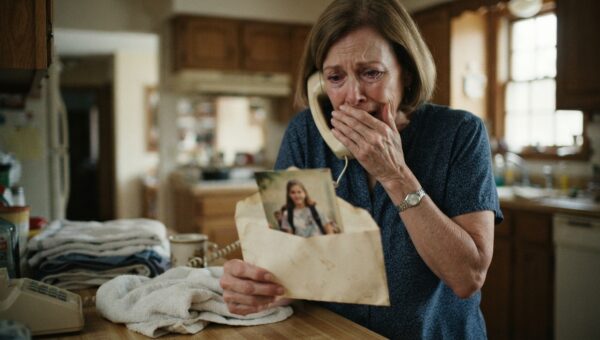
A thick manila envelope was wedged tight between the second bin and the trash can, stuck in the gap like someone had tried to shove it down out of sight.
The front of the envelope was addressed to me: Evelyn Miller.
The handwriting was not mine, but the return name printed on the upper left corner was Kevin Miller. The envelope was sealed with three strips of brown packing tape, but the seam had split where someone had jammed it against the wheel of the plastic cart.
Inside, through the tear, I could feel the thick edge of a legal folder.
PART 2
I didn’t open the envelope on the driveway. I carried it under my arm, hauled my three bins back up to the concrete apron near the garage door, and went into the back shed where Donald used to keep his socket wrenches.
I sat on a wooden milk crate with my hands stiff from the morning chill. I peeled the packing tape off slowly so it wouldn’t shred the paper inside.
The folder was from an estate planning office twenty miles south in Oak Creek. The date stamped on the top sheet was October 14, just six weeks after Kevin and Brianna got married at the courthouse.
The first page was a quitclaim deed. It had my address on it, the two-story split-level Donald and I bought in 1994 for $112,000 and paid off fifteen years later. But underneath the legal description of the lot was an application for a transfer of ownership based on power of attorney, paired with an evaluation form from Pinecrest Senior Living.
The Pinecrest document was an intake assessment. It had my date of birth, my Social Security number, and Kevin’s signature at the bottom as the responsible family member. In the space marked “Reason for Placement,” Kevin had written in his cramped, familiar print: *Mother experiencing severe cognitive decline, wandering tendencies, unable to manage daily property maintenance or personal hygiene independently.*
I stared at the black ink. I had planted two dozen tulip bulbs in the front bed three weeks ago. I did the grocery shopping every Thursday morning at nine. I paid the water bill from my checking account at First Community Bank every month on the fifth.
Underneath the intake form was a financial summary sheet. Kevin had listed the estimated market value of my home at $340,000, along with a note about liquidating equity to cover Pinecrest’s monthly fee of $4,800, with remaining proceeds going into a family trust where Brianna was listed as the secondary trustee.
He hadn’t put me in the garage so Brianna could have an office. He had put me in the garage to make a paper trail.
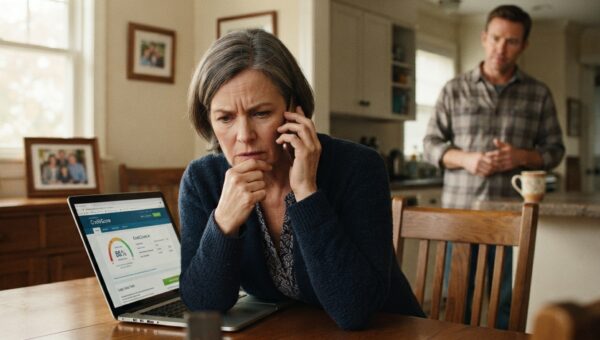
I took my phone from my pocket and called Donald’s younger brother, Ray. Ray worked thirty years in title insurance before retiring to fish over on the lake.
“Ray,” I said when he picked up. “Can you look at the county records online right now?”
“Evelyn? What’s going on? You sound out of breath.”
“Just look up 414 Elm Street. Tell me whose name is on the deed this morning.”
I sat on that milk crate for three minutes while the keyboard clicked on his end. The garage door opened above me. I heard Kevin’s truck start up, idle for a second, and then back out down the driveway.
“Evelyn,” Ray’s voice came back, slow and steady. “The deed is still in your name. There was an inquiry filed three weeks ago to record a transfer, but the county clerk rejected it for missing an original notarized signature from you. They flagged it on the second of this month. Did you sign anything for Kevin lately?”
“He brought me a stack of papers last month,” I said, remembering the kitchen table on a Sunday afternoon. “He said it was the homestead property tax exemption renewal for seniors.”
“Did you sign the actual deed?” Ray asked.
“No,” I whispered. “I signed the tax form. But he had four other pages clipped behind it that he said were county disclosures.”
“Listen to me,” Ray said. “Get your coat, get in your car, and drive down to the county clerk’s office on Market Street. Don’t confront him in that kitchen until you have the title locked. He tried to record a forged or blind-signed conveyance, Evelyn. If that clerk had rubber-stamped it, you’d be fighting your own kid in court while sitting in an assisted living room.”
I stood up from the crate. My knees were stiff, but the fog in my head was gone. I walked back into the garage, grabbed my handbag off the sewing table, and drove straight into town.
PART 3
The county clerk was a woman named Martha who had worked that desk since Donald was still driving his delivery routes. She pulled the rejected file from a gray metal cabinet behind her desk.
The signature on the third page had my name on it, but the loop on the capital E was flat and stiff, not the rounded curve I learned in school fifty years ago.
“He brought this in with a notary stamp from a pack-and-ship store over on 12th,” Martha said, keeping her voice low. “Our recorder caught the discrepancy between this and your original 1994 filing. We mailed the notice of rejection to the property address on Wednesday.”
The envelope by the trash cans. Kevin had intercepted the county’s rejection letter before I could check the box, shoved it into an old envelope from his own office files, and tossed it into the bin so I would never know he had attempted the transfer.
“I want an immediate fraud alert placed on the parcel,” I told Martha. “And I want to change the mailing address for all tax and title notices to a post office box today.”
It took forty minutes to fill out the paperwork and pay the twelve-dollar fee. When I walked back out to the parking lot, my phone rang. It was Kevin.
“Ma? Where are you? Brianna said you dragged those bins back up against the siding. We told you we need that area clear.”
“I am at the courthouse, Kevin,” I said.
The line went dead silent.
“What are you doing down there?” his voice dropped, losing the hurried edge.
“I have the rejection notice from the recorder of deeds,” I told him. “And I have the intake packet for Pinecrest Senior Living where you wrote that your mother doesn’t know how to wash her own face.”
He didn’t yell. He let out a long, ragged exhale. “Ma, you don’t understand how tight things are. Brianna’s student loans are ninety thousand dollars. My asthma medication went to six hundred a month when the shop cut our hours. That house is too big for you anyway. You would have had three meals a day at Pinecrest, and we could have kept the property in the family instead of losing it to property taxes later.”
“This house is mine,” I said. “Your father and I worked forty-two years combined to pay off that mortgage. You didn’t do this to protect me. You did this because you thought an old woman wouldn’t notice the ground disappearing under her feet.”
“Ma, please come home so we can talk about this,” he pleaded. “Brianna was just stressed. She didn’t mean that stuff about not belonging.”
“I am coming home,” I said. “And you have until six o’clock tonight to pack your things.”
When I pulled into the driveway twenty minutes later, Kevin’s truck was parked on the grass. Brianna was standing by the porch steps with her arms crossed, her phone in her hand.
“You can’t just kick Kevin out,” she said as I got out of the car. “He has tenant rights. We’ve lived here six months.”
I held up the white envelope from the county clerk.
“This is an affidavit of attempted deed forgery,” I said, looking straight at her. “The clerk told me I can walk this across the hall to the sheriff’s department by two o’clock, or Kevin can have his clothes and your monitors out of my spare bedroom by dinner. If the sheriff comes, nobody is moving into Pinecrest, but Kevin will be explaining that fake notary stamp to a judge.”
Brianna looked toward the truck. Kevin was sitting behind the steering wheel, his head down against the rim. He didn’t get out to defend her. He didn’t look up at me.
She turned around, walked up the steps, and let the screen door slam shut.
ENDING
By five-thirty that evening, two U-Haul trailers were parked along the curb where my storage bins had been that morning.
Kevin loaded the heavy boxes himself. He carried down the monitors, the kitchen appliances they had bought, and the three garment bags of work clothes. He spoke to me only once, while I stood by the front porch railing with a mug of black coffee.
“Where are we supposed to go, Ma?” he asked. His voice was hoarse, the same way it sounded when he was ten years old and woke up coughing in the middle of the night.
“You have six thousand dollars in savings, Kevin,” I said. “I saw the bank balance listed on that financial disclosure you gave Pinecrest. You can rent an apartment down near the plant just like Donald and I did when we started out.”
He looked at the floorboards of the porch, picked up the last suitcase, and walked down the steps. Brianna was already sitting in the passenger seat of his truck, staring straight ahead through the windshield with her sunglasses on.
They pulled away just as the streetlights flickered on.
I walked into the house and shut the front door. The lock turned with a solid, heavy click that echoed down the hallway.
The house felt larger than it had in months, but the air was clean. The clutter of modern floor lamps, protein powder tubs, and mail order packages was gone. The spare bedroom had two rectangular indentations on the carpet where their desk had stood, and the smell of sweet hazelnut syrup still hung near the sink.
I went out to the garage, unhooked the latch on the side door, and carried my Singer sewing machine back up the stairs. It was heavy, and my lower back protested with every step, but I didn’t stop until I had it set square in the center of the wooden table in the east bedroom.
I plugged the cord into the wall, flipped the small metal switch, and watched the little yellow bulb above the needle flicker to life.
I sat down on Donald’s old wooden desk chair, took a piece of blue cotton scrap from my pocket, and lowered the presser foot. Outside, the neighborhood was completely quiet. I tapped the foot pedal once, listened to the steady, mechanical click of the needle through the cloth, and stayed right there where I belonged.