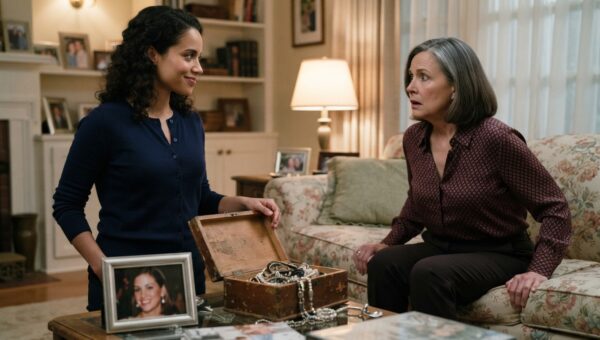
I used to think gratitude was a simple debt. You paid it back in Sunday visits, in phone calls on holidays, in letting someone rewrite your history because they were there when the ground fell out from under you. Aunt Clara made sure I understood that debt every single day. When my mother died during my junior year of college, the world went gray and stayed that way for months, and Clara was the one who stepped into the vacancy with aprons and casseroles and steady hands. She drove three hours up to campus the night the hospital called, packed up my dorm room into cardboard boxes, and took me home to her white-paneled house in Iowa. She was the one who helped pick out my lace wedding gown nine years later, dabbing her eyes with a tissue while telling me how proud my mother would have been to see me. She was the one who cleared a space in her own spare bedroom when my oldest boy was born with colic, walking the floorboards with him until dawn while I slept in five-minute increments. I gave her my trust because she kept asking for installments of it, and I paid them gladly, believing she was the bridge between the mother I lost and the life I managed to build.
The dust in Clara’s attic always smelled like dried cedar and twenty years of forgotten Christorship boxes. It was a Saturday morning in October when I finally agreed to help her sort through the cardboard stacks near the eaves, mostly because she kept complaining about her joints and the boxes were too heavy for her to drag down the aluminum ladder alone. Clara sat on a folding chair by the small round window, sipping lukewarm coffee from a chipped mug and directing traffic with her index finger. I was crouched down near a trunk marked with faded marker that said college papers, lifting out old spiral notebooks and pressed fall leaves that had long since turned the color of old paper bags. That was when my fingers brushed against a flat, square packet tucked beneath the bottom flap of a mildewed ledger. It was an envelope, thick and slightly yellowed around the gummed edge, addressed to my old campus dorm room in my mother’s unmistakable, sloping cursive. The postmark stamped in purple ink read October fourteenth, exactly two days before the hospital monitors flatlined and my entire universe stopped spinning.
Clara must have seen the change in the set of my shoulders because her voice cut through the quiet attic air before I could even slide the flap free. “What did you find down there, honey? Just toss those old junk papers in the trash bin.”
I stood up slowly, the paper feeling heavy and cold between my thumb and forefinger. “It’s a letter, Clara. From Mom.”
The coffee mug clattered against the saucer on her lap as she stood up with a speed that defied her bad knees, her hands already reaching out across the wooden floorboards. “Give that here to me right now. Your mother was confused at the end, she didn’t know what she was writing half the time, it’s just nonsense.”
I took a step backward, bumping my shoulder against a stack of rolled-up rag rugs. “If it’s nonsense, why are you shaking so hard?”
Clara stopped moving, her face draining of color until her skin looked like skim milk, and her fingers curled into the fabric of her cardigan. “Please. It will only hurt you. Let me take it, sweetheart, I only ever protected you.”
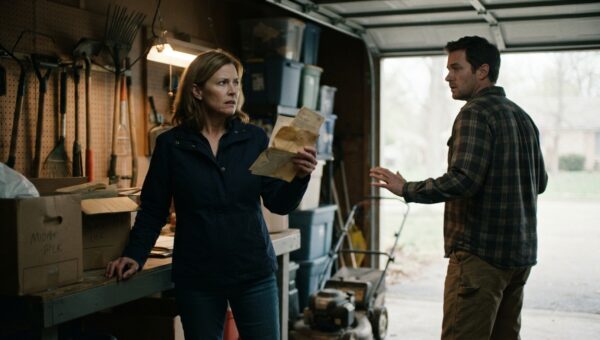
I didn’t answer her. I didn’t hand it over. I slipped my thumb beneath the crusty seal and tore the paper open right there in the dust while she watched me with eyes wide and dark with a panic I had never seen on her face in thirty years.
The first sentence was normal, scrawled in that familiar hand that used to sign my permission slips. *Dearest, I pray you get this before the week is out.* The second sentence made my breath catch in my throat and stay there. *If your aunt tells you I chose her to raise you, ask her what happened on October twelfth.*
I lowered the letter and looked up at Clara, who had pressed both hands flat against her mouth as if she could physically push the words back down my throat. The silence in the attic suddenly felt massive and suffocating, thick with thirty years of buried dirt. October twelfth was the Tuesday before Mom died, the day Clara had called me at college to say Mom was heavily sedated, sleeping peacefully, and too weak to have visitors. Clara had told me to stay on campus, to focus on my midterm exams, because Mom wouldn’t want me missing classes for a sickbed vigil that might drag on for weeks. I had trusted her. I had stayed in my dorm room, studying library science by the glow of a desk lamp, while across the state my mother was apparently trying to reach me through locked doors.
“You lied,” I whispered, the words tasting like copper in my mouth.
Clara dropped her hands, her shoulders slumping as the mask of the devoted surrogate mother finally cracked right down the middle, revealing something small and desperate underneath. “I didn’t lie about how much I loved you, I raised you when nobody else was going to,” she said, her voice dropping into a harsh, defensive whine that sounded nothing like the soft grandmotherly tone she used for church potlucks. “Your mother wasn’t thinking straight, she had cancer in her bones and morphine in her veins, she didn’t know what she was signing away.”
“Signing what away, Clara?”
She didn’t answer. She just turned her face toward the dusty window, refusing to meet my eyes, which told me everything the letter had only hinted at.
The drive home that morning took forty minutes, and I watched the yellow center lines of the county highway blur beneath my tires while every memory I had of Clara replayed itself through a terrifying new filter. The way she had managed the small insurance payout after Mom died, explaining that lawyers took half and funeral costs took the rest. The way she had discouraged me from applying to graduate school out of state, insisting that a girl needed family close by when she started having babies. The way she always arrived unannounced at my front door with a casserole dish and an opinion on how I was running my household. It wasn’t love that built those boundaries; it was a cage constructed out of forged permission slips and intercepted mail, designed to keep me dependent, grateful, and permanently in debt to a woman who had stolen my mother’s final days to secure her own position as the matriarch of our family.
I didn’t go straight home to my husband. Instead, I drove down to the county courthouse in the old brick municipal building by the river, sitting in the hard plastic chairs of the records department until my palms were sweating against my denim jeans. It took three hours of digging through probate microfilms and estate ledgers from twenty-two years ago to find the file for my mother’s estate. There it was, tucked behind the standard hospital release forms: a petition to amend guardianship and power of attorney, dated October twelfth, bearing my mother’s shaky signature and a stamped denial from the county judge due to lack of independent witness verification. Attached to it was a bank transfer ledger showing six thousand dollars moving from my mother’s medical trust account into an external savings routing number belonging to Clara Miller, executed three days before my mother drew her final breath.
My hands were shaking so badly I dropped the plastic viewing wand back into its cradle with a sharp plastic clatter that made the clerk behind the high counter look up over her bifocals. I didn’t cry. The grief I felt wasn’t the soft, weeping kind I had carried through my college years; it was a hard, cold anger that felt like swallow-glass. My mother hadn’t drifted away peacefully in a haze of morphine while Clara held her hand. She had been fighting for her life, fighting for me, trying to claw her way through her own sister’s blockade to leave her daughter a warning about who was really standing at the foot of her bed.
By the time I drove back out to Clara’s house that evening, the sun was dropping low behind the western cornfields, painting the sky the color of a bruised plum. I didn’t knock on the screen door this time; I pushed it open and walked straight into the linoleum kitchen where she was standing by the stove stirring a pot of beef stew, exactly the way she had done every Sunday for as long as I could remember.
She looked up when the door swung back, her wooden spoon hovering mid-air over the steaming broth. She didn’t look surprised to see me. She looked tired, the skin around her eyes folded into deep, permanent creases that no amount of cold cream could soften.
“I saw the bank transfers, Clara,” I said, my voice sounding flat and distant even to my own ears. “I saw the paperwork from October twelfth. You weren’t protecting her. You were cleaning her accounts out while she was too weak to lift a pen to stop you.”
Clara set the spoon down on the counter with a dull clink, her jaw tightening as she gripped the edge of the laminate table. “She didn’t need that money anymore, she was dying, and I had a teenager to put through clothes and school fees,” she snapped, the sudden venom in her voice stripping away every pretense of maternal warmth we had shared for decades. “I gave up my own life to take you in. I raised you like you were my own flesh and blood. You wouldn’t even have gone to college if I hadn’t managed what was left after your father left us high and dry.”
“Don’t you dare talk about my father like that, and don’t you dare use me to justify stealing from a dying woman,” I said, taking two deliberate steps toward her across the floor. “You kept her letters. You kept me away from her hospital room for forty-eight hours so she couldn’t change the will or tell me what you were doing. You didn’t raise me out of kindness, Clara. You raised me so I wouldn’t ever find out what you stole.”
She didn’t yell. She didn’t cry this time. She just looked at me with those cold, flat eyes that suddenly belonged to a stranger I had never really known at all. “And what are you going to do about it now? Call the police on an old woman? Drag your family name through the local paper over money that’s been spent and gone for twenty years? Go ahead. See who people believe, the aunt who raised you or a dead woman’s angry ghost.”
That was the moment the debt finally snapped. The thirty years of gratitude, the holiday dinners, the hand-me-down wisdom, the feeling that I owed my existence to her charity, it all dissolved into nothing right there between the stove and the refrigerator. There was nothing left to salvage because there had never been anything real to begin with.
“I’m not calling the police, Clara,” I said quietly, turning toward the front door without looking back. “I’m just leaving.”
“You’ll be back,” she called out to my back as my hand found the brass knob. “You have nowhere else to go, who else do you have left?”
I pulled the screen door open, stepping out into the cool evening air where the smell of wood smoke and damp earth rose up from the lawn. “Myself,” I said, and let the door latch shut behind me with a clean, final click.
The house was quiet when I got home, the kids already upstairs in their beds asleep, my husband waiting in the kitchen with a cup of coffee and a look of quiet concern that didn’t demand explanations until I was ready to give them. I didn’t cry when I told him what was in the attic envelope, and I didn’t break down when I burned the old photo albums of Clara and me in the backyard fire pit later that week. Instead, I took my mother’s original, authenticated letter from my coat pocket and placed it inside a clean leather journal on my own desk, right next to a fresh glass of water and the morning sunlight pouring through my window where it belonged.