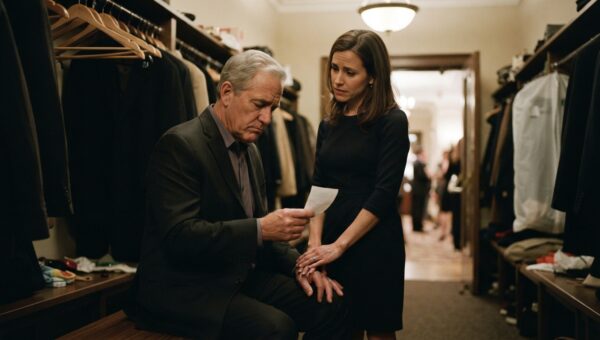
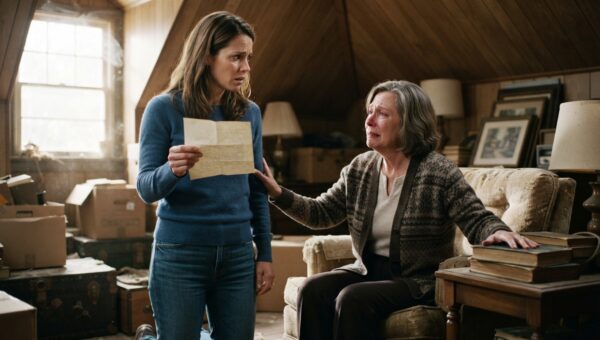
The green kitchen clock on my wall clicked past 8:00 p.m. three Sundays ago, and for the first time in fifteen years, my phone did not ring. Nathan had called me every single Sunday without fail. Even when he was in Chicago for his firm’s audit, even when the twins had the croup, even when our old water heater blew and flooded my basement on a snowy November night, his voice came through that little speaker right around dinner time. I stared at the screen until the little blue light went dark. I told myself he was just tired. I told myself the kids had acted up or he got stuck late at the office.
By the second Sunday, my stomach felt like a cold stone sitting right under my ribs. I sent three text messages, and none of them went through as delivered. When I finally called Elena, my daughter-in-law, her voice sounded tight and brittle like dry twigs snapping underfoot. “He’s busy, Martha, we’ve got a lot on our plates right now,” she told me before hanging up without even saying goodbye. Her tone had that sharp, defensive edge that always meant she was hiding something large and ugly. I didn’t sleep that whole week. I kept seeing Nathan’s face from the last time he visited, the way his shoulders looked pinched under his coat like a man carrying fifty pounds of wet sand.
On Tuesday morning, I couldn’t take the quiet anymore. I got into my sedan and drove the two hours down the interstate to their subdivision, my fingers cramped so hard around the steering wheel that my knuckles turned the color of chalk. Their driveway looked completely empty except for three faded plastic toys left by the curb. A big red For Sale sign was jammed right into the flower bed where Nathan had planted hydrangeas with his own hands. I walked up the porch steps and knocked until my knuckles hurt, but the only sound came from somewhere down the street where a lawn mower was chewing through dry grass. A woman with a basket of wet laundry stepped out from the house next door and watched me like I was a stray dog. “They cleared out on Thursday,” she called over the fence, her voice flat and bored. “Packed a van and just vanished. Left the keys with an agent.”
My fingers shook so hard I dropped my phone twice trying to dial Elena’s number. When it finally went through, the automated voice told me the number had been disconnected. I stood there on that bare concrete porch with the hot wind blowing dust across my shoes, feeling completely untethered from the earth. That was when the brown delivery van pulled right up behind my car. The driver hopped out with a clipboard tucked under his arm, looking at me sideways because my old sedan was blocking his turn. I just stared at him, my brain feeling thick and muddy like old pond water.
“You looking for the folks who lived here?” the driver asked, squinting against the glare off my windshield. His name tag said Marcus. “They cleared their mail forwarding last week. But wait.” He stopped walking toward the front door and looked down at my license plate as I hurried to move my car. “Are you Martha Evans?” I told him I was, and my heart gave a hard, painful thud against my ribs. Marcus let out a long breath and shook his head, reaching back into the cab of his truck. “Your son Nathan left something at our sorting depot over on Route 4. He told the manager specifically that if his wife ever cut off the phones and moved out without a forwarding address, only you could pick it up.”
The drive to the Route 4 shipping depot took twenty minutes, and I drove like an old woman, gripping the wheel at ten and two. The depot smelled like wet cardboard and stale coffee, a cavernous gray room where giant trucks backed up to loading docks all day long. The manager, a thick-set man with graying temples named Ray, recognized me from Nathan’s description before I even showed my driver’s license. He walked back to a locked metal cage and came out carrying a heavy brown box sealed with three layers of heavy-duty packing tape. “He was shaking when he dropped this off three weeks ago,” Ray told me quietly, resting the box on the scarred wooden counter. “Said his family’s life depended on you opening it if things went sideways.”
I took the box out to my car and sat in the driver’s seat with the engine off, the air-conditioning fan humming softly. Using my house key, I sliced through the tape and pulled back the cardboard flaps. Inside lay a thick stack of bank printouts, loan applications bearing forged signatures, and a sealed manila envelope with my name written across the front in Nathan’s hurried, familiar handwriting. My hands were trembling so badly I had to lay the papers out across the passenger seat just to steady them. The printouts showed over $67,000 in high-interest loans taken out against Nathan’s business credit without his knowledge, every single one of them traced back to online accounts controlled solely by Elena. There were notices from collection agencies hidden behind the toaster in their old kitchen, final demands for payment on credit cards Nathan didn’t even know existed.
I opened his letter and read the first line twice because my eyes wouldn’t focus. “Mom, if you’re reading this, she finally broke our accounts and threatened to take the kids across state lines where I’ll never find them.” My breath hitched in my throat, a sharp, ragged sound in the empty car. He wrote about how Elena had been spending thousands on secret online schemes and gambling debts, draining their college funds down to $124.00, and how she had threatened to accuse him of things he never did if he tried to freeze the joint accounts. He told me he was taking the kids and running to the old summer cabin we used to rent near Lake Marion, the one place Elena hated because there was no cell service and the nearest grocery store was twenty miles away. “Don’t call the police yet,” he wrote at the bottom of the page. “She has friends in the county court who told her how to clean me out first. I need your help, Mom. Please.”
I didn’t waste ten minutes. I knew that cabin; my uncle had built the stone hearth in the back room back when Eisenhower was president. I called Arthur Vance, an old friend of my late husband who had practiced real estate law in our county for forty years, and read him three lines from the bank statements while sitting in my parked car outside the depot. Arthur didn’t sound tired anymore; his voice went cold and sharp like a surveyor’s blade. “Bring those files to my office first thing in the morning, Martha,” he told me over the static. “We’ll file for emergency protective custody before she realizes Nathan locked her out of the main servers. That woman committed fraud on paper, and we’ve got the trail right here.”
I drove straight to the lake instead of going home, my headlights cutting through the heavy pine woods as the sun went down behind the ridge. The air out there smelled like wet cedar and cold iron, just the way it always did in October. When I turned my sedan down the gravel track leading to the old cabin, I didn’t see any lights, but I saw Nathan’s station wagon parked behind the shed with a blue tarp thrown over the back window to hide it from the road. I killed my engine and sat there for a long minute listening to the wind sighing through the hemlocks, wondering how my boy had let things get this bad without telling me a word.
The front door creaked when I pushed it open, and Nathan came around the corner of the small kitchen with a heavy iron skillet raised in his hand, his eyes wide and hollow like a hunted animal’s. When he saw it was me standing in the doorway with my old leather handbag and the box of depot papers tucked under my arm, the skillet slipped from his fingers and hit the braided rug with a dull thud. He didn’t say a word. He just crossed the small room in two long strides and put his arms around me, burying his face in my shoulder the way he used to do when he scraped his knees as a little boy, shaking so hard I could feel it right through my coat. “She cleaned out the savings on the first, Mom,” he whispered into my hair, his voice breaking right down the middle. “She said if I called you, she’d make sure I never saw the twins again.”
We sat at the scarred wooden kitchen table until past two in the morning with only a single kerosene lamp burning because the electricity wasn’t turned on yet. Upstairs, the two little girls were sleeping soundly in twin iron-framed beds, worn out from a long day of playing in the woods with their father. Nathan told me everything then, all the small humiliations and quiet threats that had built up over three years until his marriage looked like a prison with padded walls. I listened without interrupting, pouring him cup after cup of black coffee from the small camping percolator he had set up on the wood stove. When he finished, I reached across the table and laid Arthur Vance’s card right next to his hand. “We’re going back to town tomorrow morning, son,” I told him, keeping my voice steady and flat. “We’re going to clean out her name from your life the same way she tried to clean out your accounts, and we’re bringing the kids home where they belong.”
The legal fight took four months of hard depositions and late-night meetings in Arthur’s drafty office, but Elena’s paper trail of forged signatures and hidden liabilities collapsed the moment Arthur presented the depot records to the family court judge. She didn’t get the kids, and she didn’t get the house either; the court ordered a complete financial freeze and gave Nathan temporary sole custody while the fraud charges worked their way through the county prosecutor’s desk. It was messy and loud for a while, with phone calls from her lawyers and bitter letters arriving in the mail almost daily, but Nathan stopped reading them after the second week. He moved back into a small, clean apartment closer to my side of town with the girls, and every afternoon after school, they walked across the empty grass between our yards with their backpacks dragging in the dirt.
Two Sundays ago, the kitchen clock clicked past 8:00 p.m., and the phone on my wall didn’t ring because Nathan was already sitting at my table with his boots kicked off by the back door. Today, the morning sun hits the blue laminate of my kitchen counter at exactly seven-fifteen, throwing a long, thin shadow across the white linoleum floor where I’m slicing bread for breakfast. Two mugs of steaming coffee sit on the sunlit wooden kitchen table while Nathan’s little girls play tag in the yard outside among the falling maple leaves. The back door swings open with a familiar squeak, and the bright, clear ring of our old telephone cuts through the morning quiet. Nathan doesn’t even look up from his coffee cup as he reaches out and lifts the receiver on the second ring, answering my call before it can even echo in the room.