PART 1
My brother told me our mother had signed away the family cabin, so I stopped fighting him over it.
The cabin sat on two wooded acres off Black Bear Lake. It was the place Dad had spent twenty-two years maintaining with his own hands, replacing the pine decking, clearing the boat dock every spring, and putting in a fieldstone hearth before he took sick.
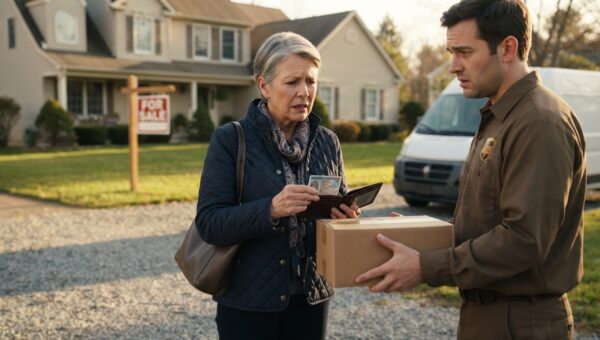
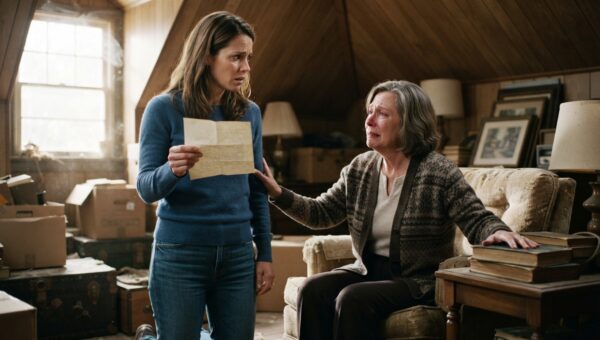
Dad had always told both of us that the parcel belonged to me and Tom equally. But two months after Mom went into the memory care wing at Meadowbrook, Tom drove out to my house on a Sunday afternoon, sat on my back steps, and told me the land was already gone.
“Mom signed a conveyance over to my LLC back in April,” Tom said, rolling his coffee cup between his palms. He did not look at me. “Her medical care is five thousand a month, Sarah. I had to secure the property to offset the costs I’m carrying. The cabin is off the table.”
I hated how easily my brother dismissed it. I had been the one driving forty miles every Tuesday and Thursday to sit with Mom, comb her hair, and make sure the aides had her clean cardigan. Tom lived fifteen minutes from the facility and visited once a month to drop off laundry detergent.
Yet when I asked to see the paperwork, he told me I was being combative during a family crisis.
I was tired, and I did not have five thousand dollars a month to offer for Mom’s care. So I backed down. I stopped asking about the deed.
“What about Dad’s fourteen-foot cedar boat?” I asked him before he got back into his truck. “The one in the boathouse?”
Tom laughed, a dry, dismissive sound that made my chest tighten. “You want that old wooden tub? The transom is rotten and the varnish peeled off three years ago. Take the junk if you want it. Just get it off the shoreline before the surveyor comes next week.”
I drove up to the lake on Wednesday morning with a utility trailer hitched to my Jeep.
The cabin was dead quiet. The yellow leaves from the birch trees had covered the gravel turnabout, and the green shutters Dad made were bolted shut against the coming winter.
I backed the trailer down toward the shoreline, walked into the drafty boathouse, and looked at Dad’s boat resting on its wooden cradle.
It was covered in dust, dried spiderwebs, and fallen pine needles. Dad had built that flat-bottom skiff out of marine plywood and white cedar in the summer of 1998, bending each rib by hand over a steam pipe. I grabbed a pair of leather work gloves, a stiff broom, and a hand brush from my trunk, and started hauling out forty pounds of rotted life jackets, tangled nylon line, and rusted anchor weights.
Underneath the center bench, right beside the wooden keel strip, a short plank seemed loose.
I pried the cedar strip up with the edge of a flathead screwdriver. Wedged deep in the narrow pocket between the hull ribs was an old rectangular metal lunch tin, the blue plaid kind Dad carried to the paper mill for thirty years.
The tin was wrapped in a thick plastic bread bag and secured with three dry-rotted rubber bands.
I cut the rubber bands with my pocketknife and popped the metal latch.
Inside lay a heavy brass mortise key with three square notches cut into the bit. Attached to the ring was a faded plastic key tag with Dad’s pencil script: *Back door storage, interior jamb.*
I turned and looked up the hill at the rear of the cabin.
I had spent my entire childhood running through that kitchen door, but I had never seen a lock on the back door that matched a heavy mortise key. I climbed the hill, walked onto the rear porch, and examined the heavy pine frame. Tucked three inches inside the weather stripping, almost hidden behind the exterior door casing, was a small brass keyway that had been painted over with gray deck paint years ago.
I scraped the paint away with my pocketknife, slid the brass key into the hole, and turned it.
With a dull, heavy click, a four-foot section of the tongue-and-groove cedar siding popped outward by half an inch.
PART 2
The narrow panel swung open on two concealed steel hinges.
Behind the siding was a shallow wall compartment framed directly between the wall studs. It was dry and smelled of old cedar shavings. Inside sat a green metal document box with Dad’s name stenciled across the lid in white paint: *Robert Miller, Personal.*
The box was unlocked.
I lifted the lid with my gloves still on. The first paper was a copy of Dad’s original 1996 land patent for the two acres on Black Bear Lake. But clipped directly underneath it was a thick manila folder labeled in Dad’s firm, heavy hand: *Irrevocable Property Trust & Power Restrictions.*
I sat on the top step of the rear porch in the cold October wind, turning the pages one by one.
The trust was dated August 14, 2017, five months before Dad passed away from lung cancer. The language was clear, drafted by an estate attorney named Walter Hayes in Duluth. Under Section Four, Dad had placed the cabin, the boathouse, and both lakefront parcels into the Miller Family Heritage Trust.
The terms stated plainly that upon Dad’s death, Mom held a life estate only. She had the right to occupy the cabin or receive any rental income it generated, but she had zero legal authority to sell, convey, encumber, or transfer the fee simple title to anyone. The deed had been recorded in the county courthouse under the trust’s name, not Mom’s personal name.
More than that, the trust named me as the sole successor trustee the moment Mom was certified by two licensed physicians as lacking mental capacity.
Tom wasn’t even listed as an alternate trustee. Dad had written an addendum on yellow lined legal paper, signed and notarized at the bottom:
*Tom has borrowed against every vehicle and tool I ever bought him. If he gets his hands on this land, he will sell it to a developer before the grass grows over my grave. Sarah is to protect the lake for her mother’s care and keep the cabin in one piece.*
I looked at the dates. Tom had claimed that Mom signed a conveyance to his LLC in April. But Mom had been formally diagnosed with moderate-to-severe vascular dementia by two staff physicians at Meadowbrook in January. She could not legally execute a deed, and even if she could hold a pen, she did not own the underlying property.
I pulled my cell phone from my coat pocket and dialed the number for Hayes & Associates in Duluth.
The firm was still operating on Superior Street. An attorney named Brian Hayes, Walter’s son, picked up after the receptionist transferred the call.
“Mr. Hayes,” I said, my voice shaking slightly. “My name is Sarah Miller. My father was Robert Miller. I am sitting on the back porch of his cabin on Black Bear Lake holding his original 2017 trust agreement.”
Brian Hayes paused for two seconds. “Mrs. Miller? We have been trying to locate a current address for you since June. Your brother, Thomas, filed an informal affidavit of adverse claim with the St. Louis County Recorder four months ago, claiming the trust had been dissolved. Did you authorize that filing?”
“No,” I said, looking out over the dark water of the lake. “I didn’t even know the trust existed until twenty minutes ago.”
“Do not leave that property, Mrs. Miller,” Hayes told me. “And do not sign anything Thomas gives you. He has a commercial purchase agreement pending with a private dock developer out of Minneapolis. The closing is set for this Friday.”
PART 3
Brian Hayes pulled the county records while I stayed on the line.
Tom had not just misled me; he had recorded a fraudulent quitclaim deed using a generic power of attorney form that Mom had signed back in 2015 for routine checking account deposits. He had presented it to a closing agent in Grand Rapids, claiming the family trust had expired upon Robert Miller’s death.
“The title company flagged the discrepancy two weeks ago,” Hayes said, the clicking of his computer keyboard loud over the line. “They demanded a certified copy of the original 2017 trust instrument to verify whether the trustee powers had passed to Thomas. Thomas told them the trust document had been destroyed in a basement flood and that he was the sole surviving representative.”
“I have the original right here in my lap,” I told him. “Signed by your father.”
“Bring it to my office at two o’clock,” Hayes said. “I will file an emergency Lis Pendens and a Notice of Trustee Succession with the county recorder before the close of business today. That will freeze the parcel immediately. No title insurer will touch that sale.”
I packed the document box into the front seat of my Jeep, hitched the trailer with Dad’s boat secured to the bunks, and drove two hours south to Duluth.
Brian Hayes was in his late forties, with the same measured, quiet demeanor his father had. He examined the wet-ink signatures on Dad’s documents, checked the St. Louis County deed records, and called the escrow officer handling Tom’s pending sale right from his desk speakerphone.
The escrow officer confirmed that Tom had signed a purchase agreement for $410,000 with a Minneapolis recreation firm. The cash was scheduled to be wired to Tom’s private LLC account on Friday morning at ten.
“I am serving your office with an immediate Notice of Fraudulent Conveyance and Revocation of Authority within the hour,” Hayes told the escrow officer. “If one dollar of buyer funds is disbursed on parcel 44-A, your agency will be joined as a co-defendant in a breach of trust action.”
The escrow officer stopped arguing immediately. “The file is frozen as of right now, counselor.”
At four-fifteen that afternoon, as I was walking back to my Jeep in the courthouse parking lot, my phone rang.
It was Tom.
“Sarah,” he said, his voice loud and hurried. “Where are you? The title company just called my broker and said somebody placed a cloud on the lake parcel. Did you call someone? I told you this was handled.”
“I am in Duluth, Tom,” I said, looking up at the gray stone walls of the county building.
“What are you doing in Duluth?” he snapped.
“I have Dad’s lunch tin,” I told him plainly. “The one he hid under the cedar boards in the boat you called junk.”
Silence fell over the line, heavy and cold.
“Sarah, listen to me,” Tom stammered, his confident tone collapsing into a rapid, desperate plead. “You don’t know the whole picture. I’m fifty-eight thousand dollars in debt on the commercial equipment for my grading business. If that four hundred thousand doesn’t hit my account on Friday, the bank is repossessing my backhoe and putting a lien on my own house. I was going to set aside fifty grand for Mom’s facility in an escrow account. I wasn’t going to leave her with nothing.”
“You told me Mom gave it away,” I said. “You let me feel guilty for not being able to cover her bills while you were pocketing three hundred and sixty thousand dollars behind my back.”
“We can split it!” he pleaded, his voice cracking into the phone. “We can split the proceeds sixty-forty! You take two hundred thousand, Sarah! Just tell Hayes you withdrew the objection! It’s four hundred thousand dollars in cash, Sarah, nobody uses that cabin anymore!”
“Dad built that cabin for his family, Tom,” I said. “And he knew exactly what you would do if you got your hands on it. That’s why he gave the key to the boat.”
I hung up the phone before he could answer.
ENDING
Brian Hayes filed the complete trust registration with the county recorder the next morning.
By Friday at noon, Tom’s commercial sale was formally terminated. The Minneapolis buyers withdrew their earnest deposit, and the title company issued a permanent cloud on Tom’s LLC. Because Tom had submitted a fraudulent affidavit regarding the trust’s status, Hayes sent a formal notice to Tom’s attorney stating that any further attempt to enter the lake property or contact Meadowbrook regarding Mom’s finances would result in an immediate referral to the county prosecutor for elder financial exploitation.
Tom did not call me again.
Two weeks later, he surrendered his commercial equipment to the bank and put his own suburban ranch home on the market to cover his loan defaults. He stopped showing up at Meadowbrook entirely.
I took over Mom’s administrative affairs as the legal trustee.
The cabin needed work, but the foundation was sound. I used four thousand dollars from Dad’s old maintenance fund to repair the roof vents and clear the fallen timber from the driveway. During the summer, I rented the cabin to a quiet family of fly fishermen for two weeks each month, generating twelve hundred dollars a week that went straight into Mom’s dedicated care trust at First National Bank.
On a bright, clear Saturday in late November, before the first heavy snowfall reached the north country, I drove back up to the lake.
The air was sharp and smelled of pine needles and cold stone. I unlocked the double doors of the boathouse and walked inside.
Dad’s cedar boat was sitting square on its wooden cradle, scrubbed clean from stem to stern. I had sanded the cedar planks down to the bare, fragrant wood, sealed the seams with fresh marine compound, and brushed three coats of clear amber spar varnish over the ribs. The wood glowed warm and rich under the afternoon sunlight cutting through the boathouse windows.
On the center bench, right above the loose floorboard where the tin had rested for six years, I set the brass mortise key on a new leather lanyard.
I ran my hand along the smooth curve of the cedar gunwale, listening to the small waves of Black Bear Lake lap gently against the dock pilings outside. The shoreline was completely peaceful. The cabin on the hill was safe, the water was quiet, and the boat Dad built was right where it belonged.