PART 1
After graduating from college five years ago, I quietly placed the $1.2 million estate my grandparents left me into a protected trust.
I never told my family because I knew exactly how they felt about money. To my parents, money was something you used to keep score and play favorites. My younger sister, Ashley, was twenty-four, had quit three jobs before finishing training, and drove a leased convertible our father struggled to pay for every month. I was twenty-seven, worked as a civil compliance specialist for the regional sanitation authority, and drove a ten-year-old hatchback.
The property on Crestview Road was part of that estate. It was a sturdy four-bedroom stone home on two wooded acres in Bloomington, built by my grandfather in 1978. When Grandpa passed away two years after Grandma, his legal paperwork was handled quietly through an independent trust firm in Indianapolis. I moved into the stone house after graduation, paying the property taxes, handling the lawn care, and keeping the roof in repair.
My parents had always assumed the house sat in a messy, unfinished family estate that nobody had bothered to clear through the county clerk. My father, Richard, had lived in their cramped suburban split-level across town for thirty years, constantly complaining about his mortgage and Ashley’s credit card balances.
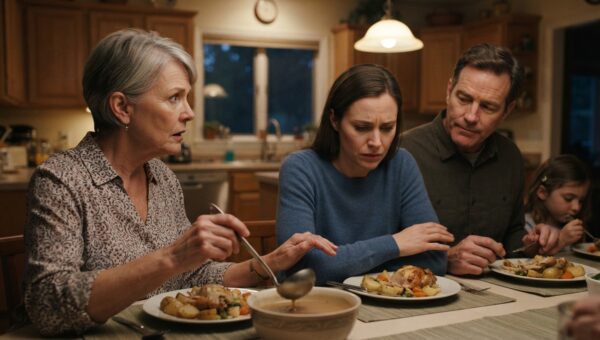
Last Tuesday, my parents and Ashley showed up at my front door unannounced. They were smiling.
Ashley walked into my foyer carrying a shiny brass key ring with a pink leather tassel. She kicked off her sandals right onto my clean hall rug and looked around the high ceilings like she was inspecting a hotel suite.
My mother, Karen, set her purse on the entryway table and folded her hands over her stomach.
“We’ve put the house in Ashley’s name,” my mother announced proudly. “You need to be out by Friday.”
I stood in the hall holding a basket of clean laundry.
“Excuse me?” I said.
My dad stepped forward, adjusting his windbreaker with the self-important posture he used whenever he thought he held all the cards.
“Ashley is getting married to Brandon in the spring,” my dad said. “Brandon comes from a very respectable family in Carmel. They need a place with space to entertain, and this house has been sitting here underutilized with just you in it. We went down to the county records office yesterday and filed a petition of heirship for intestate property. We assigned the residential claim over to Ashley as her wedding gift.”
“This house isn’t intestate,” I said, keeping my voice very quiet.
Ashley rolled her eyes, walking into the living room and running her hand across my mother’s old walnut sideboard.
“Claire, don’t be difficult,” Ashley said. “You’re single. You work sixty hours a week at the county offices. You don’t need four bedrooms and two acres. Mom and Dad found you a very nice one-bedroom rental over by the bypass. Dad even offered to pay your application fee.”
They were so confident they never imagined I had already prepared for this exact afternoon years ago.
I didn’t argue. I didn’t raise my voice. I set the laundry basket on the bottom step of the staircase, looked straight at my father, and said, “We’ll see about that.”
Ashley laughed, shaking her shiny new key ring. “Friday morning, Claire. Eight o’clock sharp. We hired the two-man crew from Quick Move to pack whatever you leave behind.”
They walked back out to their car, talking about which walls they were going to paint gray.
Two days later, on Friday morning at seven-forty-five, a white box truck with the Quick Move logo pulled into my gravel driveway.
My dad’s sedan followed right behind it, with Ashley riding shotgun wearing designer sunglasses and holding an iced coffee. My mother was in the back seat, already holding a clipboard with paint swatches clipped to the top.
They climbed out of the car, expecting to find me crying on the front steps surrounded by cardboard boxes.
Instead, they froze the moment they saw the person waiting on the front porch, holding a thick folder of legal documents.
PART 2
The man sitting in the wooden porch rocker was Walter Vance.
Walter was sixty-four years old, wearing a dark gray suit and wire-rimmed glasses, holding a steaming travel mug of black coffee in one hand and a navy blue legal binder in the other. He had been my grandparents’ personal estate and trust attorney for nearly thirty years, based out of the firm’s main offices on North Meridian in Indianapolis.
I stood right beside Walter in the doorway, wearing my work slacks and a sweater, with the front door unlocked behind me.
My father walked up the three stone steps first, frowning. He looked at Walter, then at me.
“Claire, what is this?” my dad demanded. “I told you eight o’clock. The movers charge ninety dollars an hour just to sit in the driveway. Why aren’t your clothes on the porch?”
Ashley pushed her sunglasses onto the top of her head. “Who is this old guy?”
Walter set his coffee mug on the small table beside the rocker, stood up slowly, and unbuttoned his suit jacket. He didn’t look annoyed or rushed. He looked like a man who had seen thirty years of family squabbles and knew the exact page where each one fell apart.
“Mr. Richard Miller?” Walter asked.
“Yes,” my dad said, puffing out his chest. “I’m Richard Miller. And this is my daughter Ashley, the legal titleholder of this property under our county heirship petition. If you’re a tenant advocate, you’re wasting your time. We filed the intestate paperwork on Tuesday.”
Walter gave a dry, quiet nod. He opened the blue binder, took out three stapled packets printed on heavy bond paper, and held them out.
“I am Walter Vance, managing trustee of the Eleanor and Arthur Miller Irrevocable Family Trust,” Walter said. “And I suggest you tell your moving crew to turn their engine off.”
My mother walked up the porch steps, her clipboard pressed against her chest. “Arthur’s trust was liquidated when he passed. He left a simple will.”
“Arthur’s will covered his personal checking accounts and his personal vehicle,” Walter replied, his voice calm, clear, and without a trace of hesitation. “His real property, along with his investment portfolio and municipal bonds, was transferred into an irrevocable trust in March 2019, four months before his death.”
He handed the top packet to my father.
“Here is a certified copy of the warranty deed recorded with the Monroe County Recorder in 2019,” Walter said, pointing his finger at the official county seal stamped on the front page. “This property is not owned by the estate of Arthur Miller. It is owned by the Eleanor and Arthur Miller Trust. It was never intestate. Your petition filed at the clerk’s office on Tuesday is legally void, as you attempted to convey real estate that did not belong to the decedent’s general estate.”
My father’s eyes scanned the document. His mouth fell open slightly.
“Wait a minute,” my dad stammered, looking from the paper to Walter. “Arthur couldn’t do that. I’m his only son. Indiana law protects direct heirs from total disinheritance without a specific exclusion clause.”
“There is an exclusion clause, Mr. Miller,” Walter said.
In that instant, every plan they had made began to unravel.
Ashley grabbed the paper out of my dad’s hand, spilling a few drops of her iced coffee onto the stone porch.
“This is ridiculous!” Ashley shouted, her voice shrill. “Dad, Brandon’s parents are coming over on Sunday to look at the dining room! We already ordered the draperies! Tell him to get off our porch!”
“Ashley, be quiet for a second,” my dad muttered, his face turning an uneasy, blotchy red. He looked at Walter. “Who is the trustee? Who holds the beneficial interest?”
Walter looked directly at my father.
“Your daughter Claire is the sole primary beneficiary,” Walter said. “And under the terms established by your parents, she became the co-trustee upon reaching her twenty-fifth birthday. The entire estate, valued at one point two million dollars, belongs exclusively to her.”
PART 3
The gravel driveway was completely silent. Down by the gate, the two men from the moving truck stepped out of the cab, leaning against the fender with their arms crossed, watching the porch.
My mother dropped her hands to her sides, the paint swatches fluttering against her slacks.
“One point two million?” my mother whispered. Her voice sounded thin, stripped of all its earlier pride. “Arthur told us he had less than fifty thousand left after Eleanor’s nursing home bills. He told us he was broke.”
“He told you what he needed to tell you, Karen,” I said, speaking up from the doorway.
My father looked at me, his eyes wide and angry. “You knew? You’ve known about this for five years?”
“I’ve known since the week after graduation,” I said.
Walter turned to page seven of the blue binder.
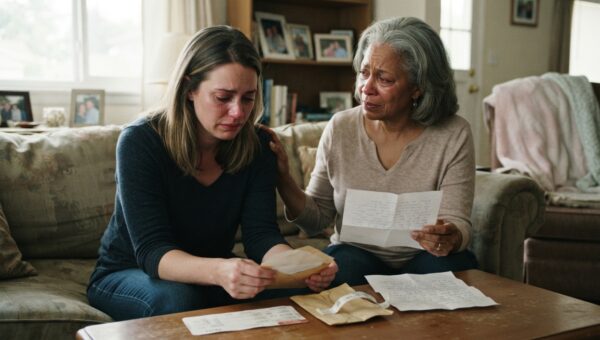
“Your parents were very specific when they sat in my office in 2019, Richard,” Walter said. “Your father brought in the canceled checks from the previous twelve years. Over one hundred and forty thousand dollars in personal loans he had given you to cover Ashley’s private school tuition, your credit card consolidations, and the down payment on your second car. Not one dollar of that money was ever repaid.”
My dad swallowed hard. “Those were family gifts. My father wanted to help his granddaughter.”
“Your father kept an itemized ledger in his safe,” Walter replied, tapping the paper. “He noted every check, every broken promise of repayment, and every conversation where you demanded more. In his final memorandum of intent, Arthur stated clearly that he had already given you your full inheritance while he was alive. He created this trust to ensure that the remainder of his life’s work would go to the only grandchild who visited him without asking for an envelope of cash.”
Ashley stepped toward me, her eyes filling with furious tears.
“You stole my wedding gift!” she screamed, shaking her fists at her sides. “You knew Brandon and I needed this house! You sat there at Sunday dinner two weeks ago and listened to me talk about wedding venues, and you never said a word! You’re selfish, Claire! You’ve always been jealous of me!”
“I didn’t steal anything from you, Ashley,” I told her plainly. “You tried to throw me out of my own home with two days of notice. You brought a moving crew here to dump my belongings on the street so you could impress your fiancé’s parents with a house you didn’t earn.”
“Claire, we are your family,” my mother pleaded, taking a step toward the porch railing. “You can’t do this to your sister. If Brandon finds out the house isn’t hers, the engagement might fall apart. His parents are very old-fashioned about property. You have one point two million dollars! You could buy another house anywhere in town! Let Ashley have this one.”
The sheer entitlement of it was breathtaking. For twenty-seven years, my needs had always been secondary. When I got my scholarship to Indiana University, my parents didn’t celebrate; they used the money they had saved for my college fund to buy Ashley a newer sedan. When I worked forty hours a week at the dining hall to pay for my textbooks, Ashley was spending summers at the lake on Dad’s dime.
I looked at my mother. The pleading look on her face wasn’t about love; it was about protecting Ashley from the consequences of her own arrogance.
“No,” I said.
The word was quiet, but it stopped my mother cold.
“No?” my dad yelled, his temper finally breaking through his shock. “I am your father! You don’t speak to your mother like that! We will contest this trust! We’ll hire an estate litigator in Indianapolis! We’ll prove Arthur was suffering from cognitive decline when he signed these papers!”
Walter Vance closed his navy blue binder with a heavy, deliberate snap.
“Mr. Miller,” Walter said, his voice dropping into that cold, formal tone that ends conversations. “Arthur underwent a complete neuropsychological evaluation at Indiana University Health forty-eight hours before executing this trust. That evaluation is sealed and attached to the probate docket. Any petition challenging this trust will be met with an immediate motion for sanctions and attorney fees.”
Walter pointed down the driveway toward the moving truck.
“Furthermore,” Walter continued, “if this vehicle and your family are not off this trust property within ten minutes, the Monroe County Sheriff’s Department will be dispatched to issue formal criminal trespass citations. I have the dispatcher on standby.”
My father looked at Walter’s phone resting on the binder. He looked down at the certified deed in his own hand, with its shiny county stamp and my name printed on the beneficiary line.
He didn’t have thirty thousand dollars for a trust litigation retainer. He didn’t have an inheritance coming.
“Come on,” my dad muttered, grabbing Ashley by the elbow.
“Dad, don’t let her do this!” Ashley cried, pulling against his grip.
“Get in the car, Ashley,” my dad snapped, his voice rough and defeated.
My mother didn’t say another word. She walked down the stone steps with her head down, her clipboard dangling loosely from her fingers.
The two movers watched them climb into the sedan. The driver shook his head, climbed back into the cab of the QuickMove truck, and put the vehicle in reverse.
I stood on the porch with Walter and watched the red taillights disappear down Crestview Road.
ENDING
The dust from the gravel settled slowly in the morning sun.
Walter picked up his coffee mug, took a sip, and looked out over the wooded front yard.
“Arthur told me this day would come, Claire,” Walter said softly. “He told me your father wouldn’t be able to resist taking a run at this land once he thought enough time had passed. You did well keeping quiet until the trust was fully settled.”
“Thank you, Walter,” I said. “For driving down so early.”
“It was an honor to finish Arthur’s work,” he said. He handed me the navy blue binder, shook my hand with a firm, warm grip, and walked down to his sedan.
The fallout across the family was swift and permanent.
Ashley’s fiancé, Brandon, did find out about the house. When my father was forced to withdraw the fraudulent heirship petition at the county courthouse on Monday morning, the record became public. Brandon’s family called off the large wedding at the country club three weeks later. Ashley moved into a small two-bedroom apartment near the mall with a roommate, and from what my cousin told me, she blames me for ruining her entire future.
My parents stopped calling. My father sent one angry email in October, demanding that I reimburse him the three hundred dollars he paid to the QuickMove company for the morning they spent in my driveway.
I didn’t reply to the email. I printed it out, filed it in the green folder with the rest of the family papers, and blocked his address.
When people only see you as a resource to be harvested, cutting the connection isn’t cruelty; it is the only way to keep your life intact.
The summer turned into autumn, and the two big sugar maples in my front yard turned bright orange and red.
I spent the following months doing the things my grandfather had always loved doing around the property. I hired a local stone mason to repoint the chimney bricks, cleaned out the perennial beds along the walkway, and had the hardwood floors in the front living room buffed and sealed.
Last Saturday, while cleaning out the high shelf in the pantry, I found my grandfather’s old metal tackle box.
Inside, tucked beneath the brass fishing lures and the plastic bobbers, was an old wooden-handled pocketknife with his initials carved into the handle: *A.M.*
The blade was worn thin from forty years of sharpening, but the brass pins were solid, and the hinge snapped shut with a clean, sturdy click.
I rubbed the dust off the polished wood with my thumb, walked over to the front window, and set the knife right in the center of the walnut sideboard.
I stood there for a long moment, looking out through the clean glass at the quiet woods, knowing that nobody could ever tell me I didn’t belong here again.