PART 1
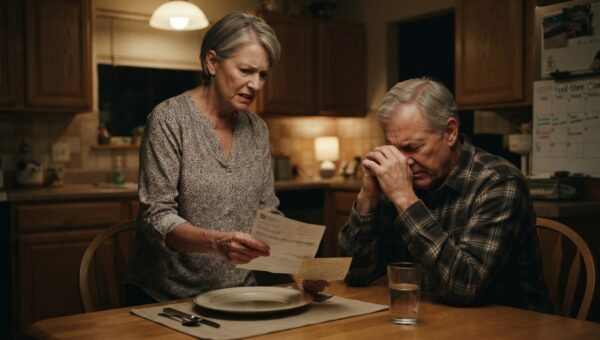
My wife started paying our adult daughter’s rent without telling me. I didn’t raise my voice when I found the transfers on our bank statement. I had learned a long time ago that arguing too early only gives people time to change their story, polish the corners, and turn the spotlight back on you.
There was more history behind it than anyone at our kitchen table seemed to remember.
Our daughter, Chloe, was twenty-four. She had walked away from two state college programs, left three retail jobs before her ninety-day probation was up, and always had a reason why the supervisor was cruel or the hours were unfair. Two years ago, when she signed the lease on a brick garden apartment forty minutes away across the river, my wife Diane swore we had to draw a hard line. Diane had told me to my face that Chloe would never learn to stand on her own two feet if we kept laying down cushions.
Yet there it was, printed in clean black numbers on our joint money market ledger: $2,250 every month for ten months. Exactly twenty-two thousand five hundred dollars moved out in steady increments, each labeled with the apartment complex name.
I wouldn’t have minded if our daughter had actually been struggling with sickness or an emergency. Any father would write a check to keep a child from freezing.
But I had spent forty-one years running a heating and sheet metal repair shop, crawling through damp crawl spaces on bad knees while Diane handled the front office. That money was our cushion for the winter months when new furnace installs slowed down.
I am not proud of how long I waited. I was scared the answer would hurt more than the wondering. When I finally asked Diane about the recurring line item over our morning coffee, she didn’t look up from her tablet.
“She needs a soft place to land, Frank,” Diane said, her voice flat and practiced, like she had rehearsed it in the bathroom mirror. “Chloe is finding herself. The design agency didn’t work out, and city rents are impossible right now. Are you going to begrudge our daughter a roof over her head?”
I probably would have dropped it if not for the total: $2,250 every month for ten straight months.
That night I finally did the thing I had been avoiding because looking too closely at family always costs you something.
I didn’t call ahead. I drove over with two heavy paper bags of groceries on a cold Saturday afternoon. I had bought the thick-cut bacon Chloe liked, gala apples, cheddar cheese, and a flat of bottled spring water.
I climbed the exterior carpeted stairs to unit 204, balancing the bags against my hip, and knocked on the painted wood.
The door opened after four seconds.
A young man in his late twenties stood there wearing athletic shorts and wool socks. He was holding a video game controller in his left hand, and behind him the living room was set up with a leather sectional, a glass coffee table, and an easel I had never seen before.
“Can I help you?” he asked, looking at my work jacket and the bags.
“I’m looking for Chloe Miller,” I said, setting one bag down by my boot. “I’m her father.”
The man blinked, his brow pulling together in genuine confusion. “Chloe? Man, Chloe moved out before Christmas. My girlfriend and I took over the lease in January.”
PART 2
The hallway smelled like someone cooking garlic on the floor below. I stood on that outdoor landing with the second grocery bag growing heavy in my arms.
“She moved out in December?” I asked.
“Yeah, right around the holidays,” he said, setting the controller on a small console table inside the entryway. “We responded to her listing on the neighborhood sublet board. We paid her the security transfer, and we’ve been paying the management office directly on their resident portal every month since the first of the year.”
My hand stayed flat against the cold doorframe. “You pay the management office directly?”
“Two thousand one hundred flat,” he said, nodding. “That was the rent on the renewal. Did she leave some mail here or something?”
“No,” I told him, looking past his shoulder at the empty space where Chloe’s pine desk used to sit. “No mail. I’m sorry to bother you.”
I carried both bags of groceries down the metal stairs, set them into the passenger footwell of my pickup, and sat behind the wheel with the engine off.
It was mid-October. That meant Chloe had moved out ten months ago. The young couple upstairs had been paying the building owner two thousand one hundred dollars on the first of every month, while Diane had been moving two thousand two hundred and fifty dollars out of our operating account every thirty days like clockwork.
The money hadn’t gone to the landlord. The landlord was already getting paid.
I pulled out my phone and dialed the rental office on the ground floor of building A. The leasing agent was still in her office on Saturday afternoon. When I gave her Chloe’s name and explained that I was confirming the old deposit paperwork for our tax records, she checked the ledger on her computer screen without hesitation.
“Unit 204 was officially transferred out of Chloe Miller’s name on December twenty-eighth,” the woman said. “There is no outstanding balance on that file. The current tenants are fully current.”
I sat in the truck cab for twenty minutes while the heater blew cold air.
If Diane wasn’t paying rent, where was twenty-two thousand five hundred dollars going? And why had Diane looked me in the eye three days ago and told me Chloe was sitting in that living room trying to find herself?
I didn’t call Diane, and I didn’t drive home.
Instead, I drove three miles north to the commercial strip near the community college. Chloe had told us in March that she had taken a part-time retail shift at a boutique clothing shop on Grand Avenue while she worked on her online graphic portfolio. Every Sunday dinner for six months, Chloe had complained about the owner of that shop, describing the inventory boxes she had to carry and how her back ached from standing on the concrete floor.
I parked across the street from the boutique.
I walked inside. The shop was quiet, smelling of expensive candles and dried flowers. An older woman with silver hair behind the glass register looked up and asked if I was looking for a gift.
“I’m looking for Chloe Miller,” I said. “Does she have a shift today?”
The woman’s eyebrows rose slightly. “Chloe? She hasn’t worked here since last summer, sir. She gave notice back in August of last year. I haven’t seen her in over a year.”
My mouth felt dry as dust. Every Sunday meal, every phone call, every text message about her sore feet and her tough boss had been an outright performance.
I walked back out to the truck. I pulled the bank app up on my phone and checked the routing numbers on the ten outgoing wires. Diane had disguised them in our personal ledger with the memo line *Apt 204 Rent*, but the actual receiving account was not a commercial property management firm.
The funds were transferring into an individual checking account at a regional bank branch located three blocks from our house, an account under Chloe’s name with Diane listed as a joint signatory.
PART 3
I walked into our house at six o’clock.
Diane was in the kitchen, slicing zucchini on the cutting board by the sink. The radio was playing soft country music, and the smell of roasting chicken filled the warm room. She looked up and smiled, wiping her hands on her striped apron.
“Did you run errands?” she asked. “Dinner will be ready in twenty minutes.”
I took the two grocery bags from the hall, carried them into the kitchen, and set them heavily onto the island right between the cutting board and the salt shaker.
“The bacon was on sale,” I said, my voice quiet. “I took it by unit 204 for Chloe.”
Diane’s knife stopped against the wood. Her back went completely straight.
“What did you do that for, Frank?” she asked, not turning around. “You know she hates people dropping in without texting. She’s anxious.”
“Chloe hasn’t lived in unit 204 since before Christmas, Diane.”
Diane slowly put the knife down. She turned around, leaning her hips against the counter edge. Her face didn’t break into panic, but her mouth tightened into that thin, stubborn line she gets whenever someone questions her books at the shop.
“Who told you that?”
“The young man living in her apartment,” I said. “The one who took over her lease ten months ago. The one who pays the landlord two thousand one hundred dollars every month on the resident portal.”
Diane crossed her arms. “She had to get out of there. The stairs were bad for her, and she wanted a quieter place.”
“Then why did you tell me on Wednesday that she was still there?” I asked. “Why have you transferred twenty-two thousand five hundred dollars out of our sheet metal account into a private joint account with her name on it?”
Diane looked at the floorboards between our feet. “Because you would have judged her, Frank. You’ve always been hard on her. From the time she was sixteen, you expected her to be like you, clocking in at dawn and never complaining. She’s sensitive. She doesn’t have your thick skin.”
“Where is she living, Diane?”
“She’s fine,” Diane whispered, her voice tightening. “She’s staying with friends.”
“Where is the twenty-two thousand dollars?”
Diane didn’t answer.
I pulled out my phone, laid it on the granite beside the grocery bags, and tapped the speaker button. I dialed Chloe’s cell.
It rang five times before Chloe picked up. Her voice was loud and clear, with the hum of traffic and music in the background.
“Hey, Mom,” Chloe said easily. “Did you send the transfer yet? My card got flagged at the boutique in Scottsdale and I need to clear the pending balance before dinner.”
The kitchen went dead still. Scottsdale, Arizona was two thousand miles away from our town.
I leaned over the island. “Chloe,” I said.
There was an immediate hitch in her breath on the other end of the line. “Dad?”
“What are you doing in Arizona, Chloe?”
A pause lasted three full seconds. When she spoke again, all the sweetness was gone from her voice, replaced by the sharp, petulant tone she used whenever she was cornered.
“Why are you listening on Mom’s phone? Mom said you knew about this. She said you agreed to help fund my styling residency out here.”
“There is no styling residency,” I said, looking right at Diane.
Diane reached across the island to snatch the phone, but I slid it out of her reach with my left forearm.
“You’ve been out there since January,” I said into the receiver. “Living on our business reserve while your mother lied to my face every week.”
“Mom told me you were happy to help!” Chloe yelled, her voice tinny through the tiny speaker. “She said you were proud I was building a brand in the Southwest! If you didn’t want to support me, you should have just said so instead of playing games!”
She hung up with a sharp beep.
The silence that followed was suffocating. Diane stood with her hands flat against the counter, her eyes bright with tears of defensive anger.
“She was drowning here, Frank,” Diane said, her voice shaking. “She was depressed. She couldn’t find her footing in this town, where everyone knows you and everyone expects her to work a counter. Her friend invited her out to Scottsdale. I helped her furnish a small condo and gave her a stipend so she wouldn’t have to work twenty hours at a diner while she built a client base. I was going to put the money back from my end-of-year draw.”
“Your draw comes from our joint labor, Diane,” I told her, my chest aching with a dull, heavy weight. “I was on my knees in a frozen crawl space on Miller Road last January while you were wiring our payroll cushion across the country so our twenty-four-year-old could pretend she had a career.”
“I am her mother!” Diane cried. “A mother protects her child!”
“You didn’t protect her,” I said, looking at the zucchini slices drying on the board. “You taught her that lying to her father is the easiest way to buy shoes.”
ENDING
I didn’t yell. I didn’t throw plates. I took my work boots off by the backdoor, walked into our small home office, and sat down at the computer.
That night, I removed Diane’s signature authority from the business operating account at First National. I transferred what remained of our working capital into an enterprise account requiring my sole signature for any electronic withdrawal over two hundred dollars.
The next morning was Sunday. There was no family dinner.
I called our accountant at home and told him we needed to split our personal tax filings and prepare a formal accounting of the $22,500 that had been diverted from the company books. When money is stolen from a partnership by one partner to fund a family secret, the state does not view it as a harmless misunderstanding.
Diane spent three days staying at her sister’s house across town. When she came back on Wednesday evening, her bags were smaller and her eyes were dark from lack of sleep.
She sat down at the table, where the grocery bags still sat by the pantry door.
“Chloe called me yesterday,” Diane said quietly, staring at her hands. “She asked if I could wire another eight hundred dollars for her car payment. She told me that if I didn’t, she would have to come home.”
I looked at my wife. For thirty years, we had built a life on shared work, early mornings, and common sense. Looking at her now, I realized that her weakness for Chloe had eaten through the foundation of our marriage like dry rot under a porch.
“Did you send it?” I asked.
Diane shook her head slowly. “No. I closed the joint account at the branch this morning. There was four hundred and twelve dollars left in it. I told her she has to find a job by Friday or give up the lease.”
“That’s a start,” I said.
We didn’t file for divorce. When you have spent thirty years together, you don’t always burn the house down over one season of madness. But things do not go back to the way they were just because a bank card is canceled.
The sheet metal business is strictly in my name now. Every Friday, I write Diane a regular paycheck for the hours she actually spends logging invoices at the desk, and our personal living expenses are paid out of a household account that requires both of our physical signatures on every paper check.
Chloe has not called my phone since that Saturday on the landing. My sister-in-law told me she took a hostess job at a resort hotel in Scottsdale to keep her rent paid. She posts pictures of desert sunsets and patio drinks, telling the internet she is self-made and thriving.
Yesterday, I carried the groceries I had bought for Chloe into the kitchen and made vegetable soup with the bacon and the cheddar cheese.
When Diane came down the stairs for lunch, she ladled a bowl for herself and sat on the far side of the table. We ate our soup in the quiet room, listening to the clock tick on the wall above the stove.
She reached across the table and touched the sleeve of my flannel shirt.
“It’s good soup, Frank,” she whispered.
“It is,” I told her, setting my spoon down against the porcelain. “It’s paid for, anyway.”