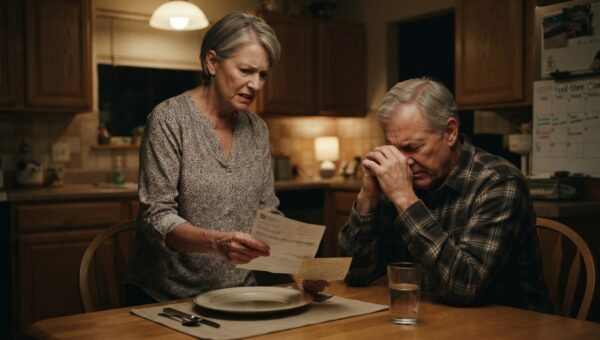
The tiny metallic beep came from the kitchen counter every four seconds, a dry, rhythmic click that seemed to measure out the remaining patience in the room. Mom sat at the oval table with her hands folded over a linen napkin, her shoulders squared the way they always were when she was trying not to show how much something hurt.
I stood by the coffee maker, watching the green LED light on the charging dock flash in time with the sound.
“It just won’t stop, honey,” Mom said, her voice dropping into that flat, frustrated register she used when she felt like a burden. “Marcus said he took care of all the settings. He said the audiologist programmed them specifically for my left ear frequency. But every time I put them in, it sounds like a kettle boiling inside my head.”
A week ago, Marcus had stood right where I was standing, holding a cup of black coffee and telling me not to worry about a single dime of the $3,450 balance. He had clapped me on the shoulder, flashing that easy grin that had gotten him out of every scrape since high school, and told me he handled the paperwork during his lunch break. I had thanked him. I had even felt a little guilty for doubting him earlier that month when he asked Mom to sign some blank authorization forms for a special family discount grant.
“Let me take them back to the clinic,” I said, reaching across the laminate surface to pick up the small beige devices. “Dr. Vance’s receptionist knows me. I’ll have them plug them into the diagnostic rig and see why they’re cycling like this.”
Mom nodded, her thumb tracing the edge of her coffee mug. “Check every number before signing anything, especially if he hurried you or refused to let me take a copy.”
That was her favorite warning lately. Mom was seventy-eight, and her hearing had been fading slowly since the winter after Dad passed, but her mind was as sharp as a dry sickle. She didn’t trust digital portals or mobile apps, and she certainly didn’t trust banks that didn’t have a brick-and-mortar branch within three miles of the town square. When Marcus had brought home the initial quote three weeks ago, she had insisted on reading every line of the fine print until Marcus grew visibly impatient, tapping his pen against the tabletop and telling her the grant window was closing by sundown.
The drive down to the Miller Creek Audiology clinic took twelve minutes through steady morning drizzle. The receptionist, Clara, looked up from her computer screen as the bell above the door jingled, offering a polite, familiar smile that faded the moment I set the little white plastic case on the counter.
“They’re beeping constantly,” I said, leaning against the counter. “My brother Marcus said he paid for them in full last Tuesday, but something’s wrong with the programming.”
Clara typed a few keystrokes, her fingernails clicking against the plastic keys with a steady, hollow rhythm. I watched her eyebrows draw together, a small crease forming between them that didn’t look like good news. She scrolled down, clicked another tab, and then stopped typing entirely. She didn’t look up right away.
“Your brother’s name is Marcus?” she asked, her voice dropping half an octave.
“Yes. Marcus Reynolds. He brought Mom’s check in two weeks ago and told us the balance was settled.”
Clara turned her monitor slightly toward me, though not enough for the patients in the waiting area to see. The screen showed an account status highlighted in bright, unforgiving red letters. CANCELED.
“The order was terminated ten days ago,” Clara said quietly. “Your brother came back here four days after the initial deposit. He told us the family decided to go with a different provider in the city and requested an immediate account closure and refund disbursement.”
I stared at the glowing letters on the screen. The clinic waiting room smelled faintly of antiseptic and old magazines, but suddenly the air felt thin, like the oxygen had been sucked out through the air vents.
“A refund?” I asked. “He didn’t buy them anywhere else. Mom has been wearing these exact devices for a week.”
Clara reached into a manila folder beside her keyboard and slid a single sheet of paper across the laminate counter. It was a standard clinic cancellation and refund release form. At the bottom, in sprawling, hurried cursive that didn’t match the neat handwriting Mom used for her grocery lists, was a signature bearing my mother’s name. Beside it was a phone number I recognized instantly as Marcus’s cell phone.
“We had to issue the remaining balance via check to the primary contact listed on the closure rider,” Clara murmured, looking genuinely sorry for me. “Your brother signed for it right here at the desk.”
I didn’t say thank you when I left the clinic. I walked back out to my sedan, climbed into the driver’s seat, and sat there with my hands resting on the cold steering wheel while the rain drummed a heavy, dull rhythm against the roof. The silence in the car wasn’t peaceful; it was the heavy, suffocating kind that comes right before a storm breaks over the river. Marcus hadn’t paid for the hearing aids with his own money. He had taken Mom’s check, pocketed the cash difference from her retirement account, and when the clinic demanded the rest of the balance, he had forged her name to shut the whole thing down and intercept whatever cash he could squeeze out of the refund.
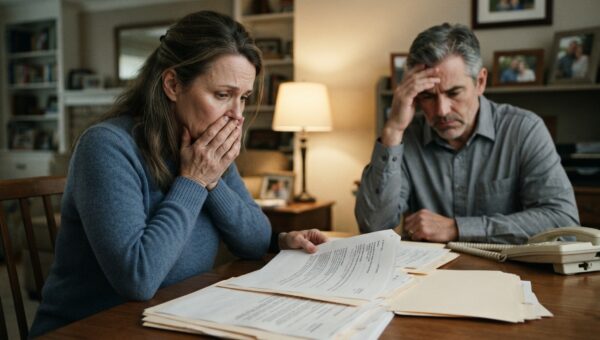
By two o’clock that afternoon, I was sitting at Mom’s kitchen table with her checkbook register spread out between us like a crime scene. Mom wasn’t crying. That was the hardest part to watch. She just sat in her Windsor chair, her fingers resting lightly on the armrests, staring out the window toward the backyard where the old oak tree was shedding its last wet leaves onto the grass.
“I knew I shouldn’t have signed those extra papers,” she said softly, her voice barely louder than a whisper. “He looked right at me and told me the bank needed dual verification for the senior discount. I raised him better than that, Ray. I raised both of you to know that a man’s word is the only thing he takes with him when he goes.”
“It’s not your fault, Mom,” I said, though the words tasted like dry ash in my mouth.
I had the bank statements printed out from my phone, showing the digital image of the check Mom had handed Marcus for the medical grant. The endorsement on the back wasn’t the clinic’s merchant ID. It was Marcus’s personal savings account at the credit union down on Main Street, deposited via mobile app the very same afternoon he promised us the order was locked in.
We didn’t have to wait long for him to show up. Sunday afternoon meant Marcus always dropped by around three o’clock to raid the refrigerator and talk about his latest landscaping venture or whatever high-risk business idea he was currently sinking his money into. We heard the gravel crunch under the tires of his truck, followed by the familiar slam of the driver’s side door that always rattled the front screen door in its frame.
Marcus walked into the kitchen carrying a plastic bag of pastries from the bakery downtown, whistling under his breath. He stopped dead the second he crossed the threshold. He looked at Mom sitting upright in her chair, then at me sitting opposite her with the printed bank statement and the clinic’s cancellation form lying side by side on the checkered tablecloth.
“What’s all this about?” Marcus asked, forcing a quick, nervous chuckle as he tossed the bakery bag onto the counter. “Is this a tax audit or did I miss someone’s birthday?”
He tried to lean back against the refrigerator, but his shoulders were stiff beneath his jacket. He didn’t look at our faces; he looked straight at the white paper with the forged signature.
“Sit down, Marcus,” Mom said. Her voice didn’t shake. It was the same steady tone she used when we were kids and caught us lying about breaking the neighbor’s window with a baseball.
Marcus didn’t move. “Come on, Mom. I’ve got a crew waiting on me over at the Miller property. What is this?”
“Clara called me from the clinic about twenty minutes ago,” I said, my voice dangerously low. “She wanted to make sure we knew the devices you gave Mom were just refurbished floor models you picked up off some discount site online, while the actual medical order was canceled and cashed out ten days ago.”
Marcus flushed red right up to his hairline, his jaw working as he tried to find footing in a story that had already collapsed beneath him. “The clinic made a mistake. Those administrators are incompetent. I told them to adjust the billing, not cancel it. They must have mixed up the paperwork with another patient.”
“They have your cell phone number on the refund release form, Marcus,” I said, standing up from the table so I was looking right down at him. “And the bank has your mobile deposit slip for Mom’s check. You didn’t pay for the hearing aids. You stole three thousand dollars from her savings account, forged her signature when the clinic caught the short payment, and kept the change for yourself.”
The kitchen grew so quiet we could hear the refrigerator compressor humming in the corner. Marcus opened his mouth to say something else, some defensive lie about cash flow or temporary loans, but he caught the look in Mom’s eyes and stopped. He saw the exact moment her opinion of him shifted from protective maternal indulgence into something cold, distant, and final.
“You took my grocery money, Marcus,” Mom said, her voice frighteningly calm. “You took the money your father left me in his lockbox for emergencies, and you lied to my face while you drank my coffee.”
Marcus swallowed hard, his eyes darting toward the front door as if he could outrun the math spread out across the table. “I was going to pay it back. It was just a bridge loan until the contractor settled my invoice on Friday. You know how cash flow is right now.”
“You have forty-eight hours to put every single cent back into Mom’s account,” I told him, stepping closer until he had to take a half-step back toward the hall. “If the balance isn’t restored by Tuesday morning, I’m taking these papers down to the sheriff’s office myself. And don’t bother coming back for Sunday dinner ever again.”
Marcus looked from me to Mom, realizing for the first time in his thirty-four years that his charm had finally run out of currency. He didn’t apologize. He just grabbed his jacket off the back of the chair, muttered something about us being ungrateful, and let the screen door slam behind him with a force that rattled the glass panes.
We didn’t talk for a long time after he left. The rhythmic beeping of the defective hearing aids still echoed faintly from the counter where I had tossed them earlier.
The next morning, the replacement hearing aids arrived via courier, ordered directly through a secure line with the clinic manager’s personal oversight, paid for with funds we pulled back from Marcus’s reach before he could touch them again. Mom sat by the sunny living room window, adjusting her newly fitted devices while I stood behind her chair with a small screwdriver and a fresh pack of batteries. She turned the volume wheel until the room filled with the soft, natural sounds of the neighborhood outside, clear and functioning perfectly without a single unwanted beep. We didn’t need to whisper anymore, and for the first time in years, the house felt entirely safe.