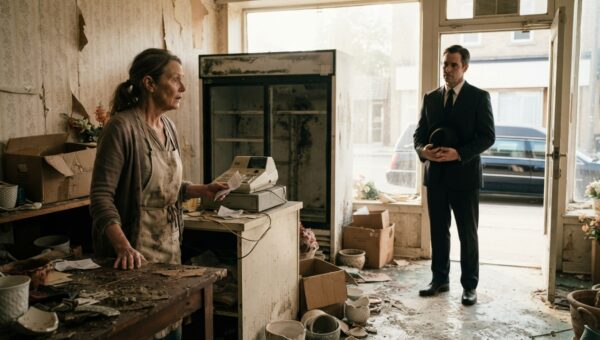
PART 1
My older brother, Greg, handled our father’s finances during his final year because I lived two states away in Ohio with a full-time job and a daughter finishing high school. Dad had suffered a mild stroke fifteen months before he passed, and Greg, being ten minutes down the county road in Pennsylvania, took over the checkbook, the doctor appointments, and the bills.
Every time I called to ask if Dad needed help with groceries or his supplemental insurance, Greg told me the same thing.
“Don’t worry about it, Sarah,” Greg would say, his voice always rushed. “Dad’s pension barely covers the oil heat and his prescriptions. He’s down to his last few thousand. Just let me handle the paperwork so you don’t have to take time off.”
I believed him. I hated being the daughter who lived far away, and I felt grateful that Greg was willing to spend his lunch breaks driving Dad to physical therapy. When Dad passed away quietly in his sleep on a rainy Tuesday in October, I drove four hundred miles to arrange the service.
After the burial at St. Luke’s, the family gathered in the church basement for coffee and ham sandwiches. Greg walked up to me near the coat racks, carrying a plastic grocery bag from the local supermarket.
He held it out to me. “That’s what he wanted you to have,” he said.
I looked inside the bag. There was Dad’s worn Timex watch with the scratched crystal, two faded flannel work shirts he used to wear while raking the yard, and a chipped ceramic coffee mug from the hardware store where Dad had worked for thirty-two years.
“Is this everything?” I asked, my voice barely above a whisper. “What about his savings, Greg? What about the savings bonds he always talked about for the kids?”
Greg looked around the church hall, then leaned in close. “Sarah, you weren’t here. Between the visiting nurse visits, the private ambulance runs, and the prescription copays, Dad was wiped out. His checking account had sixty-four dollars in it on the day he died. I paid the funeral deposit out of my own pocket. Be glad he left with no medical debt.”
I took the plastic bag and put it on the passenger seat of my car. I felt ashamed for even asking about money when my brother had done the heavy lifting of caregiving.
Two days later, on a chilly Friday morning, I drove out to Route 19 to clear out Dad’s ten-by-ten storage unit before the monthly rental expired. The facility manager gave me the spare key, and I rolled up the rusted aluminum door. Inside were dusty cardboard boxes of old camping gear, Dad’s metal tackle box, and three vintage fiberglass fishing rods leaning against the corrugated wall.
I began loading the tackle boxes into my trunk. Behind a stack of canvas tarps in the far back corner, sitting on top of an old milk crate, was a heavy steel cash box painted dark green.
The latch was unlocked.
I lifted the lid. Sitting on top of an old receipt book was a thick stack of printed bank statements from First Commonwealth Bank, covering the previous twelve months.
Every single statement had a repeating line item highlighted with an orange marker: an electronic debit transfer of $1,850 on the third of every month, routing straight into an account ending in 7704.
I had never seen that account number before. It wasn’t Dad’s checking account, and it wasn’t the utility escrow.
Then I saw the white envelope taped flat against the underside of the cash box lid. Written across the front in Dad’s shaky, deliberate pencil script were two sentences:
“If your brother tells you I had nothing left, take these to Arthur Vance at the county courthouse.”
PART 2
I stood inside that cold storage unit with the metal lid propped open on my knees.
The name Arthur Vance was familiar. He was an older attorney in town who had been Dad’s fishing buddy for thirty years, the man who had drawn up our mother’s estate papers before she passed away in 2012.
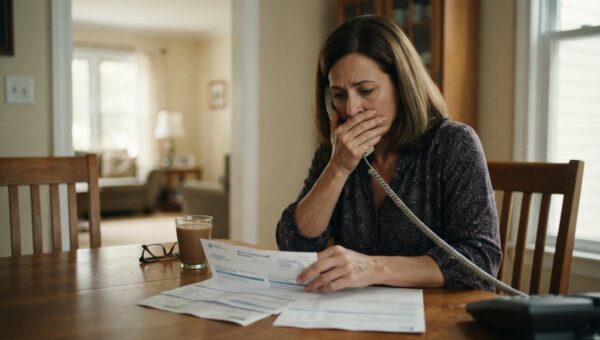
I sat down on the milk crate and went through every single statement in the box.
There were eleven statements in total. Each one showed a monthly pension deposit of $2,400 from the hardware supply company, along with Dad’s Social Security benefit of $1,650. Dad had nearly four thousand dollars coming in every single month. And every single month, exactly two days after the funds cleared, an electronic transfer of $1,850 was sent directly to account 7704.
Altogether, $20,350 had left Dad’s account in less than a year.
Beneath the bank statements lay a folded carbon copy of a formal complaint Dad had started drafting by hand on lined notebook paper. It was dated four months before he died.
“Greg took the online password,” Dad had written in his unsteady hand. “Told me he needed it for the pharmacy. He won’t give me the statements. Says I’m getting confused. Arthur, please check on this before he takes the house equity.”
My hands shook as I folded the lined paper.
Dad had not been confused. He had been trapped in his own recliner, watching his money disappear while Greg told him he was losing his mind. And all the while, Greg had been calling me in Ohio, painting a picture of an empty bank balance so I wouldn’t ask questions.
I closed the green metal box, carried it to my car, and drove directly into town.
Arthur Vance’s law office was on the second floor of a brick building across from the county courthouse. Arthur was seventy-four, wearing a cardigan with suede elbow patches, his gray hair combed neat. When I walked in unannounced with the green box, he stood up from his desk and held both of my hands.
“Sarah,” Arthur said gently. “I was so sorry to hear about your dad. He was a good man.”
“Arthur,” I said, setting the box down on his desk blotter. “I found this in Dad’s storage unit an hour ago. He left a note telling me to bring it to you.”
Arthur’s expression changed. He put on his reading glasses, pulled the bank statements out of the box, and spread them across his desk. When he saw the handwritten note on lined paper, he let out a slow, tired breath.
“Your father came to see me in June, Sarah,” Arthur said quietly. “He took a cab down here while Greg was at work. He told me he suspected Greg was siphoning money from his retirement deposits, but he didn’t have the statements to prove it because Greg had switched the account to paperless delivery. I filed a formal records request with First Commonwealth under Dad’s power-of-attorney revocation, but your father had another stroke in August before we could get the court hearing scheduled.”
“Whose account is 7704?” I asked.
Arthur opened a filing cabinet behind his desk and pulled out a thin manila folder. He opened it, slid a document across the desk, and tapped his fountain pen against a signature line.
“It belongs to a limited liability company called Ridge Line Remodeling,” Arthur said. “The registered owner and sole manager is your brother, Greg.”
PART 3
The paper Arthur showed me was a state corporate registration form. Greg had registered Ridge Line Remodeling fourteen months earlier, right around the time he bought a new heavy-duty trailer and a commercial skid loader for his weekend contracting side business.
“Greg didn’t just take twenty thousand dollars, Sarah,” Arthur said, his voice grave. “Look at the date on this document.”
Arthur handed me a second page. It was a recorded home equity mortgage against Dad’s two-bedroom house on Maple Street, filed with the county recorder’s office eight months ago.
Greg had used his temporary financial power of attorney to take out an $85,000 equity line against Dad’s paid-off house. The entire balance had been drawn down within ninety days. Sixty thousand had been transferred directly into Ridge Line Remodeling’s business account, and the monthly payments on that loan were being serviced by the $1,850 transfers Dad had flagged on his statements.
“He borrowed eighty-five thousand dollars against Dad’s home?” I whispered, my chest feeling tight.
“Yes,” Arthur said. “And because the house is the collateral, if that note isn’t paid, the bank will initiate foreclosure against the estate within six months. Greg didn’t pay for the funeral out of his own pocket, Sarah. He paid it from the loan proceeds he took out against your father’s property.”
I looked at the green cash box sitting on the edge of the desk. The grief I had been carrying since Tuesday turned into a cold, steady resolve.
“What do we do?” I asked.
“Greg is the named executor in the 2018 will,” Arthur said. “He hasn’t filed for probate yet because he wants to quietly liquidate the house, pay off the equity balance, and pocket whatever is left before you find out. We file an emergency petition to remove him as executor for breach of fiduciary duty, and we serve him today.”
I picked up the green box. “Let me speak to him first, Arthur. I want him to look at Dad’s handwriting.”
At two o’clock that afternoon, I drove out to Greg’s house on the county road.
His driveway was paved and wide. Parked next to his two-car garage was a brand-new enclosed utility trailer with bright blue decals on the side: Ridge Line Remodeling.
I pulled in behind his pickup, took the green box from the passenger seat, and walked up to his front door.
Greg opened the door wearing a sweatshirt and sweatpants. He looked surprised to see me, his eyebrows pulling together.
“Sarah? I thought you were heading back to Ohio this morning.”
“I was,” I said. “Until I went to Dad’s storage locker.”
Greg’s eyes flickered down to the dark green metal box in my arms. The ease in his face vanished instantly, replaced by a guarded, rigid stiffness.
“Come inside,” he said, stepping back into the entryway.
The living room had new hardwood floors and a fifty-inch television mounted above a stone fireplace. His wife, Brenda, came out of the kitchen with a coffee mug, saw the expression on my face, and stopped near the sofa without speaking.
I walked to the dining table, set the green cash box down, and flipped the lid wide open.
“Account 7704, Greg,” I said. My voice was completely steady. “Eighteen hundred and fifty dollars every month. And an eighty-five thousand dollar equity loan against Maple Street.”
Greg’s jaw tightened. He didn’t look at the box. He shoved his hands into his pockets and looked at the hallway rug.
“You don’t understand what it was like, Sarah,” Greg said, his voice dropping into that harsh, defensive tone he had used since we were teenagers. “You were living your comfortable life in Columbus while I was over at that house three nights a week plunging his toilet and listening to him tell the same three stories over and over. I gave up my weekends. I ruined my own truck hauling his junk. I had a business opportunity that could set up my family, and Dad wasn’t using that equity.”
“He was using it to live, Greg,” I said. “He was rationing his heart pills because you told him he was down to sixty-four dollars.”
“I never told him to ration his pills!” Greg shouted, stepping toward the table. “He was old! He had enough for his care! I was going to pay that loan back once the remodeling contracts started clearing!”
“You had him drafting notes to Arthur Vance in secret,” I said, pointing down at the pencil handwriting on the yellow legal paper. “He knew you were stealing from him, Greg. He sat in his chair and wondered why his own son was robbing him blind. And then you handed me a plastic grocery bag with two work shirts and told me that was all he had left.”
Brenda set her mug down on the counter with a quiet clatter. She looked at Greg, her face pale. “Greg… you told me your father gifted you that startup capital.”
Greg didn’t look at his wife. He looked at me, his chest heaving, his hands balling into fists inside his pockets.
“What do you want, Sarah?” he muttered, his voice cracking. “You want to call the state police? You want to see your own brother go to jail over a house?”
“I don’t want your excuses,” I told him. “And I don’t want you touching another piece of Dad’s estate.”
ENDING
We didn’t go to the state police, but we went directly to Courtroom 2A on Monday morning.
Faced with Arthur Vance’s emergency petition and the copies of the unauthorized electronic transfers, Greg’s attorney advised him to step aside immediately. Greg signed a voluntary renunciation of his executorship before the judge took the bench.
The probate court appointed Arthur as the independent administrator of Dad’s estate.
Under the settlement Arthur drafted, Greg was forced to take full legal responsibility for the $85,000 equity line. To prevent the bank from initiating foreclosure on Maple Street, Greg had to sell his new enclosed trailer, his commercial skid loader, and take out a high-interest personal loan against his own residence to pay off the lien within ninety days.
He didn’t make a profit on Ridge Line Remodeling. By the time he cleared the bank debt, his business was dissolved, and he was back to working forty hours a week as a shift mechanic at the gravel quarry.
Dad’s house on Maple Street was preserved.
Arthur handled the quiet sale of the property four months later, once the title was completely cleared of liens. After the final administrative expenses and the legitimate medical copays were settled, the estate netted $142,000 from the sale.
Per Dad’s original, handwritten instructions that Arthur had kept in his office safe, the remaining money was divided into three equal portions: one share for me, and two college investment accounts set aside for Greg’s daughter and mine. Greg did not receive a single dollar from the distribution.
I haven’t spoken to my brother since the afternoon we signed the final paperwork in Arthur’s conference room. He didn’t come to the courthouse steps to say goodbye, and he didn’t call on Thanksgiving. My sister-in-law Brenda sent a brief card at Christmas, apologizing for not knowing the truth, but the distance between our families is permanent now. You cannot rebuild twenty years of trust after watching a brother strip his dying father’s accounts.
Last Saturday, I finally unpacked the plastic grocery bag Greg had handed me in the church basement.
I washed the two flannel shirts and hung them in the hall closet next to my winter coats. I took Dad’s old Timex watch to a jeweler in Columbus, had the cracked crystal replaced with clean glass, and put in a fresh battery.
The watch has a steady, quiet tick.
I keep it on my nightstand right beside the lamp. Every morning when I reach over to turn the light on, I see the small gold dial, run my thumb over the worn leather band, and remember the honest man who wore it for thirty years.