The yellow bag of flour had split somewhere between aisle four and the passenger seat of my sedan, leaving a fine white powder all over the blue rubber floor mat that Arthur had cut to fit the Buick back in the fall of 2011. I sat there in the driveway for a minute with the engine idling, watching the exhaust pipe puff little gray clouds into the damp Michigan air because I did not want to carry the groceries inside just yet.
The house looked quiet. The green shutters were square against the white siding, and the old lilac bush by the meter was starting to drop its leaves into the mulch. It was just an ordinary Tuesday afternoon, or at least that is what I kept telling myself while my hands stayed locked on the steering wheel.
A month. That was how long it had been since the funeral home took Arthur away in that long black car with the smudge on the fender. Sarah had come over three times that week with casseroles in foil pans that she left on the counter without unwrapping them, and every single time she looked around my kitchen like she was taking inventory for an estate sale. She would run a finger along the edge of the Formica table and sigh under her breath.
“It’s just too much house for one person now, Mom,” she told me on Sunday while she was peeling an orange into the sink. “The taxes alone are going to eat up whatever is left of the pension, and you can’t even get out here to clear the snow when January hits.”
“I cleared the snow before you were born, Sarah,” I told her, keeping my voice level while I watched her drop the orange peels right past the disposal. “And I can clear it now.”
She just shook her head and dropped the subject, but she never looked at the walls.
She didn’t look at the pencil marks on the pantry doorframe where Arthur measured the kids every summer until their legs stopped growing. She only saw square footage and real estate comps, the kind of numbers people talk about when they are trying to figure out what someone else’s life is worth on paper.
So when I finally turned off the Buick engine and walked up the three wooden steps to the back porch, I didn’t expect to see anything out of the ordinary. My mind was on the butter melting in the grocery sack and whether I had enough vinegar to wipe down the counters before dark. I reached for the brass handle, and my hand hit something cold and square that did not belong there.
It was a black metal lockbox clamped right over the doorknob with a heavy steel shackle. The little plastic window on the front was flipped down to show a combination dial.
I stood there on the mat for a second because my brain kind of stopped working for a few beats. I didn’t scream or drop my groceries. I just stared at the black box until the absurdity of it finally broke through the fog in my head. I walked back down the steps, put the brown paper bag on the patio table next to the empty birdfeeder, and pulled my flip phone out of my coat pocket. My hands were shaking so hard I punched Sarah’s number three times before I hit the green button.
She answered on the second ring, sounding hurried, like she was standing in the middle of a grocery store aisle herself. “Mom? I’m kind of in the middle of something.”
“Sarah,” I said, and my voice sounded lower than I meant it to. “What is on my front door?”
There was a long pause on the other end of the line, just the faint sound of traffic noise in the background. “What do you mean?”
“The black box,” I said. “The lockbox with the key inside it. Who put that on my door?”
“Oh,” she said, and the air went completely flat out of her voice. “Right. So I talked to an agent last week. Just to get some numbers, Mom. Just to see what the market is actually doing right now.”
“You put a lockbox on my house without asking me?”
“I didn’t want to upset you,” she said, her voice rising that familiar defensive notch she always used when she knew she had crossed a line but wanted to blame me for noticing. “You’re being entirely too difficult about this. You’re living alone in a four-bedroom house that’s falling apart, and I’m trying to help you transition before you get stuck. You’re making a mountain out of a molehill.”
“Get it off,” I told her.
“Mom, be reasonable, “
“Get it off my door by sundown, Sarah, or I’ll take a hacksaw to it myself.”
I clicked the phone shut before she could finish whatever lecture she had lined up for me. I didn’t wait for her to fix it. I went into the shed, pulled Arthur’s old hacksaw off the pegboard, and walked back up to the porch. It took me twenty minutes of sweating and sawing through the hard plastic shackle before the box dropped into my hand with a dull clunk. My shoulder burned the whole time, a sharp, familiar ache that reminded me I wasn’t twenty anymore, but every scrape of the blade felt like taking my own breathing back.
When the box was off, I didn’t stop there. I walked down to the hardware store on Main Street and bought a heavy brass deadbolt set off the shelf, the kind with the reinforced steel plate that Arthur had always talked about putting in but never quite got around to. By five o’clock, the old lock was sitting in the trash can by the garage, and my house had a key only I possessed.
The next morning, the sun was just clearing the top of the neighbor’s maple tree when someone hammered on the front door. Not a polite knock, but that heavy, confident rap people use when they think they own the place.
I opened it to find a man in a blue windbreaker and a woman holding a large manila envelope. They both looked about forty, dressed in nice clothes that didn’t belong on our gravel driveway.
“Morning,” the man said, offering a tight, polite smile. “We’re Arthur and Brenda Vance. We’re here for the final walkthrough before closing next week.”
I didn’t move out of the doorway. I kept one hand on the new brass handle. “There’s no closing here. You’ve got the wrong address.”
The woman frowned, stepping closer and holding out the manila envelope like she was offering me a menu. “No, this is 414 Elm Street. We already put down the ten thousand earnest money deposit with the agency. We have the signed purchase agreement right here.”
The world narrowed down to the corner of that yellow paper she was shoving toward me. I reached out and took it, my fingers catching the stiff edge. I walked it over to the porch swing where the light was better, sliding my thumb down to the signature line at the bottom.
There was my name. Written in blue ink, with the little loop on the ‘E’ that I hadn’t made that way since I changed my signature after Arthur and I got married back in seventy-eight. It was a good forgery, but it wasn’t mine. And right below it, on the witness line, was a signature I knew better than my own grocery list.
Julian Vance.
Julian had lived two doors down from us for thirty years. He was the notary public down at the county annex before he retired, the man who brought us Christmas stollen every December and helped Arthur build the back deck after the big storm in ninety-eight.
“May I borrow this for a minute?” I asked the woman, my voice barely above a whisper.
She looked at her husband, confused. “Well, that’s the broker’s copy, but, “
“I’ll be right back,” I said, and before they could say another word, I turned on my heel, walked straight down my driveway, and marched past the empty lawn to Julian’s front door. I didn’t knock. I pushed the screen door open and walked right into his kitchen where he sat at the laminate table reading the morning paper with his reading glasses halfway down his nose.
Julian looked up, blinking against the kitchen light, his coffee mug hovering halfway to his mouth. “Elena? Good morning, I didn’t hear you, “
I dropped the contract right on top of his crossword puzzle, square over the Sunday clues.
“Tell me why your signature is on this,” I said.
Julian stared at the paper. His face didn’t go white like it does in the movies, but his jaw went slack, and he set the mug down very slowly, as if he was afraid it might shatter. He didn’t look at me. He looked at the blue ink near the bottom.
“Sarah came by the office last Thursday,” Julian muttered, his voice dropping into that raspy, miserable register old men use when they are caught doing something shameful. “She had the papers already printed up. She said you couldn’t drive down to the annex because of your hip. She showed me a text message on her phone, Elena. It looked like it came from you. It said you agreed to the remote sale and needed me to witness the remote execution so the buyer wouldn’t walk.”
“You didn’t call me,” I said. It wasn’t a question.
“She told me you were sleeping,” he whispered, finally looking up at me through his bifocals. His eyes looked watery and small behind the glass. “She said you didn’t want to be bothered with the phone calls while you were resting. I’ve known that girl since she was in braces, Elena. I didn’t think she’d… I didn’t think she’d forge her own mother’s name.”
“She did,” I said.
I picked the paper back up, left Julian sitting there with his cold coffee and his ruined crossword, and drove straight to Sarah’s house on the other side of town. I didn’t call ahead. I didn’t warn her. I just parked my Buick right across the end of her paved driveway so she couldn’t back out her silver crossover, walked up to her front door, and let myself in with the spare key she had given me three years ago for emergencies.
She was standing in her kitchen by the marble island, tapping away on her laptop, wearing one of those gray cashmere sweaters that cost more than a week of my groceries. When the door clicked open, she looked up, expecting her husband or the pest control man.
“Mom?” she said, her fingers freezing on the keyboard. “How did you get in here? What are you doing?”
I didn’t answer right away. I walked across her hardwood floor, laid the contract down right on top of her keyboard, and pressed my palm flat against the paper.
“Julian told me everything, Sarah,” I said. The quiet in the room was absolute, heavier than any silence I had known since Arthur died. “He told me about the text message. He told me about the papers you brought him.”
Sarah’s face didn’t change all at once. It cracked slowly, like dry mud in the summer sun. The defensive color rushed up her neck and into her cheeks, and then she dropped her hands to her sides, her shoulders collapsing inward.
“You don’t understand how bad things are,” she whispered, her voice cracking on the edge of a sob. “The business, Mom. The bank is calling the line of credit on the commercial space, and if I don’t clear sixty thousand by the end of the month, everything we built is gone. Everything. Arthur’s insurance wasn’t enough to cover what you need anyway, and the house is just sitting there empty most of the time, “
“It is not empty,” I told her, and my voice didn’t shake once. “It has forty years of my life in every drawer, and it is not yours to sell.”
“I was going to move you into that nice senior place on Oak Street,” she said, her voice rising into that frantic, whiny pitch that used to drive her father crazy. “You would have had a kitchenette and people to talk to. I was trying to save you from yourself!”
“You weren’t trying to save anyone,” I said, looking right at her until she had to look away down at the floorboards. “You were trying to save your own skin with my roof.”
I reached out, picked up the contract, and folded it twice into a neat square before slipping it into my coat pocket.
“The buyers are on my porch right now,” I told her, my hand resting on the brass latch of her front door. “I’m going back to tell them the deal is fraudulent. You are going to call your real estate agent within the hour and cancel the listing, or I am going down to the county prosecutor’s office with Julian and this piece of paper. Do you understand me?”
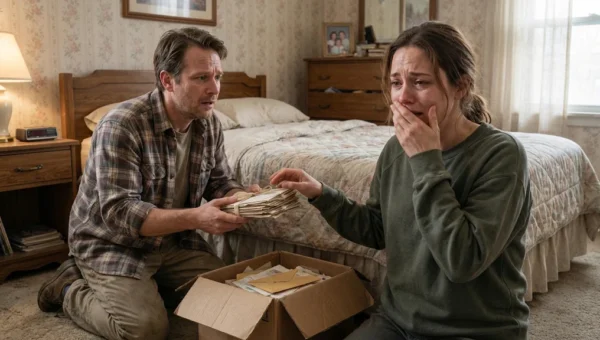
Sarah didn’t answer. She just sank down onto one of the counter stools, burying her face in her hands, her shoulders shaking as the tears finally came. It wasn’t pretty, and it wasn’t peaceful, but it was the truth, and for the first time since Arthur died, the air in the room felt entirely clear.
I walked out to my car, backed out of her driveway, and drove home.
The sun was dropping low behind the tree line when I pulled back into 414 Elm Street. The porch was empty. The prospective buyers had left their business card tucked into the screen door frame, but I didn’t look at it. I walked up the three wooden steps, reached out, and ran my thumb over the cold, heavy brass of the new lock I had put in myself the day before. The metal was solid under my hand, catching the last orange rays of the Michigan evening as the crickets started up in the grass.