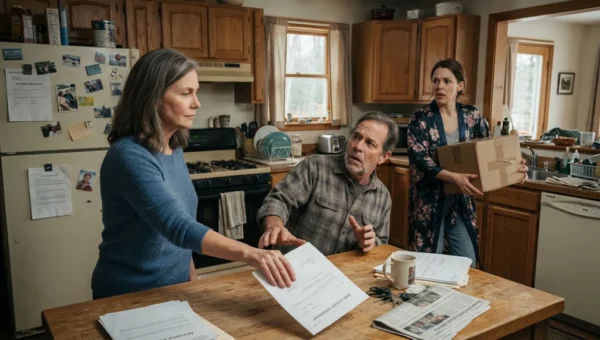
It started small, the way bad news usually does in a family. For about two months, Chloe’s Sunday calls got shorter and shorter, shrinking from a comfortable half-hour chat about the neighbors to hurried five-minute check-ins where she sounded like she was running for a train. Then came the casual mention that Mark had a line on some work waiting for him out in Arizona.
After that, she dropped the word temp into the conversation like it was nothing more than a minor weather delay.
Last week, the illusion finally broke into pieces right in my driveway. Chloe pulled up in her dented station wagon with both kids and four black trash bags of clothes piled high in the back. She didn’t even wait for me to get off the front porch before she started talking fast, her hands moving over the steering wheel.
“Just a year, Mom. Eighteen months,” she said, leaning across the counter inside the kitchen and sliding three hundred dollars in crisp twenties onto the laminate surface like that covered the next century of living.
I felt my pulse jump straight up into my throat. I’m seventy-one years old, and my heart medication costs more than that paltry stack of bills some months, even with the secondary insurance. But before I could draw enough breath to tell her no, my grandson Leo, who just turned seven, had already set his blue school backpack right by the door I keep specifically for him.
Maya, my granddaughter, was standing in the middle of the linoleum asking which room would be hers. Outside, Mark gave a sharp honk from the idling car, too impatient to even walk up the steps. Chloe checked her phone screen and looked up at me with those big, practiced pleading eyes.
“So, we good?” she asked.
Every face in that kitchen turned toward me, waiting on me to fold the way I always had. I’ve spent my whole life keeping things running, measuring out my days by my pill box and the quiet hum of the refrigerator, and for a second my knees actually felt weak under my apron. I looked at the trash bags leaking a strap of winter wool, then down at Leo’s small velcro sneakers standing right beside my threshold.
I didn’t give them a blind yes, but I didn’t lock the door either. I told them they could stay for precisely one night while we sorted out the logistics, but Mark had to come inside the house.
I wasn’t going to negotiate through a car window while he pretended he was just dropping off laundry.
When Mark finally dragged his boots across my threshold ten minutes later, he smelled of stale cigarette smoke and cheap gas station coffee. He dropped himself into one of my wooden kitchen chairs and looked around like he was appraising a second-hand motel.
“Arizona is booming, Clara,” Mark said, tapping his fingers against the table. “Just need a runway for a few months.”
“What kind of runway, Mark?” I asked, keeping my voice lower than my blood pressure wanted it to be. “Chloe says eighteen months. That’s not a runway. That’s a relocation.”
“It’ll go fast,” Chloe chimed in, already pulling milk from my fridge for the kids. “We’re going to save every penny.”
That first night was a preview of every headache to come. The house was suddenly full of noise, elbows, and damp towels thrown over my bathroom doors.
My weekly grocery budget for one person vanished before Wednesday morning, and I found myself lying awake in the dark at 3:15 listening to the refrigerator motor cycle on and off, wondering how my quiet life had been hijacked by four trash bags and a man who couldn’t look me in the eye.
The real picture didn’t take long to surface. On the third afternoon, while Chloe was out trying to find a working cell phone charger at the discount store, I went to fetch a pen from the kitchen table and noticed a crumpled piece of paper sticking out of her open leather purse. It wasn’t a job contract for a stable warehouse or a corporate office in Phoenix. It was a single photocopied flyer for a commission-only seasonal distribution gig four states away, dated three weeks prior, with a handwritten note in the margin about broken lease penalties.
When Chloe came back through the back door holding a plastic bag of groceries, I was sitting right there at the oilcloth table with that paper folded flat beneath my hands.
“You didn’t break a lease in town just for a temp job, Chloe,” I said. It wasn’t a question.
Chloe stopped dead by the sink, her face draining of color before she let out a long, ragged sigh that sounded like a tire hissing out on the highway. “Our landlord was going to evict us, Mom. Mark spent our last savings on fixing the truck transmission, and the apartment office wouldn’t wait another week.”
“And you thought my house was an emergency parking lot,” I said.
“We didn’t have anywhere else to go,” she whispered, her voice cracking as she finally dropped onto the chair opposite me. “If you didn’t let us in, the kids would have been sleeping in the back of the station wagon by Friday.”
That was the trap, wasn’t it? She knew my love for those children was bigger than my desire for peace, and she used it like a crowbar. But sitting there across from my own daughter, feeling the dull ache in my chest that always came when I let myself get too stressed, I knew that letting them roll right over my boundaries wasn’t helping anyone. It was just teaching Maya and Leo that adults don’t have to tell the truth or plan ahead as long as they have a mother to rescue them at the end of the line.
I called a family meeting for Saturday morning, and I made damn sure Mark sat at the table without his phone.
“Here is how this is going to work,” I told them, sliding my glasses off and laying them right on top of the flyer. “You are not staying here for eighteen months. You are not going to drift around my kitchen while Mark waits for a miracle in the desert. You have exactly six weeks under this roof.”
Mark opened his mouth to argue, but I held up my hand. I didn’t yell. I didn’t have the energy for theatrics. I just laid out my fixed monthly income, the cost of my prescriptions, and the exact utility bills from the last three days since the water heater started running constantly for four extra people.
“If you are here for six weeks, Mark finds a local delivery job by Monday morning to pay for his share of the groceries and power,” I said, looking him straight in the eye. “And Chloe, you start looking at local apartment complexes within our county limits where people actually live and work, not some pipe dream three states away.”
Chloe started crying then, real, messy tears that she tried to hide behind her sleeves, but she didn’t fight me. For the first time in years, she looked at me like I was a mother instead of a safety net.
The next six weeks weren’t easy. The house stayed crowded, and the kitchen smelled constantly of toasted cheese sandwiches and wet sneakers. But Mark actually went down to the local lumber yard on Monday and got himself a driving job, bringing home an envelope of cash every Friday night to drop on the kitchen table without being asked. Chloe stopped scrolling through her phone every five minutes and started sorting through local rental listings with a yellow highlighter.
Today, the house is quiet again, except for the sound of Leo and Maya chasing each other through the back yard grass. On the kitchen wall, right next to the calendar where I cross off the days with a black felt-tip pen, there is only one week left until Chloe and the kids move into their own small, tidy apartment two towns over.
I walked over to the window this morning and watered my African violet, watching the blossoms catch the pale morning light through the clean glass. My heart didn’t race once. My home is still mine, my peace is intact, and my grandchildren know that when they come back to visit, they’ll have a place waiting for them because things were done right.